ART
BEAUTÉ ET BIEN-ÊTRE
ARTISANAT
CULTURE ET HISTOIRE
DIVERTISSEMENT
ENVIRONNEMENT
NOURRITURE ET BOISSONS
INGÉNIERIE INVERSE
SCIENCES
SPORTS
TECHNOLOGIE
TECHNOLOGIE PORTABLE



Bore and Tone Holes: A Hole Can Be Made Bigger and Not Smaller
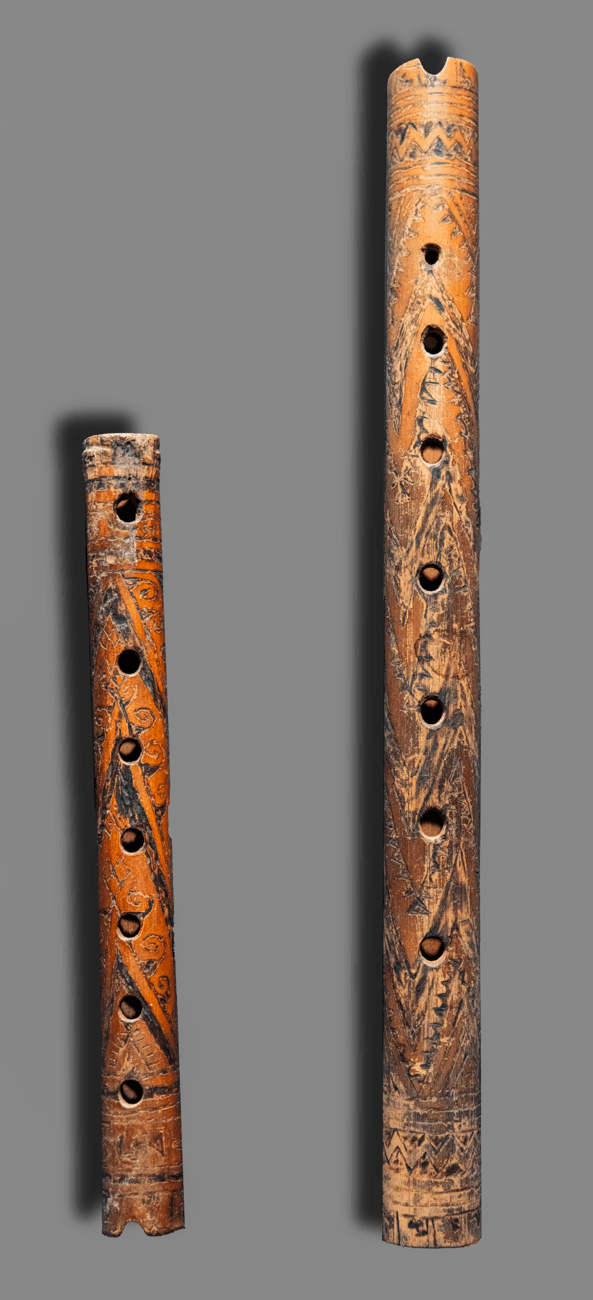
A wind instrument is a column of air with a length. Change the length and the note changes, and the whole craft is about changing it in controlled steps.
Two facts decide almost everything. A pipe closed at one end sounds an octave lower than an open one of the same length, which is why panpipes are surprisingly short. And a tone hole does not end the air column at the hole — it ends it somewhere below, by an amount that depends on how big the hole is.
That second fact is the working rule of the whole craft: cut every hole small and tune it by enlarging it, because wood cannot be put back.
Intermédiaire
5 hours
Consignes
1
1
Open, closed, and how the instrument is excited
Open, closed, and how the instrument is excited
**An open pipe** — a flute, a recorder, a quena — resonates at a half wavelength and overblows to the octave, then the twelfth, giving the full harmonic series.
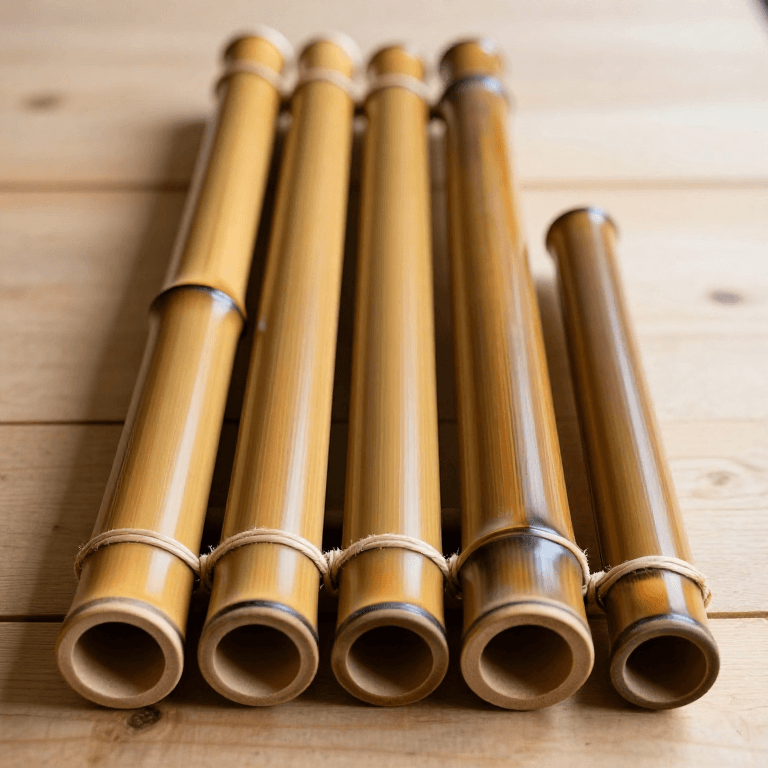
**A pipe closed at one end** — a panpipe, a stopped organ pipe, a clarinet — resonates at a quarter wavelength. It sounds an octave lower for the same length and it produces only the odd harmonics, so it overblows to the twelfth and skips the octave entirely. That is why a clarinet's fingering changes so awkwardly between registers, and why its lowest note is so low for its size.
How the column is set going is a separate question from its length:
**An air jet across an edge** — flute, quena, shakuhachi, panpipes, and the fipple of a recorder or whistle. The jet flaps in and out of the pipe at the resonance.
**A beating reed** — clarinet, oboe, bagpipe chanter. A tongue of cane opens and closes the entrance, and it acts as a closed end.
**A free reed** — sheng, khaen, accordion, harmonica. The tongue swings through a slot and its own stiffness sets the pitch, so the pipe is a resonator rather than the thing that decides the note.
Matériaux pour cette étape :
 Bambou3 pièces
Outils nécessaires :
 Règle
 Accordeur chromatique et métronome (à pince)
2
2
Lengths, corrections and hole positions
Lengths, corrections and hole positions
Chargement du notebook Jupyter…
Outils nécessaires :
 Ordinateur de bureau
3
3
Cutting and tuning a simple flute
Cutting and tuning a simple flute
Work in this order and nothing is wasted.
**Cut the tube long.** Longer than the calculation, by 20 mm or more. The overall length is the one dimension that can be corrected by cutting, and only in one direction.
**Make the embouchure or fipple first and tune the whole tube.** With no finger holes at all, the pipe sounds one note. Shorten it until that note is right. Now the length is known to be correct before a single hole is drilled.
**Mark the holes from the calculation, then drill them undersized.** Two millimetres under is a reasonable start.
**Tune from the bottom hole upwards**, enlarging each until it is in tune, because each hole's pitch depends on the ones below it being open.
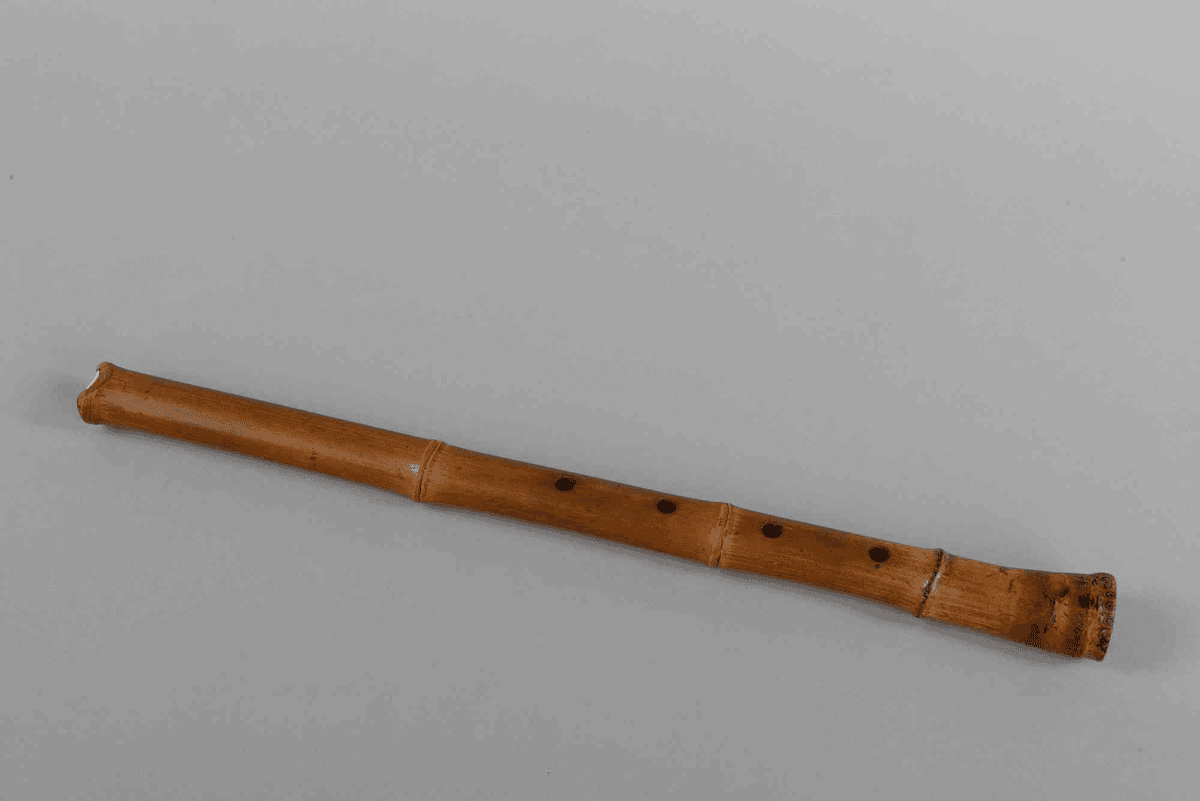
**Undercut rather than enlarge, when the hole is already as big as a finger can seal.** Angling the walls of the hole inside the bore raises the pitch further while the opening the finger covers stays the same size. That is the traditional fix for a hole that has run out of room.
Check the tuning warm and with the pipe wet. Both change the pitch, and the instrument is played in that state, not cold and dry.
Matériaux pour cette étape :
Bambou2 pièces Cire d'abeille1 pièce
Outils nécessaires :
 Jeu de forets
 Jeu de limes aiguilles
 Pied à coulisse numérique 6 poucesAccordeur chromatique et métronome (à pince)
 Papier de verre fin
4
4
The bore is not just a hole through the middle
The bore is not just a hole through the middle
A cylinder is the simplest bore and not the only one, and the shape changes which harmonics line up.
**Cylindrical** — flute, clarinet, most bamboo flutes. Simple to make, and the harmonic behaviour follows the open or closed rule directly.
**Conical, widening towards the bell** — oboe, bassoon, saxophone, many folk shawms. A cone driven by a reed at its narrow end behaves like an OPEN pipe: it overblows to the octave and gives all the harmonics, although the reed closes one end. That is why a saxophone overblows an octave and a clarinet a twelfth, although both are single-reed instruments.
**Bore diameter changes the tone more than the pitch.** A wider bore for a given length is louder, darker, harder to overblow; a narrow bore is quieter, brighter and jumps to the upper registers easily. The shakuhachi's wide bore and the quena's narrow one are two deliberate answers.
**Small irregularities matter.** A ridge, a node left in a bamboo tube, or a rough patch sits somewhere in a standing wave, and its effect depends on where. Near a pressure maximum it changes the note; near a node it does almost nothing. This is why traditional makers ream and polish a bore, and why two tubes of identical length do not always play the same.
Matériaux pour cette étape :
Bambou3 piècesOutils nécessaires :
Pied à coulisse numérique 6 pouces RâpePapier de verre finAccordeur chromatique et métronome (à pince)
Outils requis
8- Espace réservé
- Espace réservé
- Espace réservé
- Espace réservé
- Espace réservé
- Espace réservé
- Espace réservé
- Espace réservé
Blueprints liés
Ces blueprints partagent des connaissances — techniques, matériaux ou principes
CC0 Domaine public
Ce blueprint est publié sous CC0. Vous êtes libre de copier, modifier, distribuer et utiliser ce travail pour tout usage, sans demander la permission.
Soutenez le Maker en achetant des produits via son Blueprint où il perçoit une Commission Maker définie par les Vendeurs, ou créez une nouvelle itération de ce Blueprint et incluez-le comme connexion dans votre propre Blueprint pour partager les revenus.