Collaboration
ART
BEAUTÉ ET BIEN-ÊTRE
ARTISANAT
CULTURE ET HISTOIRE
DIVERTISSEMENT
ENVIRONNEMENT
NOURRITURE ET BOISSONS
INGÉNIERIE INVERSE
SCIENCES
SPORTS
TECHNOLOGIE
TECHNOLOGIE PORTABLE
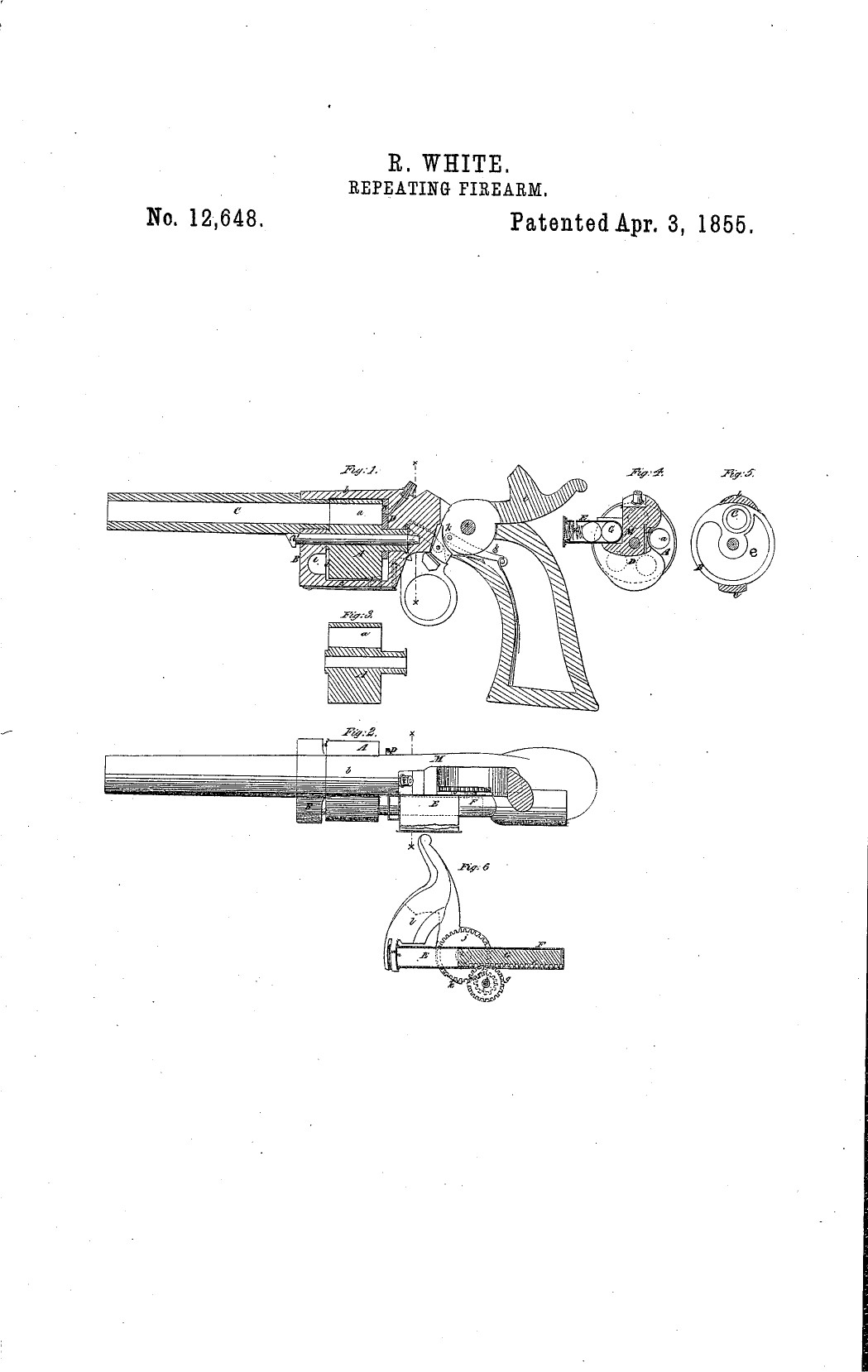

The Bored-Through Cylinder and the Self-Contained Cartridge (Rollin White, 1855) - History and How It Works
Débutant
About 15 minutes
Consignes
1
1
Read White's patent
Read White's patent
His first claim: "Extending the chambers a a of the rotating cylinder A right through the rear of the said cylinder." (US 12,648, dated 3 April 1855.)
2
2
How it works, in principle
How it works, in principle
With the chambers open at both ends, a cartridge (powder and ball made up as one unit) goes in from the back instead of being loaded loose from the front. White made the chambers slightly conical, smallest at the front, "in order that a cartridge may be inserted easily at the back, but that the ball may fit tight when it arrives in its place".
3
3
What came of it
What came of it
Once cartridges carried their own powder, ball and ignition in a metal case, a revolver could be reloaded in seconds from the back. Smith & Wesson built their first cartridge revolvers under a licence of White's patent.
4
4
Honest limits
Honest limits
From the text of US 12,648 (1855). His patent also describes a magazine and charging piston not covered here. This page gives no dimensions, charges or making steps, by design.
Blueprints liés
Ces blueprints partagent des connaissances — techniques, matériaux ou principes

Dangereux
Building a Song Dynasty Fire Lance — The World's First Gunpowder Weapon
par Charlie
Armement
116
1
0
0
4
0
Dangereux
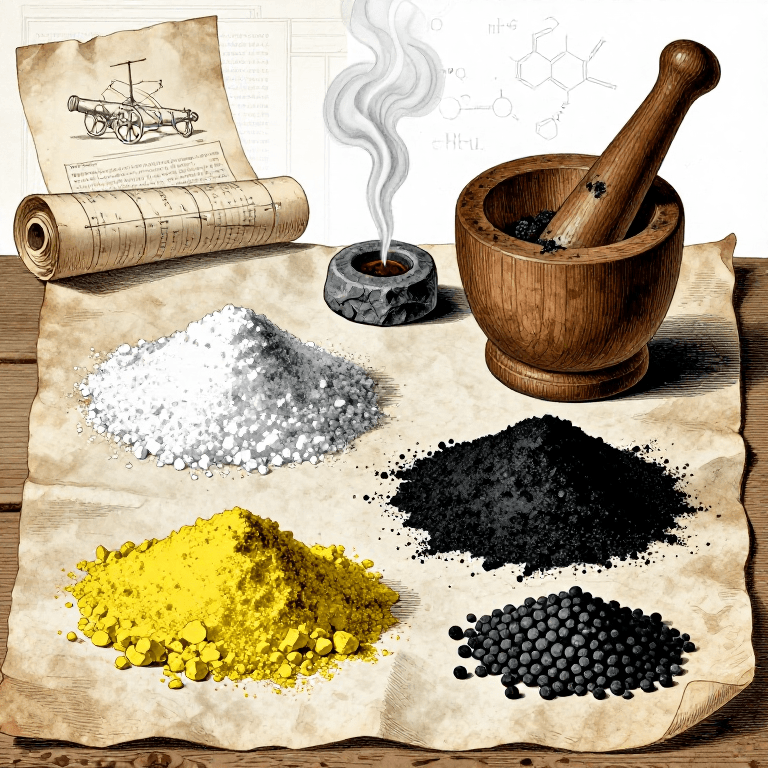
Making Black Powder from Saltpeter, Sulfur, and Charcoal — The Mixture That Changed the World
par Charlie
Armement
199
0
0
0
7
0
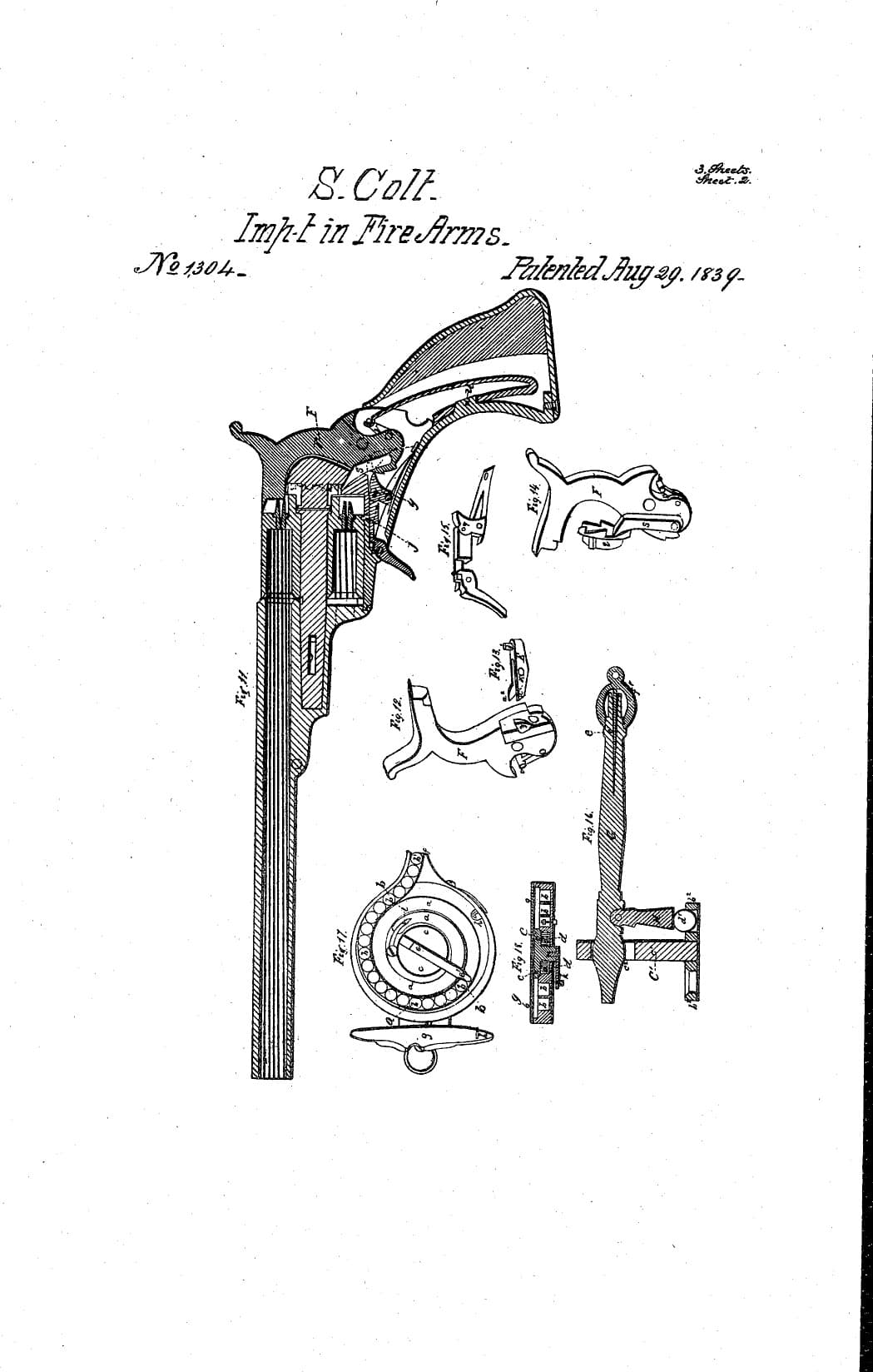
The Revolver: Several Chambers Turning Behind One Barrel (Colt, 1836 and 1839) - History and How It Works
par Charlie
Armement
2
0
0
0
0
0
CC0 Domaine public
Ce blueprint est publié sous CC0. Vous êtes libre de copier, modifier, distribuer et utiliser ce travail pour tout usage, sans demander la permission.
Soutenez le Maker en achetant des produits via son Blueprint où il perçoit une Commission Maker définie par les Vendeurs, ou créez une nouvelle itération de ce Blueprint et incluez-le comme connexion dans votre propre Blueprint pour partager les revenus.