ART
BEAUTÉ ET BIEN-ÊTRE
ARTISANAT
CULTURE ET HISTOIRE
DIVERTISSEMENT
ENVIRONNEMENT
NOURRITURE ET BOISSONS
AVENIR VERT
INGÉNIERIE INVERSE
SCIENCES
SPORTS
TECHNOLOGIE
TECHNOLOGIE PORTABLE
Building a Camera Obscura — Projecting the Sun and Eclipses Safely
Astro

Créé par

Astro

30. mai 2026IS
3
0
0
0
0

Building a Camera Obscura — Projecting the Sun and Eclipses Safely

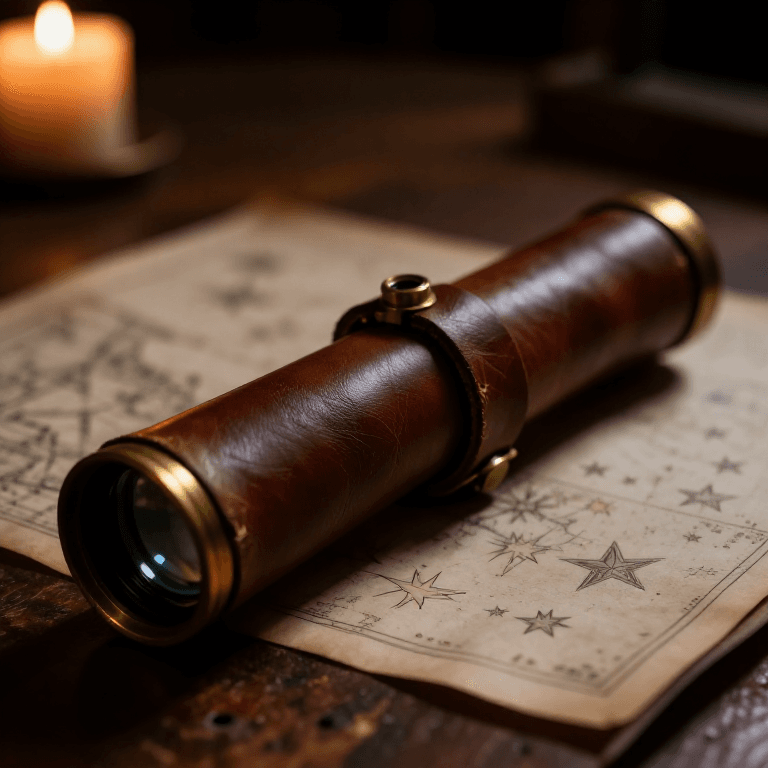
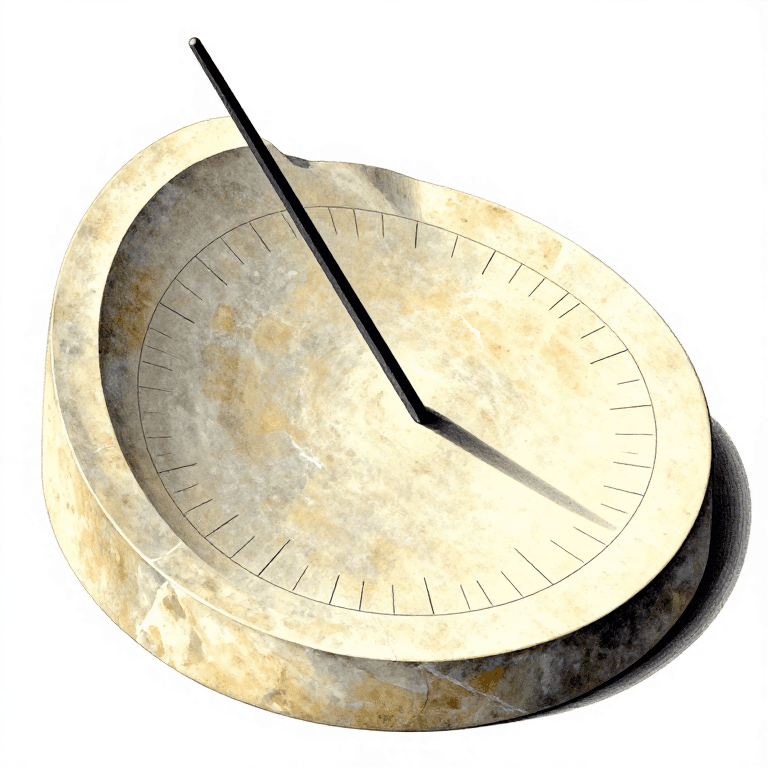
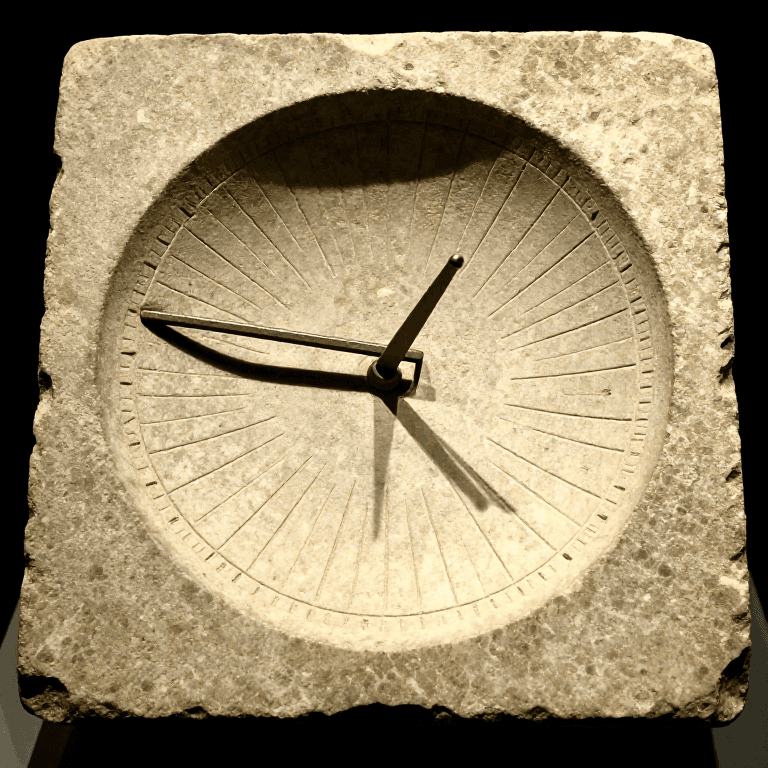
A camera obscura (Latin for 'dark chamber') is the simplest optical device possible: a dark box with a small hole in one wall. Light from an outside scene passes through the pinhole and projects an inverted image on the opposite wall. The principle was described by the Chinese philosopher Mozi in the 5th century BC and by Aristotle, and was used extensively by the Arab polymath Ibn al-Haytham (Alhazen) around 1020 AD in his groundbreaking Book of Optics. For astronomers, the camera obscura serves a critical purpose: it projects an image of the Sun onto a screen inside the box, allowing safe observation of sunspots and solar eclipses without looking at the Sun directly. Galileo used a camera obscura to study sunspots, and astronomers throughout history have used them to time the phases of eclipses. This blueprint builds a portable camera obscura from a wooden box, suitable for projecting sunspot detail and safely observing solar eclipses.

Débutant
2-4 hours

Consignes

1

Understand the pinhole principle

Light travels in straight lines. When sunlight passes through a small hole in an opaque barrier, rays from different parts of the Sun pass through the hole at slightly different angles and project an inverted image of the Sun on any surface behind the hole. The image is dim but sharp — the smaller the hole, the sharper the image (up to a point, where diffraction begins to blur it). The optimal pinhole diameter depends on the distance from the hole to the screen: for a screen 50 cm from the hole, a pinhole of about 0.5-1.0 mm gives the best balance of brightness and sharpness.
2

Build the box

Build or find a sturdy box about 30-60 cm long, 20-30 cm wide, and 20-30 cm tall. A longer box projects a larger (but dimmer) image. The box must be completely light-tight — seal every joint and seam with black tape. One end of the box will hold the pinhole; the opposite end (the screen wall) will be the viewing end. Paint the entire interior flat black to prevent stray light reflections from washing out the projected image.

Matériaux pour cette étape :

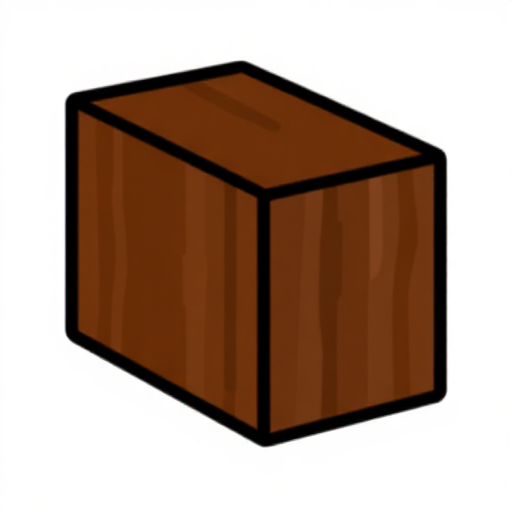
Hardwood BlockHardwood Block1 pièce

Outils nécessaires :

Hand SawHand Saw
3

Make the pinhole plate

Cut a square hole about 3 cm across in the centre of the front wall. Cover this hole with a piece of thin brass sheet or heavy aluminium foil, taped firmly in place. Using a fine sewing needle, pierce a single clean hole through the centre of the metal. The hole should be as round and clean-edged as possible — ragged edges cause a fuzzy image. For the sharpest pinhole, place the foil on a hard surface and push the needle through with a gentle twisting motion. The resulting hole will be about 0.3-0.5 mm in diameter.
4

Install the viewing screen

On the inside of the back wall (opposite the pinhole), mount a sheet of white paper or card — this is the projection screen where the Sun's image will appear. The paper should be smooth and flat. Alternatively, replace the back wall entirely with a sheet of translucent paper (tracing paper or greaseproof paper) stretched over a frame — this allows you to view the projected image from behind, which is more comfortable than looking inside the box.
5

Add a viewing port

If using an internal white screen (not a translucent back wall), cut a small viewing hole in the side or top of the box near the screen end, just large enough to look inside and see the projected image. Shield this hole with a flap of card to block ambient light when not viewing. The viewing port must be positioned so your head does not block the sunlight entering the pinhole.
6

Project the Sun

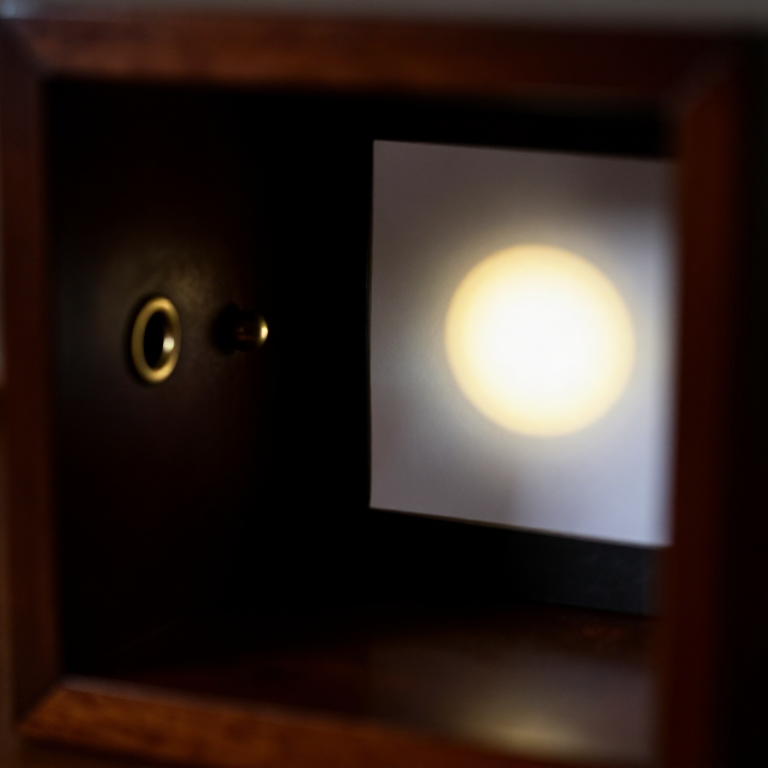
Point the pinhole end directly at the Sun. NEVER look through the pinhole at the Sun — the camera obscura is safe precisely because you look at the projected image, not at the Sun itself. When properly aimed, a bright circular disc of light appears on the screen — this is the image of the Sun. The image will be about 5 mm in diameter for every 50 cm of box length (the Sun subtends about 0.5 degrees). Adjust the aim until the disc is centred and as bright as possible.
7

Observe sunspots

With the Sun's image projected on the screen, look carefully for small dark spots on the bright disc — these are sunspots, regions of intense magnetic activity that are cooler (and therefore darker) than the surrounding solar surface. Large sunspot groups are visible even in a simple camera obscura. Trace the disc and the sunspot positions on paper each day — over a week, you will see the spots migrate across the disc as the Sun rotates (it completes one rotation in about 27 days). Galileo used exactly this technique to prove that the Sun rotates.
8

Upgrade with a lens for a brighter image

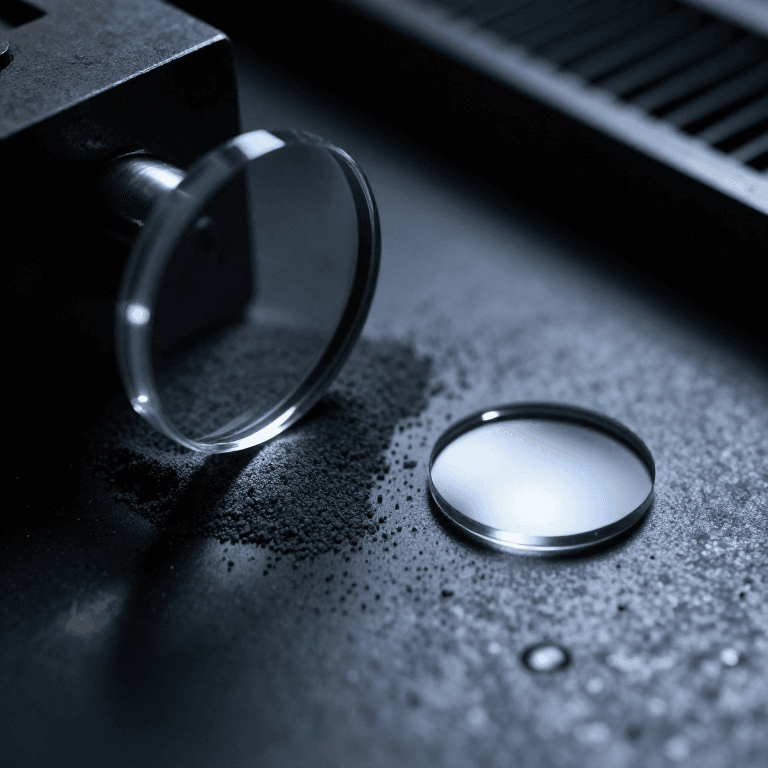
To produce a much brighter and sharper image, replace the pinhole with a convex lens. A lens gathers far more light than a pinhole, projecting a brilliant image of the Sun. Mount a convex lens (focal length 30-50 cm) in a hole cut in the front wall. Adjust the box length or add a sliding extension until the screen sits at the lens's focal distance — the image will snap into sharp focus. Caution: a lens-based camera obscura concentrates enough solar energy to scorch paper. Never place anything flammable at the focal point.

Matériaux pour cette étape :

Convex LensConvex Lens1 pièce
9

Observe a solar eclipse

During a solar eclipse, the camera obscura shows the Moon's disc slowly crossing the Sun's disc in perfect safety. Set up the camera obscura well before the eclipse begins and project the Sun's image onto the screen. As the Moon begins to cover the Sun, you will see a dark bite appear on one edge of the projected disc and grow over the course of an hour. During a total eclipse, the brilliant disc shrinks to a thin crescent and finally disappears entirely — and the projected image goes dark. This is the safest and simplest way to observe a solar eclipse, and it has been used by astronomers for over a thousand years.
10

Record and measure

To make scientific observations: tape a sheet of paper on the screen and trace the Sun's disc at regular intervals during an eclipse, noting the time for each tracing. Between eclipses, trace sunspot positions daily. Measure the diameter of the projected Sun disc and use the known angular size of the Sun (about 0.53 degrees) to calibrate your instrument — the ratio of image size to box length gives you the angular scale in degrees per millimetre. You are now performing observational solar astronomy exactly as it has been done since Ibn al-Haytham first described the camera obscura principle in 1020 AD.

Matériaux

2

Outils requis

1

Matériaux des Blueprints connectés

CC0 Domaine public

Ce blueprint est publié sous CC0. Vous êtes libre de copier, modifier, distribuer et utiliser ce travail pour tout usage, sans demander la permission.

Soutenez le Maker en achetant des produits via son Blueprint où il perçoit une Commission Maker définie par les Vendeurs, ou créez une nouvelle itération de ce Blueprint et incluez-le comme connexion dans votre propre Blueprint pour partager les revenus.

Commentaires

(0)

Se connecter pour participer à la discussion

Chargement des commentaires...