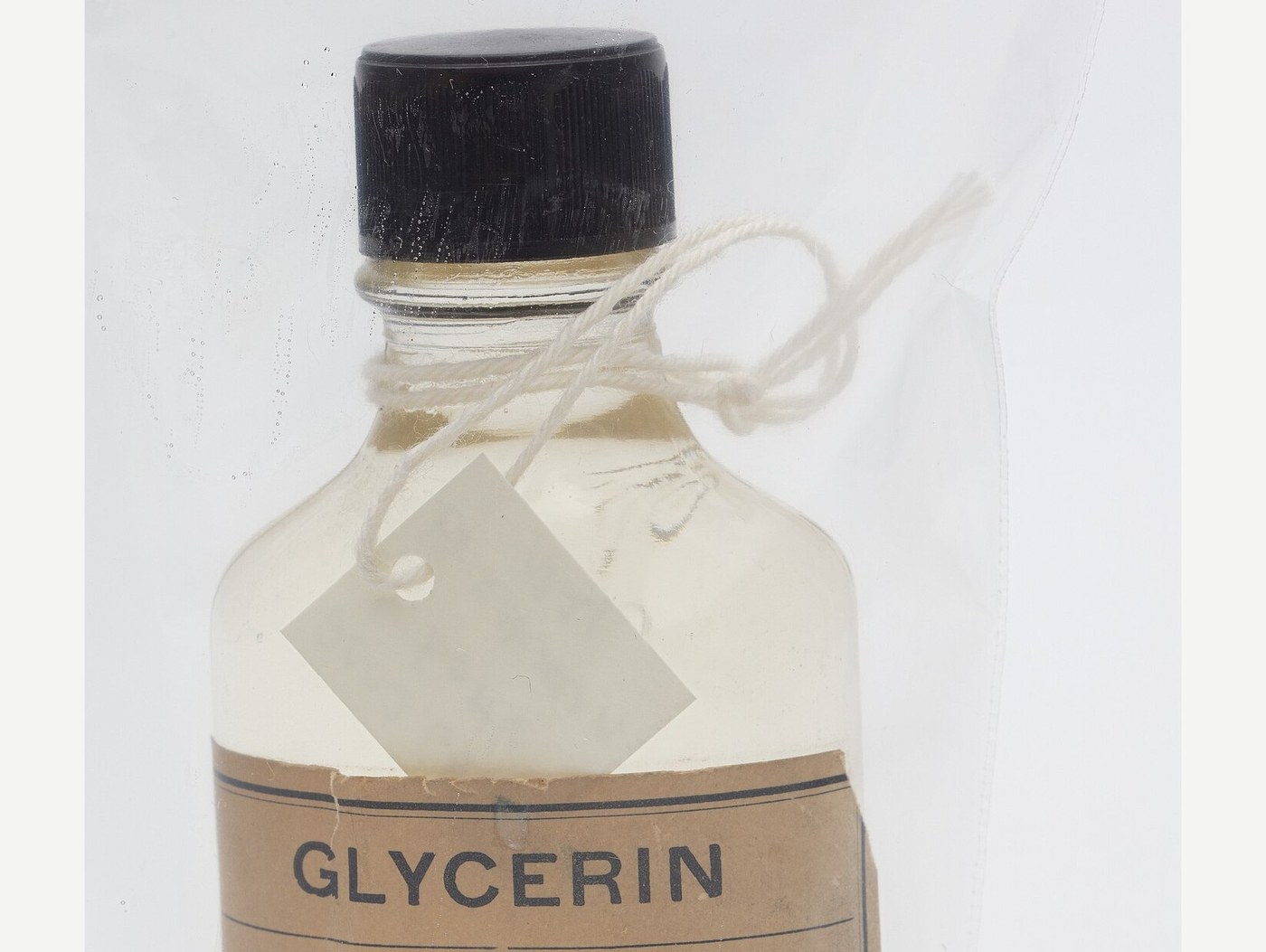


Glycerin from Candle-Works Sweet Water: Cap's Process
Consignes
Boil down the sweet water
Boil down the sweet water
Matériaux pour cette étape :
 Eaux glycérineuses1 as required
 Charbon bitumineux1 as required
Outils nécessaires :
 Chaudière d'évaporation
 Four en briques
Find how much lime it holds
Find how much lime it holds
Outils nécessaires :
 Oxalate d'ammonium
 Papier filtre
 Creuset en argile réfractaire
 Balance à fléau
Throw the lime down with sulfuric acid
Throw the lime down with sulfuric acid
Matériaux pour cette étape :
 Acide sulfurique1 as required
Outils nécessaires :
 Cuve
 Lunettes-masque anti-projections chimiques
 Gants en caoutchouc
Boil it out of contact with air, to 14° Twaddell
Boil it out of contact with air, to 14° Twaddell
Matériaux pour cette étape :
Charbon bitumineux1 as requiredOutils nécessaires :
Cuve Pagaie en boisFour en briques
 Densimètre
Neutralise any excess acid with chalk
Neutralise any excess acid with chalk
Matériaux pour cette étape :
 Carbonate de calcium - calcaire concassé1 as required
Outils nécessaires :
 Papier de tournesolPagaie en bois
Boil on to 37.5° and filter
Boil on to 37.5° and filter
Matériaux pour cette étape :
Charbon bitumineux1 as requiredOutils nécessaires :
CuvePagaie en boisFour en briquesDensimètre Passoire
Reduce to 49°, filtering again if needed
Reduce to 49°, filtering again if needed
Matériaux pour cette étape :
Charbon bitumineux1 as requiredOutils nécessaires :
Chaudière d'évaporationFour en briquesDensimètrePassoireClear it through bone black
Clear it through bone black
Outils nécessaires :
 Noir d'osPassoire
Concentrate to 51° Twaddell
Concentrate to 51° Twaddell
Matériaux pour cette étape :
Charbon bitumineux1 as requiredOutils nécessaires :
Chaudière d'évaporationFour en briquesDensimètreCap's readings as specific gravity
Cap's readings as specific gravity
Troubleshooting
Troubleshooting
Flow
History and honest limits
History and honest limits
Matériaux
4- 1 as requiredEspace réservé
- 1 as requiredEspace réservé
- 1 as requiredEspace réservé
- 1 as requiredEspace réservé
Outils requis
14- Espace réservé
- Espace réservé
- Espace réservé
- Espace réservé
- Espace réservé
- Espace réservé
- Espace réservé
- Espace réservé
- Espace réservé
- Espace réservé
- Espace réservé
- Espace réservé
- Espace réservé
- Espace réservé
Ce plan fabrique

Blueprints liés
Ces blueprints partagent des connaissances — techniques, matériaux ou principes
CC0 Domaine public
Ce blueprint est publié sous CC0. Vous êtes libre de copier, modifier, distribuer et utiliser ce travail pour tout usage, sans demander la permission.
Soutenez le Maker en achetant des produits via son Blueprint où il perçoit une Commission Maker définie par les Vendeurs, ou créez une nouvelle itération de ce Blueprint et incluez-le comme connexion dans votre propre Blueprint pour partager les revenus.