Collaboration
ART
BEAUTÉ ET BIEN-ÊTRE
ARTISANAT
CULTURE ET HISTOIRE
DIVERTISSEMENT
ENVIRONNEMENT
NOURRITURE ET BOISSONS
INGÉNIERIE INVERSE
SCIENCES
SPORTS
TECHNOLOGIE
TECHNOLOGIE PORTABLE
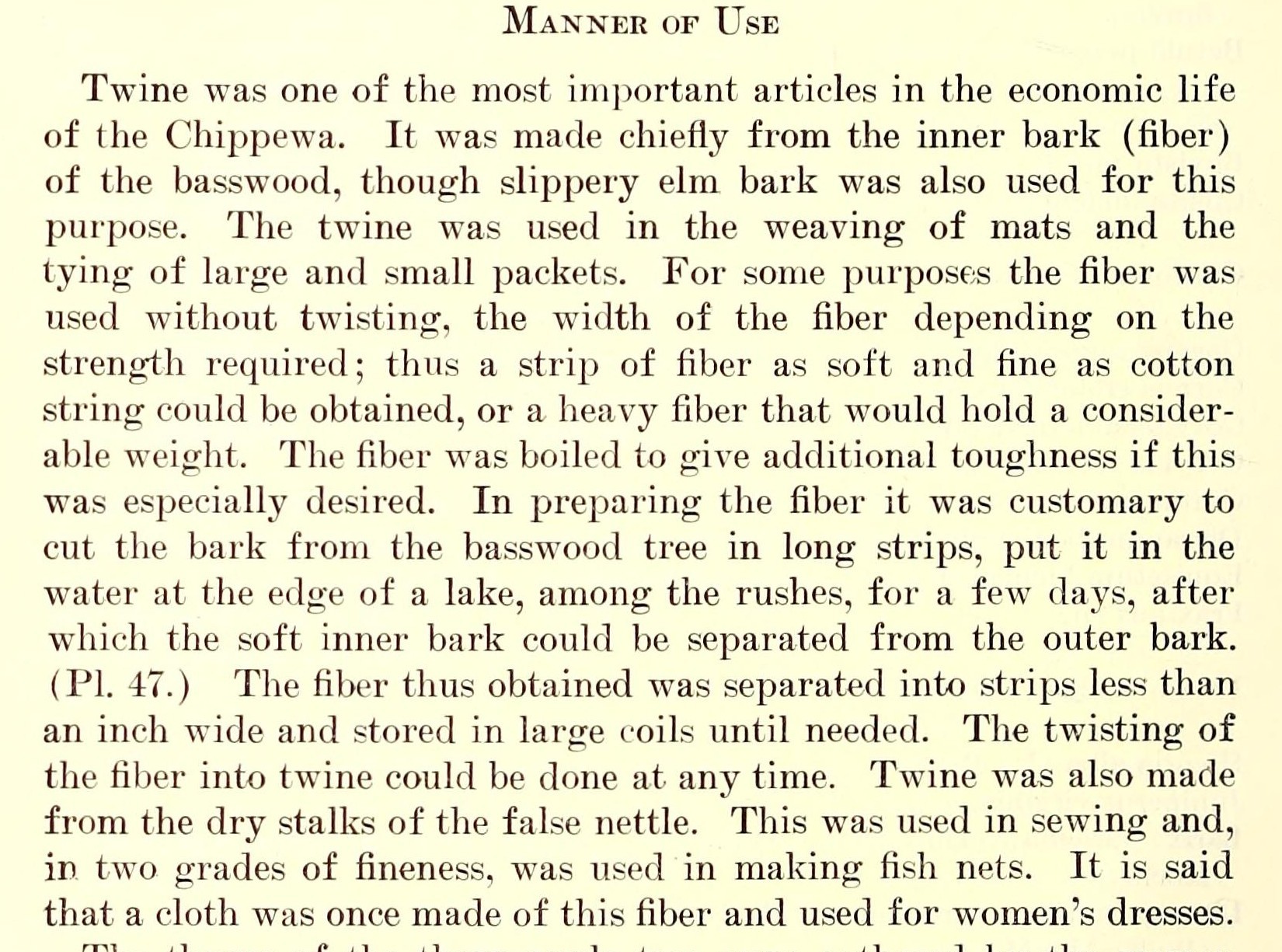


Chippewa Basswood Fiber and Twine: Bark Strips Soaked at the Lake Edge, Inner Bark Peeled and Coiled (Densmore, 1928)
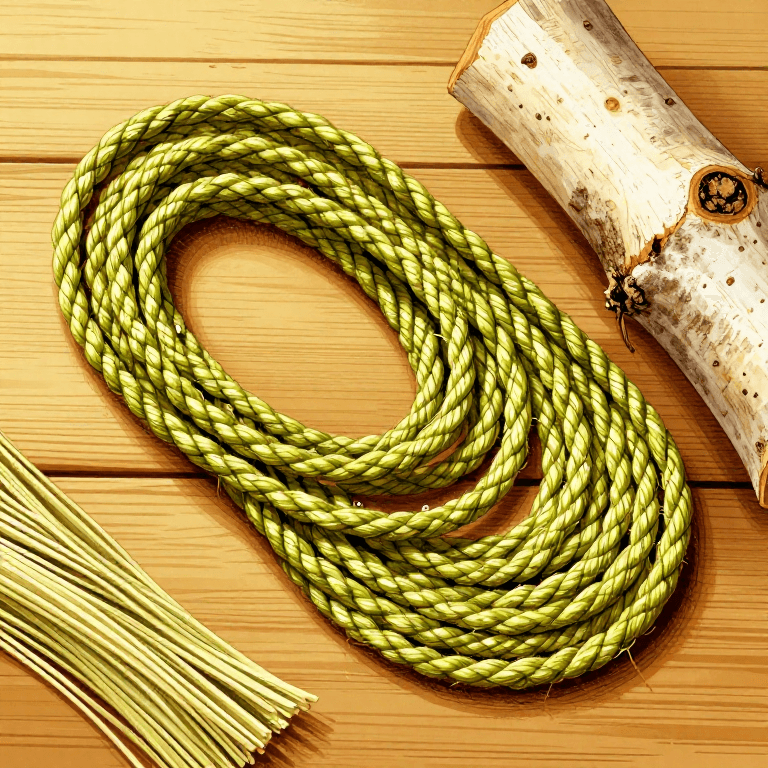
How the Chippewa (Ojibwe) got their most important twine, from Frances Densmore's record: long strips of basswood bark left a few days in the water among the rushes at a lake edge, the soft inner bark peeled off, split into strips under an inch wide and kept in coils, used flat or twisted into twine, and boiled when extra toughness was wanted.
Débutant
A few days of soaking, then an afternoon
Consignes
1
1
Read Densmore
Read Densmore
"Twine was one of the most important articles in the economic life of the Chippewa."
2
2
Cut the bark
Cut the bark
Cut the bark from a basswood tree in long strips. (Slippery elm bark was also used.)
Matériaux pour cette étape :
 Bille de tilleul d'Amérique (Tilia americana)1 pièce
Outils nécessaires :
 Couteau
3
3
Soak at the lake edge
Soak at the lake edge
Put the strips in the water at the edge of a lake, among the rushes, for a few days.
Matériaux pour cette étape :
 Eau1 pièce
Outils nécessaires :
Couteau4
4
Peel and coil the fiber
Peel and coil the fiber
Separate the soft inner bark from the outer bark. Split the fiber into strips less than an inch (25 mm) wide, narrow for string as soft and fine as cotton, wider for a heavy load. Store it in large coils, somewhat moist, in a dark, cool place.
Outils nécessaires :
Couteau5
5
Toughen and twist
Toughen and twist
Boil the fiber if you want it extra tough. Use it flat for tying, or twist it into twine whenever you like. She does not say how; ours: roll two strands on the thigh so each twists one way, then let them wind round each other.
Matériaux pour cette étape :
Eau1 pièceOutils nécessaires :
 Bouilloire en fonte
 Foyer de feu
6
6
Troubleshooting
Troubleshooting
Basswood fiber troubleshooting.
Flow
Loading...
7
7
History and honest limits
History and honest limits
From Frances Densmore, *Uses of Plants by the Chippewa Indians*, **44th Annual Report of the Bureau of American Ethnology** (1928), pp. 378-379 (checked on the archive.org scan usesofplantsbych00dens). The twine wove bulrush floor mats, passed over and under the rushes on a frame. Soaking time beyond "a few days", the knife, boiling time and the twisting method are not given; ours.
Matériaux
2- Espace réservé
- 2 piècesEspace réservé

Blueprints liés
Ces blueprints partagent des connaissances — techniques, matériaux ou principes

CC0 Domaine public
Ce blueprint est publié sous CC0. Vous êtes libre de copier, modifier, distribuer et utiliser ce travail pour tout usage, sans demander la permission.
Soutenez le Maker en achetant des produits via son Blueprint où il perçoit une Commission Maker définie par les Vendeurs, ou créez une nouvelle itération de ce Blueprint et incluez-le comme connexion dans votre propre Blueprint pour partager les revenus.