Collaboration
ART
BEAUTÉ ET BIEN-ÊTRE
ARTISANAT
CULTURE ET HISTOIRE
DIVERTISSEMENT
ENVIRONNEMENT
NOURRITURE ET BOISSONS
INGÉNIERIE INVERSE
SCIENCES
SPORTS
TECHNOLOGIE
TECHNOLOGIE PORTABLE
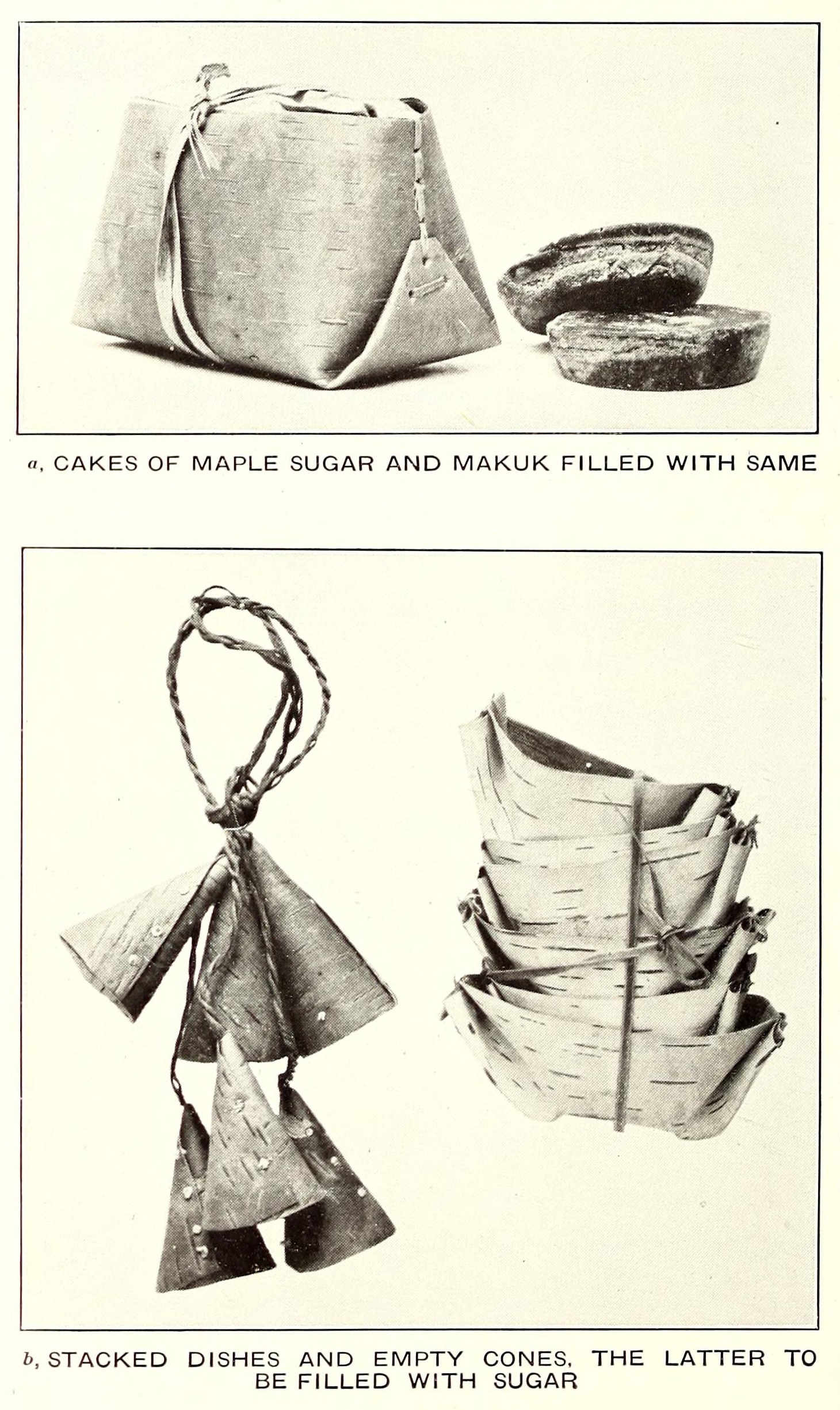


Chippewa Birch Bark Makuks, Dishes and Trays: Warmed Bark Folded and Sewn with Split Roots (Densmore, 1928)
The Chippewa (Ojibwe) birch-bark makuks, dishes and trays Frances Densmore recorded: bark warmed at the fire so it bends and holds its shape, everyday dishes about 10 in. long and 5 in. deep folded and held by a stitch or two at each end, and makuks and trays sewn with split roots and bound at the rim with basswood bark. Birch bark keeps food from spoiling.
Débutant
An hour per dish, an afternoon per makuk
Consignes
1
1
Read Densmore
Read Densmore
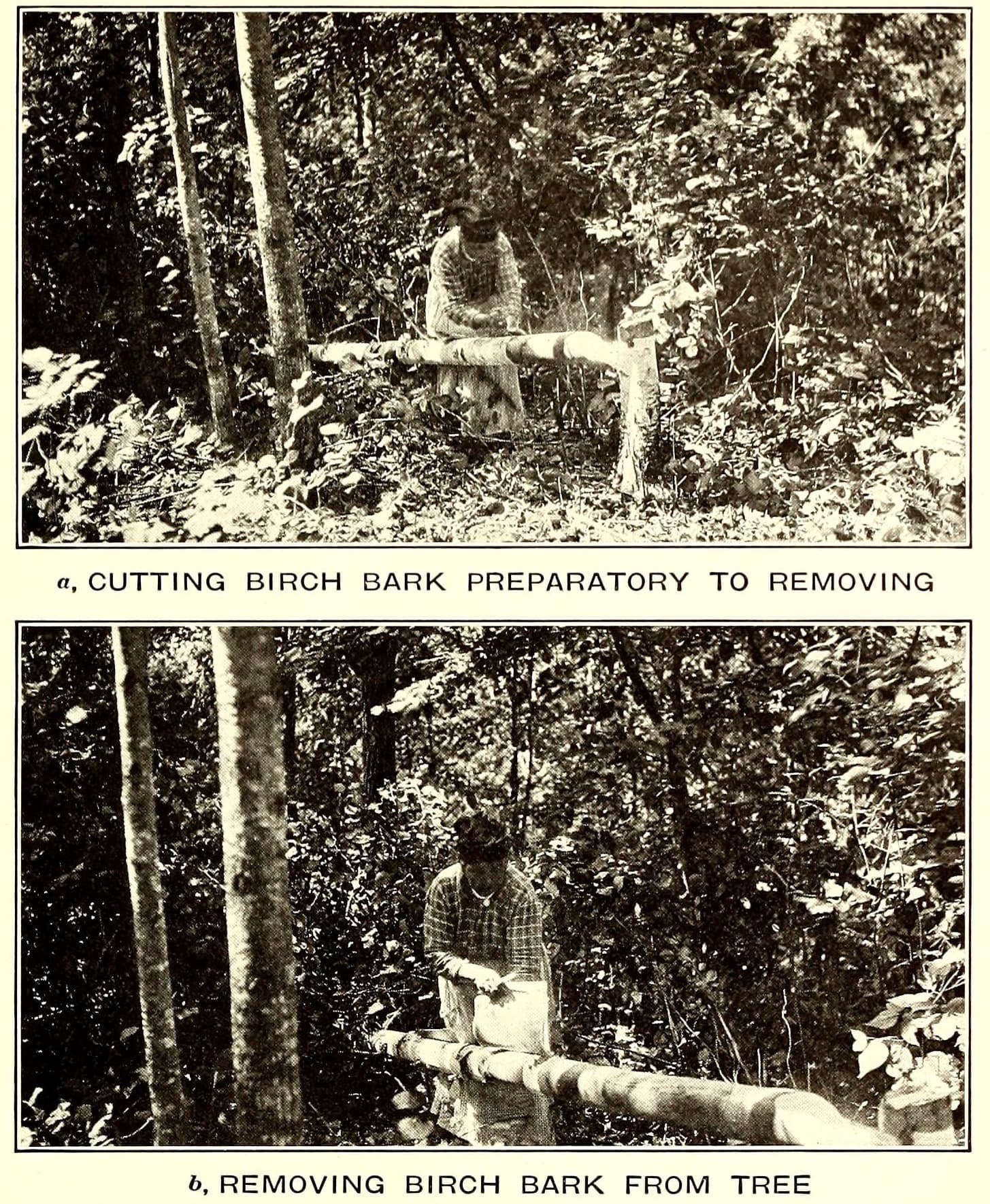
"Birch bark can be unrolled only by exposing it to the heat of a fire. When heated it becomes pliable, and retains any form in which it is placed when thus softened."
2
2
Warm the bark
Warm the bark
Pick bark of the right thickness: heavy for buckets and large makuks, thinner for dishes. Warm the sheet at the fire until it bends without cracking.
Matériaux pour cette étape :
 Feuilles d'écorce de bouleau1 pièce
Outils nécessaires :
 Foyer de feu
 Couteau
3
3
Folded dish
Folded dish
Fold the warm sheet up into a dish and fasten it with one or two stitches of split root at each end. Her common size: about 10 in. (25 cm) long and 5 in. (13 cm) deep. Ours: fold the corners in like a paper box and pierce the stitch holes with an awl. Tie dishes in bunches of ten to store.
Matériaux pour cette étape :
 Racines d'arbre fendues1 pièce
Outils nécessaires :
 AlêneCouteau
4
4
Tray
Tray
For a finer tray cut away the spare bark at the ends, sew the overlapping edges with split roots, and finish the top with a stiff strip of bark sewn firmly in place.
Matériaux pour cette étape :
Feuilles d'écorce de bouleau1 pièceRacines d'arbre fendues1 pièceOutils nécessaires :
AlêneCouteau5
5
Makuk
Makuk
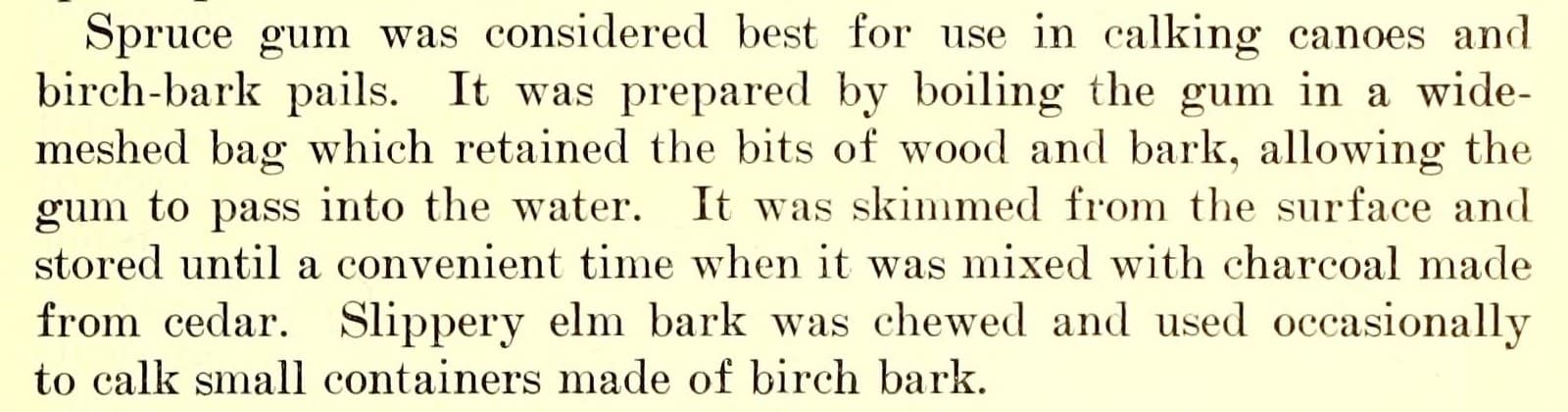
Sew a box-shaped makuk with split roots. Lay a thin strip of basswood bark round the top and sew it over and over with split roots, like a canoe rim. Sew a cover with slanting sides over the top. Sizes ran from about 1 lb to 20-30 lb of maple sugar. For a bucket, cover the seams with pitch and add a handle.
Matériaux pour cette étape :
Feuilles d'écorce de bouleau1 pièceRacines d'arbre fendues1 pièce Fibre libérienne de tilleul1 pièce
 Colle de poix de pin1 pièce
Outils nécessaires :
AlêneCouteauFoyer de feu6
6
Troubleshooting
Troubleshooting
Birch bark container troubleshooting.
Flow
Loading...
7
7
History and honest limits
History and honest limits
From Frances Densmore, *Uses of Plants by the Chippewa Indians*, **44th Annual Report of the Bureau of American Ethnology** (1928), pp. 388-389 and plates (checked on the archive.org scan usesofplantsbych00dens). Other forms: berry makuks of about a quart with a fibre loop for the belt; storage makuks of 12 quarts or more with one side higher to lap over; an old round dish 9 in. across and 3 in. deep with folded sides and two rows of sweet grass at the rim. She gives no folding pattern: the fold, the awl and metric sizes are ours.
Matériaux
4- 1 pièceEspace réservé
- 1 pièceEspace réservé
- 1 pièceEspace réservé
- 1 pièceEspace réservé
Ce plan fabrique

Blueprints liés
Ces blueprints partagent des connaissances — techniques, matériaux ou principes

CC0 Domaine public
Ce blueprint est publié sous CC0. Vous êtes libre de copier, modifier, distribuer et utiliser ce travail pour tout usage, sans demander la permission.
Soutenez le Maker en achetant des produits via son Blueprint où il perçoit une Commission Maker définie par les Vendeurs, ou créez une nouvelle itération de ce Blueprint et incluez-le comme connexion dans votre propre Blueprint pour partager les revenus.