ART
BEAUTÉ ET BIEN-ÊTRE
ARTISANAT
CULTURE ET HISTOIRE
DIVERTISSEMENT
ENVIRONNEMENT
NOURRITURE ET BOISSONS
INGÉNIERIE INVERSE
SCIENCES
SPORTS
TECHNOLOGIE
TECHNOLOGIE PORTABLE
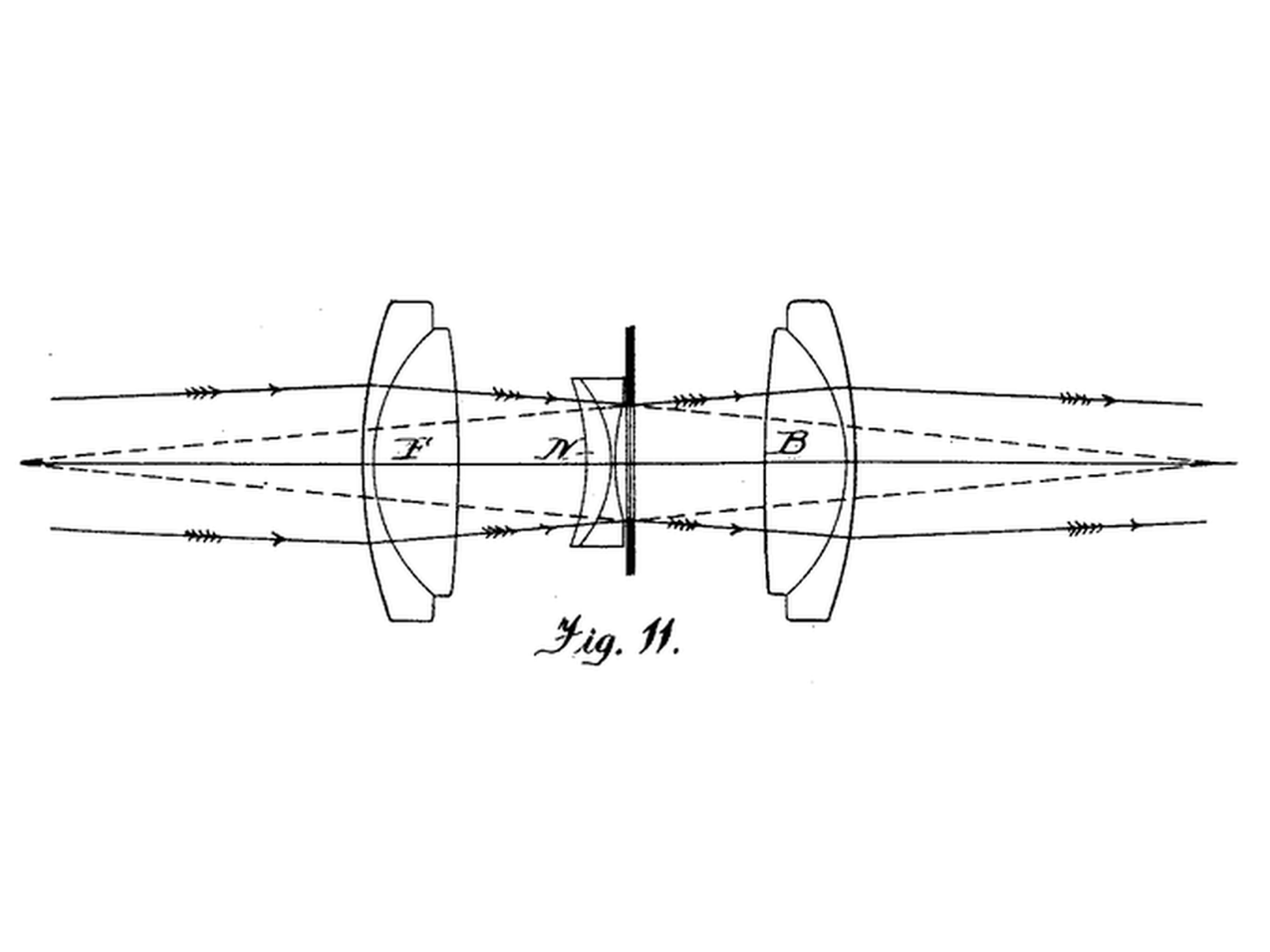

Cooke Triplet Lens
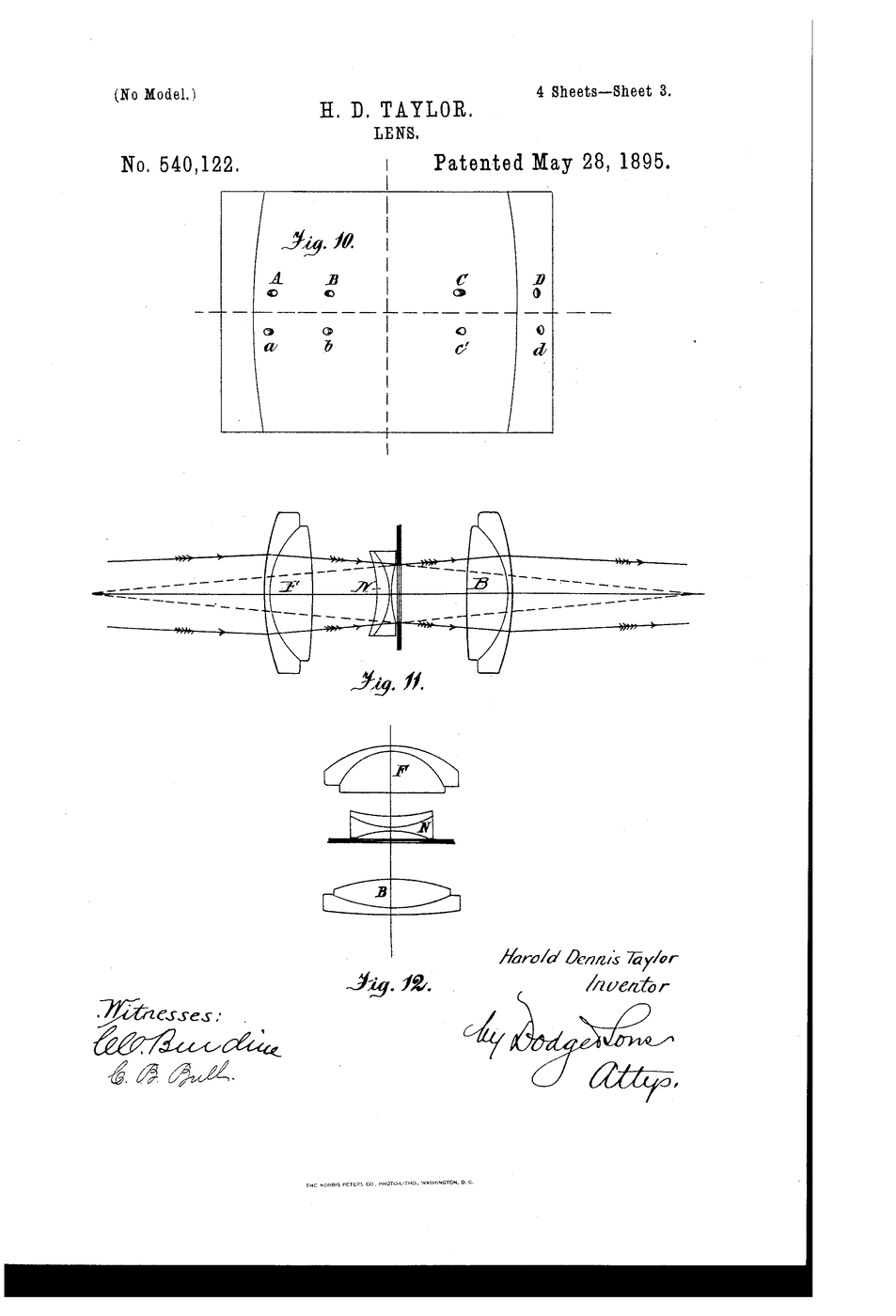
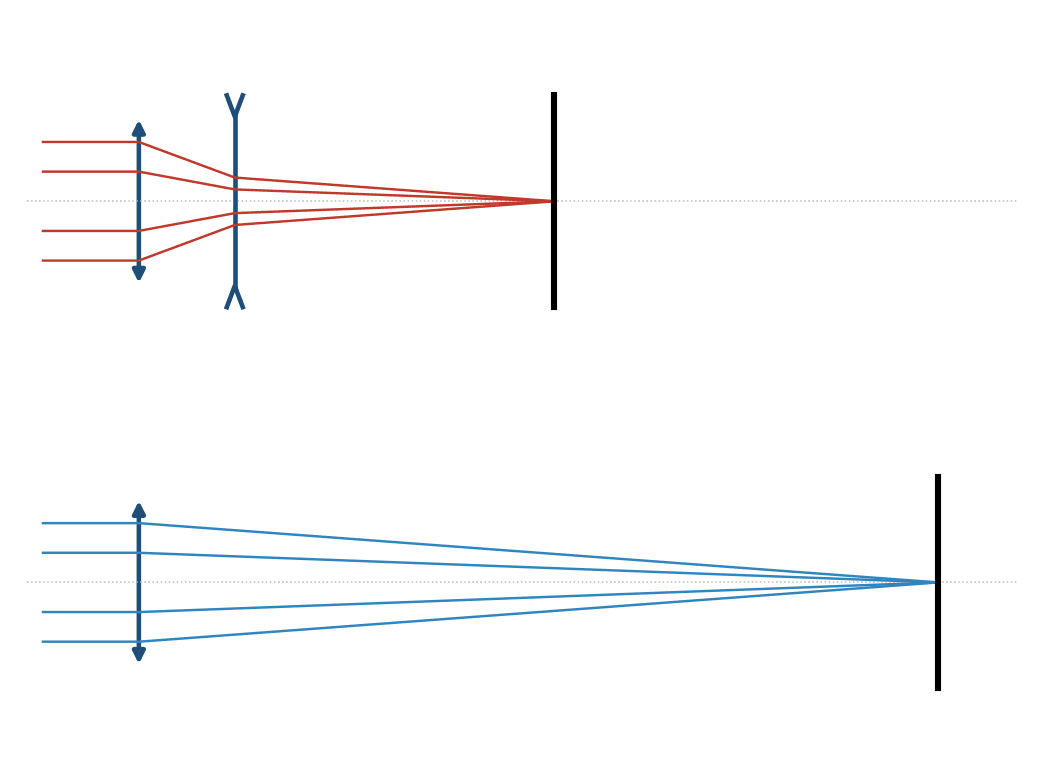
Nineteenth-century lens makers flattened the image with a stop placed in front of or behind the lens, at the cost of astigmatism at the edges. Harold Dennis Taylor, optical manager at T. Cooke & Sons of York, dropped that trick entirely. He showed that a negative lens images a flat object onto a surface curved exactly as much as a positive lens of equal power, but the other way - so one can cancel the other.
**US 540,122**, "Lens", Taylor, filed 5. February 1894, granted 28. May 1895, puts "a negative lens … between two positive lenses, the focal power of the negative lens being approximately equal to the combined focal powers of the two positive lenses". Three separated elements: the Cooke triplet, still the simplest well-corrected camera lens.
**You build one from stock lenses**, and compare how flat its image is with a single lens.
Intermédiaire
2 hours
Consignes
1
1
Choose three lenses
Choose three lenses
Two convex lenses of about 100 mm focal length (check each on a distant window) and one concave of about -50 mm. Powers: +10 and +10 dioptres against -20.
Matériaux pour cette étape :
 Jeu de lentilles convergentes1 jeu
 Lentille concave1 pièce
Outils nécessaires :
 Règle en acier
2
2
Mount the triplet
Mount the triplet
On the bench: convex, 20 mm gap, concave, 20 mm gap, convex. Centre all three on the same height.
Outils nécessaires :
 Banc et rail d'optique
 Jeu de porte-lentilles
3
3
Light a grid
Light a grid
Tape graph paper to a window or light it from behind with a torch, 1.5 m from the lens. Put a tracing-paper screen behind the triplet and focus the centre of the grid sharply.
Matériaux pour cette étape :
 Papier millimétré1 feuille
 Rouleau de papier calque à patrons1 feuille
 Ruban de masquage1 rouleau
Outils nécessaires :
 Lampe d'inspection à LED
 Mètre ruban
4
4
Measure the edge refocus
Measure the edge refocus
Without touching the lenses, move the screen until the grid 15 mm from the image centre is sharpest. Note how far it moved. Replace the triplet with one convex lens, refocus the centre, and measure the refocus again at the same 15 mm image height.
Outils nécessaires :
Règle en acier5
5
Petzval sum and design
Petzval sum and design
Chargement du notebook Jupyter…
6
6
History & Context
History & Context
**What the patent specifies:** a negative lens between two positive lenses, its power about equal to theirs combined, each element free of diaphragm corrections, flattening the field and removing marginal astigmatism. **Modern build (derived):** three stock singlets on a bench.
Taylor's employer declined to make it; Taylor, Taylor & Hobson did, as the Cooke lens. Tessar and many later designs grew from it. Its limits: with only three elements the aperture and angle of view are modest before aberrations return.
Matériaux
5- Espace réservé
- 1 pièceEspace réservé
- 1 feuilleEspace réservé
- 1 feuilleEspace réservé
- 1 rouleauEspace réservé
Outils requis
5- Espace réservé
- Banc et rail d'optique10 % de commissionEspace réservé
- Jeu de porte-lentilles10 % de commissionEspace réservé
- Espace réservé
- 1 vendor sell this, none ship to you yetEspace réservé
Blueprints liés
Ces blueprints partagent des connaissances — techniques, matériaux ou principes

CC0 Domaine public
Ce blueprint est publié sous CC0. Vous êtes libre de copier, modifier, distribuer et utiliser ce travail pour tout usage, sans demander la permission.
Soutenez le Maker en achetant des produits via son Blueprint où il perçoit une Commission Maker définie par les Vendeurs, ou créez une nouvelle itération de ce Blueprint et incluez-le comme connexion dans votre propre Blueprint pour partager les revenus.