Collaboration
ART
BEAUTÉ ET BIEN-ÊTRE
ARTISANAT
CULTURE ET HISTOIRE
DIVERTISSEMENT
ENVIRONNEMENT
NOURRITURE ET BOISSONS
INGÉNIERIE INVERSE
SCIENCES
SPORTS
TECHNOLOGIE
TECHNOLOGIE PORTABLE
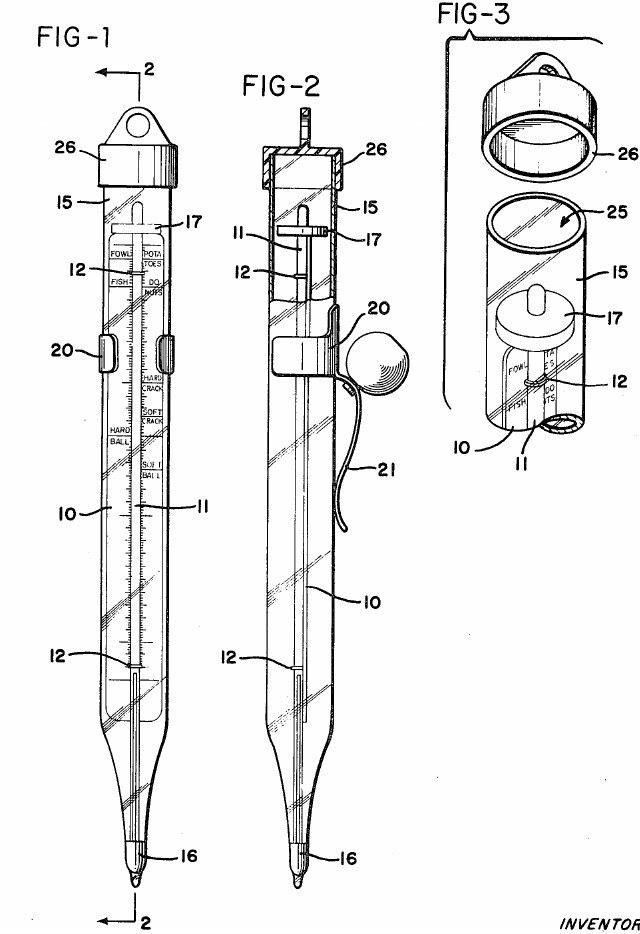

Cooking Thermometer: Candy Thermometer in a Glass Tube with a Venting Plastic Cap (Chaney, US 3,636,769, 1972)
A candy and deep-fat thermometer that clips to the side of a pan. A glass thermometer on a printed scale card sits inside a protective glass tube, so it never touches the candy. The top of the tube is closed by a polyethylene cap that seals in normal use but softens when the whole thermometer is heated far too hot, as in an oven, so the air inside escapes instead of bursting the tube.
Result: a pan-side cooking thermometer that cannot explode if overheated.
Source: J. L. Chaney, US 3,636,769 (1972). Unknown: the scale range, sizes and several materials. Picture: the patent drawing.
Intermédiaire
Unknown
Consignes
1
1
Mount the thermometer on its scale
Mount the thermometer on its scale
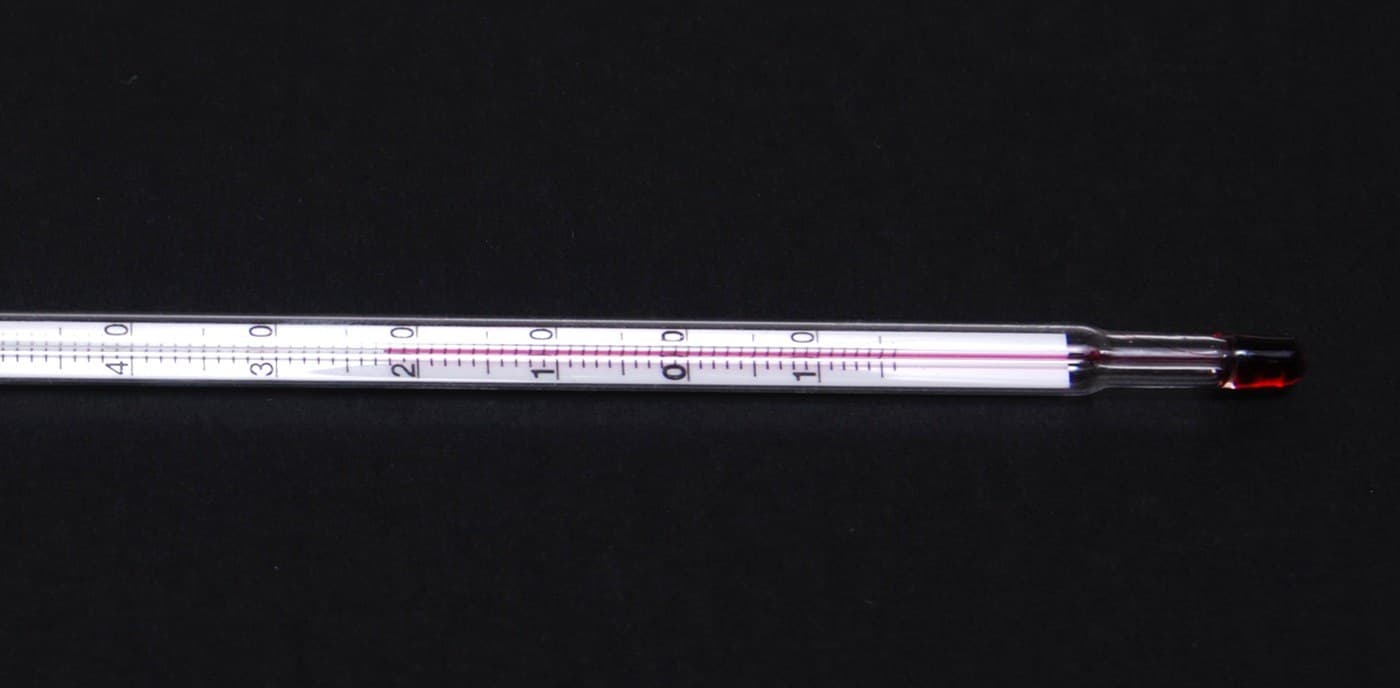
Fasten a glass thermometer tube to a graduated scale card with small fasteners, the bulb at the bottom. The patent's card is marked with cooking points such as soft ball, hard ball, soft crack, hard crack, fish, fowl, potatoes and doughnuts. Fix a disk on top of the card to keep it centred in the outer tube. Not given: the range, the card and fastener materials.
Matériaux pour cette étape :
 Thermomètre de laboratoire1 thermometer tube
 Matériau inconnu1 scale card, disk
 Métal inconnu1 fasteners
Outils nécessaires :
 Dimensions inconnues
2
2
Enclose it in the protective tube
Enclose it in the protective tube
Slide the card and thermometer into a glass protective tube, open at the top, so the bulb reaches the lower end and touches a metal cap there to pass on the heat. Not given: the tube size, the metal of the end cap, how the cap is joined to the tube.
Matériaux pour cette étape :
 Tube de verre1 protective tubeMétal inconnu1 end cap
Outils nécessaires :
Dimensions inconnues3
3
Fit the venting cap
Fit the venting cap
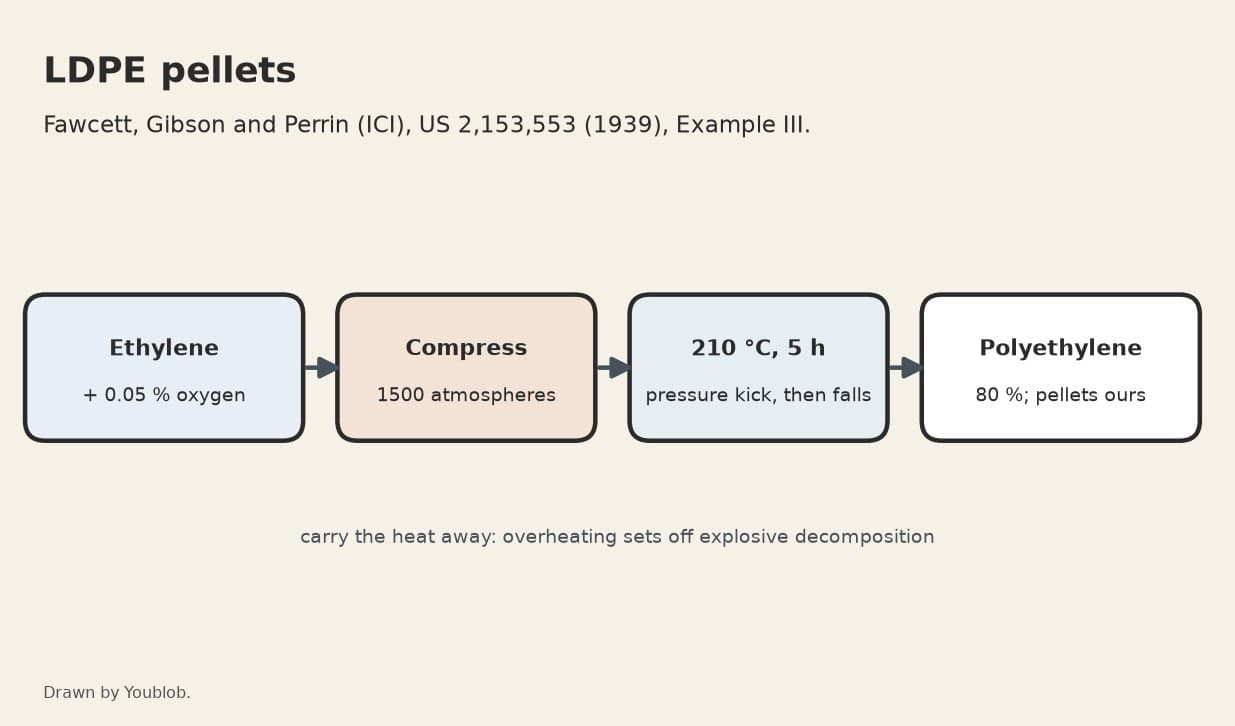
Close the open top with a cup-shaped cap of a thermoplastic such as polyethylene, a friction fit that seals out dirt. Polyethylene softens at about 180 °F and melts near 250 °F: if the thermometer is heated in an oven to 400-550 °F, the air inside would reach 12-14 psi, but the cap distorts first and lets it out. Do not use rubber or a thermosetting plastic, which does not vent. Ours: LDPE.
Matériaux pour cette étape :
 Granulés de LDPE1 cap
Outils nécessaires :
Dimensions inconnues4
4
Fit the pan clip and use it
Fit the pan clip and use it
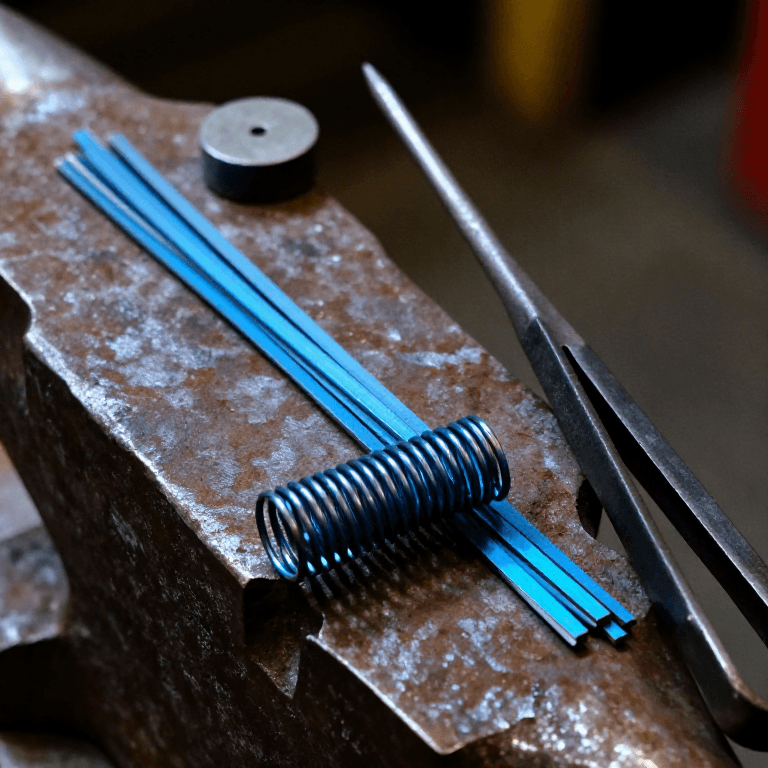
Slide a spring clip onto the outside of the tube; its spring arm holds the thermometer upright over the edge of the pan. Clip it on with the bulb end in the candy or fat and read the scale; it also serves for deep frying. Ours: spring steel wire.
Matériaux pour cette étape :
 Fil d'acier à ressort1 clip
Outils nécessaires :
 Pince à becs ronds
Matériaux
6- 1 thermometer tubeEspace réservé
- 1 scale card, diskEspace réservé
- 1 end capEspace réservé
- 1 protective tubeEspace réservé
- 1 capEspace réservé
- 1 clipEspace réservé
Outils requis
2- Espace réservé
- Espace réservé
Matériaux des Blueprints connectés
Dangereux
10 % d'attribution
Liquid-in-Glass Thermometer: Bulb, Fill, Seal and Scale
par Penny
Travail du Verre
42
0
0
0
1
0
Dangereux
10 % d'attribution
LDPE Pellets: Ethylene Polymerised at 1500 Atmospheres with a Trace of Oxygen
par Charlie
Industriel
15
0
0
0
2
0
10 % d'attribution
Spring Steel Strip and Wire, Hardened and Tempered
par Forge
Travail des Métaux
48
0
0
0
5
0
Ce plan fabrique

CC0 Domaine public
Ce blueprint est publié sous CC0. Vous êtes libre de copier, modifier, distribuer et utiliser ce travail pour tout usage, sans demander la permission.
Soutenez le Maker en achetant des produits via son Blueprint où il perçoit une Commission Maker définie par les Vendeurs, ou créez une nouvelle itération de ce Blueprint et incluez-le comme connexion dans votre propre Blueprint pour partager les revenus.