ART
BEAUTÉ ET BIEN-ÊTRE
ARTISANAT
CULTURE ET HISTOIRE
DIVERTISSEMENT
ENVIRONNEMENT
NOURRITURE ET BOISSONS
INGÉNIERIE INVERSE
SCIENCES
SPORTS
TECHNOLOGIE
TECHNOLOGIE PORTABLE
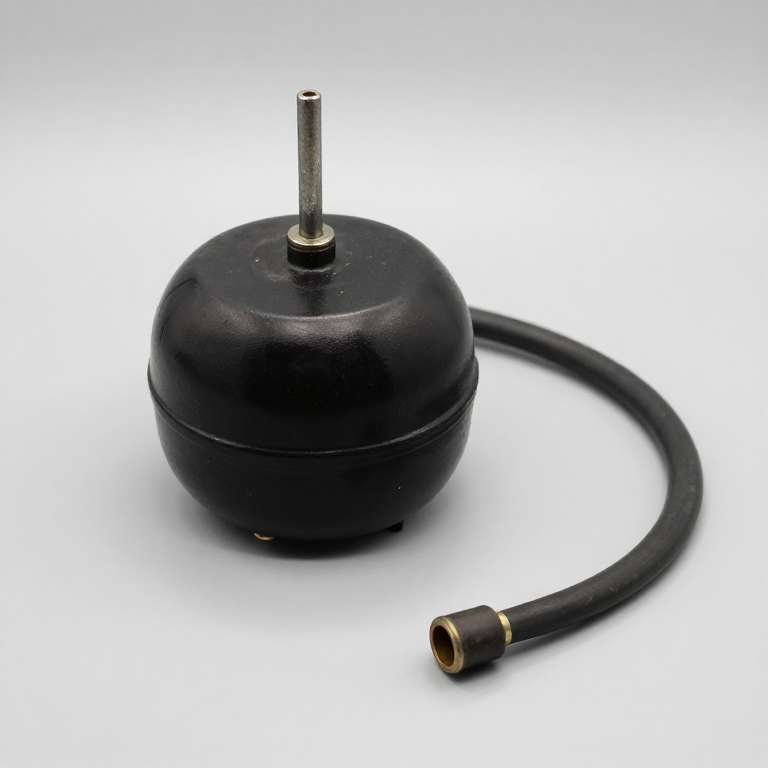


Cruise Control - Teetor's Speedostat
Ralph Teetor was blinded in an accident at the age of five and became an engineer anyway, running Perfect Circle in Indiana. The story he told about the idea is that riding with his lawyer, who slowed down whenever he was talking and sped up whenever he was listening, was making him seasick. He patented a speed-holding device and it reached the public as the Auto-Pilot on the 1958 Chrysler Imperial.
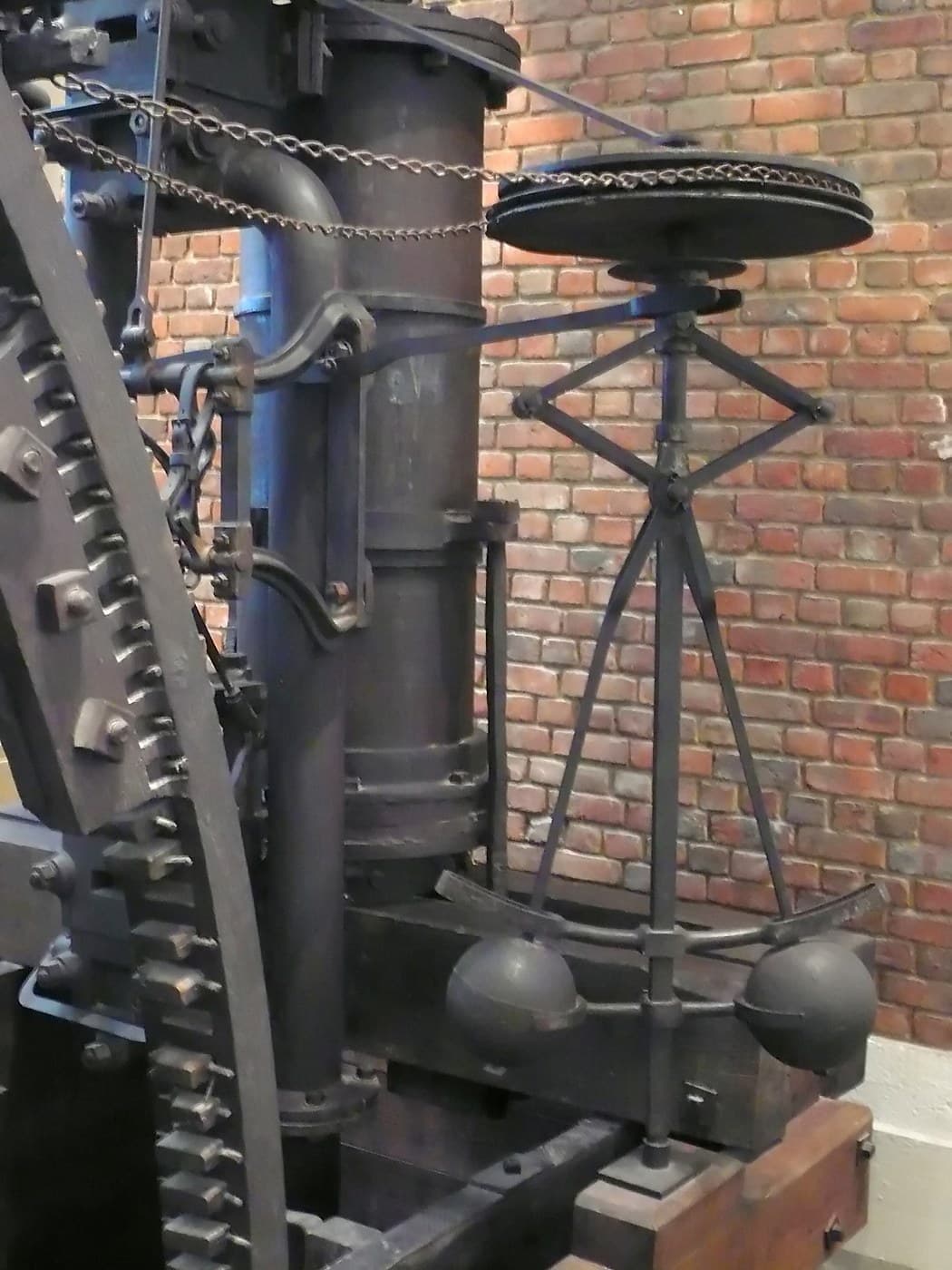
The mechanism is a governor in the direct line of the 1788 flyball: the speedometer cable spins a magnet, its drag against a spring gives a position proportional to road speed, and that position lets manifold vacuum pull on the throttle linkage. No electronics anywhere.
It is also the first loop in this batch whose entire job is rejecting a disturbance. Nothing asks the car to change speed - the setpoint sits still for an hour - and everything the controller does is answering the road. A four per cent grade, which is an ordinary motorway hill, more than doubles the force a 1500 kg car needs at 100 km/h, and it arrives without warning.
That is why a proportional controller alone cannot do this job. It only produces extra throttle by being wrong, so on a hill it settles several kilometres an hour slow, and the gain that would fix that is past the point where the driveline lag turns the loop into a surging oscillator. The throttle has to end up somewhere new while the speed ends up exactly where it started, and only an integrator can hold an output with no input left to sustain it - Maxwell's distinction between a moderator and a governor, arriving in a car ninety years later.
The reason it is fitted is not comfort. A driver whose speed wanders a few kilometres an hour burns a couple of per cent more fuel, which across a fleet of lorries is the whole business case.
Intermédiaire
4 hours
Consignes
1
1
A motor, a slotted disc and a thumb
A motor, a slotted disc and a thumb
Cut a 60 mm disc with twenty slots around its rim, fit it to the geared motor's shaft and straddle the rim with the optical detector.
Mount a lever with a rubber pad where you can press it against the disc's edge. That lever is the hill, and being able to apply a disturbance ON PURPOSE, repeatably, is what makes the next step an experiment rather than a demonstration.
Matériaux pour cette étape :
 Contreplaqué de bouleau de Baltique1 feuille
 Motoréducteur à courant continu1 pièce
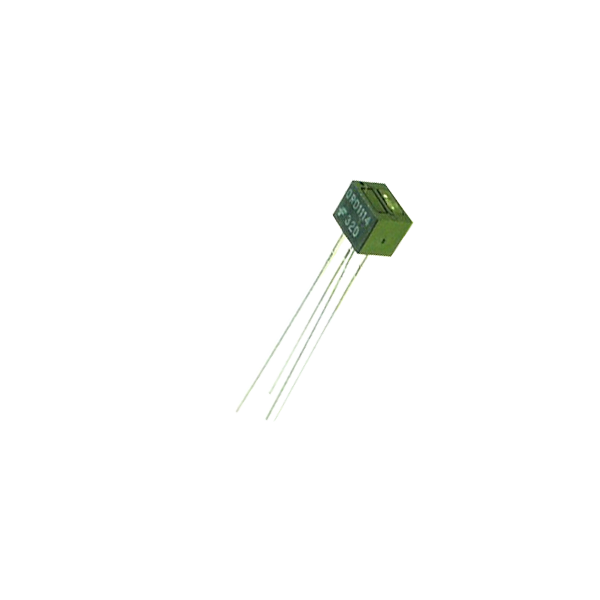 Optical Detector / Phototransistor - QRD11141 pièce
 Assortiment de joints toriques1 kit
Outils nécessaires :
 Cutter de précision
 Pied à coulisse numérique 6 pouces
 Perceuse sans fil
 Règle en acier
2
2
Proportional, then proportional plus integral
Proportional, then proportional plus integral
One constant switches between a 1950s vacuum servo and what replaced it. Log the speed to the serial plotter and press the lever for five seconds at a time.
In proportional mode the speed sags while you press and stays sagging. Switch to PI and it sags, then climbs back to exactly where it was - and you can watch the integral term filling up in the fourth column as it does.
speed_regulator.inocpp
Matériaux pour cette étape :
 MOSFET canal N IRF540N1 paquet
 Kit de résistances 1/4 W1 kit
 Jeu de câbles Dupont (mâle-femelle)1 jeu
Outils nécessaires :
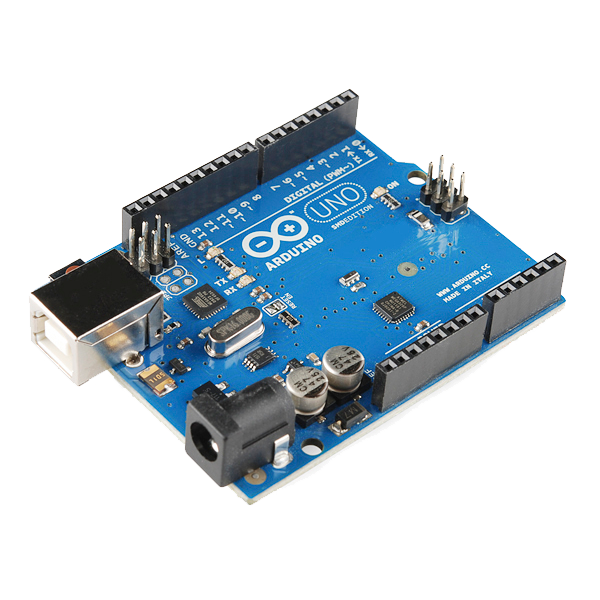 Arduino Uno R3 SMD
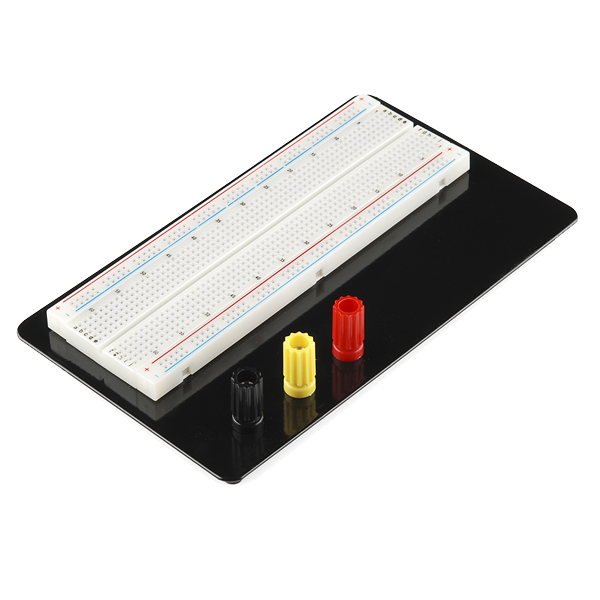 Breadboard - Classic
 Ordinateur de bureau
 Alimentation de laboratoire
3
3
The hill in newtons, the droop in km/h, and four schemes
The hill in newtons, the droop in km/h, and four schemes
Chargement du notebook Jupyter…
Outils nécessaires :
Ordinateur de bureau4
4
Compendium: what must happen when you touch the brake
Compendium: what must happen when you touch the brake
A cruise control is the first feedback loop most people meet that can hurt them, and most of the engineering is in getting OUT of the loop rather than staying in it. The brake pedal must disengage the system through a path that does not depend on the controller being healthy - on the vacuum systems a mechanical valve dumped the servo the instant the pedal moved, and modern installations still use a separate switch wired so that a failure disengages rather than engages. The clutch does the same, because a loop that keeps asking for speed with the driveline disconnected will take the engine to its limit in a couple of seconds. There is also a lower speed limit, typically around 40 km/h, and it exists because the car's own speed time constant grows as it slows and the loop's margin shrinks with it.
The awkward disturbance is the downhill one. On a four per cent descent the road supplies more force than the drag absorbs, so the throttle shuts and the car speeds up anyway - the actuator has run out of range in the direction it needs, exactly like the aileron on its stop in blueprint 2. The controller has nothing left to do and the integral will wind itself backwards unless clamped. The answer is an actuator that can take energy OUT, which is why systems that hold speed downhill are wired to the transmission or the engine brake and not only to the throttle.
Matériaux
7- 1 feuilleEspace réservé
- à partir de€2.23
- Optical Detector / Phototransistor - QRD111410 % de commission1 pièce€1.04
- Espace réservé
- 1 paquetEspace réservé
- Espace réservé
- Espace réservé
Outils requis
8- Espace réservé
- Espace réservé
- 1 vendor sell this, none ship to you yetEspace réservé
- Espace réservé
- Arduino Uno R3 SMD10 % de commission€23.61
- Breadboard - Classic10 % de commission€8.29
- Espace réservé
- Espace réservé
Total estimé
Ce que le maker a acheté. Les matériaux sans prix se trouvent là où vous les achetez.
Blueprints liés
Ces blueprints partagent des connaissances — techniques, matériaux ou principes

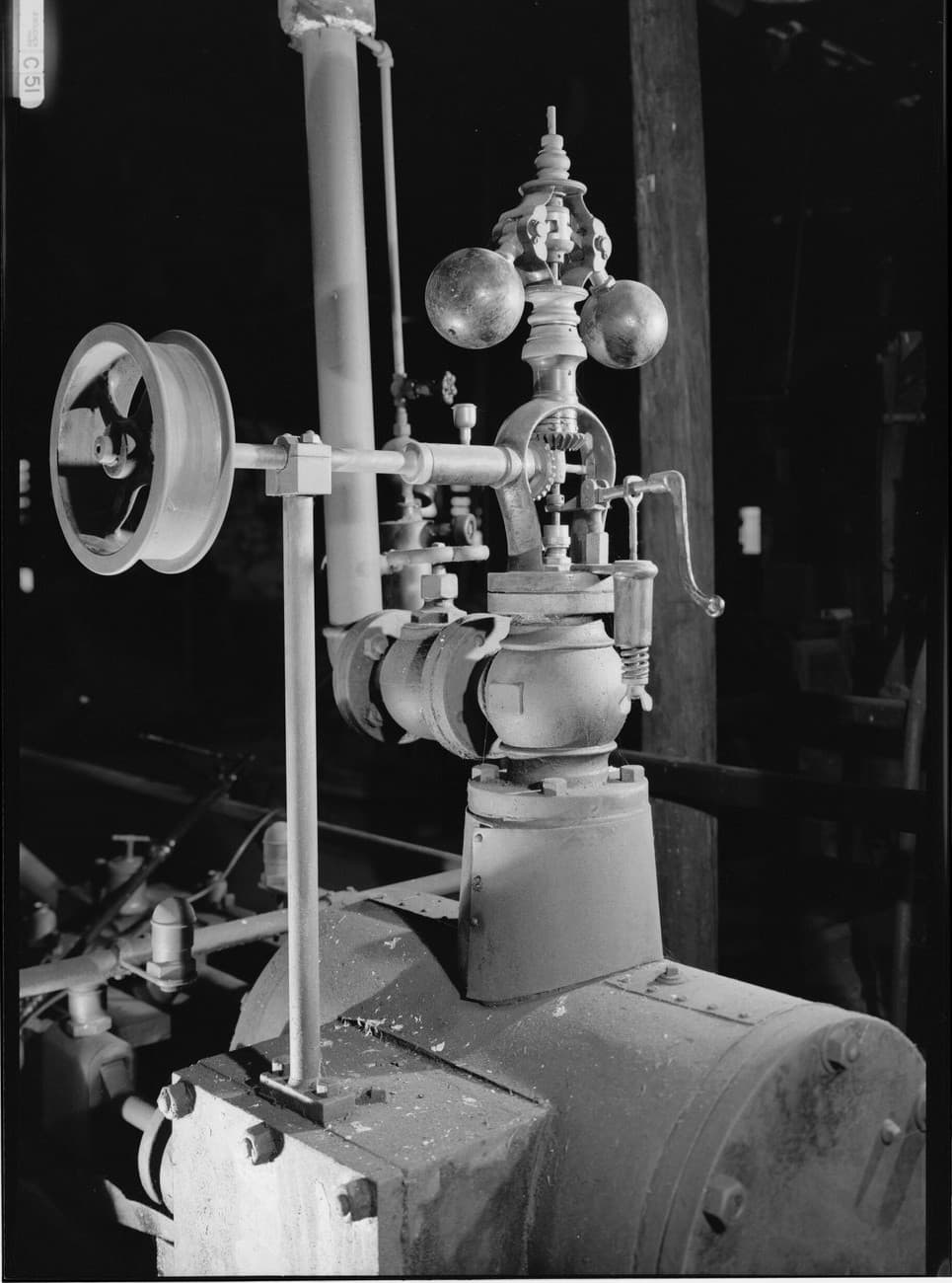

CC0 Domaine public
Ce blueprint est publié sous CC0. Vous êtes libre de copier, modifier, distribuer et utiliser ce travail pour tout usage, sans demander la permission.
Soutenez le Maker en achetant des produits via son Blueprint où il perçoit une Commission Maker définie par les Vendeurs, ou créez une nouvelle itération de ce Blueprint et incluez-le comme connexion dans votre propre Blueprint pour partager les revenus.