ART
BEAUTÉ ET BIEN-ÊTRE
ARTISANAT
CULTURE ET HISTOIRE
DIVERTISSEMENT
ENVIRONNEMENT
NOURRITURE ET BOISSONS
INGÉNIERIE INVERSE
SCIENCES
SPORTS
TECHNOLOGIE
TECHNOLOGIE PORTABLE
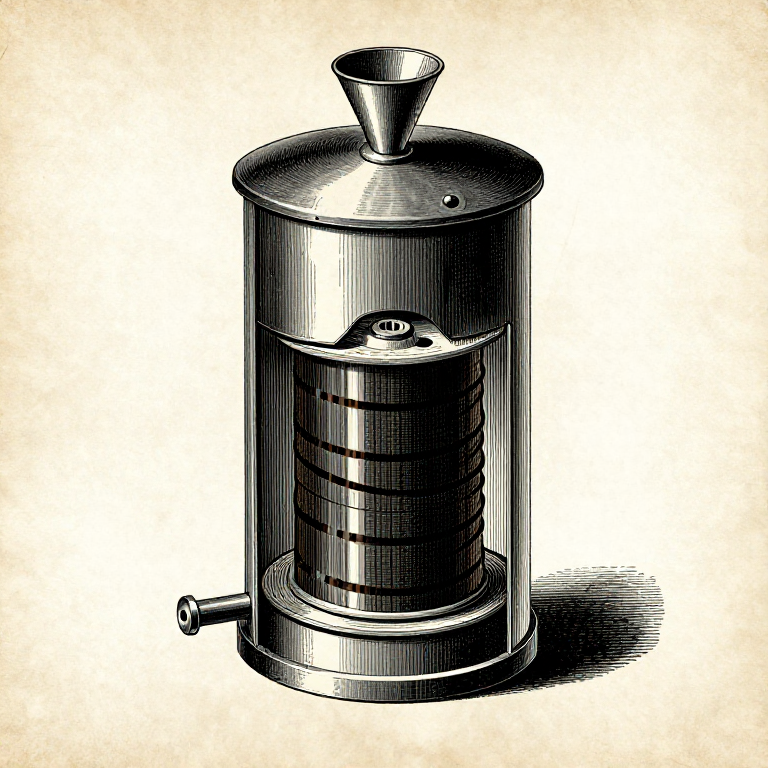

Developing a Negative: Time, Temperature, Agitation
A developed negative is a piece of chemistry with three controls: how long, how warm, and how much it was moved.
Time and temperature trade directly — a warmer bath needs a shorter time, and the standard rule is that the rate roughly doubles every 10 C. Agitation is different: it changes the contrast as well as the amount of development.
The reason all three matter is that development affects the highlights far more than the shadows. The exposure decides where the shadows sit; the development decides how far the highlights climb above them. That is the whole of "expose for the shadows, develop for the highlights".
Intermédiaire
4 hours
Consignes
1
1
Loading the tank in the dark
Loading the tank in the dark
Everything up to the fixer happens in total darkness — a changing bag or a genuinely dark room. No safelight: film is sensitive to all visible light, unlike printing paper.
**Practise with a sacrificial roll in daylight first.** Loading a reel by feel is the one genuinely awkward manual skill in the process, and learning it in the dark with a roll that matters is the wrong order.
**Everything dry.** A damp reel will not take a film — it binds halfway and cannot be pushed or pulled. This is the commonest failure.
**Lay out everything before the lights go off**: opener, scissors, reel, tank, lid. In the dark, a tool that is not where you left it is gone.
**Cut the leader square** and slightly round the corners; a square corner catches in the reel's spiral.
**Feel for the film buckling.** If it is not tracking, it bulges in the middle and will touch itself — and any part touching another part does not develop, leaving a clear blotch.
**Lid on before the lights go on.** Then everything after is done in the light.
Matériaux pour cette étape :
 Pellicule photographique1 pièce
Outils nécessaires :
 Cuve de développement (acier inoxydable, 2 spires)
2
2
The numbers: temperature, contrast and pushing
The numbers: temperature, contrast and pushing
Chargement du notebook Jupyter…
Outils nécessaires :
 Ordinateur de bureau
3
3
Agitation, and why it is specified so precisely
Agitation, and why it is specified so precisely
Agitation replaces the exhausted developer at the film surface with fresh developer. Without it, the chemistry next to a dense area is used up and development there stops.
**The standard scheme:** continuous inversions for the first 30 seconds, then four inversions every minute, with a firm tap on the bench after each round to dislodge bubbles.
**Too little** gives **bromide drag** — streaks running down from dense areas, where exhausted developer has sunk and held back development below them. Most visible against a plain sky, and unmistakable once seen.
**Too much** raises contrast and can give uneven development along the edges, where the sprocket holes let developer surge through more freely than in the middle.
**Stand development** is the deliberate extreme: very dilute developer, an hour or more, almost no agitation. The shadows keep developing while the highlights exhaust their local developer and stop, which compresses an enormous brightness range. It also gives bromide drag if the little agitation it does get is not even.
**Be consistent.** The exact scheme matters less than using the same one every time, because a time is only meaningful alongside the agitation it was measured with.
Matériaux pour cette étape :
 Kit de chimie photographique (révélateur, bain d'arrêt et fixateur N&B)1 piècePellicule photographique1 pièce
Outils nécessaires :
Cuve de développement (acier inoxydable, 2 spires) Thermomètre de laboratoire
 Éprouvette graduée
4
4
Mixing, reusing and knowing when a developer is dead
Mixing, reusing and knowing when a developer is dead
**Mix into water, never water into concentrate**, for the same reason as any other chemistry — and with the same eye protection and ventilation.
**One-shot or replenished.** A one-shot developer is diluted from concentrate, used once and thrown away. It is the reliable choice, because every roll gets the same fresh chemistry. A replenished or reused stock developer is cheaper and needs a record of how many rolls it has done plus a correction, and the record is the whole of the technique.
**Developer dies in air, not in use.** A part-used bottle oxidises and goes brown. Store full, in small bottles, and treat a brown developer as dead: it will give thin negatives and no warning.
**Water quality matters more than people expect.** Hard water can give a scum on the negative; very cold tap water changes the time. Let it stand to reach room temperature, and use the same source each time.
**Write down what was done.** Film, developer, dilution, temperature, time, agitation scheme, and how it came out. Without it, a thin negative has half a dozen possible causes; with it, usually one.
Matériaux pour cette étape :
Kit de chimie photographique (révélateur, bain d'arrêt et fixateur N&B)1 pièceOutils nécessaires :
Éprouvette graduéeThermomètre de laboratoire Gants résistants aux produits chimiques
Matériaux
2- 1 pièceEspace réservé
- Espace réservé
Outils requis
5- Espace réservé
- Espace réservé
- Espace réservé
- Espace réservé
- Espace réservé
Blueprints liés
Ces blueprints partagent des connaissances — techniques, matériaux ou principes




CC0 Domaine public
Ce blueprint est publié sous CC0. Vous êtes libre de copier, modifier, distribuer et utiliser ce travail pour tout usage, sans demander la permission.
Soutenez le Maker en achetant des produits via son Blueprint où il perçoit une Commission Maker définie par les Vendeurs, ou créez une nouvelle itération de ce Blueprint et incluez-le comme connexion dans votre propre Blueprint pour partager les revenus.