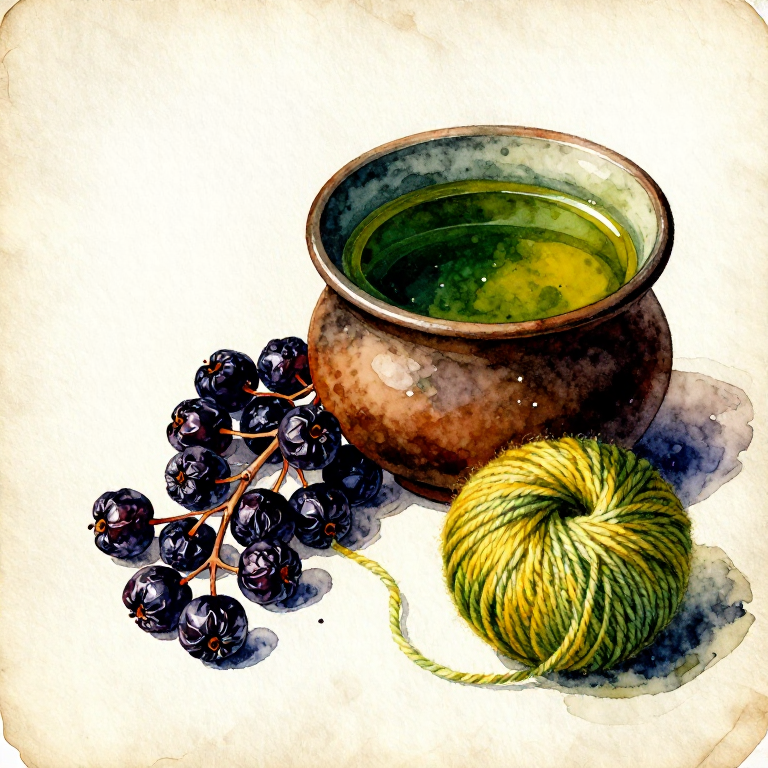


Dyeing Yellow-Green with Persian Berries — The Buckthorn Dye of Ancient Manuscript Painters
Persian berries are the unripe fruits of several Rhamnus species — primarily Rhamnus saxatilis and Rhamnus infectoria — native to the Mediterranean basin and Western Asia. These small, hard berries contain rhamnetin and other flavonoid glycosides that produce a distinctive yellow-green on alum-mordanted wool. The berries have been used as both a textile dye and a pigment for manuscript illumination since antiquity — Roman and Byzantine painters ground them into a lake pigment called 'stil de grain' that appears in manuscripts and panel paintings across medieval Europe.
The name 'Persian berries' reflects their historical trade route — the berries were exported from Persia (modern Iran) and the eastern Mediterranean to European dye markets. In French dye terminology they are 'graines d'Avignon' (berries of Avignon), referring to the Provençal trade hub. Italian dyers called them 'grana di spina' (thorn berries). Whatever the name, the product was the same: small, hard, dark berries sold dried in bulk by the barrel.
The colour from Persian berries is a unique yellow-green — warmer and more golden than most plant greens, with a distinctive olive undertone. On alum-mordanted wool, the fresh dye is a bright, clear yellow-green. The lightfastness is moderate — not as permanent as weld or fustic, but the colour is unique enough that dyers valued it for its particular shade rather than its durability. With iron modification, the colour shifts to a deep olive-green.
Consignes
Weigh the dried Persian berries
Weigh the dried Persian berries
Use 50-100% WOF of dried Persian berries. For 100 g of wool, weigh out 50-100 g of dried berries. The berries should be small, hard, and dark greenish-brown to black when dried. They are sold by specialty dye suppliers. Crush the berries lightly with a mortar and pestle to break them open and expose the inner seed and flesh — this dramatically increases the dye extraction rate.
Matériaux pour cette étape :
 Graines d'Avignon (séchées)80 g
Outils nécessaires :
 Balance de cuisine numérique
 Mortier et pilon
Soak the crushed berries overnight
Soak the crushed berries overnight
Place the crushed berries in a dye pot with 4 litres of warm water and soak overnight (8-12 hours). The water will turn a greenish-yellow as the flavonoid glycosides dissolve. The overnight soak allows the hard berry shells to soften fully and release their dye content. By morning, the liquid should be a distinct greenish-gold.
Outils nécessaires :
 Marmite haute
Simmer at 80°C for 45 minutes
Simmer at 80°C for 45 minutes
Bring the pot to a gentle simmer (75-80°C) and hold for 45 minutes. Stir occasionally. Do not boil — excessive heat shifts the colour toward dull brown. The liquid will deepen to a rich greenish-yellow to golden-green. The crushed berries will release their remaining dye during this simmering period.
Outils nécessaires :
 Thermomètre de cuisson
 Cuillère à remuer en bois
Strain out the berry material
Strain out the berry material
Strain the dye liquor through a fine mesh strainer into a clean pot. Berry fragments and seed particles can stick to wool and cause uneven spots — strain thoroughly, pressing the pulp to extract all remaining liquid. For the cleanest results, strain a second time through muslin cloth. The strained liquor should be a clear greenish-gold.
Outils nécessaires :
 Passoire à maille fine
Dye alum-mordanted wool at 75-80°C for 45 minutes
Dye alum-mordanted wool at 75-80°C for 45 minutes
Pre-wet the alum-mordanted wool in lukewarm water for 15 minutes, squeeze gently, and lower it into the Persian berry dye bath at room temperature. Slowly raise to 75-80°C over 15 minutes, then hold for 45 minutes. Turn gently every 10 minutes. The wool will develop a distinctive yellow-green — the characteristic Persian berry colour that manuscript painters called stil de grain. The alum mordant produces the brightest, most vivid version of this colour.
Matériaux pour cette étape :
 Écheveau de laine100 g
 Alun (alun de potassium)10 g
Cool, rinse, and dry
Cool, rinse, and dry
Turn off the heat and let the wool cool in the dye bath overnight. Remove, squeeze gently, and rinse in lukewarm water until the runoff is clear. The final colour is a unique yellow-green with a warm olive undertone — a shade that is difficult to achieve from any other single dye source. Lightfastness is moderate — better than turmeric but not as permanent as weld. The colour will shift slightly toward warmer gold tones with prolonged light exposure. Dry in shade.
Matériaux
3- Espace réservé
- 100 gEspace réservé
- Espace réservé
Outils requis
6- Espace réservé
- Espace réservé
- Espace réservé
- Espace réservé
- Espace réservé
- Espace réservé
Matériaux des Blueprints connectés
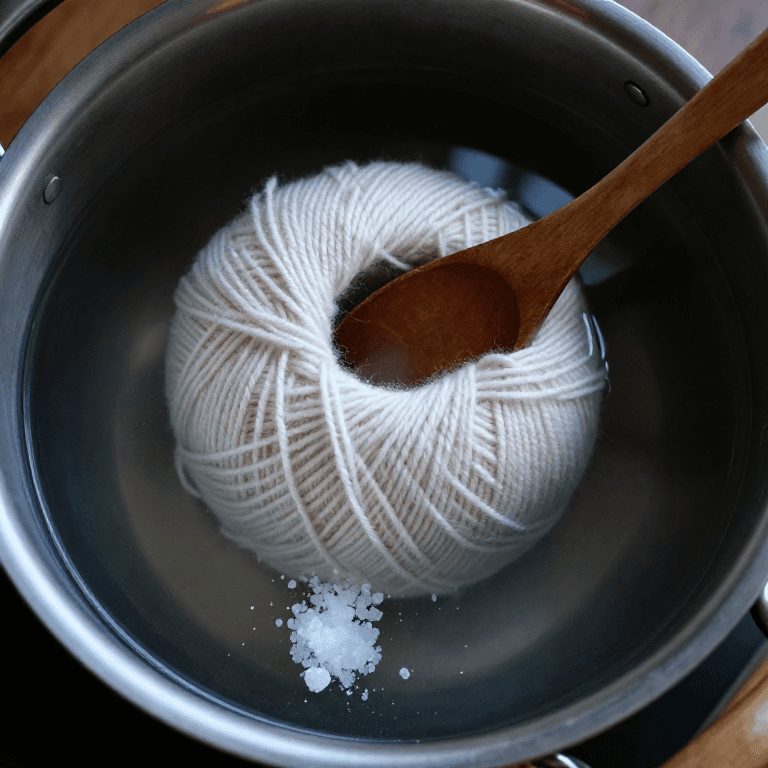
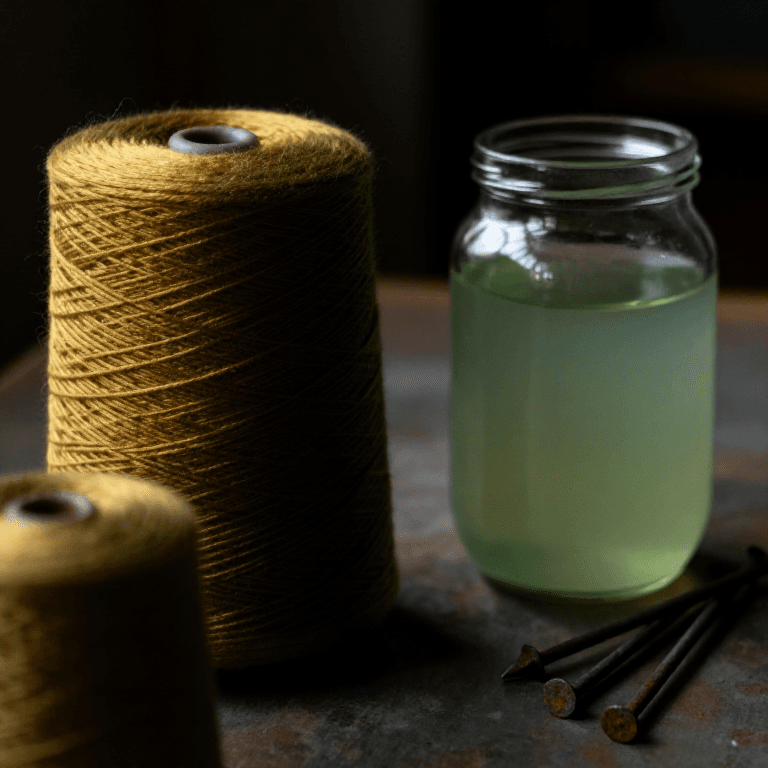
Ce plan fabrique

Blueprints liés
Ces blueprints partagent des connaissances — techniques, matériaux ou principes
CC0 Domaine public
Ce blueprint est publié sous CC0. Vous êtes libre de copier, modifier, distribuer et utiliser ce travail pour tout usage, sans demander la permission.
Soutenez le Maker en achetant des produits via son Blueprint où il perçoit une Commission Maker définie par les Vendeurs, ou créez une nouvelle itération de ce Blueprint et incluez-le comme connexion dans votre propre Blueprint pour partager les revenus.