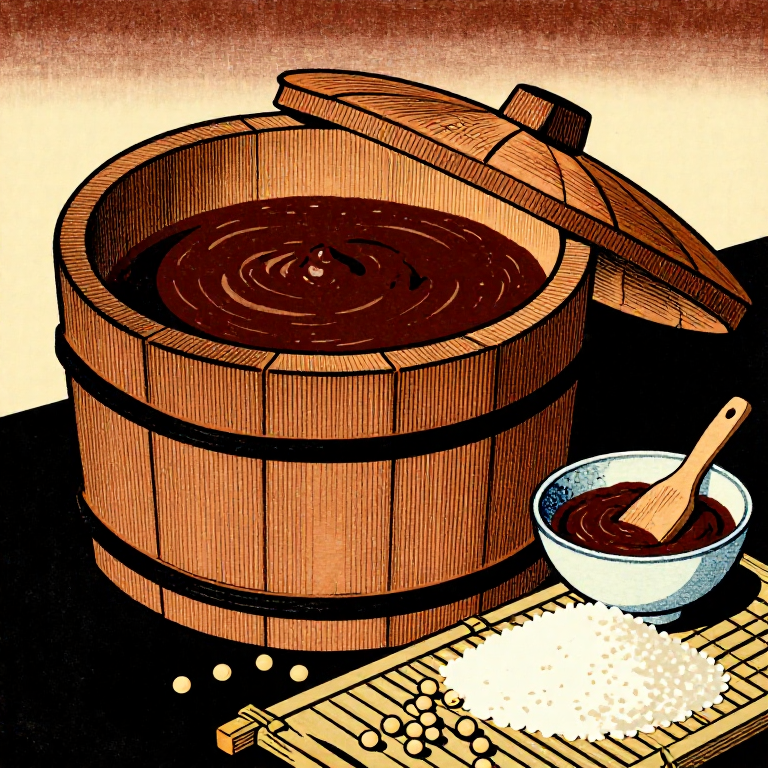


Fermenting Miso Paste from Soybeans — Traditional Japanese Fermentation
Consignes
Soak and Cook the Soybeans
Soak and Cook the Soybeans
Rinse 1 kg of dried soybeans and soak them in three times their volume of water for 12-18 hours (overnight). The beans will roughly double in size. Drain and cook in fresh water at a gentle boil for 3-4 hours until they are soft enough to crush easily between your thumb and finger with almost no resistance. Skim foam from the surface periodically during cooking. Reserve 200-300ml of the cooking liquid (called ame) before draining — this starchy liquid helps bind the miso mixture. Slightly under-cooked beans produce a grainy miso; properly soft beans yield a smooth, homogeneous paste.
Matériaux pour cette étape :
 Eau1 kg kg
 Riz koji (Aspergillus oryzae)800g-1 kg g
 Sel marin fin400-500g (for ~12% salt ratio) g
 Eau de cuisson du soja réservée200-300ml ml
Outils nécessaires :
 Grande marmite
 Pot de fermentation
 Presse-purée
 Étamine (pour filtrer)
Mash the Soybeans
Mash the Soybeans
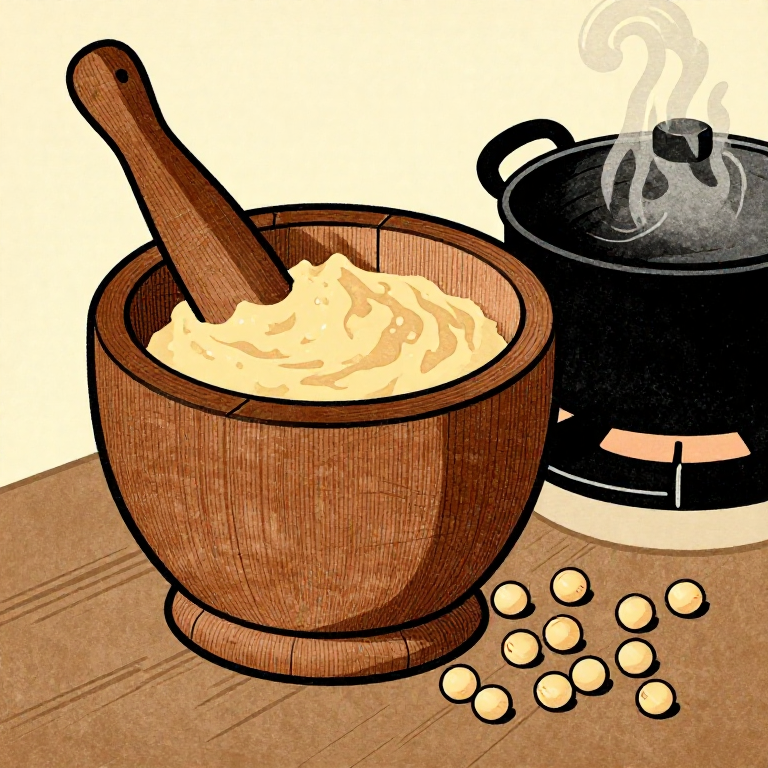
Mash the hot, drained soybeans using a potato masher, pestle, or food mill. The texture should be a rough paste — some whole or half beans remaining is fine for rustic miso, but for a smoother finished product, mash more thoroughly. Allow the mashed beans to cool to approximately 35-40 degrees C before combining with koji, because temperatures above 45 degrees C kill the Aspergillus oryzae mould and its enzymes, which are essential for fermentation. Spread the mashed beans in a wide container to cool faster if needed.
Mix Soybeans with Koji and Salt
Mix Soybeans with Koji and Salt
In a large bowl, break apart the koji rice grains and mix them thoroughly with the salt. Then combine this koji-salt mixture with the cooled mashed soybeans. Add reserved soybean cooking liquid as needed to achieve a consistency similar to stiff peanut butter — moist enough to pack tightly but not soupy. Mix vigorously by hand for 5-10 minutes to distribute the koji evenly. Every grain of koji carries millions of Aspergillus oryzae spores that will produce the protease and amylase enzymes responsible for breaking down the soybean proteins and rice starches during the long fermentation. Uneven mixing creates pockets with different fermentation rates, resulting in inconsistent flavour.
Pack the Fermentation Crock
Pack the Fermentation Crock
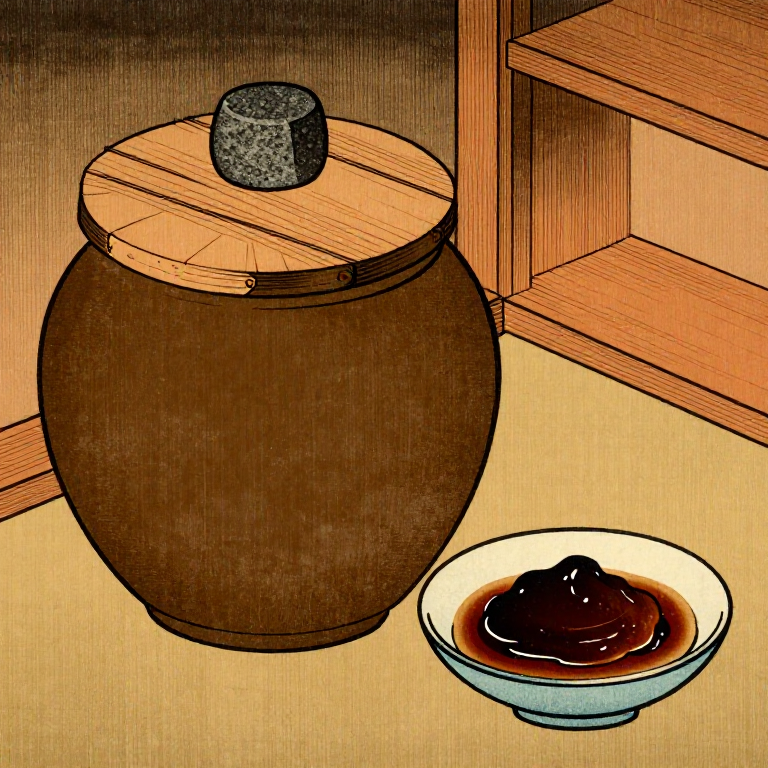
Sterilize the fermentation crock with boiling water or alcohol and let it dry. Form the miso mixture into balls about the size of a fist and throw them forcefully into the crock one at a time — the impact drives out air pockets, which can harbour undesirable bacteria and cause off-flavours. After each layer of balls, press the surface down firmly with your fist to eliminate gaps. Continue until all the mixture is packed in. Smooth the top surface and sprinkle a thin layer of salt across it — this salt crust inhibits surface mould growth. Press plastic wrap directly onto the surface (no air gap), place a flat lid or plate on top, and weight it with a 1-2 kg clean stone or water-filled jar.
Ferment and Monitor
Ferment and Monitor
Store the packed crock in a cool, dark place (15-25 degrees C) for 6-12 months. Warmer temperatures accelerate fermentation: miso packed in summer may be ready in 6 months, while winter-packed miso benefits from a full year. Check monthly for surface mould — scrape off any white, green, or black mould that appears on top (it is surface-only and does not affect the miso beneath). The liquid that collects on top (tamari) is a natural soy sauce and can be drawn off and used. The miso is ready when it has developed a deep, complex, savoury aroma and a rich brown colour. Taste periodically after 6 months — when the flavour has the desired depth of umami, transfer to sealed containers and refrigerate to halt further fermentation.
Matériaux
6- 1 kg kgEspace réservé
- 400-500g (for ~12% salt ratio) gEspace réservé
- 1 kg pièceEspace réservé
- 800g-1 kg pièceEspace réservé
- 200-300ml pièceEspace réservé
- 1 kgEspace réservé
Outils requis
9- Espace réservé
- Espace réservé
- Espace réservé
- Pressing lid and weight (1-2 kg stone or plate)
- Espace réservé
- Espace réservé
- Espace réservé
- Espace réservé
- Espace réservé
CC0 Domaine public
Ce blueprint est publié sous CC0. Vous êtes libre de copier, modifier, distribuer et utiliser ce travail pour tout usage, sans demander la permission.
Soutenez le Maker en achetant des produits via son Blueprint où il perçoit une Commission Maker définie par les Vendeurs, ou créez une nouvelle itération de ce Blueprint et incluez-le comme connexion dans votre propre Blueprint pour partager les revenus.