Collaboration
ART
BEAUTÉ ET BIEN-ÊTRE
ARTISANAT
CULTURE ET HISTOIRE
DIVERTISSEMENT
ENVIRONNEMENT
NOURRITURE ET BOISSONS
INGÉNIERIE INVERSE
SCIENCES
SPORTS
TECHNOLOGIE
TECHNOLOGIE PORTABLE
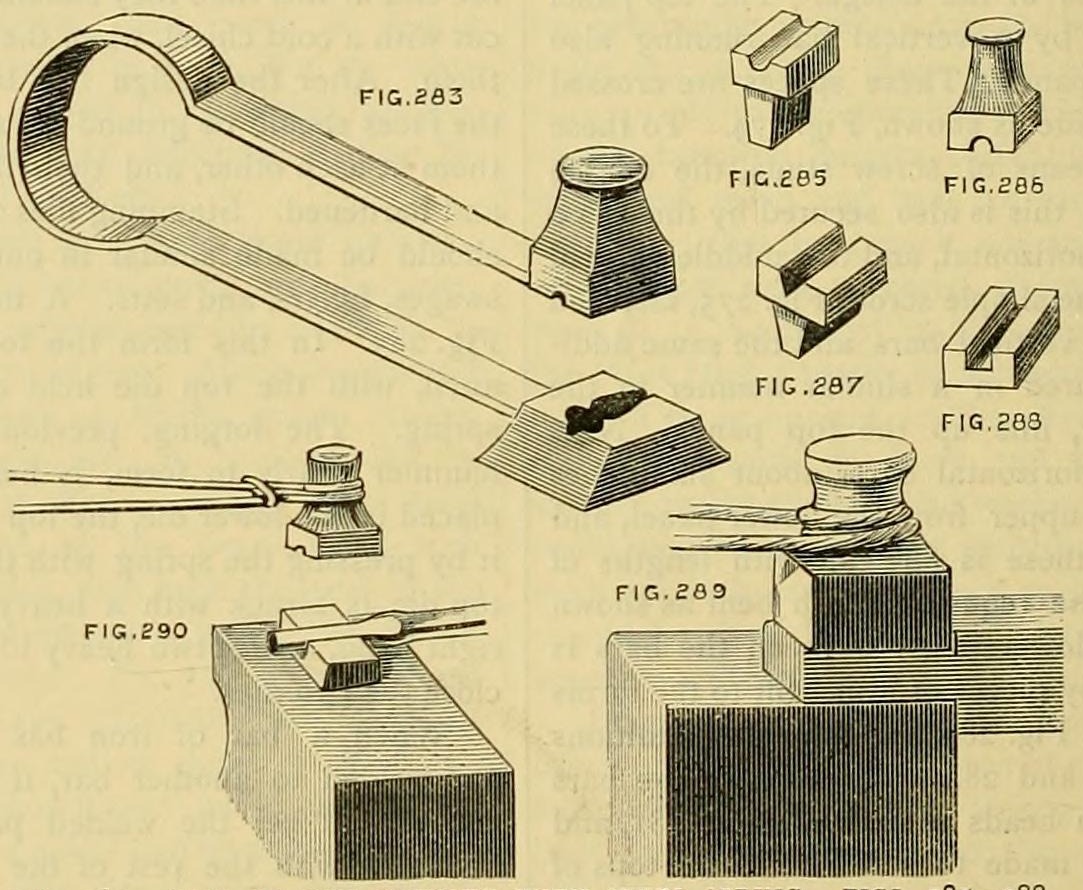


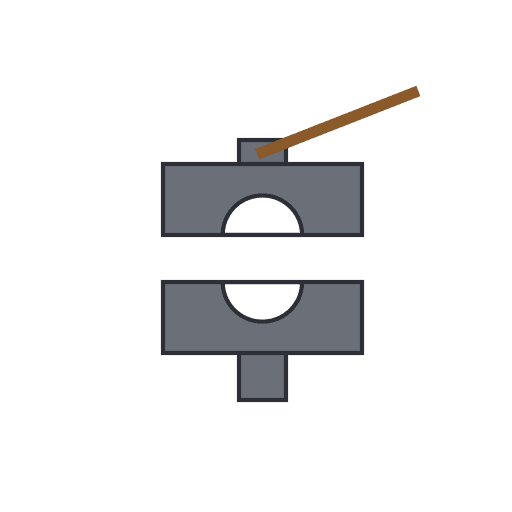
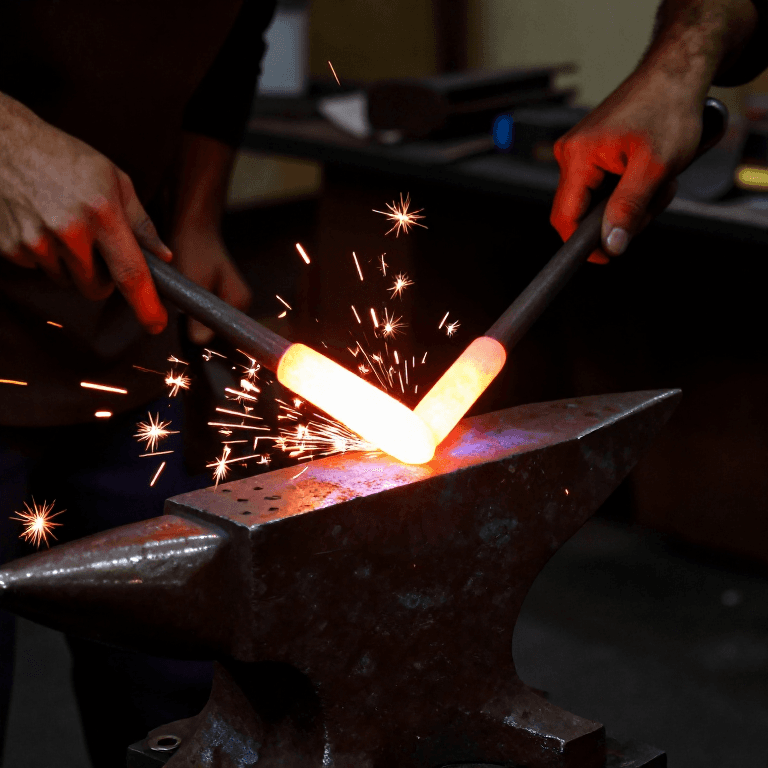
Top and Bottom Swages: Steel-Faced Iron Like a Fuller, Square Tang Below, Withy Handle Above, or Sprung Together (Edwinson, 1886)
Swages, the smith's top and bottom tools for bringing a weld back to round or square, from George Edwinson's smithing series in Amateur Work (1886): steel or steel-faced iron made like a fuller, the bottom tool tanged for the anvil's square hole, the top tool on a withy or iron-rod handle, or the pair coupled by a steel spring for single-handed work.
Avancé
A day at the forge per pair
Consignes
1
1
Read Edwinson
Read Edwinson
"They may be made of steel throughout, or of steel-faced iron. The method of making them is similar to that for making fullers and setts."
2
2
Weld the blanks
Weld the blanks
As for a fuller: upset an iron bar, split it into a fork with a hot set, weld in a forged steel wedge. Or use steel throughout.
Matériaux pour cette étape :
 Barre de fer forgé1 pièce
 Acier au creuset1 pièce
 Borax en poudre1 pièce
Outils nécessaires :
 Forge de forgeron
 Enclume
 Masse
 Tranche à chaud
 Pinces de forgeron
3
3
Bottom swage
Bottom swage
Forge the steel face into a block with a square tang that fits the square hole in the tail of the anvil, like a bottom set (his figs. 285-288).
Outils nécessaires :
Forge de forgeronEnclume MarteauPinces de forgeron
4
4
Top swage
Top swage
Forge the matching top tool with a neck for its handle.
Outils nécessaires :
Forge de forgeronEnclumeMarteauPinces de forgeron5
5
Cut the grooves
Cut the grooves
Form the working groove in each face to the section you need: round, half-round, oval, diagonal, square or rectangular. Groove sizes are ours: match the bars you forge.
Outils nécessaires :
Forge de forgeron Dégorgeoir (fuller)Enclume
 Limes (lime à main)
6
6
Handle or spring
Handle or spring
Give the top tool a hazel-rod or iron-rod handle as for fullers and top sets. For single-handed work, couple the top and bottom tools with a steel spring (fig. 283).
Matériaux pour cette étape :
 Baguettes de noisetier (vertes, souples)1 pièce
 Barre ronde en acier doux1 pièce
 Fil de fer1 pièce
 Feuillard d'acier à ressort1 pièce
Outils nécessaires :
Forge de forgeronEnclumeMarteau7
7
Grind and harden
Grind and harden
Grind the faces level so they fit each other, then heat the whole tool and harden it (his note for hand-worked dies).
Outils nécessaires :
 Pierre à aiguiser à roueForge de forgeron
 Baquet de trempe
8
8
Use them
Use them
Work the weld at a red heat. Hold the bar and the top swage; the striker hits the top tool with a light sledge. Pass the bar to and fro, turning it for round. After each heat gauge the weld in the swage block or with callipers.
Outils nécessaires :
Forge de forgeronMasse Pied à coulisse
9
9
Troubleshooting
Troubleshooting
Swage troubleshooting.
Flow
Loading...
10
10
History and honest limits
History and honest limits
From George Edwinson, "Smithing and Forging" XI, **Amateur Work, Illustrated**, vol. VI (1886-87), pp. 259-260 and figs. 283-290 (checked on the archive.org scan amateurworkillus06lond). The forging steps follow his fuller method (pp. 14-16). Groove sizes, the spring stock and the tools are ours.
Matériaux
7- 1 pièceEspace réservé
- 1 pièceEspace réservé
- 1 pièceEspace réservé
- Espace réservé
- 1 pièceEspace réservé
- 1 pièceEspace réservé
- 1 pièceEspace réservé
Outils requis
11- Espace réservé
- Espace réservé
- Espace réservé
- Espace réservé
- Espace réservé
- Espace réservé
- Espace réservé
- Espace réservé
- Espace réservé
- Espace réservé
- 1 vendor sell this, none ship to you yetEspace réservé
Ce plan fabrique

Blueprints liés
Ces blueprints partagent des connaissances — techniques, matériaux ou principes
CC0 Domaine public
Ce blueprint est publié sous CC0. Vous êtes libre de copier, modifier, distribuer et utiliser ce travail pour tout usage, sans demander la permission.
Soutenez le Maker en achetant des produits via son Blueprint où il perçoit une Commission Maker définie par les Vendeurs, ou créez une nouvelle itération de ce Blueprint et incluez-le comme connexion dans votre propre Blueprint pour partager les revenus.