
Extracting Lithium from Spodumene — The Lightest Metal That Powers the Future
Lithium is the lightest metal and the lightest solid element — atomic number 3, density only 0.534 g/cm³ (it floats on water, then reacts violently with it). It sits at the top of the alkali metal group alongside sodium and potassium, sharing their ferocious reactivity but surpassing them in electrochemical potential. This property — the highest electrode potential of any element — is what makes lithium the foundation of modern rechargeable batteries, from phones to electric vehicles to grid-scale energy storage.
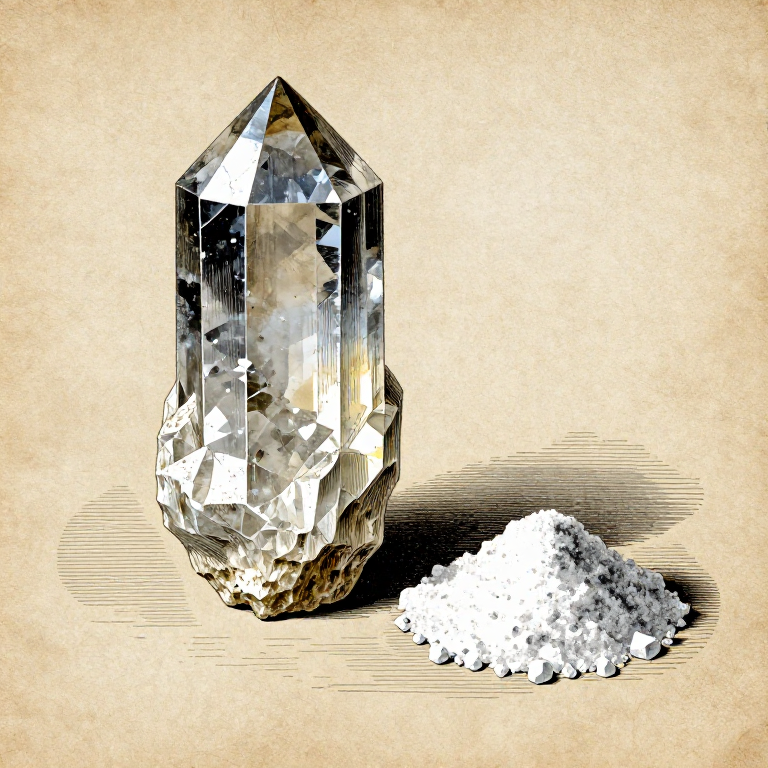
Lithium does not occur as a free metal in nature. Its primary ore is spodumene (LiAlSi₂O₆), a lithium aluminum silicate pyroxene mineral found in lithium-rich pegmatite granites. Spodumene crystals can be enormous — single crystals over 14 meters long have been found in the Black Hills of South Dakota. The mineral also occurs in Australia, Brazil, Zimbabwe, Portugal, and China. An alternative source is lithium-bearing brines (salt flats in Chile, Argentina, Bolivia), but ore-based extraction is the subject of this blueprint.
The challenge: spodumene in its natural α (alpha) form is extremely resistant to chemical attack. The silicon-oxygen framework locks lithium inside a dense monoclinic crystal structure. The solution is a two-step process: first, calcine (roast) the ore at 1050–1100 °C to convert α-spodumene to β-spodumene — a tetragonal form with an expanded, more open crystal lattice. Then react the β-spodumene with sulfuric acid at 250 °C, which selectively dissolves the lithium as lithium sulfate while leaving aluminum and silicon behind. The lithium sulfate is water-leached, purified, and precipitated as lithium carbonate (Li₂CO₃) — the standard commercial lithium compound.
HAZARD: Concentrated sulfuric acid causes severe chemical burns and generates toxic sulfur trioxide fumes when heated. Calcination at 1050+ °C requires proper furnace equipment. Lithium compounds are corrosive to skin and eyes. Work outdoors or under strong fume extraction. Wear acid-resistant gloves, chemical splash goggles, and a P100 respirator with acid gas cartridges. Have a sodium bicarbonate neutralization solution and running water immediately available for acid spills.
Contenu dangereux
Ce blueprint contient des procédures dangereuses. Connectez-vous et activez le contenu dangereux dans les paramètres de votre compte pour voir les instructions étape par étape.
Se connecterCC0 Domaine public
Ce blueprint est publié sous CC0. Vous êtes libre de copier, modifier, distribuer et utiliser ce travail pour tout usage, sans demander la permission.
Soutenez le Maker en achetant des produits via son Blueprint où il perçoit une Commission Maker définie par les Vendeurs, ou créez une nouvelle itération de ce Blueprint et incluez-le comme connexion dans votre propre Blueprint pour partager les revenus.