ART
BEAUTÉ ET BIEN-ÊTRE
ARTISANAT
CULTURE ET HISTOIRE
DIVERTISSEMENT
ENVIRONNEMENT
NOURRITURE ET BOISSONS
INGÉNIERIE INVERSE
SCIENCES
SPORTS
TECHNOLOGIE
TECHNOLOGIE PORTABLE

Fat Over Lean: Why the Order of the Layers Decides Whether It Cracks
An oil paint film keeps moving for years after it feels dry. It continues to take up oxygen, continues to cross-link, and continues to shrink slightly — and how much depends on how much oil is in it.
A FAT layer has more oil: it dries slower, stays more flexible, and shrinks less. A LEAN layer has more solvent and less oil: it dries faster, ends up more brittle, and shrinks more.
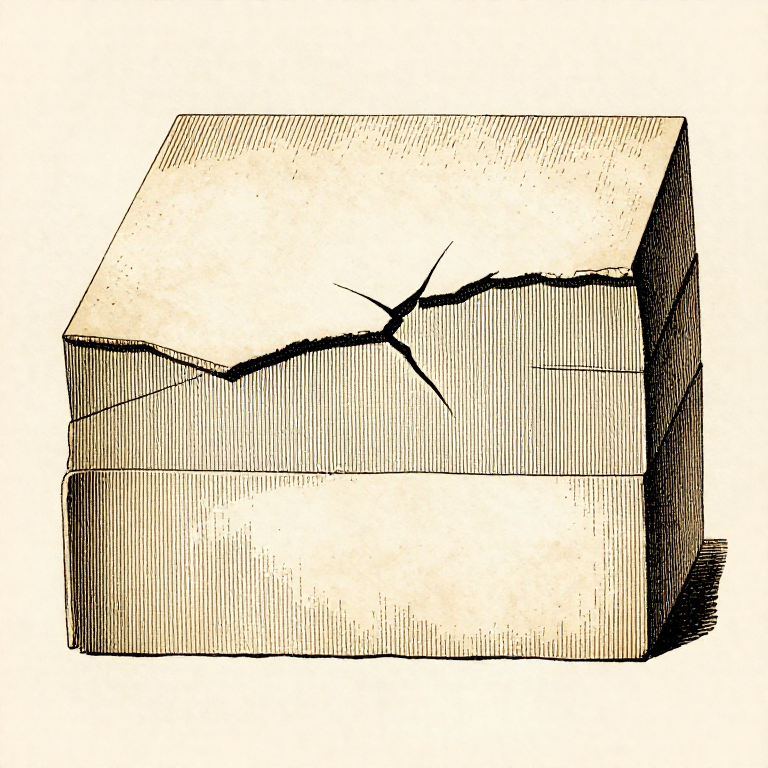
So a lean layer over a fat one is a fast-drying brittle skin stretched over something still moving underneath. It cracks, usually within months, and there is no repair. Fat over lean is the rule and it is simply the mechanics of the situation.
Intermédiaire
3 hours
Consignes
1
1
What makes a layer fat or lean
What makes a layer fat or lean
Adding SOLVENT — turpentine or white spirit — makes paint leaner, because the solvent leaves and the remaining film has less binder relative to its pigment.
Adding OIL or an oil-rich medium makes it fatter. So does using a pigment that needs a lot of oil to wet it, which is why some colours are inherently fatter than others straight from the tube.
Which means the practical rule is about the sequence of your mediums: start with paint thinned by solvent, and increase the proportion of oil in each successive layer. The traditional phrasing is 'each layer slightly fatter than the last', and slightly is the operative word — large jumps have their own problems.
Matériaux pour cette étape :
 Huile de lin1 pièce
 Essence de térébenthine de gemme1 pièce
 Coffret de pigments de terre en poudre1 pièce
Outils nécessaires :
 Bécher en verre
 Baguette d'agitation
 Balance de précision
2
2
The mechanism, and why it fails so reliably
The mechanism, and why it fails so reliably
A drying oil film does not dry by losing something. It GAINS oxygen and cross-links, which initially makes it swell slightly and then contract as the network tightens — a process that runs for years.
A lean upper layer completes that process quickly and then has no give left. The fat layer beneath is still contracting and still moving. The brittle skin above cannot follow it, so it cracks — and because the cracks follow the stress they usually appear as a wide net over the whole surface.
That is distinguishable from other cracking. Drying cracks from fat-over-lean violations are wide, open, and appear within months to a few years. Age cracks are fine, follow the support's movement, and take decades.
Matériaux pour cette étape :
Huile de lin1 pièceEssence de térébenthine de gemme1 pièceOutils nécessaires :
 Loupe de bijoutier
 Jeu de pinceaux d'artiste
3
3
Thick over thin, and slow over fast
Thick over thin, and slow over fast
The same logic gives two more rules that are often confused with the first. THICK over THIN: a thick layer takes far longer to dry through, so a thick layer underneath will still be moving long after a thin one on top has set.
SLOW over FAST: pigments dry at very different rates. Umbers and lead white dry in a day or two; ivory black, alizarin and titanium white can take a week or more. A fast drier over a slow one is the same trap as lean over fat.
So a fast-drying underpainting in earth colours is not just tradition — it is choosing the pigments whose drying behaviour suits being underneath. The traditional palette encodes a great deal of this.
Matériaux pour cette étape :
Coffret de pigments de terre en poudre1 pièceHuile de lin1 pièceOutils nécessaires :
Jeu de pinceaux d'artisteLoupe de bijoutier4
4
Let each layer dry, and test rather than guess
Let each layer dry, and test rather than guess
Touch-dry is not dry. An oil layer is touch-dry in days and still moving for months, so the meaningful question is whether it has moved enough that the next layer will not be stretched.
Paint a test strip alongside the work with the same paints and mediums, and keep it. A strip that has been through a year tells you far more about your materials than any rule of thumb, and it costs a few centimetres of canvas — which is the test-tile habit from the glaze and print batches.
Where a painting must be finished quickly, use a medium designed for it or change medium entirely. Acrylic underpainting with oil over it is a legitimate modern answer; oil under acrylic is not, for the reason the ground rung gives.
Matériaux pour cette étape :
 Toile d'artiste (montée sur châssis)1 pièceHuile de lin1 pièceCoffret de pigments de terre en poudre1 pièce
Outils nécessaires :
Jeu de pinceaux d'artisteLoupe de bijoutierMatériaux
4- 4 piècesEspace réservé
- 2 piècesEspace réservé
- Espace réservé
- Espace réservé
Outils requis
5- Espace réservé
- Espace réservé
- Espace réservé
- Espace réservé
- Espace réservé
Blueprints liés
Ces blueprints partagent des connaissances — techniques, matériaux ou principes

CC0 Domaine public
Ce blueprint est publié sous CC0. Vous êtes libre de copier, modifier, distribuer et utiliser ce travail pour tout usage, sans demander la permission.
Soutenez le Maker en achetant des produits via son Blueprint où il perçoit une Commission Maker définie par les Vendeurs, ou créez une nouvelle itération de ce Blueprint et incluez-le comme connexion dans votre propre Blueprint pour partager les revenus.