Collaboration
ART
BEAUTÉ ET BIEN-ÊTRE
ARTISANAT
CULTURE ET HISTOIRE
DIVERTISSEMENT
ENVIRONNEMENT
NOURRITURE ET BOISSONS
INGÉNIERIE INVERSE
SCIENCES
SPORTS
TECHNOLOGIE
TECHNOLOGIE PORTABLE
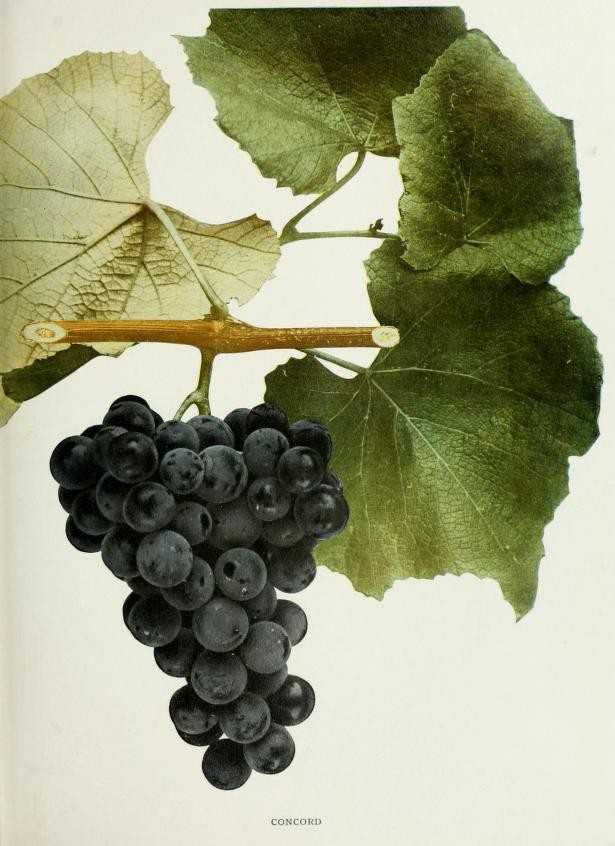


Grape Juice: Concord Grapes Heated, Pressed and Pasteurized Twice Below 180 F (USDA / New York Station, 1939)
Home grape juice by the New York State Experiment Station's method, as broadcast by the U.S. Department of Agriculture in 1939: ripe Concord grapes heated until the juice runs, pressed through a jelly bag, heated to 165-180 F (never above 180), jarred and pasteurized, then left 3 to 6 months so the gritty crystals settle, strained and pasteurized again.
Débutant
About 4 months, two short sessions
Consignes
1
1
The temperatures in Celsius
The temperatures in Celsius
Chargement du notebook Jupyter…
2
2
Read the 1939 leaflet
Read the 1939 leaflet
"Too much heat gives a cooked bitter flavor to the juice. Too little heat will not sterilize it for keeping."
3
3
Wash and stem
Wash and stem
Use fully ripe, sound, clean Concord or other slip-skin grapes. Wash and stem them.
Matériaux pour cette étape :
 Raisin1 as required
Outils nécessaires :
 Crible
4
4
Heat until the juice flows
Heat until the juice flows
Heat them in an aluminium or enamelware kettle until the juice flows easily and the colour of the skins spreads through the whole mass.
Outils nécessaires :
 Grande marmite
 Cuillère en bois
5
5
Press through a jelly bag
Press through a jelly bag
Press the juice through a jelly bag.
Outils nécessaires :
 Sac à filtrer
 Verre doseur
6
6
Heat to 165-180 F
Heat to 165-180 F
Heat the juice to simmering, between 165 and 180 F (74-82 C), never above 180 F. Use a thermometer.
Outils nécessaires :
Grande marmite Thermomètre de cuisson
7
7
Fill hot jars
Fill hot jars
Pour it hot into hot sterilized jars, leaving as little air space at the top as possible. Seal them.
Outils nécessaires :
 Bocaux de conserve (Mason)
8
8
Pasteurize 20 minutes
Pasteurize 20 minutes
Pasteurize the sealed jars in a water bath for 20 minutes at simmering temperature.
Outils nécessaires :
 Stérilisateur au bain-marieThermomètre de cuisson
9
9
Store 3 to 6 months
Store 3 to 6 months
Put the jars away in a cool dark place for 3 to 6 months, so the tartrate crystals settle.
Outils nécessaires :
Bocaux de conserve (Mason)10
10
Strain, sweeten, pasteurize again
Strain, sweeten, pasteurize again
Strain the juice off the particles at the bottom. Add sugar to taste if wanted, heat it once more and pasteurize it in sealed jars as before.
Matériaux pour cette étape :
 Sucre blanc1 as required
Outils nécessaires :
Sac à filtrerGrande marmiteThermomètre de cuissonBocaux de conserve (Mason)Stérilisateur au bain-marie11
11
Troubleshooting
Troubleshooting
Grape juice problems and fixes.
Flow
Loading...
12
12
History and honest limits
History and honest limits
From the U.S. Department of Agriculture's radio script "Putting up apple and grape juice at home", Housekeepers' Chat, 2 September 1939, reporting the New York State Experiment Station's directions. It gives no batch size. These are 1939 directions: check current home-canning safety guidance for your jars and altitude as well. Ours: the Celsius figures.
Outils requis
8- Espace réservé
- Espace réservé
- Espace réservé
- Espace réservé
- Espace réservé
- Espace réservé
- Espace réservé
- Espace réservé
Ce plan fabrique
Blueprints liés
Ces blueprints partagent des connaissances — techniques, matériaux ou principes

CC0 Domaine public
Ce blueprint est publié sous CC0. Vous êtes libre de copier, modifier, distribuer et utiliser ce travail pour tout usage, sans demander la permission.
Soutenez le Maker en achetant des produits via son Blueprint où il perçoit une Commission Maker définie par les Vendeurs, ou créez une nouvelle itération de ce Blueprint et incluez-le comme connexion dans votre propre Blueprint pour partager les revenus.