
हल्दी की खुदाई और प्रसंस्करण — कच्ची हल्दी से सूखी हल्दी बनाना
Consignes
हल्दी के पौधे को समझना
हल्दी के पौधे को समझना
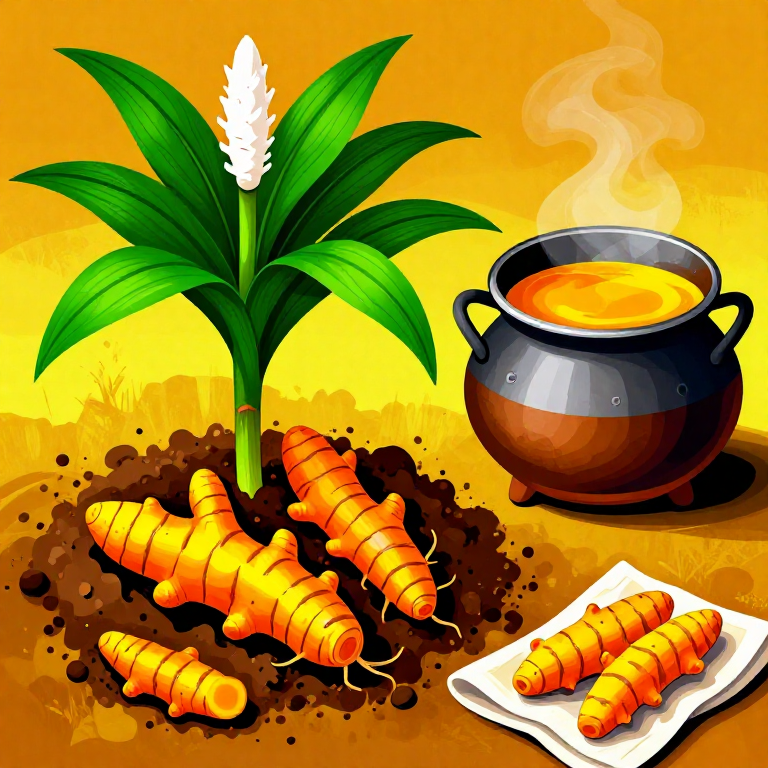
हल्दी (Curcuma longa) अदरक कुल (Zingiberaceae) का एक बारहमासी पौधा है। इसकी ऊँचाई ६०-१०० सेमी होती है और पत्तियाँ चौड़ी, गहरे हरे रंग की होती हैं। ज़मीन के नीचे कंद (rhizome) होते हैं — यही हल्दी का मुख्य उपयोगी हिस्सा है। कंद दो प्रकार के होते हैं: माँ कंद (mother rhizome) जो गोल और भारी होता है, और अंगुलियाँ (fingers) जो माँ कंद से निकली पतली शाखाएँ होती हैं। ताज़ी हल्दी में ६-९% करक्यूमिन (curcumin) होता है जो इसका प्रमुख सक्रिय यौगिक है और पीले रंग का कारण है। भारत विश्व की लगभग ८०% हल्दी का उत्पादन करता है।
खुदाई के संकेत पहचानना
खुदाई के संकेत पहचानना
हल्दी बुआई के ७-९ महीने बाद तैयार होती है — अप्रैल-मई में लगाई गई फसल जनवरी-मार्च में खुदाई के लिए तैयार होती है। पहचान के संकेत: पत्तियाँ पीली पड़ने लगती हैं, सूखने लगती हैं और ज़मीन पर गिरने लगती हैं। जब ७०-८०% पत्तियाँ सूख जाएँ तो खुदाई का सही समय है। पत्ते पूरी तरह सूखने से पहले ही खुदाई कर लेनी चाहिए — बहुत देर करने पर कंद ज़मीन में सड़ने लगते हैं या कीड़े लग सकते हैं।
हल्दी की खुदाई
हल्दी की खुदाई
खुदाई से पहले खेत में हल्की सिंचाई करें ताकि मिट्टी नरम हो जाए और कंद आसानी से निकलें। फावड़े या कुदाल से पौधे के चारों ओर १५-२० सेमी दूरी पर मिट्टी ढीली करें। कंदों को सावधानी से निकालें ताकि वे कटें या टूटें नहीं — कटे हुए कंदों में फफूँद लग सकती है। एक अच्छी फसल से प्रति हेक्टेयर २०-२५ टन ताज़ी हल्दी निकलती है। खुदाई सुबह के समय करना बेहतर होता है जब धूप तेज़ नहीं होती।
Outils nécessaires :
 Bêche
Bêche Houe
Houeकंदों की सफ़ाई
कंदों की सफ़ाई
खुदाई के बाद कंदों से चिपकी मिट्टी हटाएँ। हाथ से या पानी की हल्की धार से मिट्टी साफ़ करें। जड़ों और पतले रेशे (rootlets) को हाथ से तोड़कर अलग करें। सड़े हुए, कीड़े लगे या क्षतिग्रस्त कंदों को छाँटकर अलग करें — इन्हें प्रसंस्करण में न मिलाएँ। सफ़ाई के बाद कंदों को छाया में रखें — सीधी धूप में ताज़े कंद जल्दी सूखकर सिकुड़ सकते हैं।
Matériaux pour cette étape :
 Eau distillée50 litres
माँ कंद और अंगुलियाँ अलग करना
माँ कंद और अंगुलियाँ अलग करना
साफ़ कंदों को दो हिस्सों में अलग करें: माँ कंद (mother rhizome) और अंगुलियाँ (fingers)। माँ कंद गोल, भारी होता है — इसका एक हिस्सा अगली फसल के लिए बीज के रूप में रखा जाता है। अंगुलियाँ (fingers) पतली, लम्बी शाखाएँ हैं जो मसाले के लिए प्रसंस्कृत की जाती हैं। अंगुलियाँ माँ कंद से हाथ से तोड़ी जा सकती हैं। बीज के लिए रखे जाने वाले माँ कंद स्वस्थ, बिना कीड़े वाले और कम से कम ३०-४० ग्राम वज़न के होने चाहिए।
क्यूरिंग — कंदों को उबालना
क्यूरिंग — कंदों को उबालना
क्यूरिंग हल्दी प्रसंस्करण का सबसे महत्वपूर्ण चरण है। बड़े बर्तन या कड़ाही में पानी उबालें और कंदों को पानी में डालें — पानी कंदों से ५-७ सेमी ऊपर होना चाहिए। ४५-६० मिनट तक उबालें। पकने की जाँच: कंद में काँटा या कील चुभोएँ — यदि आसानी से अंदर जाए तो कंद पक गया है। उबालने से स्टार्च जिलेटिनाइज़ हो जाता है, करक्यूमिन पूरे कंद में समान रूप से फैल जाता है, और सुखाने का समय कम हो जाता है। अधिक उबालने से कंद बहुत नरम हो जाते हैं और टूट सकते हैं।
Matériaux pour cette étape :
 Eau100 litres
Outils nécessaires :
 Grand chaudron en métal
 Poêle à bois
उबले कंदों को निकालना और ठंडा करना
उबले कंदों को निकालना और ठंडा करना
उबालने के बाद कंदों को छलनी या जाली से पानी से बाहर निकालें। अत्यधिक गर्म कंदों को सीधे हाथ से न छुएँ। कंदों को बाँस की टोकरी या जालीदार सतह पर फैलाकर रखें ताकि भाप निकल जाए और पानी टपक जाए। १-२ घंटे ठंडा होने दें। उबले हुए कंद गहरे पीले-नारंगी रंग के हो जाते हैं। उबालने में प्रयुक्त पानी को फेंकें नहीं — इसमें करक्यूमिन घुला होता है और इसे प्राकृतिक रंग के रूप में उपयोग किया जा सकता है।
Outils nécessaires :
 Passoire à toile métallique fine
 Panier en bambou
धूप में सुखाना
धूप में सुखाना
ठंडे हुए कंदों को साफ़ बाँस की चटाई, कंक्रीट के फर्श या तारपोलिन पर एक परत में फैलाकर सीधी धूप में सुखाएँ। कंदों की परत ५-७ सेमी से अधिक मोटी नहीं होनी चाहिए। दिन में २-३ बार कंदों को पलटें ताकि समान रूप से सूखें। सुखाने में १०-१५ दिन लगते हैं। रात को और बारिश के समय कंदों को ढककर रखें। कंद तब सूखे माने जाते हैं जब नमी की मात्रा १०% से कम हो जाए — सूखा कंद तोड़ने पर कड़क आवाज़ करता है और अंदर से गहरा पीला-नारंगी दिखता है।
Outils nécessaires :
 Natte de bambou pour le séchage
 Bâche de protection
सूखने की जाँच
सूखने की जाँच
सूखने की जाँच कई तरीकों से करें। पहला: कंद को उँगलियों से तोड़ें — अगर कड़क होकर टूटे और 'कटक' की आवाज़ आए तो सूखा है। दूसरा: कंद को नाखून से दबाएँ — अगर निशान न पड़े तो सही है। तीसरा: कंद का वज़न ताज़ी अवस्था का लगभग २०-२५% रह जाता है — यानी १ किलो ताज़ी हल्दी से लगभग २००-२५० ग्राम सूखी हल्दी मिलती है। नमी की मात्रा ८-१०% से अधिक नहीं होनी चाहिए — अधिक नमी में फफूँद लगने का ख़तरा रहता है।
पॉलिशिंग
पॉलिशिंग
सूखे कंदों की सतह खुरदरी होती है और उस पर जड़ों के अवशेष (rootlets) चिपके होते हैं। पॉलिशिंग से सतह चिकनी और आकर्षक बनती है। पारंपरिक तरीक़ा: सूखे कंदों को बाँस की टोकरी या ड्रम में डालकर आपस में रगड़ा जाता है। बड़े पैमाने पर ड्रम पॉलिशर का उपयोग होता है — एक घूमने वाला ड्रम जिसमें कंद आपस में रगड़कर चमकदार हो जाते हैं। पॉलिशिंग से जड़ों के अवशेष, खुरदरी त्वचा और अतिरिक्त मिट्टी हट जाती है। कुछ क्षेत्रों में पॉलिशिंग के बाद हल्दी पाउडर छिड़ककर रंग एक समान किया जाता है।
Outils nécessaires :
 Tambour de polissage manuel
ग्रेडिंग
ग्रेडिंग
पॉलिश किए गए कंदों को आकार, रंग और गुणवत्ता के आधार पर छाँटा जाता है। अंगुलियाँ (fingers) और माँ कंद (bulbs) अलग-अलग रखे जाते हैं। अंगुलियाँ अधिक मूल्यवान होती हैं क्योंकि इनमें करक्यूमिन की मात्रा अधिक होती है। गुणवत्ता के मानक: रंग (गहरा पीला-नारंगी सबसे अच्छा), सुगंध (तेज़ मिट्टी जैसी गंध), करक्यूमिन प्रतिशत (व्यापारिक गुणवत्ता में ३% से अधिक), और कंद का आकार। इरोड (तमिलनाडु) का हल्दी बाज़ार एशिया का सबसे बड़ा हल्दी व्यापार केंद्र है।
Outils nécessaires :
 Table de tri
भंडारण
भंडारण
सूखी हल्दी को सूखी, ठंडी और अँधेरी जगह में रखें — सीधी धूप और नमी से बचाएँ। जूट के बोरों में भरकर लकड़ी के पैलेट पर रखें ताकि ज़मीन की नमी न लगे। बोरों को दीवार से ३०-४५ सेमी दूर रखें ताकि हवा का आवागमन हो। भंडारण तापमान २५ डिग्री सेलसिय से कम हो और सापेक्षिक आर्द्रता ६५% से कम हो। ठीक से संग्रहित सूखी हल्दी १-२ वर्ष तक गुणवत्ता बनाए रखती है। नियमित रूप से कीड़ों और फफूँद की जाँच करें। नीम की पत्तियाँ बोरों के बीच रखने से कीट प्रतिरोधक का काम करती हैं।
Matériaux pour cette étape :
 Sac de jute pour le stockage5 pièces
 Palette de stockage en bois2 pièces
 Feuilles de neem séchées1 botte
Outils nécessaires :
 Balance
Matériaux
5- 50 litresEspace réservé
- 100 litresEspace réservé
- 5 piècesEspace réservé
- 2 piècesEspace réservé
- 1 botteEspace réservé
Outils requis
11- Espace réservé
- Espace réservé
- Espace réservé
- Espace réservé
- Espace réservé
- Espace réservé
- Espace réservé
- Espace réservé
- Espace réservé
- Espace réservé
- Espace réservé
CC0 Domaine public
Ce blueprint est publié sous CC0. Vous êtes libre de copier, modifier, distribuer et utiliser ce travail pour tout usage, sans demander la permission.
Soutenez le Maker en achetant des produits via son Blueprint où il perçoit une Commission Maker définie par les Vendeurs, ou créez une nouvelle itération de ce Blueprint et incluez-le comme connexion dans votre propre Blueprint pour partager les revenus.