Collaboration
ART
BEAUTÉ ET BIEN-ÊTRE
ARTISANAT
CULTURE ET HISTOIRE
DIVERTISSEMENT
ENVIRONNEMENT
NOURRITURE ET BOISSONS
INGÉNIERIE INVERSE
SCIENCES
SPORTS
TECHNOLOGIE
TECHNOLOGIE PORTABLE
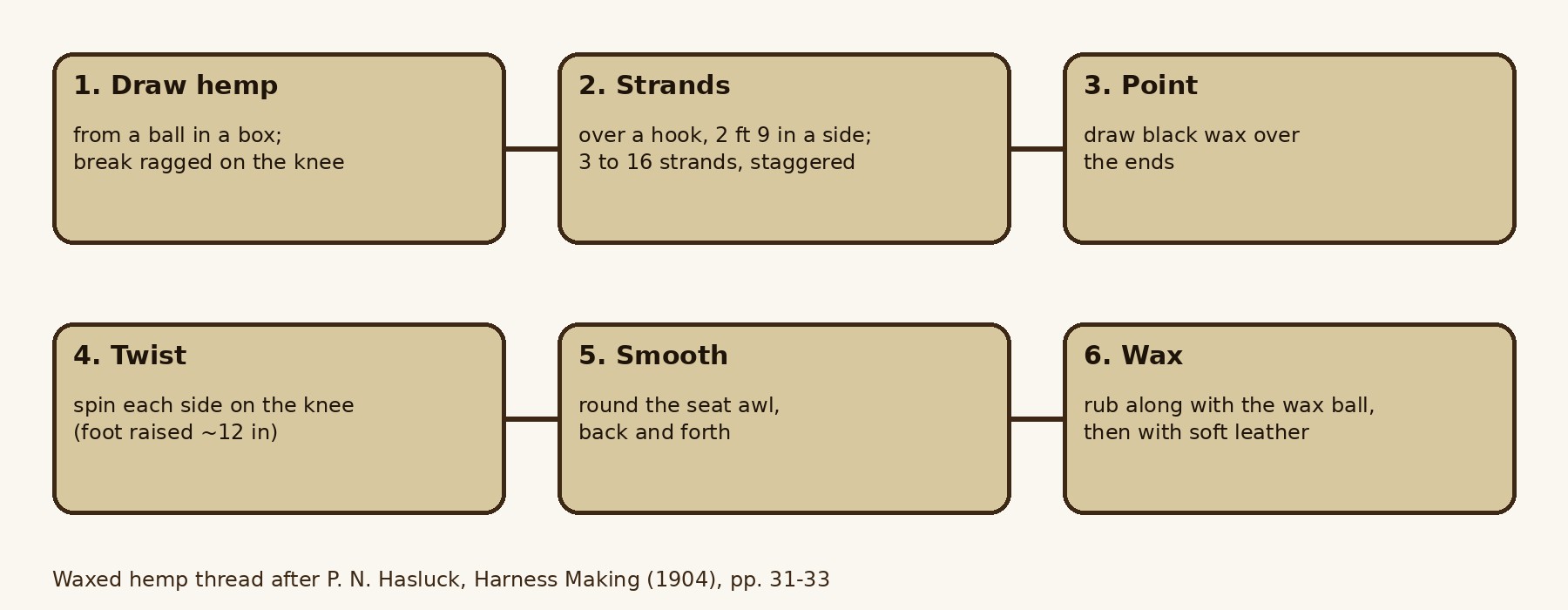


Saddler's Waxed Hemp Thread: Ragged-Pointed Strands Spun on the Knee and Rubbed With Black Wax (Hasluck, 1904)
How a harness maker makes his own waxed thread, from P. N. Hasluck's Harness Making (1904): strands of hemp broken to ragged points over a bench hook, 3 to 16 of them laid with staggered ends, each side twisted by rolling on the knee, smoothed round the seat-awl, and rubbed with black cobbler's wax (beeswax for light work).
Débutant
About 15 minutes per thread
Consignes
1
1
Length and strands
Length and strands
Chargement du notebook Jupyter…
2
2
Read Harness Making
Read Harness Making
"The threads used in the trade are many, but the principal is waxed thread, made by the saddler himself." White hemp is the best and toughest; fine No. 15 and coarse No. 3 meet most needs.
3
3
Cut the strands
Cut the strands
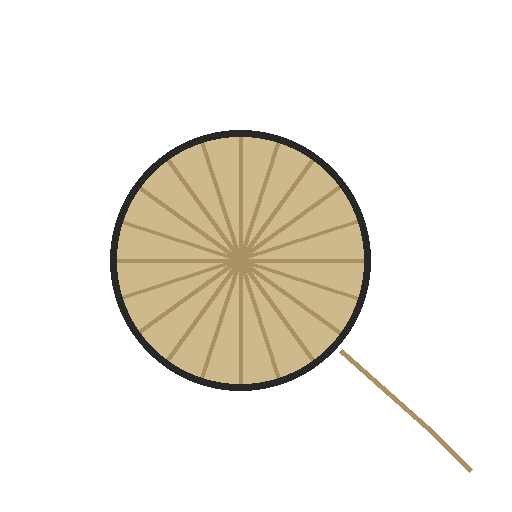
Keep the ball of hemp in a box with a small hole in the lid. Draw out the end, twist it once round the fingers, and break it by rolling on the knee and giving a sharp pull, so it breaks ragged (the more ragged, the better the point). Throw it over a nail or hook in the bench and pull until each side is about 2 ft 9 in, untwist by rolling on the knee and break again. Add strands the same way, 3 to 16 by the strength wanted, leaving the ends of unequal length for a fine point.
Matériaux pour cette étape :
 Fil de chanvre1 pièce
Outils nécessaires :
 Boîte en bois
4
4
Point and twist
Point and twist
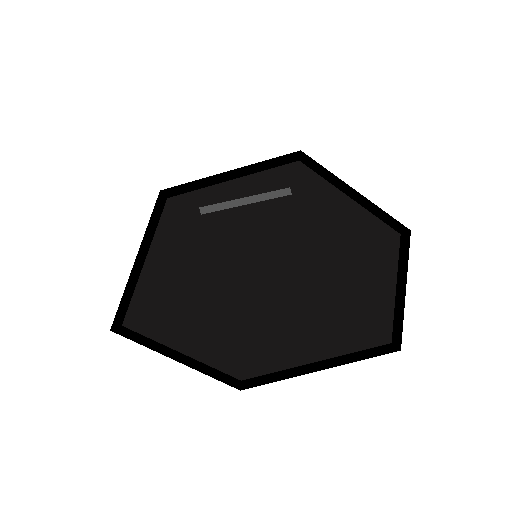
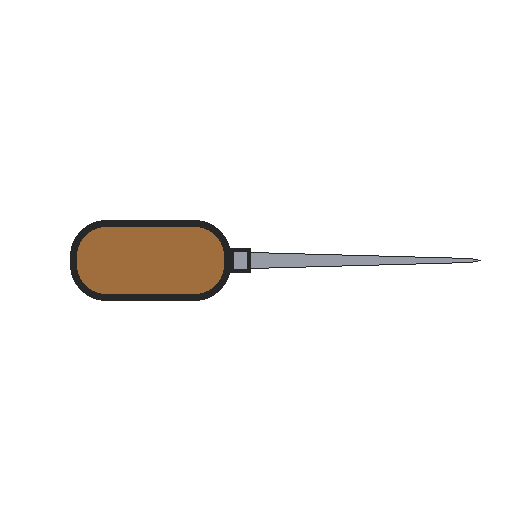
Draw the ball of wax over the points two or three times to hold them together. Raise the knee about 12 in by resting the foot on a support, and spin each side by rolling it on the knee with the palm until twisted enough (too much and it knots in stitching). For best work, twist both sides once round the seat-awl and draw it sharply back and forth to smooth out lumps.
Matériaux pour cette étape :
 Poix de cordonnier1 pièce
Outils nécessaires :
 Alène à rembourrer de sellier
5
5
Wax
Wax
Rub the thread with tallow so the wax runs smooth. Holding both ends in the left hand, rub the ball of wax along the whole thread, pulling the part round the hook out to wax it too, then rub the thread sharply end to end with soft leather or the bare hand to even the wax. For yellow or white thread on light work use beeswax, but always point the ends with black wax: only black wax keeps the thread fast to the needles.
Matériaux pour cette étape :
Poix de cordonnier1 pièce Suif1 pièce
 Cire d'abeille1 pièce
Outils nécessaires :
Alène à rembourrer de sellier6
6
Troubleshooting
Troubleshooting
Thread troubleshooting.
Flow
Loading...
7
7
History and honest limits
History and honest limits
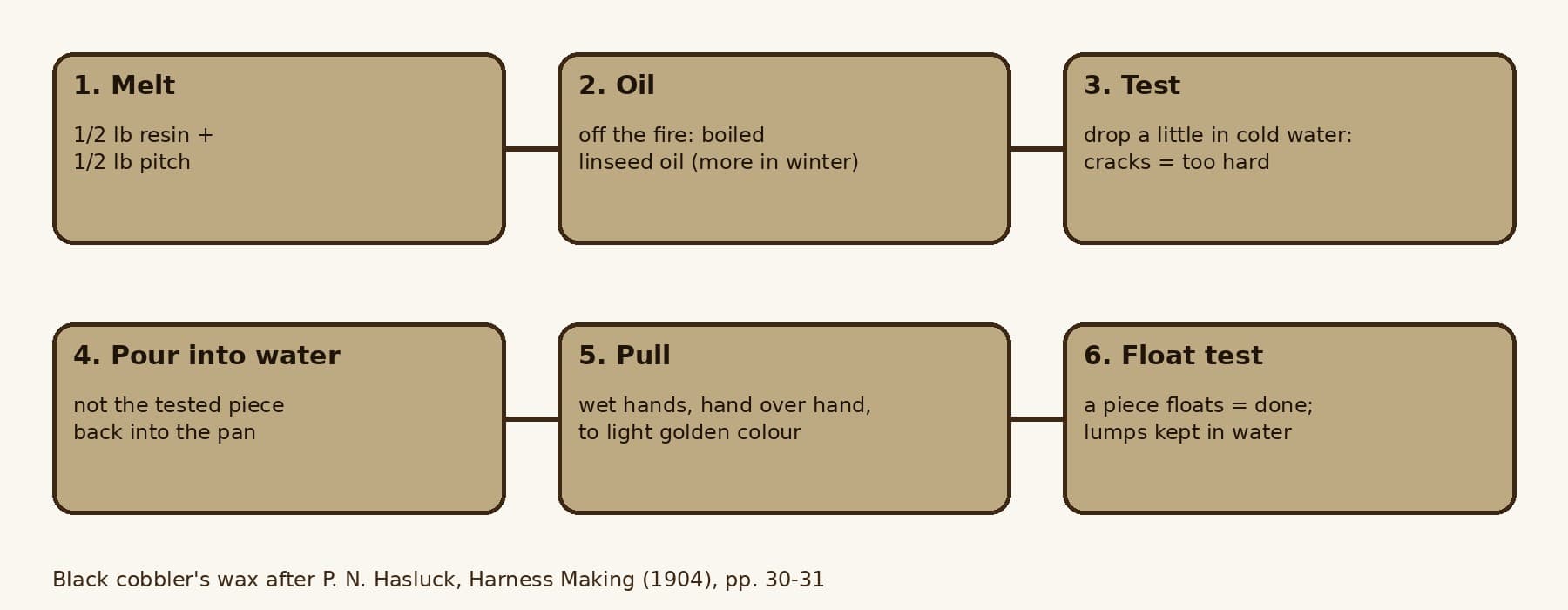
From Paul N. Hasluck, **Harness Making** (1904), "Harness-makers' Materials" (checked on the archive.org scan harnessmaking00hasl, pp. 29-33). The strand-use notes, metric figures and the diagram are ours.
Matériaux
4- 1 pièceEspace réservé
- 1 pièceEspace réservé
- 1 pièceEspace réservé
- 1 pièceEspace réservé
Outils requis
2- Espace réservé
- Espace réservé
Ce plan fabrique
Blueprints liés
Ces blueprints partagent des connaissances — techniques, matériaux ou principes

CC0 Domaine public
Ce blueprint est publié sous CC0. Vous êtes libre de copier, modifier, distribuer et utiliser ce travail pour tout usage, sans demander la permission.
Soutenez le Maker en achetant des produits via son Blueprint où il perçoit une Commission Maker définie par les Vendeurs, ou créez une nouvelle itération de ce Blueprint et incluez-le comme connexion dans votre propre Blueprint pour partager les revenus.