ART
BEAUTÉ ET BIEN-ÊTRE
ARTISANAT
CULTURE ET HISTOIRE
DIVERTISSEMENT
ENVIRONNEMENT
NOURRITURE ET BOISSONS
INGÉNIERIE INVERSE
SCIENCES
SPORTS
TECHNOLOGIE
TECHNOLOGIE PORTABLE
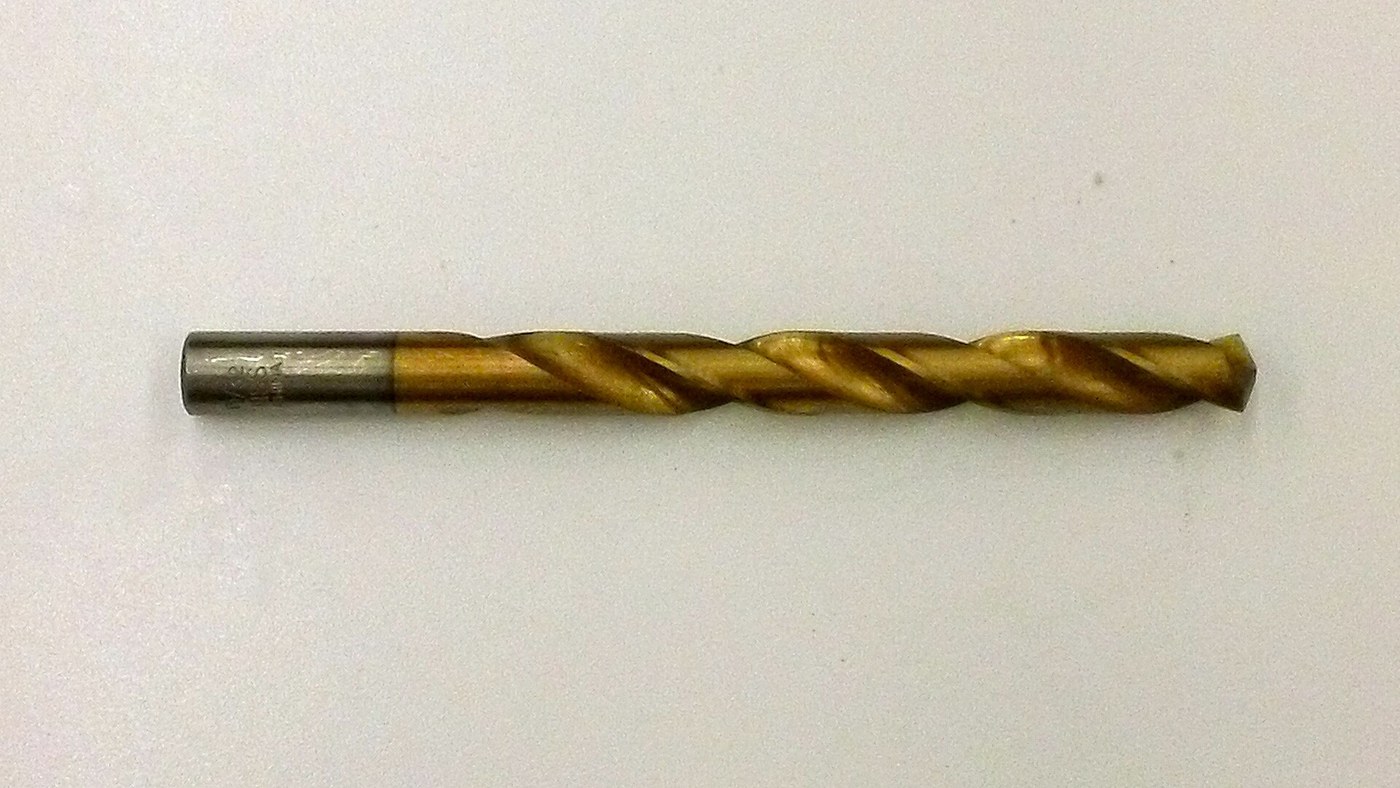


Twist Drill Bits: Flutes, Point and Coating
A twist drill is named after how it was first made: two grooves were cut in opposite sides of a round bar and the bar was twisted to make helical flutes. Today the flutes are usually ground: the bar turns while it moves past a grinding wheel, the way helical gears are cut. Drills have also been forged with their flutes, from blanks heated by induction. The common hardware-store drill has a 118° point, which works in wood, metal and plastic. A black oxide finish, made in a hot bath of sodium hydroxide with nitrates at about 141 °C that turns the surface to magnetite, adds heat and rust resistance; a titanium nitride coat, a few micrometres thick, can make a high-speed steel bit last three or more times longer.
Avancé
Factory process
Consignes
1
1
Cut the blanks
Cut the blanks
Cut high-speed steel round bar into blanks the length of the drill.
Matériaux pour cette étape :
 Rond en acier rapide1 kg
2
2
Grind the flutes
Grind the flutes
Turn each blank while moving it past a grinding wheel to cut the two helical flutes.
Outils nécessaires :
 Rectifieuse de goujures de forets
3
3
Grind the point
Grind the point
Grind the cutting point; 118° is the general-purpose angle.
Outils nécessaires :
 Affûteuse de forets
4
4
Finish
Finish
Give the drills a black oxide finish in a hot caustic nitrate bath, or a titanium nitride coat by vapour deposition.
Outils nécessaires :
 Bain de brunissage noir
 Solution d'hydroxyde de sodium
Matériaux
1- Espace réservé
Outils requis
4- Espace réservé
- Espace réservé
- Espace réservé
- Espace réservé
Ce plan fabrique
Blueprints liés
Ces blueprints partagent des connaissances — techniques, matériaux ou principes

CC0 Domaine public
Ce blueprint est publié sous CC0. Vous êtes libre de copier, modifier, distribuer et utiliser ce travail pour tout usage, sans demander la permission.
Soutenez le Maker en achetant des produits via son Blueprint où il perçoit une Commission Maker définie par les Vendeurs, ou créez une nouvelle itération de ce Blueprint et incluez-le comme connexion dans votre propre Blueprint pour partager les revenus.