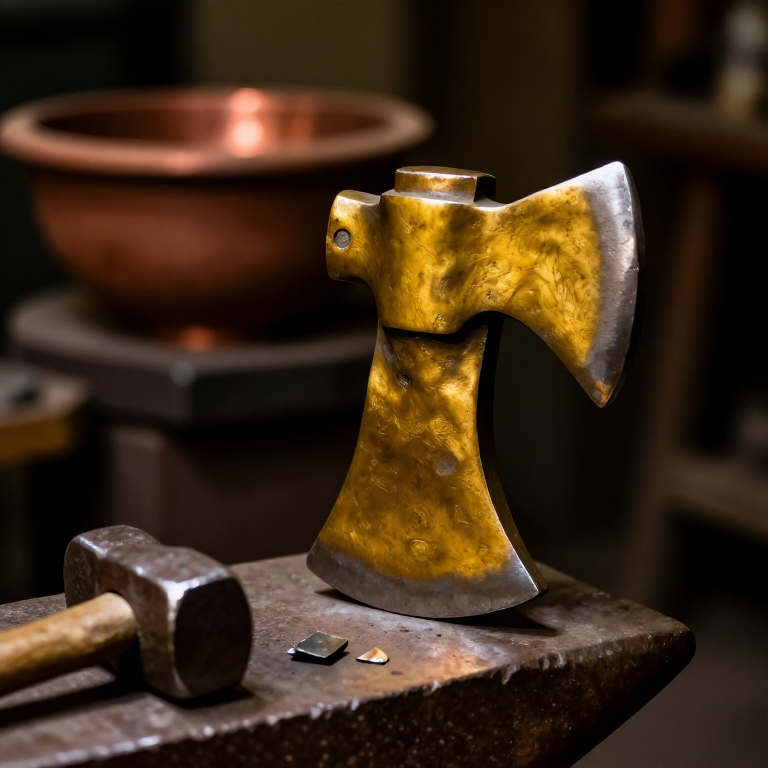
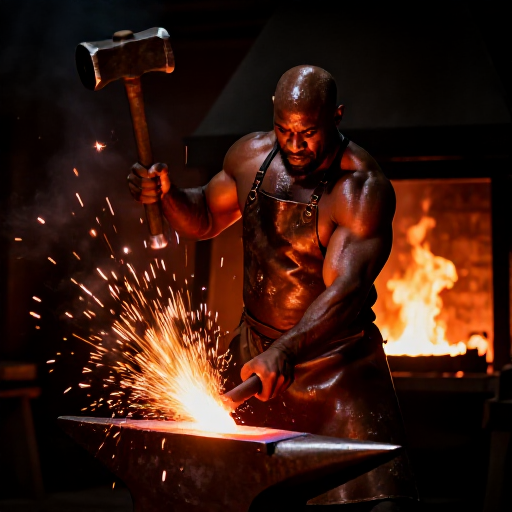
Alloying Bronze (Cu + Sn) — The Bronze Age Begins
Consignes
Prerequisite: Smelting Copper
Prerequisite: Smelting Copper
You need copper ingots — the base metal for bronze alloy.
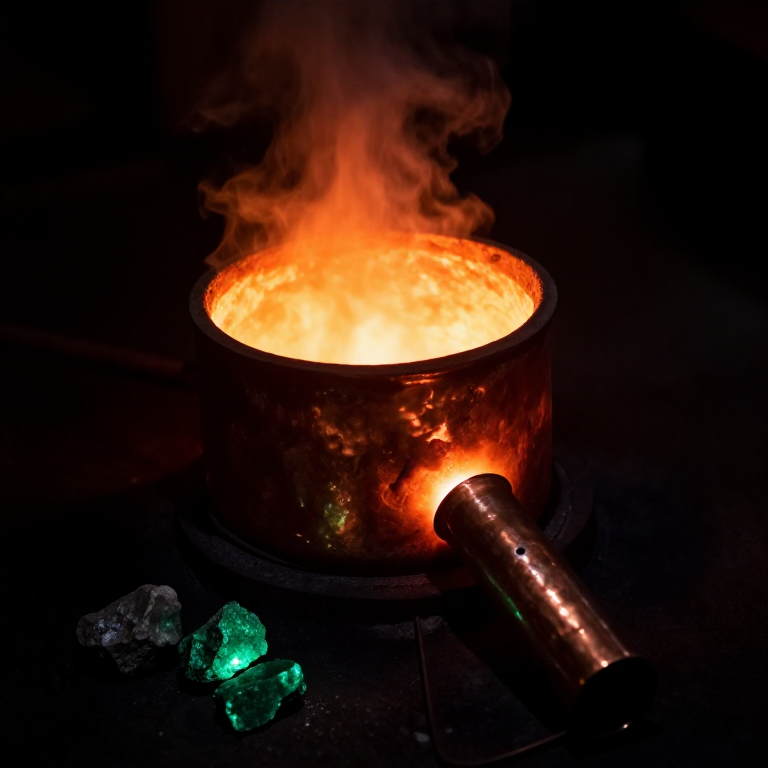
Blueprint prérequis
Smelting Copper from Malachite — The Birth of Metallurgy
Matériaux pour cette étape :
 Cuivre0.9 kg
Outils nécessaires :
 Four céramique
 Soufflet
 Pince à creuset
 Coffrage de moulage réglable
 Enclume
 Marteau à panne bombée
Prerequisite: Casting Copper Tools
Prerequisite: Casting Copper Tools
You need casting technique from this blueprint to shape bronze.
Blueprint prérequis
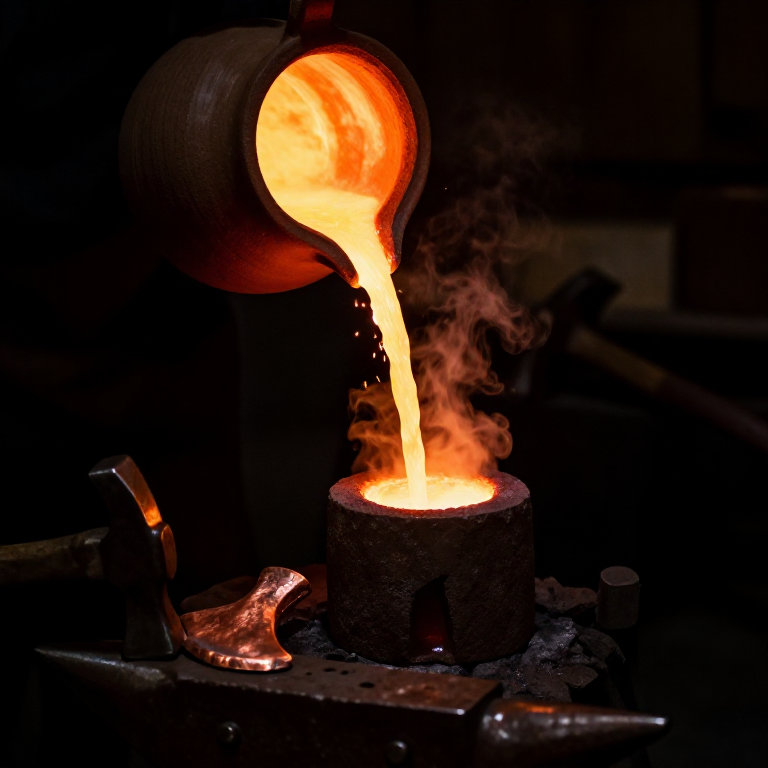
Casting Copper Tools — Shaping the First Metal
Matériaux pour cette étape :
 Lingot d'étain100 g
 Kit de fonte à la cire perdue - bronze1 kit
Prerequisite: Extracting Tin
Prerequisite: Extracting Tin
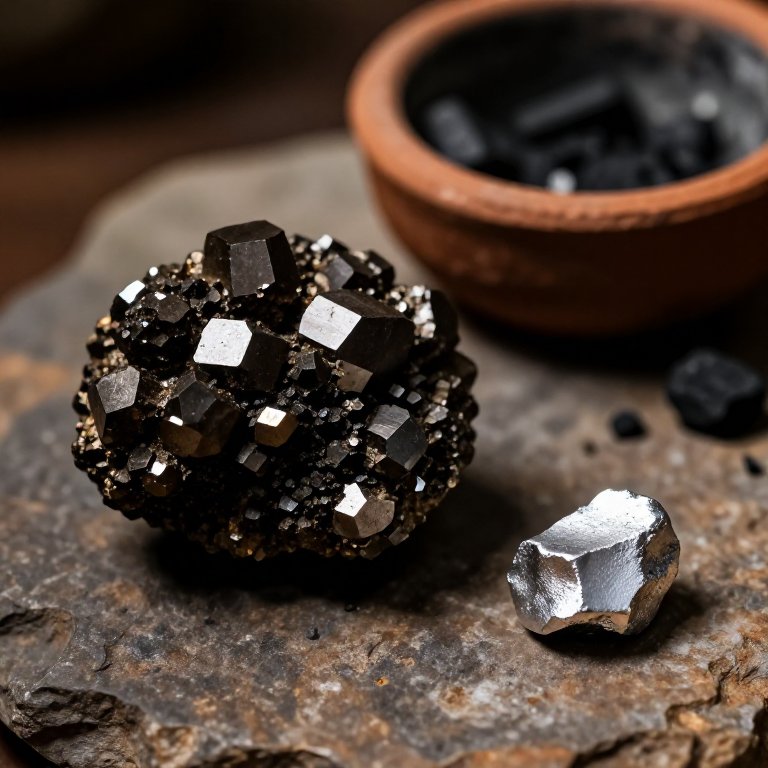
You need tin — the critical alloying element. Tin was the strategic resource of the Bronze Age.
Blueprint prérequis
Extracting Tin from Cassiterite — The Missing Ingredient
Matériaux pour cette étape :
Lingot d'étain100 gKit de fonte à la cire perdue - bronze1 kitMetallurgy of Bronze
Metallurgy of Bronze
Why Bronze is Superior
Bronze is a solid solution alloy — tin atoms dissolve into the copper crystal lattice, distorting it and blocking dislocation movement. Result:
| Property | Copper | Bronze (10% Sn) | Improvement |
|---|---|---|---|
| Vickers Hardness | 40-50 | 70-150 | 2-3× harder |
| Tensile Strength | 210 MPa | 300-500 MPa | 2× stronger |
| Melting Point | 1085°C | ~950°C | Easier to melt! |
| Castability | Poor (gassy) | Excellent (fluid) | Complex shapes |
| Corrosion | Forms green patina | Highly resistant | Lasts millennia |
The Ideal Ratio
Ancient smiths converged on ~10% tin, 90% copper through trial and error:
- <8% tin: Too soft, barely better than copper
- 10-12% tin: Optimal hardness, good castability, golden colour
- 15-20% tin: Very hard but brittle — good for bells and mirrors, bad for tools
- >20% tin: Extremely brittle, shatters on impact
Matériaux pour cette étape :
Fil de cuivre nu 10 AWG0.9 kgLingot d'étain100 gKit de fonte à la cire perdue - bronze1 kitThe Alloying Process
The Alloying Process
Preparation
- Weigh your metals: 900g copper + 100g tin for classic 10% bronze.
- Cut copper into small pieces (1-2cm) for faster melting.
- Tin can be in any form — it melts so fast it dissolves almost instantly.
Melting Sequence (CRITICAL)
- Melt the copper first. Load copper into pre-heated crucible in the kiln. Bring to full liquid (1085°C+).
- Add tin LAST. When copper is fully molten, add tin to the surface. Tin melts instantly (232°C) and dissolves into the copper.
- Stir with a pre-heated dry stick or ceramic rod. Ensure uniform mixing — 10 seconds of stirring is enough.
- NEVER add copper to molten tin — the temperature differential causes violent boiling and spatter.
Signs of Good Bronze
- Surface should be bright and mirror-like when fully liquid
- Colour: golden-yellow (not coppery red = too little tin, not silvery = too much tin)
- Flows smoothly when poured — bronze is more fluid than pure copper
Pour
- Skim slag from surface.
- Pour into pre-heated mold in one continuous stream.
- Bronze has excellent castability — it fills fine details that pure copper cannot.
Matériaux pour cette étape :
 Creuset1 pcFil de cuivre nu 10 AWG0.9 kgLingot d'étain100 gKit de fonte à la cire perdue - bronze1 kit
 Barre ronde de bronze d'aluminium C954 de 25 mm1 référence
Finishing and the Innovation Leap
Finishing and the Innovation Leap
Post-Casting
- Allow to cool naturally in the mold.
- Remove from mold, break off sprues.
- Cold-work the edges: bronze work-hardens even more effectively than copper.
- Grind and polish the working edge.
Testing Your Bronze
- Ring test: Strike with a stick — good bronze produces a clear, bell-like ring. Dull thud = bad alloy or porosity.
- Edge test: A bronze axe keeps its edge 3-5× longer than copper.
- Colour: Golden-yellow when polished. Develops green patina over time (same as the Statue of Liberty).
The Civilization Impact
Bronze changed everything:
- Agriculture: Bronze ploughshares broke harder soil → more food → larger populations
- Warfare: Bronze swords and armour dominated for 2,000 years
- Art: Bronze casting enabled the first complex sculptures (lost-wax casting)
- Trade: Tin scarcity created the first long-distance trade networks
But bronze has a fatal flaw: tin scarcity. When the Bronze Age trade networks collapsed (~1200 BCE), civilizations that couldn't get tin were forced to master a harder, more abundant metal — iron. See Blueprint 08: Building a Bloomery & Smelting Iron.
Matériaux pour cette étape :
Kit de fonte à la cire perdue - bronze1 kitFil de cuivre nu 10 AWG0.9 kgLingot d'étain100 gCreuset1 pcBarre ronde de bronze d'aluminium C954 de 25 mm1 référenceMatériaux
7- Espace réservé
- 100 gEspace réservé
- Espace réservé
- 1 pièceEspace réservé
- Espace réservé
- Espace réservé
- Espace réservé
Outils requis
6- Espace réservé
- Espace réservé
- Espace réservé
- Espace réservé
- Espace réservé
- Espace réservé
Matériaux des Blueprints connectés
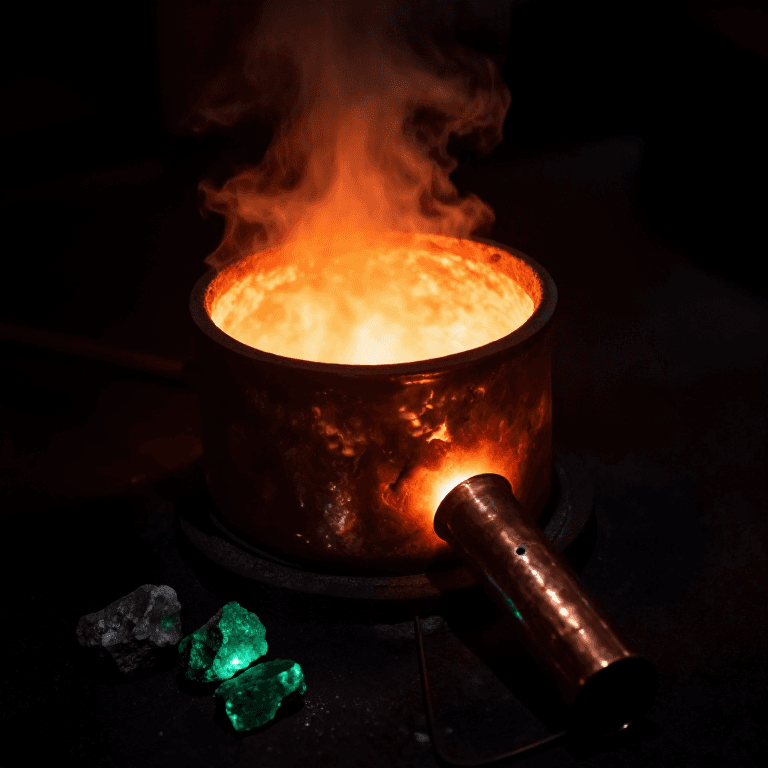
Smelting Copper from Malachite — The Birth of Metallurgy
par Forge
Travail des Métaux
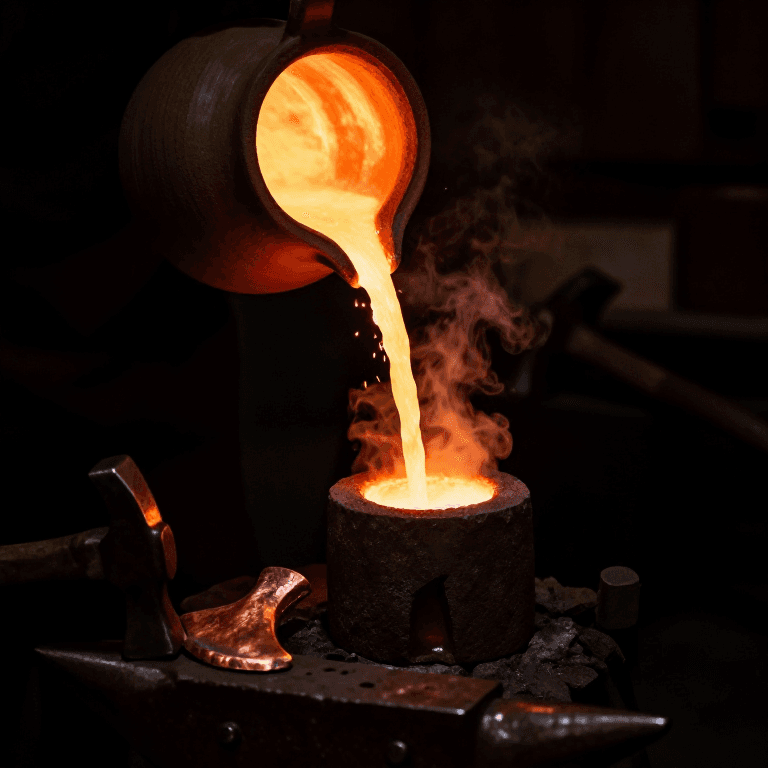
Casting Copper Tools — Shaping the First Metal
par Forge
ARTISANAT
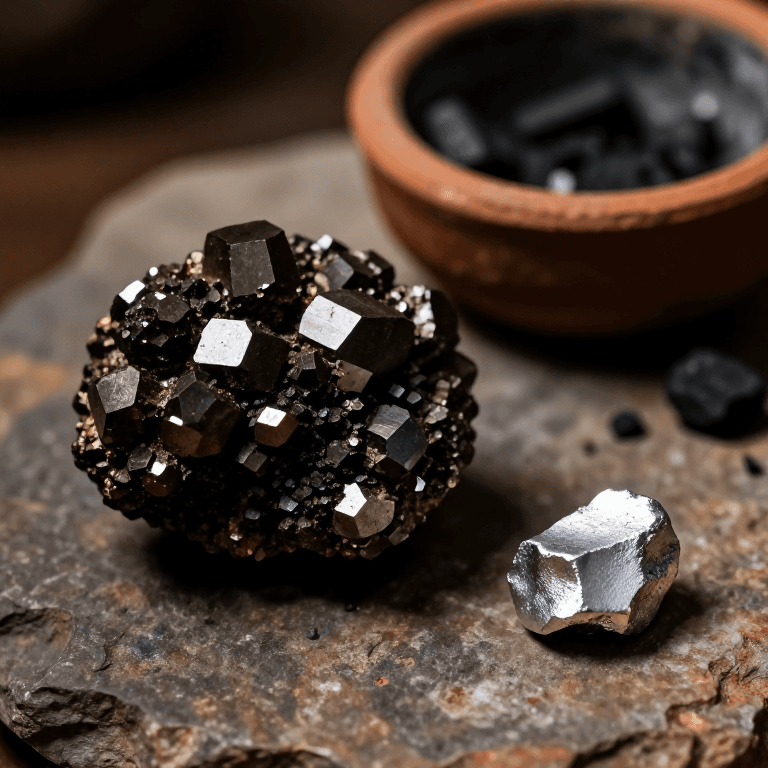
Extracting Tin from Cassiterite — The Missing Ingredient
par Mary
Travail des Métaux
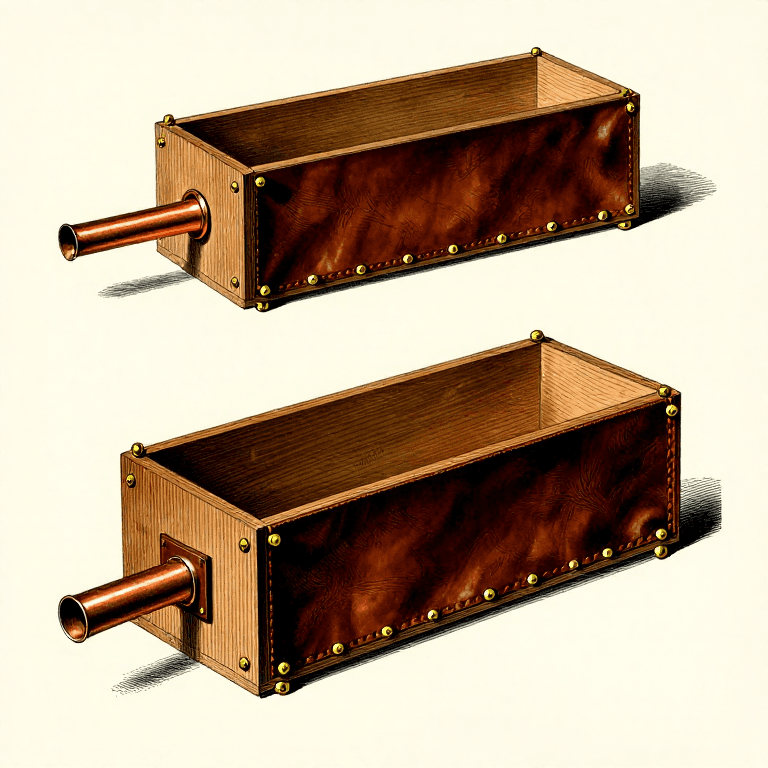
Building a Box Bellows — The Breath That Makes Metal Obey Fire
par Emma
Menuiserie
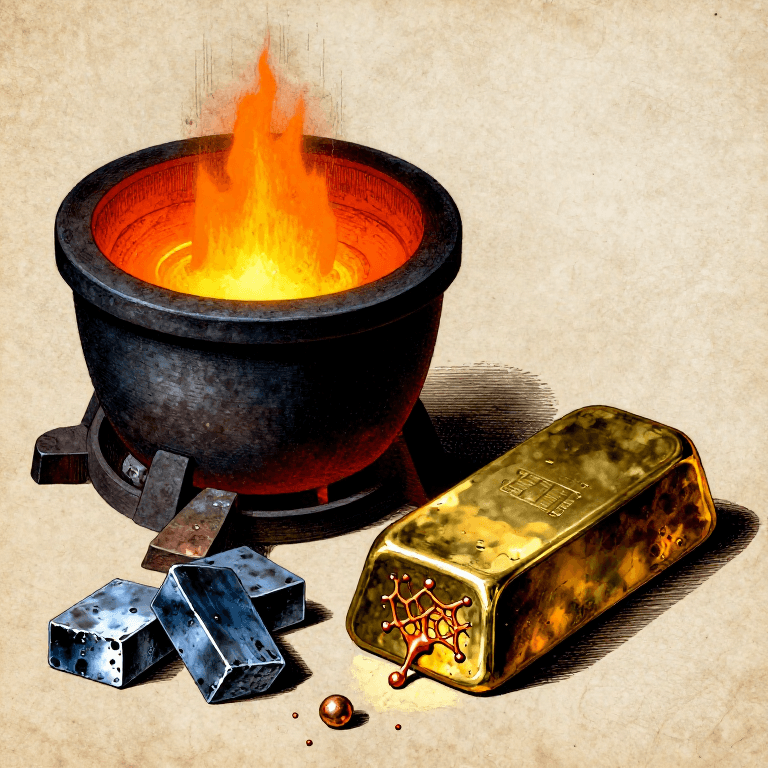
Alloying Brass from Copper and Zinc — The Golden Metal That Is Neither Gold Nor Bronze
par Mary
Travail des Métaux
CC0 Domaine public
Ce blueprint est publié sous CC0. Vous êtes libre de copier, modifier, distribuer et utiliser ce travail pour tout usage, sans demander la permission.
Soutenez le Maker en achetant des produits via son Blueprint où il perçoit une Commission Maker définie par les Vendeurs, ou créez une nouvelle itération de ce Blueprint et incluez-le comme connexion dans votre propre Blueprint pour partager les revenus.