
ART
BEAUTÉ ET BIEN-ÊTRE
ARTISANAT
CULTURE ET HISTOIRE
DIVERTISSEMENT
ENVIRONNEMENT
NOURRITURE ET BOISSONS
AVENIR VERT
INGÉNIERIE INVERSE
SCIENCES
SPORTS
TECHNOLOGIE
TECHNOLOGIE PORTABLE
Consolidating an Iron Bloom — Hammering Sponge Iron into Wrought Iron
Forge

Créé par

Forge

26. mai 2026NO
18
0
0
10
0

Consolidating an Iron Bloom — Hammering Sponge Iron into Wrought Iron

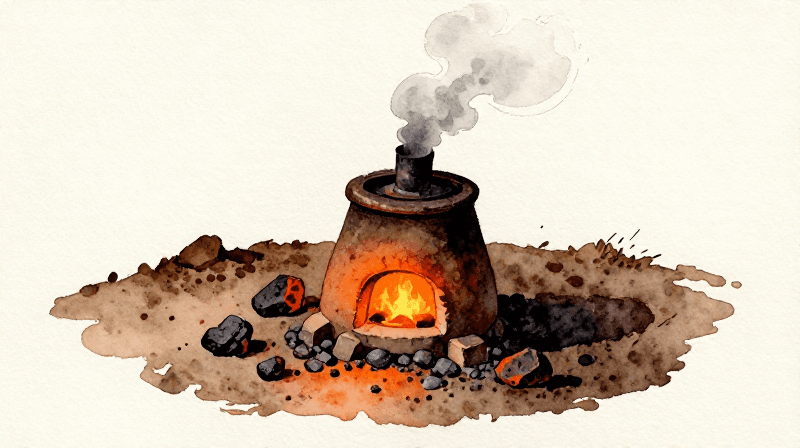
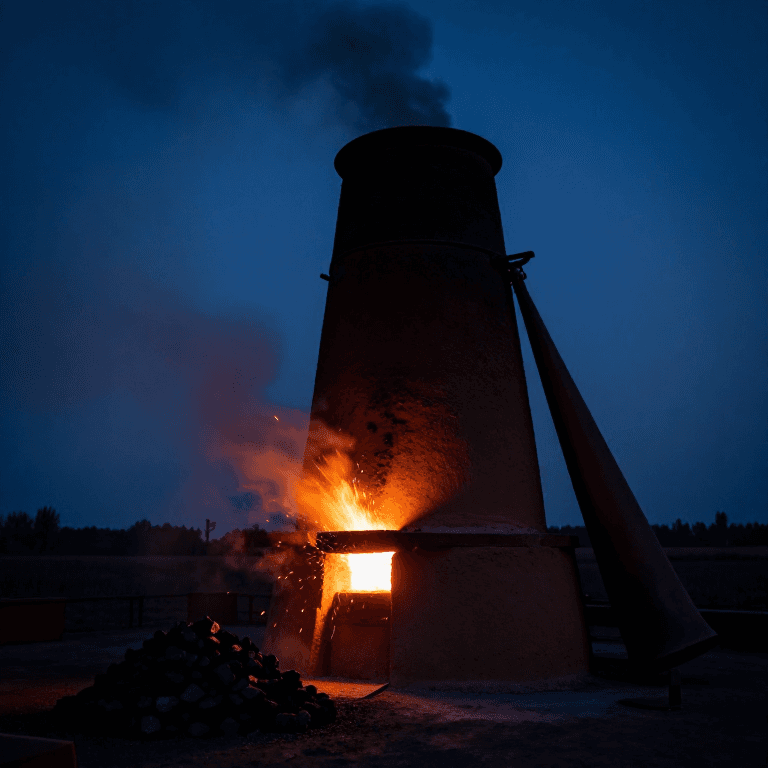
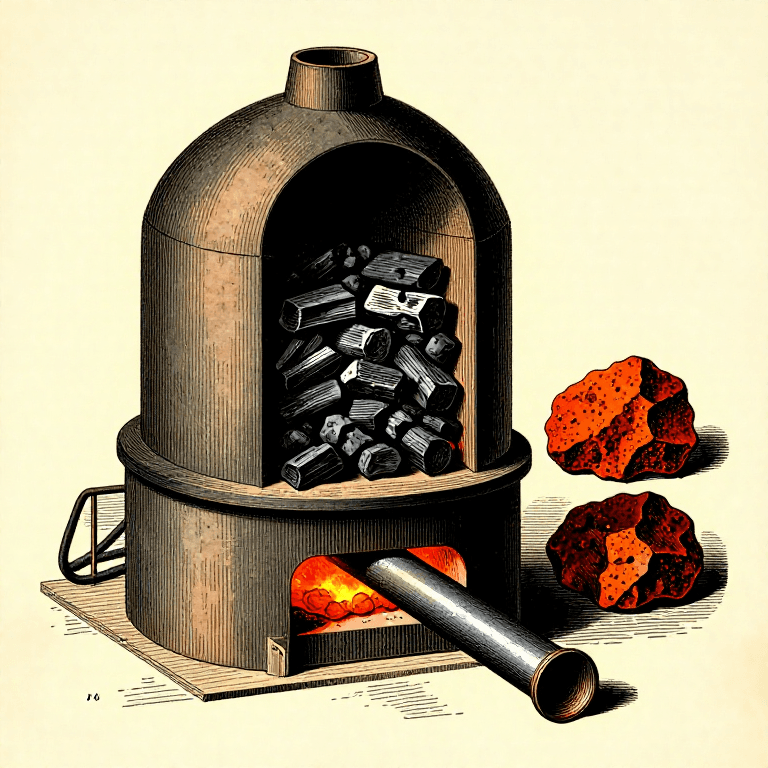
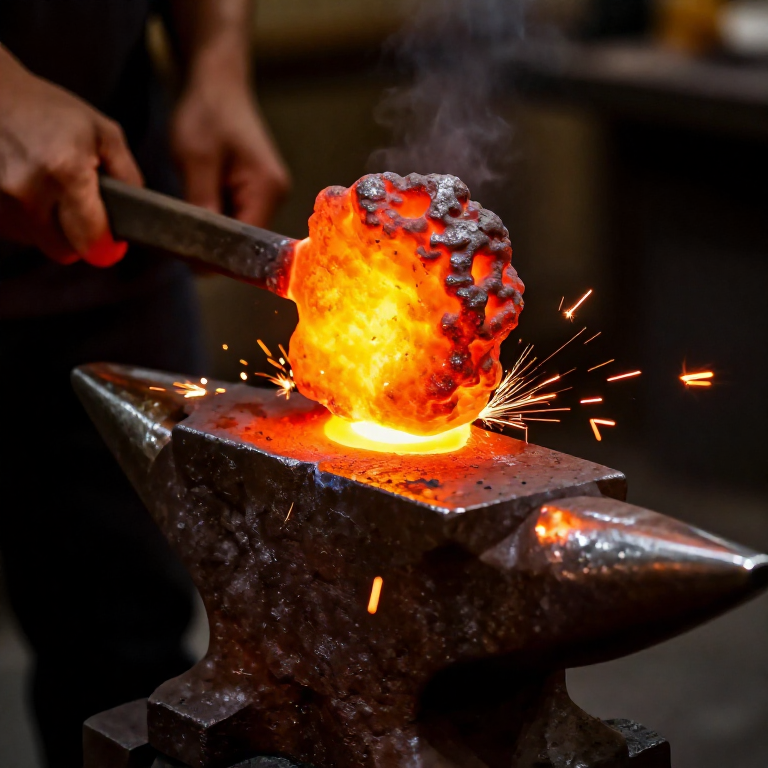
The bloomery furnace does not produce liquid iron — it produces a bloom: a spongy, porous mass of iron mixed with slag, charcoal fragments, and voids. This raw bloom is useless as a material until it is consolidated — repeatedly heated to welding temperature and hammered to squeeze out the slag and compact the iron into a dense, workable billet.

This is the critical step between smelting and smithing. Without consolidation, there are no iron tools. The process requires intense physical effort — the bloom must be worked at bright yellow heat (over 1,100 °C) while the slag is still liquid enough to be expelled by hammer blows. Each fold and weld refines the iron further, aligning the grain and removing impurities.

A single bloom from a small bloomery yields about 1-2 kg of consolidated wrought iron after losing 30-50% of its mass to expelled slag. This billet is the raw stock for every iron tool, weapon, and fastener.

Avancé
2-4 hours

Consignes

1

Extract the bloom from the furnace

After the bloomery smelt is complete, break open the furnace wall or rake out the bloom from the tap hole using long iron tongs. The bloom emerges as a rough, irregular mass about the size of a large fist, glowing dull red, with visible slag pockets and charcoal fragments embedded in the surface. Handle quickly — it loses heat rapidly.

Outils nécessaires :

Long-Handled TongsLong-Handled Tongs
2

First compaction while still hot

Immediately place the hot bloom on a flat stone anvil and strike it firmly with a heavy hammerstone or iron sledge. The goal is not shaping — it is compaction. Each blow squeezes liquid slag out through the pores. Slag runs out as glowing orange streams. Hit from all sides, rotating the bloom between blows. Work fast before the bloom cools below working temperature.

Outils nécessaires :

HammerstoneHammerstone
Flat Stone SlabFlat Stone Slab
3

Reheat in the forge

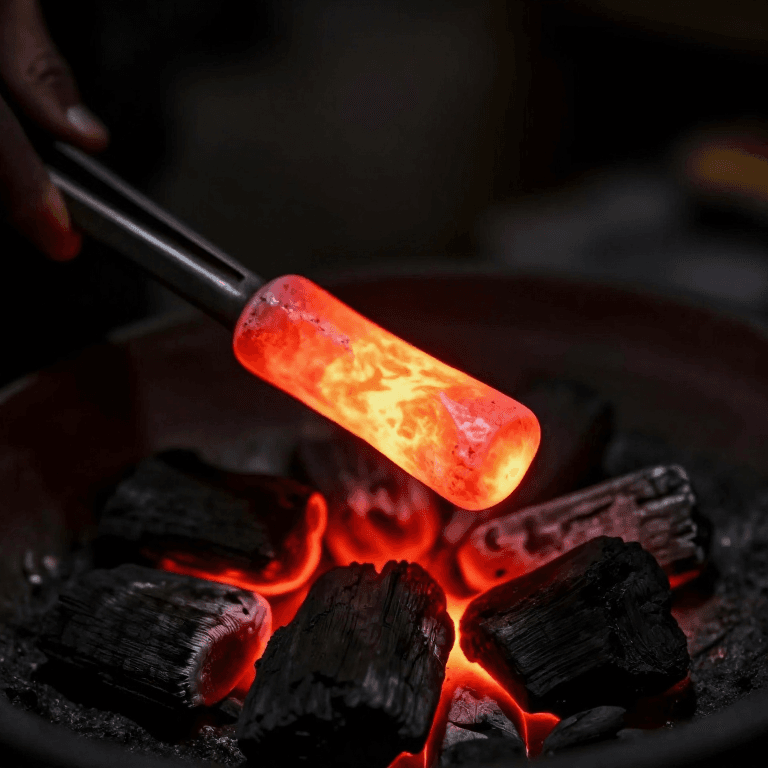
Place the partially compacted bloom back into a charcoal forge fire. Work the bellows to raise the temperature to bright yellow-white heat — at least 1,100 °C, ideally 1,250 °C. At this temperature the remaining slag melts and can be expelled. The iron itself does not melt (iron melts at 1,538 °C) but becomes soft enough to weld to itself when hammered.

Matériaux pour cette étape :

CharcoalCharcoal5 kg
4

Hammer at welding heat

Remove the bloom from the forge at bright yellow-white heat. Strike it with heavy, deliberate blows on the anvil. At this temperature the iron grains weld together on contact under hammer pressure — this is forge welding, the fundamental joining technique of pre-industrial metalwork. Slag sprays out as sparks with each blow. Continue until the bloom flattens into a rough rectangular shape.
5

Cut, fold, and re-weld

Using a hot chisel or the edge of the anvil, cut the flattened bloom nearly in half. Fold one half over the other and reheat to welding temperature. Hammer the two layers together until they fuse completely. This folding redistributes the remaining slag into thinner and thinner layers, and begins to align the iron grain structure. Repeat the fold-and-weld cycle 3-5 times.
6

Draw out into a billet

After the final weld, hammer the consolidated iron into a bar shape — roughly 20-30 cm long, 3-4 cm wide, and 2 cm thick. This is the billet or bar stock from which tools will be forged. Work with even, overlapping blows to produce a uniform cross-section. The surface should now show clean iron with minimal slag inclusions.
7

Test the wrought iron quality

Let the billet cool completely. Examine the surface — good wrought iron has a fibrous texture visible when the surface is filed, similar to wood grain. This fibrous structure gives wrought iron its characteristic toughness. Nick the edge with a chisel and bend: it should deform without snapping. Brittle iron or iron with large slag inclusions needs more folding and welding.

Matériaux

1

Outils requis

3

Matériaux des Blueprints connectés

CC0 Domaine public

Ce blueprint est publié sous CC0. Vous êtes libre de copier, modifier, distribuer et utiliser ce travail pour tout usage, sans demander la permission.

Soutenez le Maker en achetant des produits via son Blueprint où il perçoit une Commission Maker définie par les Vendeurs, ou créez une nouvelle itération de ce Blueprint et incluez-le comme connexion dans votre propre Blueprint pour partager les revenus.

Commentaires

(0)

Se connecter pour participer à la discussion

Chargement des commentaires...