Collaboration
ART
BEAUTÉ ET BIEN-ÊTRE
ARTISANAT
CULTURE ET HISTOIRE
DIVERTISSEMENT
ENVIRONNEMENT
NOURRITURE ET BOISSONS
INGÉNIERIE INVERSE
SCIENCES
SPORTS
TECHNOLOGIE
TECHNOLOGIE PORTABLE
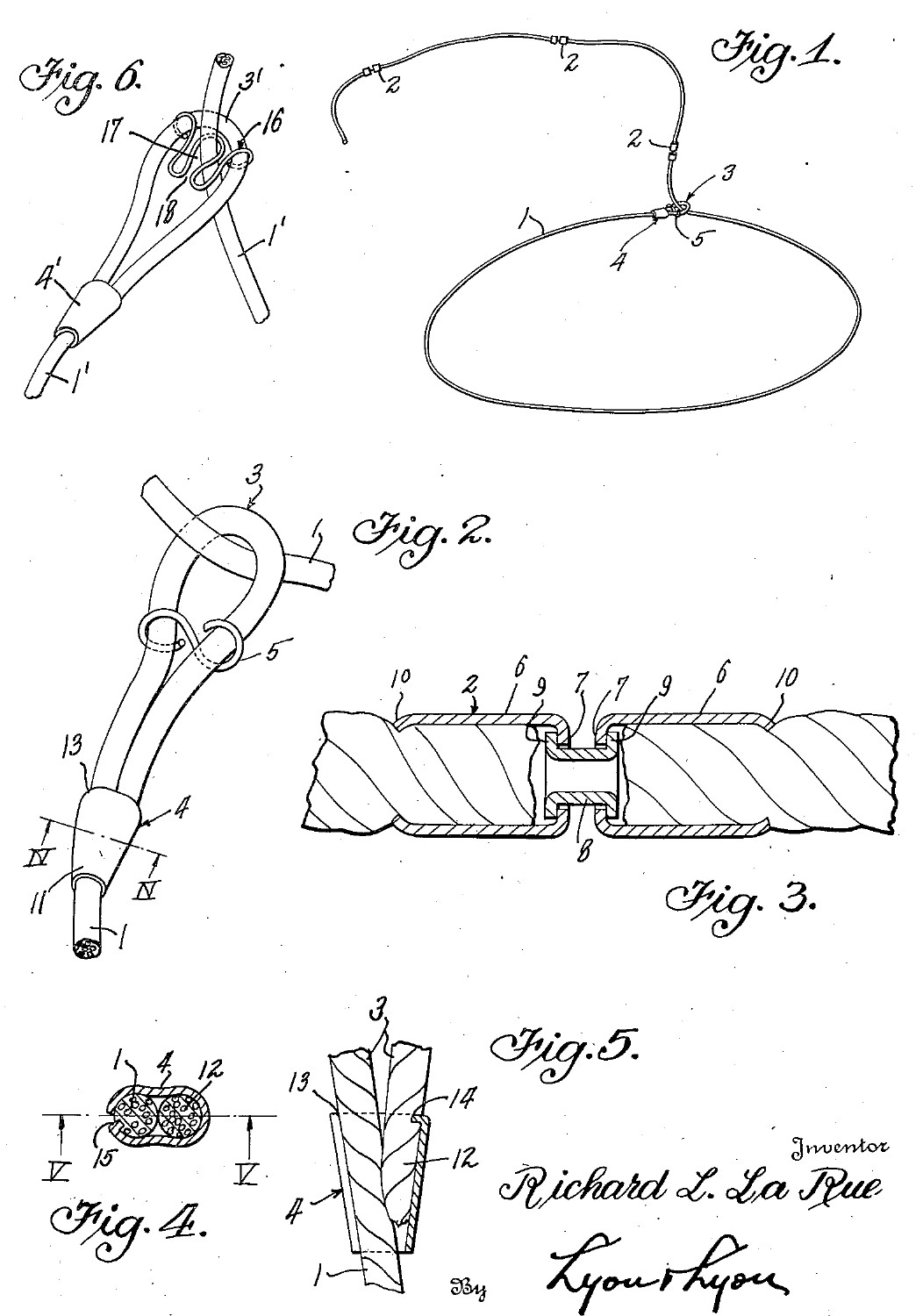


Trick Lariat That Will Not Twist: Brass Swivels in the Rope and a Choker on the Hondoo (La Rue, 1935)
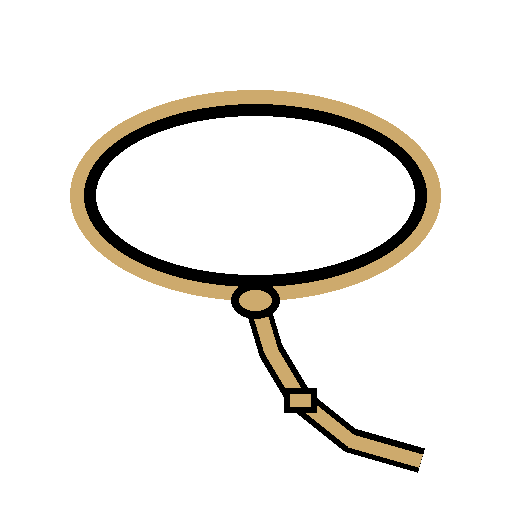
Richard L. La Rue of Los Angeles received US 1,993,010, dated 5 March 1935, for a lariat that beginners can spin. A spinning loop twists the rope; an expert lets it roll in the hand, a beginner cannot. La Rue cuts the rope into sections joined by small brass swivels, so the twist runs out. The hondoo, the eye the rope runs through, is clamped in a brass ferrule, and a wire choker can lock the loop at one size.
We make it from cotton rope and brass tube. All sizes are ours.
Intermédiaire
About 4 hours
Consignes
1
1
Where the swivels go
Where the swivels go
Chargement du notebook Jupyter…
2
2
Read US 1,993,010
Read US 1,993,010
"In accordance with the present invention, twisting of the rope is prevented by inserting several swivels at intervals along the rope, so that no matter how the operator holds it there is always at least one swivel between his hand and the loop. The swivels are made substantially the same outside diameter as the rope so that they pass readily through the hondoo."
3
3
Cut the rope
Cut the rope
Cut 6 m of 10 mm braided cotton rope (ours) into the sections the notebook gives. Wrap tape round each place before cutting so the ends do not fray.
Matériaux pour cette étape :
 Corde de coton1 pièce
Outils nécessaires :
 Mètre ruban
 Cutter de précision
4
4
Make the ferrules
Make the ferrules
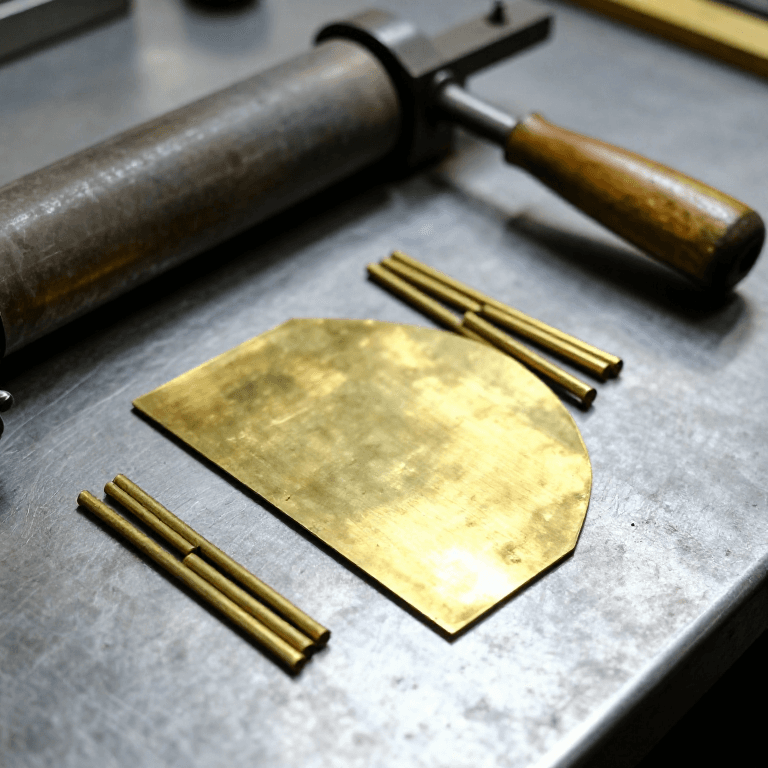
For three swivels cut six 25 mm pieces of 3/8 in brass tube (ours), his ferrules 6, and file the ends square. Soften the brass by heating each piece to a dull red with the torch and dropping it in water. On the anvil, tap one end of each inward all round with the hammer, turning it as you go, until the opening is about 4.5 mm: his end wall 7. Flare the other end out a little so the rope will go in.
Matériaux pour cette étape :
 Tube de laiton de 9,5 mm de diamètre extérieur1 pièce
Outils nécessaires :
 Scie à métaux
 Jeu de limes
 Chalumeau à propane
 Baquet de trempe
 Eau
 Enclume
 Marteau à panne bombée
 Lunettes de sécurité
5
5
Join the ferrules into swivels
Join the ferrules into swivels
Cut three 10 mm pieces of 4 mm brass tube (ours), his member 8. Put two ferrules end wall to end wall, push the small tube through both openings, and flare its ends with a centre punch from inside each ferrule until they cannot pull back through: his flanges 9. The two halves must turn freely on each other.
Matériaux pour cette étape :
 Tube en laiton1 pièce
Outils nécessaires :
Scie à métaux PointeauMarteau à panne bombée
 Étau d'établi
6
6
Fit the rope into the swivels
Fit the rope into the swivels
Push a rope end into each open ferrule as far as it goes. Squeeze the flared end back in, with the hammer on the anvil or in the vice, until it digs into the rope all round. Pull hard on each joint to test it.
Outils nécessaires :
Marteau à panne bombéeEnclumeÉtau d'établi7
7
Make the hondoo
Make the hondoo
Cut 40 mm of brass tube big enough to take the rope doubled (ours) and saw it open along its length. Squeeze one end round the single rope; flatten the other end into an oval. Pass the loop end of the rope through, from the small end, then double its butt end back and push it into the oval end as far as it will go, leaving a small eye: his hondoo 3. Dent the oval end to hold the butt (his 14) and turn one cut edge in against the rope (his 15).
Matériaux pour cette étape :
Tube en laiton1 pièceOutils nécessaires :
Scie à métauxÉtau d'établi Pince platePointeauMarteau à panne bombée
8
8
Bend the choker
Bend the choker
Bend 2.5 mm steel wire (ours) into a figure 8 round the two rope parts of the hondoo, one eye on each, so it slides when pushed but stays put by friction. Pass the free end of the rope through the hondoo to make the loop.
Matériaux pour cette étape :
 Fil d'acier1 pièce
Outils nécessaires :
 Pince coupante
 Pince à becs rondsPince plate
9
9
Use it
Use it
With the choker pushed up to the ferrule, the rope runs freely through the hondoo like any lariat. To spin a loop of one size, slide the choker away from the ferrule until the hondoo grips the running rope: the loop then stays the same size while it spins.
10
10
Troubleshooting
Troubleshooting
Swivel trick lariat troubleshooting.
Flow
Loading...
11
11
History and honest limits
History and honest limits
**Richard L. La Rue** of Los Angeles, US 1,993,010, dated 5 March 1935, filed 16 November 1932, for "a lariat for use by amateurs in performing tricks". He claimed the choker, "a figure 8 clamp of heavy wire", and a clamp "movable back and forth over the doubled rope constituting the hondoo for varying the size of the eye". He also shows a second choker of bent wire (Fig. 6), not built here. He names no rope and gives no sizes: the cotton rope, its length, the tubes, the annealing, the wire and all sizes are ours.
Matériaux
4- 1 pièceEspace réservé
- Espace réservé
- 1 pièceEspace réservé
- 1 pièceEspace réservé
Outils requis
15- 1 vendor sell this, none ship to you yetEspace réservé
- Espace réservé
- Espace réservé
- Espace réservé
- Espace réservé
- Espace réservé
- Espace réservé
- Espace réservé
- Espace réservé
- Espace réservé
- Espace réservé
- Espace réservé
- Espace réservé
- Espace réservé
- Espace réservé
Ce plan fabrique
Blueprints liés
Ces blueprints partagent des connaissances — techniques, matériaux ou principes


CC0 Domaine public
Ce blueprint est publié sous CC0. Vous êtes libre de copier, modifier, distribuer et utiliser ce travail pour tout usage, sans demander la permission.
Soutenez le Maker en achetant des produits via son Blueprint où il perçoit une Commission Maker définie par les Vendeurs, ou créez une nouvelle itération de ce Blueprint et incluez-le comme connexion dans votre propre Blueprint pour partager les revenus.