ART
BEAUTÉ ET BIEN-ÊTRE
ARTISANAT
CULTURE ET HISTOIRE
DIVERTISSEMENT
ENVIRONNEMENT
NOURRITURE ET BOISSONS
INGÉNIERIE INVERSE
SCIENCES
SPORTS
TECHNOLOGIE
TECHNOLOGIE PORTABLE
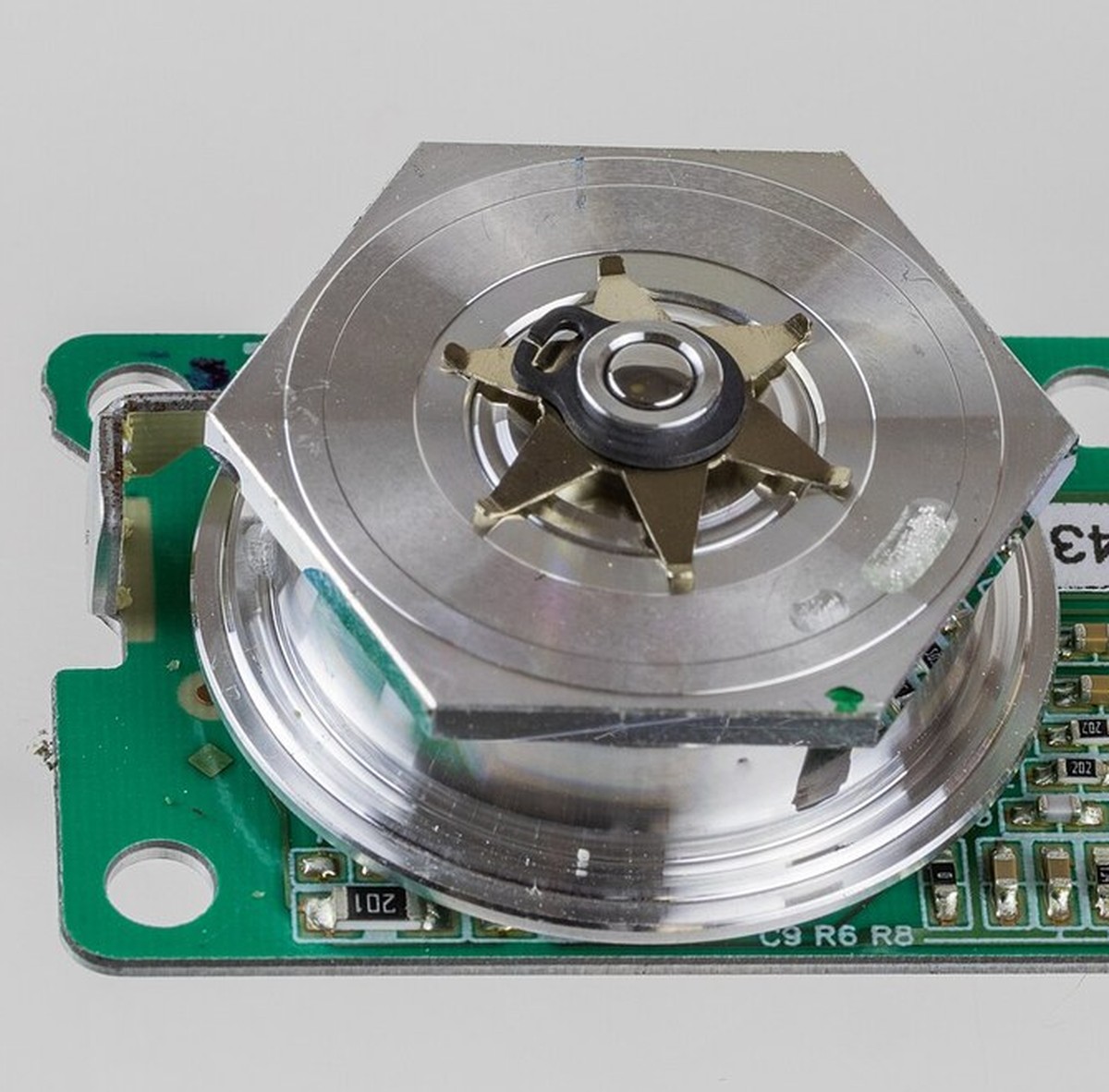


The Laser Printer
Carlson's xerography could already turn a pattern of light on a charged drum into fused toner on paper. What it could not do was invent the pattern: it needed an original, lit and imaged through a lens. A copier copies.
Gary Starkweather's argument at Xerox from 1969 was that the lens and the original could both be thrown away and the latent image DRAWN, one dot at a time, by a single laser beam swept across the drum by a spinning polygon mirror. He had a working scanner on a Xerox 7000 engine by 1971. The page no longer had to exist before it was printed.
The design is then pure arithmetic. Eight and a half inches at 300 dots per inch is 2550 dots a line; eleven inches of them, eight times a minute, is 440 lines a second; multiply and the laser must switch at over a megahertz while the mirror holds a facet on the page. Push to 1200 dpi and 20 pages a minute and it is 200 megahertz and 22,000 rpm on air bearings - which is why the idea had to wait for the semiconductor laser.
Two subtleties decide whether it works. The spot must be about one dot pitch across, and diffraction ties that to how wide the beam is on the mirror, so higher resolution forces a bigger facet on a faster-spinning mirror. And a mirror turning at a constant rate sweeps at a constant ANGULAR rate, so an ordinary lens would place the spot at f-tan-theta and stretch the dots apart towards the margins. The scan lens is deliberately barrel-distorted to give f-theta instead. Its aberration is the feature.
Avancé
4 hours
Consignes
1
1
Spin a mirror and sweep a line
Spin a mirror and sweep a line
Glue the front-surface mirror flat across the shaft of the geared motor so it turns in its own plane, and aim the laser module at it from the side. On a wall three metres away you get a bright horizontal line.
Run the motor from the bench supply and watch the line brighten and steady as the speed comes up. Goggles on, and keep the beam below eye level.
Matériaux pour cette étape :
 Miroir à surface avant1 pièce
 Jeu de modules à diode laser1 pièce
Outils nécessaires :
 Motoréducteur à courant continu
 Alimentation de laboratoire
 Lunettes-masque de sécurité
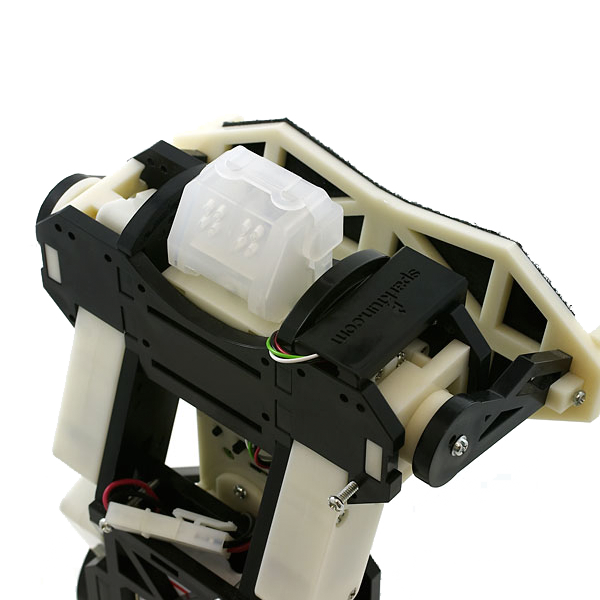 Laser Module Mount
 Mètre ruban
2
2
Measure f-tan-theta, and add a beam detector
Measure f-tan-theta, and add a beam detector
Chop the laser at a steady rate from the function generator and photograph the wall: the flashes mark equal ANGLES. Measure their spacing on paper taped to the wall. The gaps grow towards the ends, and that growth is the error the f-theta lens exists to remove.
Now put the photodiode just before the start of the sweep and trigger the scope from it. Every line now starts from the beam, not from the motor.
Matériaux pour cette étape :
 Papier4 feuilles
 Photodiode (BPW34)1 pièce
Outils nécessaires :
 Générateur de fonctions
 Oscilloscope numériqueMètre ruban
 Règle
Règle3
3
Pixel clock, spot size, scan error, and four exposures
Pixel clock, spot size, scan error, and four exposures
Chargement du notebook Jupyter…
Outils nécessaires :
 Ordinateur de bureau
4
4
Compendium: the jitter, and what the polygon must not do
Compendium: the jitter, and what the polygon must not do
Twelve facets are twelve slightly different mirrors. A facet tilted by a few arcseconds out of the plane throws its whole scan line up or down the page, so the lines bunch and open in a repeating pattern of twelve - banding, and the eye finds it instantly in a grey fill. The cure is optical, not mechanical: a cylindrical lens makes the drum surface conjugate to the facet, so a tilt of the facet moves the beam angle but not its landing point. Along the scan the cure is electronic - a start-of-scan photodiode fires before the page begins and restarts the pixel clock, so timing errors never accumulate across a line.
The 1971 machine drew its beam from a helium-neon tube, which cannot be switched at a megahertz, so the beam was modulated externally with an acousto-optic cell. The Xerox 9700 of 1977 still worked this way. Only once the semiconductor laser could be turned on and off by its own drive current did the scanner shrink from a room to a plastic box, and the same polygon-and-f-theta geometry went into desktop printers, supermarket barcode scanners and laser light shows unchanged.
Matériaux
4- 1 pièceEspace réservé
- 1 pièceEspace réservé
- 4 feuillesEspace réservé
- 1 pièceEspace réservé
Outils requis
9- 1 vendor sell this, none ship to you yetEspace réservé
- Espace réservé
- Espace réservé
- Laser Module Mount10 % de commission€4.41
- 1 vendor sell this, none ship to you yetEspace réservé
- Espace réservé
- 1 vendor sell this, none ship to you yetEspace réservé
- Espace réservé
- Espace réservé
Blueprints liés
Ces blueprints partagent des connaissances — techniques, matériaux ou principes



CC0 Domaine public
Ce blueprint est publié sous CC0. Vous êtes libre de copier, modifier, distribuer et utiliser ce travail pour tout usage, sans demander la permission.
Soutenez le Maker en achetant des produits via son Blueprint où il perçoit une Commission Maker définie par les Vendeurs, ou créez une nouvelle itération de ce Blueprint et incluez-le comme connexion dans votre propre Blueprint pour partager les revenus.