ART
BEAUTÉ ET BIEN-ÊTRE
ARTISANAT
CULTURE ET HISTOIRE
DIVERTISSEMENT
ENVIRONNEMENT
NOURRITURE ET BOISSONS
INGÉNIERIE INVERSE
SCIENCES
SPORTS
TECHNOLOGIE
TECHNOLOGIE PORTABLE
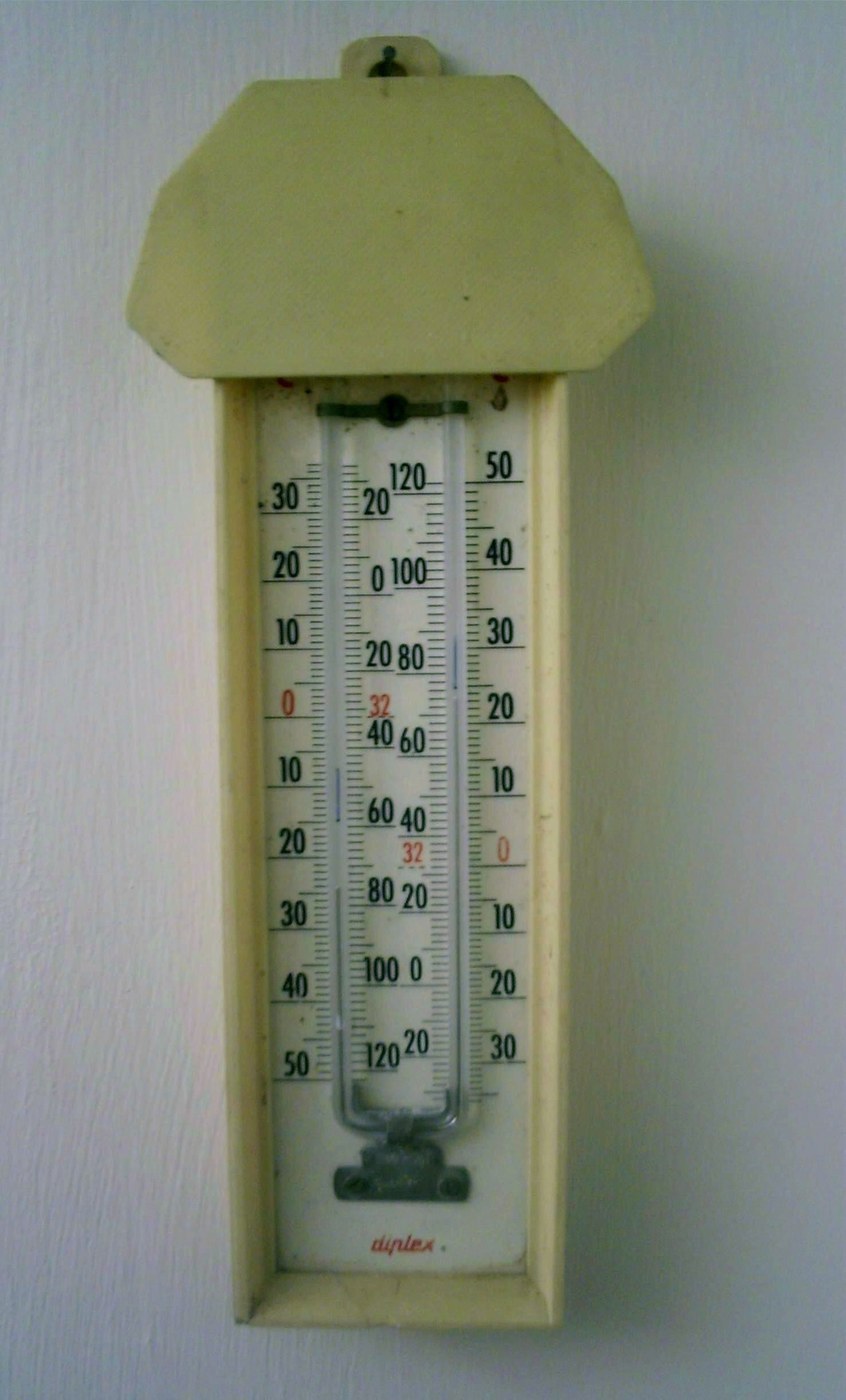


Maximum and Minimum Thermometers
An ordinary thermometer tells you the temperature at the moment you look at it. That is almost useless for weather, because the two numbers that matter — the hottest and coldest the day reached — happen in the middle of the afternoon and just before dawn, when nobody is standing there.
James Six solved it in 1782 with one instrument that records both. A U-tube holds a liquid that expands, pushing mercury round the bend; a small steel index in each limb is shoved along by the mercury and STAYS where it was pushed, held by a light spring. Read the indexes and you have the extremes since you last reset them.
Six's design is still sold. Here you will calibrate one properly, learn to read it without the classic mistake, and understand why the numbers are only as good as the screen the instrument sits in — which is the rung after next.
Intermédiaire
4 hours
Consignes
1
1
Understand what the indexes do before you touch it
Understand what the indexes do before you touch it
In a Six's thermometer, the mercury is only a piston. As the temperature rises, the working liquid expands and pushes the mercury up the RIGHT limb, driving that index ahead of it. As it falls, the mercury rises up the LEFT limb instead, driving that index.
Both indexes are pushed and never pulled, so each one stays at the extreme it reached. This is why the instrument records both ends of a swing it never witnessed being read — and why you must reset it, or you are reading the extremes of some unknown earlier period.
Matériaux pour cette étape :
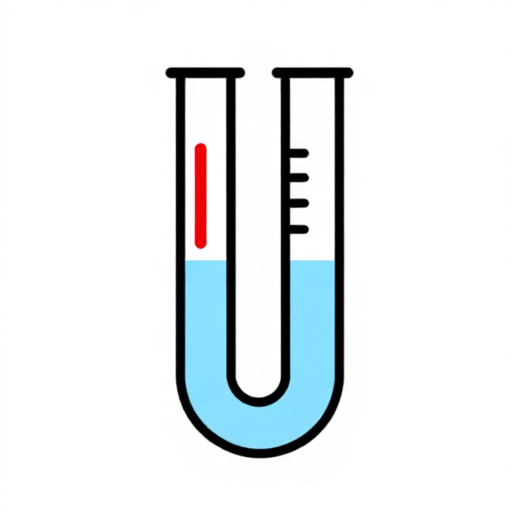 Thermomètre à maxima et minima1 pièce
2
2
Read from the END of the index nearest the mercury
Read from the END of the index nearest the mercury
Each index is a short bar. Read the scale at the end of it that faces the mercury, not the middle and not the far end.
The index is a few millimetres long and the scale is fine, so reading the wrong end is easily a two-degree error, every time, in the same direction. It is the single commonest mistake with this instrument and it produces a record that looks entirely plausible. Also read the LEFT limb's minimum scale carefully: on most instruments it runs the opposite way to the right-hand one.
3
3
Reset with a magnet, never by shaking
Reset with a magnet, never by shaking
Draw a small magnet along the glass to pull each steel index back down to the surface of the mercury. Reset both, every time you read.
Shaking a Six's thermometer breaks the liquid column and traps air, which ruins it permanently — and unlike a clinical thermometer it cannot be shaken back together. If the column does separate, warm the bulb gently and slowly so the expanding liquid drives the gap out at the top; it works often enough to be worth trying before replacing the instrument.
4
4
Calibrate against the two fixed points
Calibrate against the two fixed points
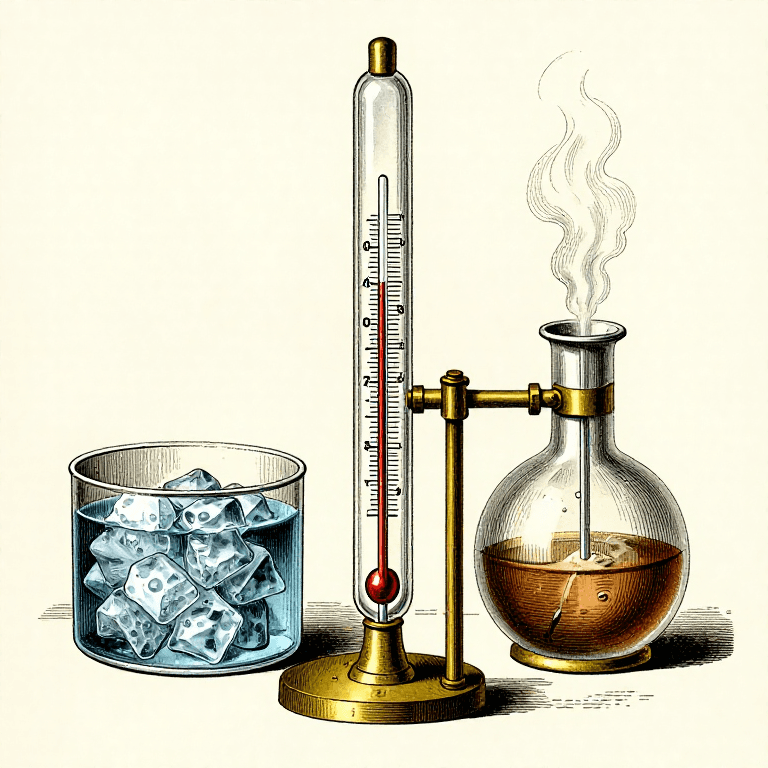
Use the method from the Celsius blueprint: crushed melting ice for zero, and boiling water — corrected for your pressure — for one hundred.
Do it at both ends, and record the error at each. A cheap instrument is commonly a degree or more out, and it is usually out by DIFFERENT amounts at the two points, which means a single offset will not fix it. Write both corrections on a tag tied to the instrument, and apply them for the rest of its life.
Matériaux pour cette étape :
 Eau distillée2 litres
Outils nécessaires :
 Thermomètre
 Seau
Seau5
5
What the daily extremes actually tell you
What the daily extremes actually tell you
Chargement du notebook Jupyter…
6
6
Mount it where it measures air, not sunshine
Mount it where it measures air, not sunshine
Hang it vertically, in shade, with free air all round it, well away from walls and paving.
A thermometer in sun reads its own absorbed radiation, not the air — easily eight degrees high — and one against a brick wall reads the wall. This is not a detail that can be corrected afterwards, because the error depends on the sun, the wind and the surface. The proper answer is the Stevenson screen, two rungs further on, and until you have one your maxima are decorative.
Matériaux
2- Espace réservé
- 2 litresEspace réservé
Blueprints liés
Ces blueprints partagent des connaissances — techniques, matériaux ou principes


CC0 Domaine public
Ce blueprint est publié sous CC0. Vous êtes libre de copier, modifier, distribuer et utiliser ce travail pour tout usage, sans demander la permission.
Soutenez le Maker en achetant des produits via son Blueprint où il perçoit une Commission Maker définie par les Vendeurs, ou créez une nouvelle itération de ce Blueprint et incluez-le comme connexion dans votre propre Blueprint pour partager les revenus.