ART
BEAUTÉ ET BIEN-ÊTRE
ARTISANAT
CULTURE ET HISTOIRE
DIVERTISSEMENT
ENVIRONNEMENT
NOURRITURE ET BOISSONS
INGÉNIERIE INVERSE
SCIENCES
SPORTS
TECHNOLOGIE
TECHNOLOGIE PORTABLE
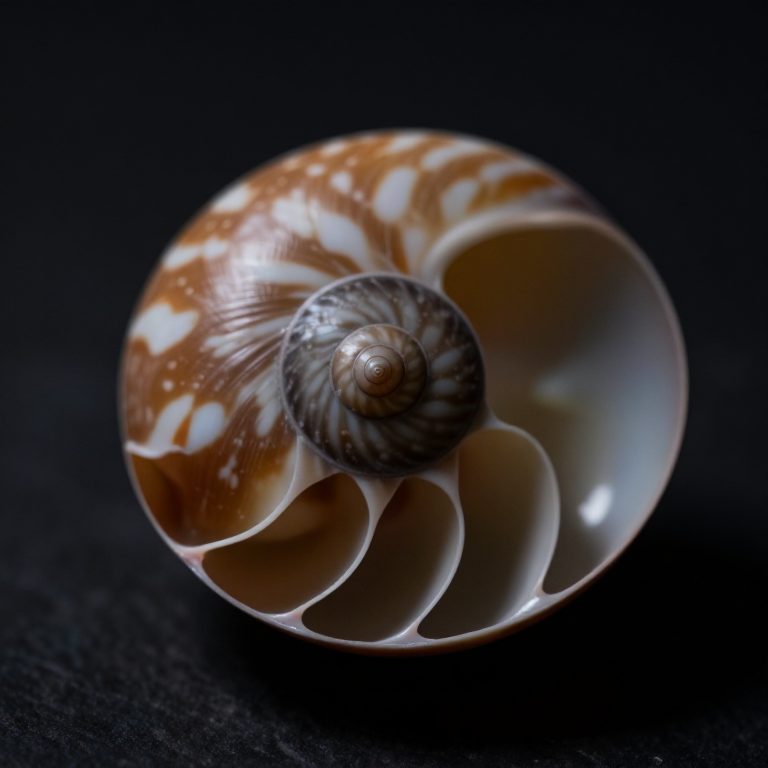


Fibonacci Numbers — Count the Spirals on a Pinecone
A hands-on maths project: count the two sets of spirals on a real pinecone or sunflower and discover they are Fibonacci numbers, then find the golden ratio hiding in the sequence. A Python cell shows the ratios closing in on 1.618, and a compendium separates the real maths of nature from the myths.
Débutant
30 minutes
Consignes
1
1
Nature's favourite numbers
Nature's favourite numbers
In 1202 Leonardo of Pisa -- Fibonacci -- wrote down a sequence where each number is the sum of the two before: 1, 1, 2, 3, 5, 8, 13, 21... The astonishing thing is that plants count with these numbers, and you can check it yourself.
2
2
Count the spirals
Count the spirals
Take a pinecone (a sunflower head or a pineapple works too). Look at the base: the scales form spirals winding one way and another set winding the other way. Mark a starting scale and count the spirals going clockwise, then count those going anticlockwise. Write both numbers down.
Matériaux pour cette étape :
 Boîte de bricolage glands et pommes de pin1 pièce
Outils nécessaires :
 Jeu de crayons graphite
3
3
Find the Fibonacci numbers
Find the Fibonacci numbers
Your two spiral counts are almost always two numbers that sit next to each other in the Fibonacci sequence -- very often 8 and 13, or 5 and 8, or 13 and 21. Check them against the sequence 1, 1, 2, 3, 5, 8, 13, 21, 34. Plants grow this way because it packs the seeds most efficiently.
Outils nécessaires :
 Calculatrice
4
4
Meet the golden ratio
Meet the golden ratio
Chargement du notebook Jupyter…
Outils nécessaires :
 Ordinateur de bureauCalculatrice
5
5
Compendium: real patterns and tall tales
Compendium: real patterns and tall tales
What is true and what is exaggerated. (1) Fibonacci spiral counts in pinecones, sunflowers, pineapples and daisy petals are REAL, and happen because each new part grows at the 'golden angle' of about 137.5 degrees, which packs them tightest. (2) The ratio of neighbouring Fibonacci numbers genuinely approaches the golden ratio, phi = (1 + square root of 5) over 2 = 1.618..., the number satisfying phi-squared = phi + 1. (3) But be sceptical of claims that the golden ratio rules the Parthenon, the Mona Lisa or the 'perfect' face -- many are cherry-picked or made up. The maths in the pinecone is beautiful and real; not every romantic story about it is.
Matériaux
2- Espace réservé
- 1 feuilleEspace réservé
Outils requis
3- Espace réservé
- Espace réservé
- Espace réservé
Blueprints liés
Ces blueprints partagent des connaissances — techniques, matériaux ou principes
CC0 Domaine public
Ce blueprint est publié sous CC0. Vous êtes libre de copier, modifier, distribuer et utiliser ce travail pour tout usage, sans demander la permission.
Soutenez le Maker en achetant des produits via son Blueprint où il perçoit une Commission Maker définie par les Vendeurs, ou créez une nouvelle itération de ce Blueprint et incluez-le comme connexion dans votre propre Blueprint pour partager les revenus.