ART
BEAUTÉ ET BIEN-ÊTRE
ARTISANAT
CULTURE ET HISTOIRE
DIVERTISSEMENT
ENVIRONNEMENT
NOURRITURE ET BOISSONS
INGÉNIERIE INVERSE
SCIENCES
SPORTS
TECHNOLOGIE
TECHNOLOGIE PORTABLE
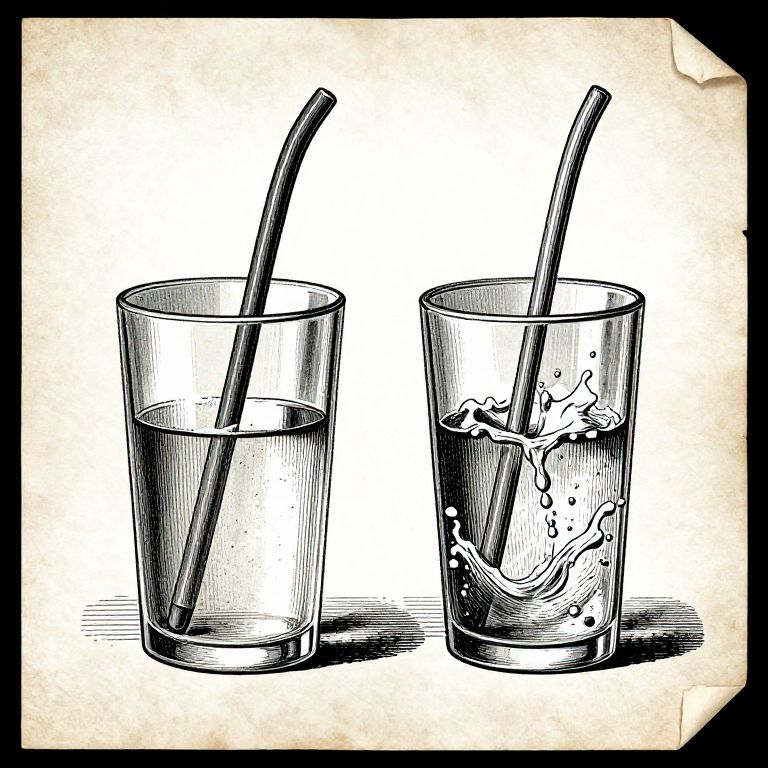


Oxygen: Wanted for an Hour, Ruinous for Ever After
There is exactly one moment in a ferment when air is welcome, and it is before the yeast starts working. After that, every bubble of air that reaches the liquid is doing damage that cannot be undone.
Oxygen reacts with compounds in beer and wine to produce stale, papery, sherry-like flavours, and it browns the colour. It also lets aerobic spoilage organisms — acetic acid bacteria above all — turn a drink into vinegar.
Which makes the whole back half of brewing an exercise in not splashing. Racking, bottling, and every transfer is a chance to dissolve air, and the technique for each one is designed around that single fact.
Intermédiaire
2 hours
Consignes
1
1
Aerate hard before pitching, and never after
Aerate hard before pitching, and never after
Cool wort holds oxygen; hot wort does not, and hot wort exposed to air oxidises immediately. So aeration happens AFTER chilling and BEFORE the yeast goes in, and at no other time.
Shaking a sealed fermenter for a minute, splashing between vessels, or an aquarium pump through a sanitised stone all work. Pure oxygen through a stone is faster and is what commercial breweries use.
Mead and wine are slightly different: they benefit from small deliberate oxygen doses in the first few days, while the yeast is still growing, because honey and juice are short of the nutrients that let yeast build membranes. After the first third of the ferment, the rule reverts.
Matériaux pour cette étape :
 Eau1 litre
 Miel1 pièce
Outils nécessaires :
 Dame-jeanne en verre
 Barboteur
 Thermomètre à lecture instantanée
2
2
Rack quietly, under the surface, and only when you must
Rack quietly, under the surface, and only when you must
Siphon rather than pour, and put the end of the tube at the BOTTOM of the receiving vessel so the liquid fills from below and never splashes or falls through air.
Every transfer picks up some oxygen however careful you are, so the best transfer is the one you do not do. Racking to a secondary vessel used to be routine advice and is now considered unnecessary for most beers — the clarity gained rarely justifies the oxygen taken on.
Where racking IS needed — long ageing, bulk ageing of mead or wine, getting off a heavy sediment before months in the vessel — do it once, quietly, and fill the receiving vessel as full as possible.
Matériaux pour cette étape :
Eau1 litreOutils nécessaires :
 Siphon automatiqueDame-jeanne en verre
 Ensemble de nettoyage et de désinfection pour le brassage
3
3
Headspace is stored oxygen
Headspace is stored oxygen
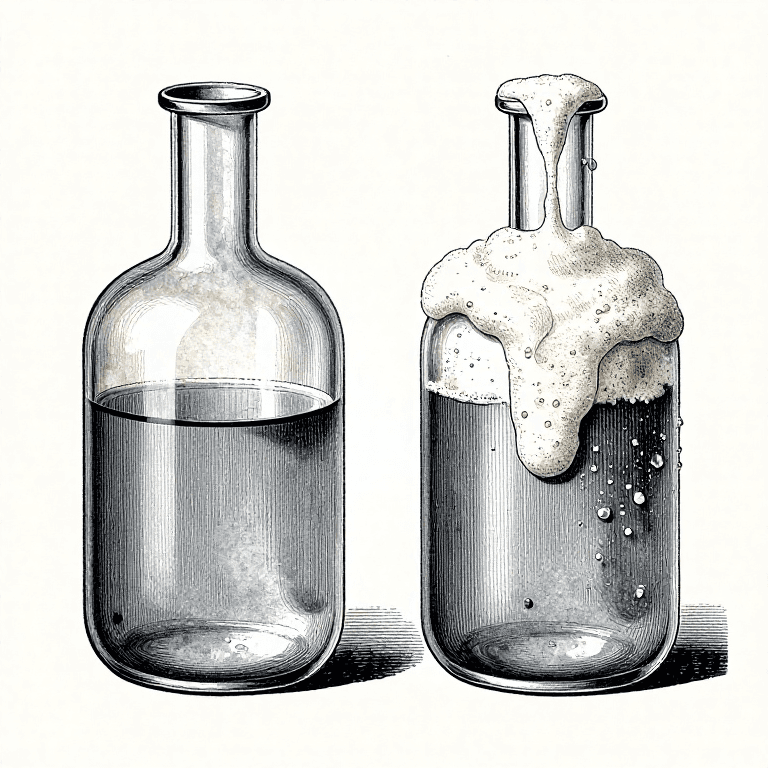
The air above the liquid in a vessel is a reservoir that will slowly dissolve in. During active fermentation it does not matter — the CO2 being produced purges it and forms a blanket. After fermentation stops, it does.
So a vessel used for ageing should be filled nearly to the airlock, and a half-full carboy left for six months will oxidise regardless of how good the airlock is. Top up with more of the same liquid, or use a smaller vessel.
CO2 is heavier than air and does form a protective layer, which is why an active ferment is safe with a large headspace. Relying on that blanket weeks after activity has stopped is the mistake, because it is slowly lost every time the vessel is moved or opened.
Matériaux pour cette étape :
Eau1 litreOutils nécessaires :
Dame-jeanne en verreBarboteur Cuve de fermentation (dame-jeanne en verre)
4
4
The aerobic ferments are the exceptions that prove it
The aerobic ferments are the exceptions that prove it
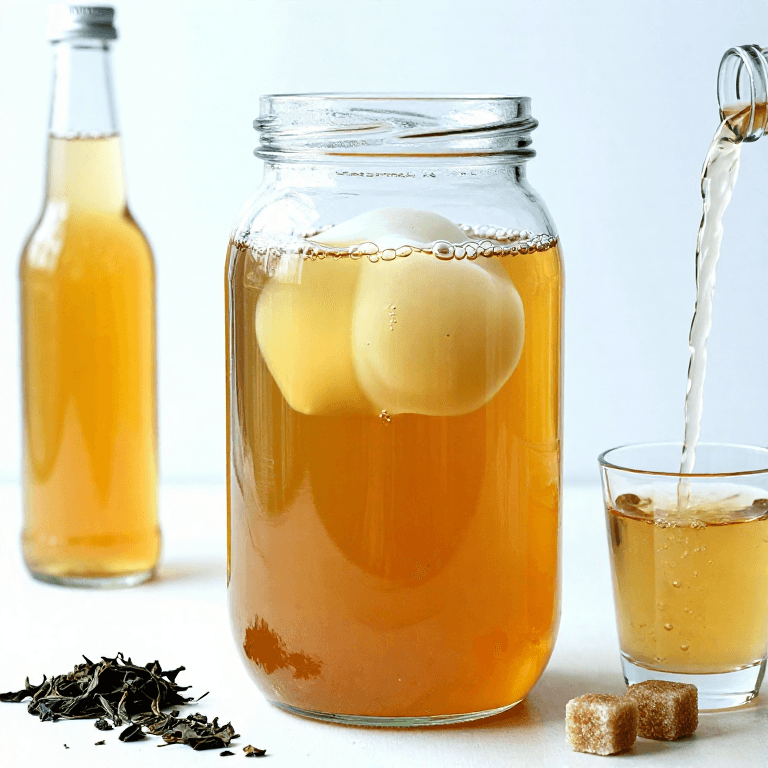
Kombucha and vinegar REQUIRE air. Both depend on aerobic organisms — acetic acid bacteria — sitting at the surface, and both are covered with cloth rather than an airlock for exactly that reason.
So the rule is not 'oxygen is bad'. It is that oxygen selects for a different set of organisms, and you get to choose which set you want. An airlock excludes them; a cloth cover invites them.
Which is the sanitation rung's argument again. Every one of these decisions — sanitiser, salt, airlock, cloth, temperature — is a way of tilting a competition, and knowing which competitor you are favouring is what makes an unfamiliar ferment predictable.
Matériaux pour cette étape :
Eau1 litreOutils nécessaires :
BarboteurCuve de fermentation (dame-jeanne en verre)Outils requis
6- Dame-jeanne en verre10 % de commissionEspace réservé
- Espace réservé
- Espace réservé
- Espace réservé
- Ensemble de nettoyage et de désinfection pour le brassage10 % de commissionEspace réservé
- Espace réservé
Blueprints liés
Ces blueprints partagent des connaissances — techniques, matériaux ou principes

CC0 Domaine public
Ce blueprint est publié sous CC0. Vous êtes libre de copier, modifier, distribuer et utiliser ce travail pour tout usage, sans demander la permission.
Soutenez le Maker en achetant des produits via son Blueprint où il perçoit une Commission Maker définie par les Vendeurs, ou créez une nouvelle itération de ce Blueprint et incluez-le comme connexion dans votre propre Blueprint pour partager les revenus.