ART
BEAUTÉ ET BIEN-ÊTRE
ARTISANAT
CULTURE ET HISTOIRE
DIVERTISSEMENT
ENVIRONNEMENT
NOURRITURE ET BOISSONS
INGÉNIERIE INVERSE
SCIENCES
SPORTS
TECHNOLOGIE
TECHNOLOGIE PORTABLE
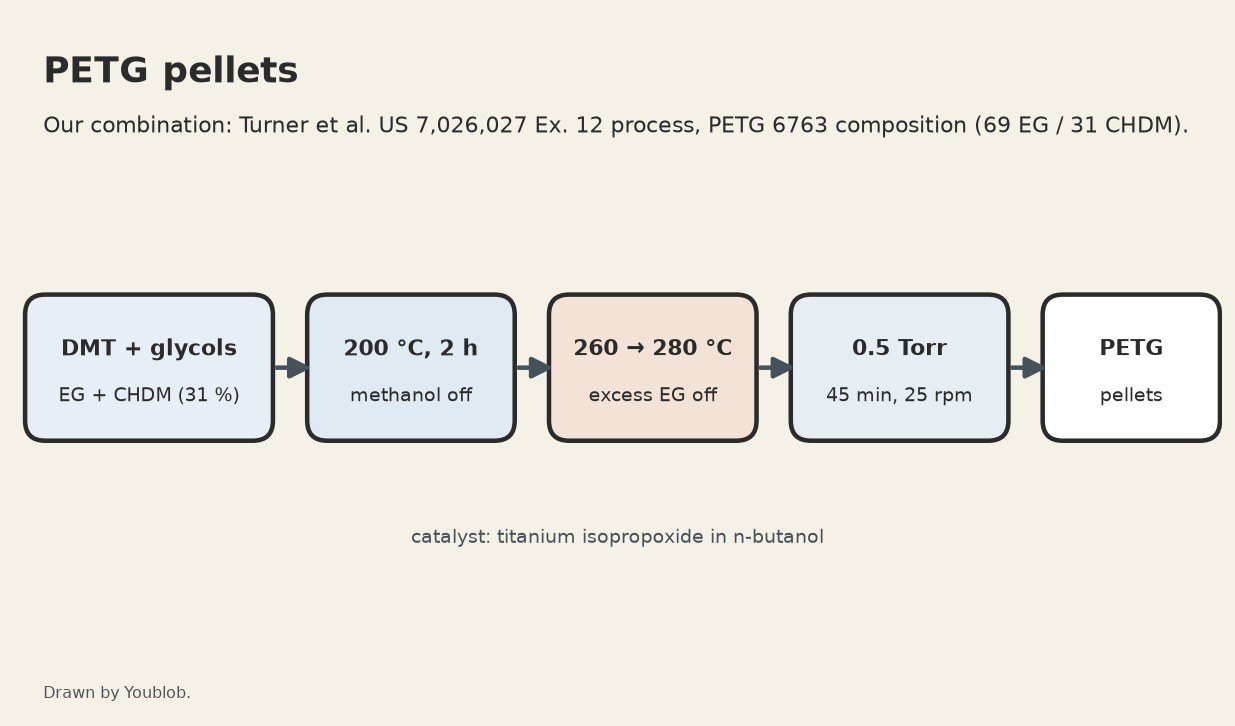

PETG Pellets: Dimethyl Terephthalate with Ethylene Glycol and CHDM
PETG is PET in which part of the ethylene glycol is replaced by CHDM, which keeps the plastic clear and amorphous. Eastman's patent US 7,026,027 describes PETG 6763 as terephthalate with about 69 mol % ethylene glycol and 31 mol % CHDM, but gives no recipe for it. This blueprint is our own combination: that composition, made by the same patent's pilot-plant process (Example 12, written for a CHDM/neopentyl glycol copolyester), with ethylene glycol in place of neopentyl glycol as in Kibler's 1959 Eastman patent. The charge weights are our arithmetic.
The picture: our diagram.
Avancé
About 5 hours
Consignes
1
1
Charge the reactor
Charge the reactor
Our charge for 31 mol % CHDM: 10.669 kg dimethyl terephthalate (54.9 mol, as in the patent's example), 2.456 kg CHDM (31 % of those moles) and 4.058 kg ethylene glycol, so the glycols total 1.5 times the ester moles as in the example. Add 53.4 g of catalyst solution (15 g titanium isopropoxide in 250 ml n-butanol). The patent's reactor held 18 gallons and had spiral agitators and a distillation column.
Matériaux pour cette étape :
 Téréphtalate de diméthyle10.669 kg
 1,4-Cyclohexanediméthanol2.456 kg
 Éthylène glycol4.058 kg
Outils nécessaires :
 Isopropoxyde de titane
 n-Butanol
 Balance à fléau
 Réacteur de polymérisation à double enveloppe
 Alambic à fractionner
 Lunettes-masque anti-projections chimiques
2
2
Ester interchange at 200 °C
Ester interchange at 200 °C
Stir (forward 50 minutes, then reverse 10), heat to 200 °C and hold 2 hours. Methanol distils off through the column.
Outils nécessaires :
Réacteur de polymérisation à double enveloppeAlambic à fractionner Thermocouple avec afficheur
3
3
260 °C, then 280 °C
260 °C, then 280 °C
Raise to 260 °C for 30 minutes and weigh the distillate, then raise to 280 °C and weigh it again. The surplus ethylene glycol is driven off; Kibler found the CHDM stays in the polymer.
Outils nécessaires :
Réacteur de polymérisation à double enveloppeThermocouple avec afficheurBalance à fléau4
4
Polymerise under vacuum
Polymerise under vacuum
Switch the agitator direction every 6 minutes and pull vacuum at 13 Torr a minute down to 0.5 Torr. Hold full vacuum for 45 minutes at 25 rpm.
Outils nécessaires :
Réacteur de polymérisation à double enveloppe Pompe à vide
 Vacuomètre
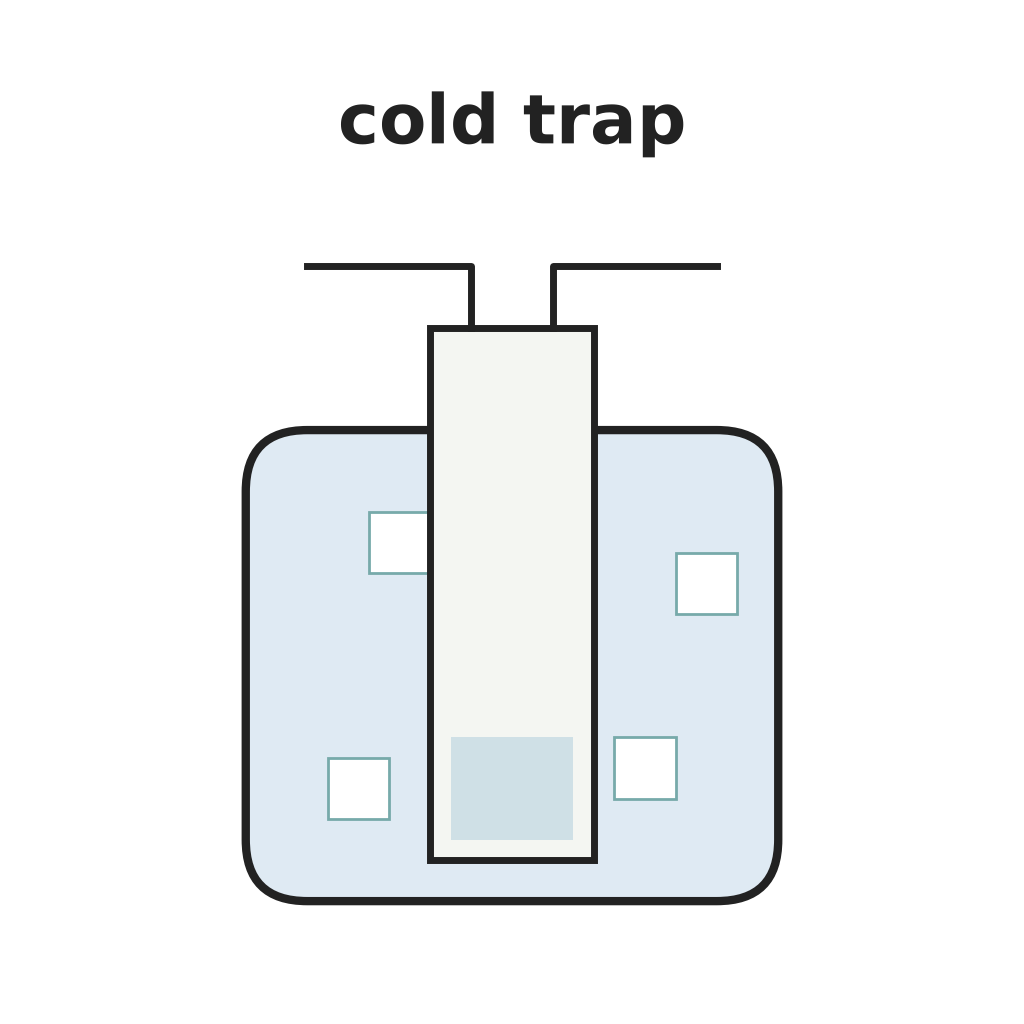 Piège froid
5
5
Extrude and chop into pellets
Extrude and chop into pellets
Let nitrogen in, extrude the polymer at once and chop it into pellets. Check the composition: in the patent's example the polymer kept slightly less CHDM than was charged (38.1 % for 40.7 %).
Outils nécessaires :
 Bouteille d’azote
 Granulateur
 Gants résistants à la chaleur
Matériaux
3- 10.669 kgEspace réservé
- 2.456 kgEspace réservé
- 4.058 kgEspace réservé
Outils requis
13- Espace réservé
- Espace réservé
- Espace réservé
- Espace réservé
- Espace réservé
- Espace réservé
- Espace réservé
- 1 vendor sell this, none ship to you yetEspace réservé
- Espace réservé
- Espace réservé
- Espace réservé
- Espace réservé
- Espace réservé
Ce plan fabrique
Blueprints liés
Ces blueprints partagent des connaissances — techniques, matériaux ou principes
Dangereux
1,4-Cyclohexanedimethanol: Dimethyl Terephthalate Hydrogenated over Palladium, then Copper Chromite
par Charlie
Industriel
12
0
0
0
0
0

Dimethyl Terephthalate: Terephthalic Acid and Methanol Sprayed through a Hot Tube
par Charlie
Industriel
10
0
0
0
0
0
Dangereux
Ethylene Glycol by Hydration of Ethylene Oxide
par Charlie
Industriel
6
0
0
0
0
0
CC0 Domaine public
Ce blueprint est publié sous CC0. Vous êtes libre de copier, modifier, distribuer et utiliser ce travail pour tout usage, sans demander la permission.
Soutenez le Maker en achetant des produits via son Blueprint où il perçoit une Commission Maker définie par les Vendeurs, ou créez une nouvelle itération de ce Blueprint et incluez-le comme connexion dans votre propre Blueprint pour partager les revenus.