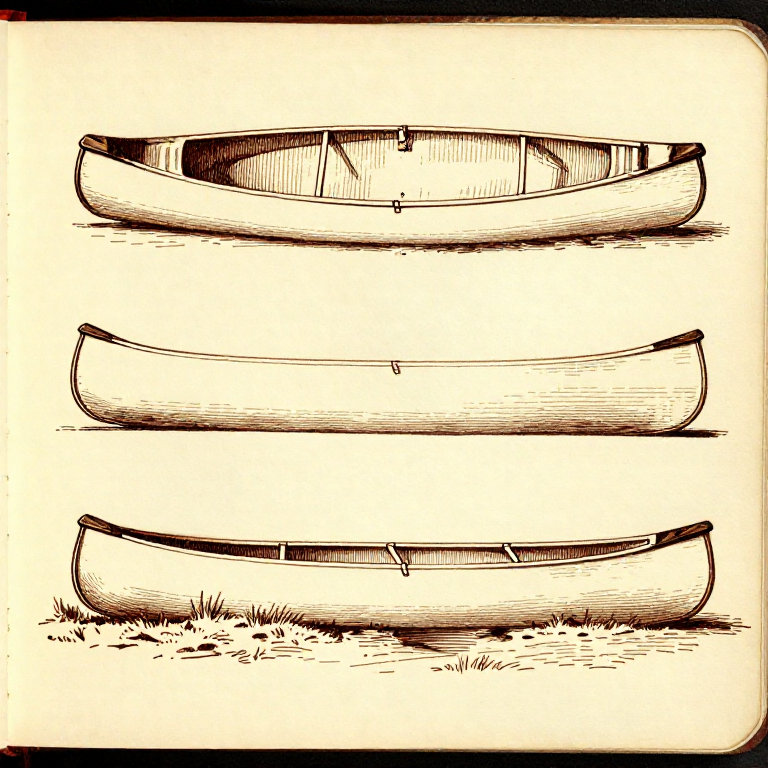


Hollowing a Dugout Canoe — Fire and Adze Method
Consignes
Select and Fell the Tree
Select and Fell the Tree
Choose a straight-trunked tree at least 50-80 cm in diameter and 3-5 metres in the section you will use. Poplar, pine, basswood, and tulip poplar are preferred because their soft, straight-grained wood is relatively easy to hollow. Oak is harder but produces a more durable vessel. Fell the tree by building a fire at its base and chopping the charred wood with a stone axe, alternating burning and chopping until the tree falls. This technique was documented by early European observers of indigenous canoe-building. Trim the log to length and remove all branches.
Matériaux pour cette étape :
 Poutre de sapin de Douglas1 log, 3-5 m long pièce
 Bois de chauffagelarge supply pièce
 Eauseveral litres pièce
 Argileseveral kg pièce
Outils nécessaires :
 Herminette
 Couteau en silex
 Kit de surveillance incendie pour soudage
Shape the Exterior
Shape the Exterior
Flatten the bottom of the log by adzing or burning so the canoe sits stable when upright. Taper both ends to form a bow and stern — the bow should be somewhat narrower and more pointed for cutting through water. Use a stone adze (a ground stone blade hafted at a right angle to a wooden handle) to shape the outer hull. Remove bark and sapwood, leaving only the denser heartwood. The hull should be roughly symmetrical along its centreline. Work with the grain whenever possible to avoid splitting the wood ahead of the adze cut.
Hollow the Interior with Fire
Hollow the Interior with Fire
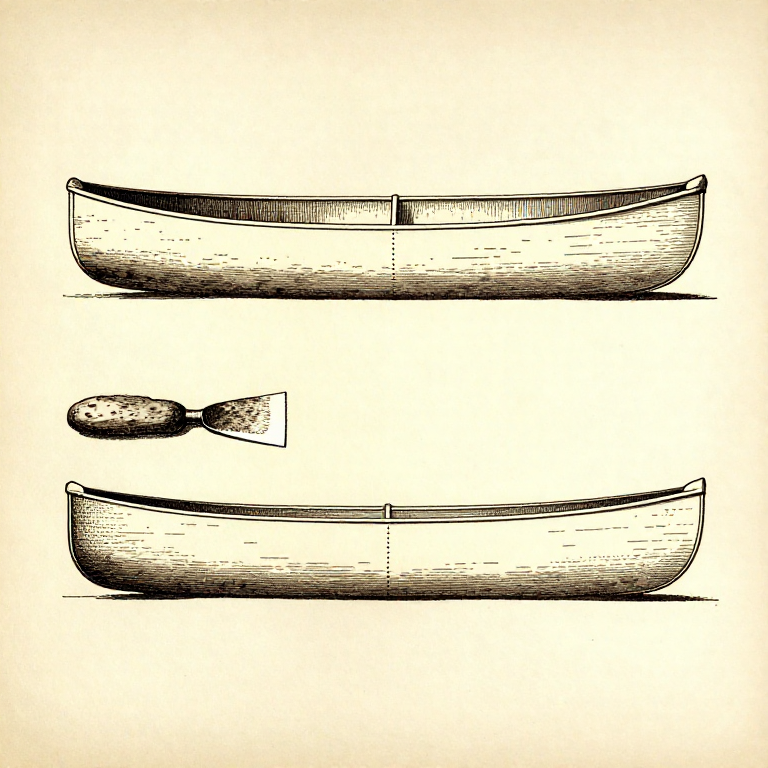
Apply wet clay or mud to the areas you do not want to burn — the outer hull, bow, stern, and the gunwale (top rim) that defines the canoe's sides. Place hot coals from a separate fire along the top centre of the log. The coals char the wood beneath them, which you then scrape away with a stone adze or shell scraper. Repeat this cycle — burn, scrape, burn, scrape — gradually deepening the hollow. Control the fire carefully with small applications of water to prevent burning through the hull walls. This combined fire-and-adze method removes wood far faster than adzing alone.
Thin the Walls to Uniform Thickness
Thin the Walls to Uniform Thickness
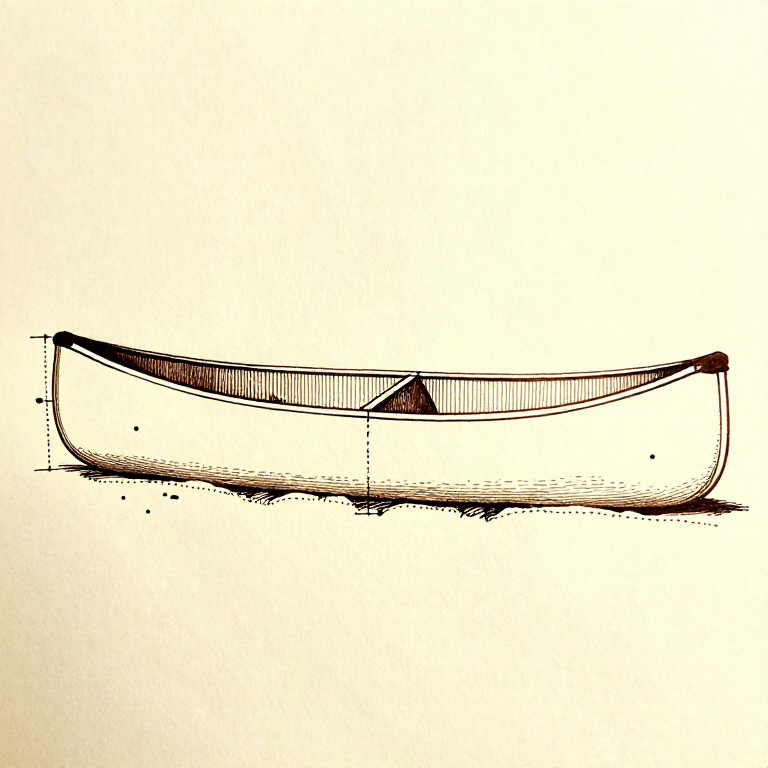
As the hollow deepens, monitor the wall thickness by drilling test holes from the outside using a pointed stone. Some builders insert pegs of known length through the hull to gauge thickness from inside. The hull walls should be a uniform 3-5 cm thick — thin enough to keep the canoe light, thick enough to maintain structural strength. The bottom should be slightly thicker (5-7 cm) because it bears the most stress. If you accidentally thin a section too much, it can be reinforced later by lashing a wooden patch over the weak spot with sinew and sealing it with pine pitch.
Seal and Launch
Seal and Launch
Smooth the interior with a stone scraper to remove all char and rough spots. Seal any cracks or thin spots with pine pitch or a mixture of pine resin and charcoal powder. If the canoe is to be used in open water, add thwarts (cross-braces) lashed between the gunwales to prevent the sides from spreading or collapsing. Float the canoe in shallow water and check for leaks — mark any seeping areas and seal them. A finished dugout canoe is remarkably stable and durable; archaeological examples show repair patches, indicating these vessels were maintained and used for years. Paddle with a simple flat-bladed wooden paddle carved from a split plank.
Matériaux
5- 1 log, 3-5 m long pièceEspace réservé
- large supply pièceEspace réservé
- several litres pièceEspace réservé
- several kg pièceEspace réservé
- Large tree trunk (poplar, pine, or oak)1 log, 3-5 m long, 50-80 cm diameter pièce
Outils requis
3- Espace réservé
- Espace réservé
- Espace réservé
CC0 Domaine public
Ce blueprint est publié sous CC0. Vous êtes libre de copier, modifier, distribuer et utiliser ce travail pour tout usage, sans demander la permission.
Soutenez le Maker en achetant des produits via son Blueprint où il perçoit une Commission Maker définie par les Vendeurs, ou créez une nouvelle itération de ce Blueprint et incluez-le comme connexion dans votre propre Blueprint pour partager les revenus.