ART
BEAUTÉ ET BIEN-ÊTRE
ARTISANAT
CULTURE ET HISTOIRE
DIVERTISSEMENT
ENVIRONNEMENT
NOURRITURE ET BOISSONS
INGÉNIERIE INVERSE
SCIENCES
SPORTS
TECHNOLOGIE
TECHNOLOGIE PORTABLE
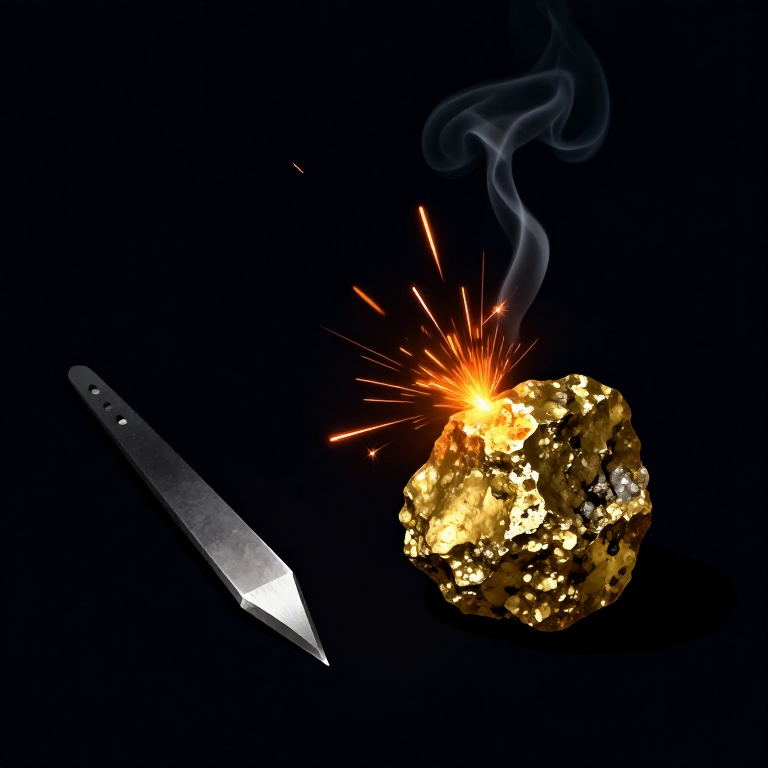


Striking Fire from Flint and Iron Pyrite — Spark-Based Fire Starting
Before the steel striker was invented, prehistoric peoples started fires by striking flint against iron pyrite (FeS2) or marcasite — a technique documented archaeologically from at least 30,000 years ago. Otzi the Iceman (3300 BCE) carried a fire-starting kit containing pyrite, flint, and true tinder fungus (Fomes fomentarius). The sparks produced are tiny incandescent particles of iron torn from the pyrite by the sharp flint edge. These particles are hot enough (over 500 degrees Celsius) to ignite char cloth or tinder fungus, but too brief and small to light raw tinder like dry grass. The technique therefore requires a prepared catching material — charred plant material, true tinder fungus, or punk wood — that will accept and hold a spark as a slowly spreading ember.
Intermédiaire
30 minutes
Consignes
1
1
Gather Iron Pyrite or Marcasite
Gather Iron Pyrite or Marcasite
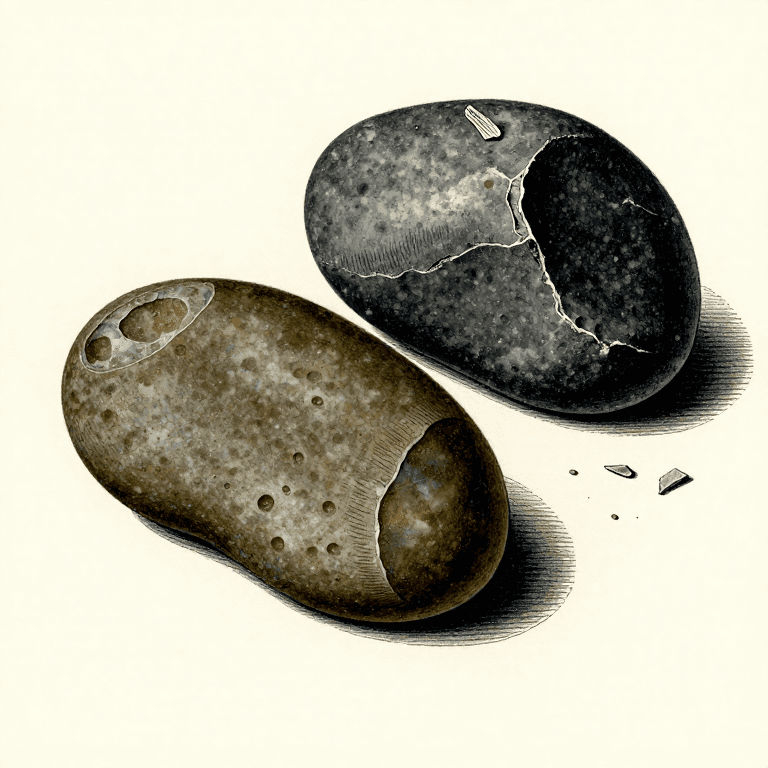
Find a piece of iron pyrite or marcasite — a brassy-yellow metallic mineral with a cubic crystal structure or nodular form. Pyrite is common in sedimentary rocks, coal deposits, and riverbed gravels. The piece should be large enough to grip firmly in one hand, roughly fist-sized. Test by striking with a flint edge — genuine pyrite produces visible sparks.
2
2
Select a Sharp Flint Flake or Blade
Select a Sharp Flint Flake or Blade
Gather a sharp flint flake or blade with a keen cutting edge. The edge must be acute enough to bite into the pyrite surface and shear off tiny particles of iron. A freshly knapped flint flake works best — a dull or weathered edge will skid across the pyrite without producing sparks.
Matériaux pour cette étape :
 Rognon de silex1 pièce
3
3
Prepare Charred Tinder
Prepare Charred Tinder
Char a piece of cotton-like plant material by partially burning it and then smothering the flame. Suitable materials include cattail pith, true tinder fungus (Fomes fomentarius), punk wood, or dried amadou. Place the material in a small fire, let it blacken but not turn to ash, then smother it in sand or a closed container to stop combustion.
4
4
Verify the Charred Tinder Quality
Verify the Charred Tinder Quality
The charred tinder should be uniformly black, extremely lightweight, and fragile. Test a small piece by touching it with a known spark source or a glowing ember tip — it should catch and glow immediately. If it does not catch, it was either under-charred (still brown inside) or over-charred (turned to powdery ash).
5
5
Build a Tinder Bundle
Build a Tinder Bundle
Construct a tinder bundle from dry grass, shredded cedar bark, or cattail fluff. Form it into a loose bird's-nest shape with a small depression in the centre. The bundle must be bone dry and have enough volume to sustain a flame once the ember is placed inside — roughly the size of a large fist.
6
6
Place the Charred Tinder in the Bundle
Place the Charred Tinder in the Bundle
Nest a piece of charred tinder in the depression of the tinder bundle. The charred piece should be at least 2 to 3 cm across — large enough to grow a sustainable ember. Position it so sparks struck from above will land directly on its surface.
7
7
Position the Pyrite and Tinder
Position the Pyrite and Tinder
Hold the pyrite firmly in one hand with the charred tinder resting on top of the pyrite or positioned very close to the expected strike zone. Some practitioners hold the char directly on the pyrite surface; others place it on the ground just below the strike point. Either method works as long as sparks land on the char.
8
8
Strike the Flint Against the Pyrite
Strike the Flint Against the Pyrite
Strike the sharp flint edge downward against the pyrite in a sharp, glancing blow — similar to striking a match. The flint edge shears microscopic particles of iron from the pyrite surface. These particles oxidize instantly in the air, reaching temperatures over 500 degrees Celsius and appearing as bright orange sparks.
9
9
Catch a Spark on the Charred Tinder
Catch a Spark on the Charred Tinder
Repeat the striking motion, directing sparks onto the charred tinder. It may take 10 to 50 strikes before a spark lands squarely on the char and catches. When a spark catches, the charred tinder will begin glowing red at the contact point and the glow will slowly spread outward. Do not blow yet — let the ember establish itself.
10
10
Transfer the Ember to the Tinder Bundle
Transfer the Ember to the Tinder Bundle
Once the charred tinder is glowing steadily with a spreading ember, gently place it into the centre of the tinder bundle if it is not already there. Fold the dry tinder loosely around the glowing char, encasing it but leaving air channels so the ember can breathe.
11
11
Blow the Tinder Bundle into Flame
Blow the Tinder Bundle into Flame
Hold the tinder bundle at arm's length and blow steadily into its centre with long, even breaths. The ember will grow brighter, the tinder will begin smoking heavily, and within 10 to 30 seconds of sustained blowing the bundle will burst into open flame. Immediately place the flaming bundle under your prepared fire lay.
Matériaux
3- 1 pièceEspace réservé
- 1 pièceEspace réservé
- 1 botteEspace réservé
Matériaux des Blueprints connectés
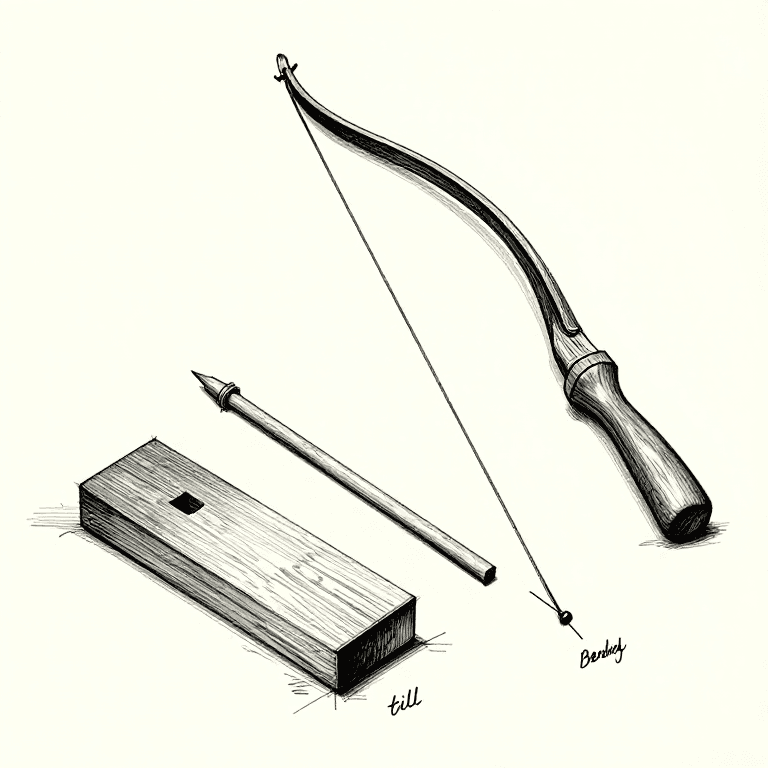
Blueprints liés
Ces blueprints partagent des connaissances — techniques, matériaux ou principes
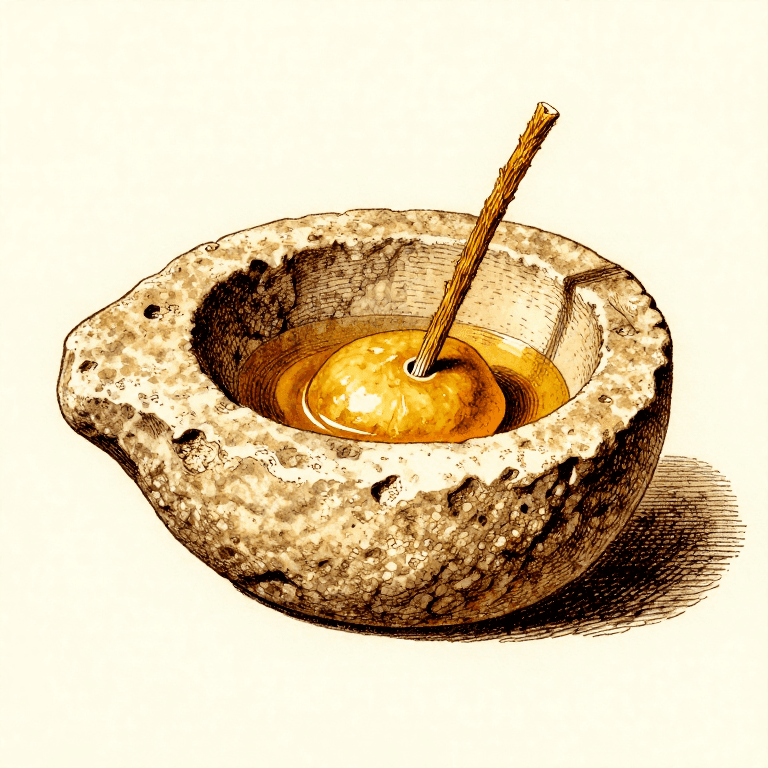


CC0 Domaine public
Ce blueprint est publié sous CC0. Vous êtes libre de copier, modifier, distribuer et utiliser ce travail pour tout usage, sans demander la permission.
Soutenez le Maker en achetant des produits via son Blueprint où il perçoit une Commission Maker définie par les Vendeurs, ou créez une nouvelle itération de ce Blueprint et incluez-le comme connexion dans votre propre Blueprint pour partager les revenus.