ART
BEAUTÉ ET BIEN-ÊTRE
ARTISANAT
CULTURE ET HISTOIRE
DIVERTISSEMENT
ENVIRONNEMENT
NOURRITURE ET BOISSONS
INGÉNIERIE INVERSE
SCIENCES
SPORTS
TECHNOLOGIE
TECHNOLOGIE PORTABLE
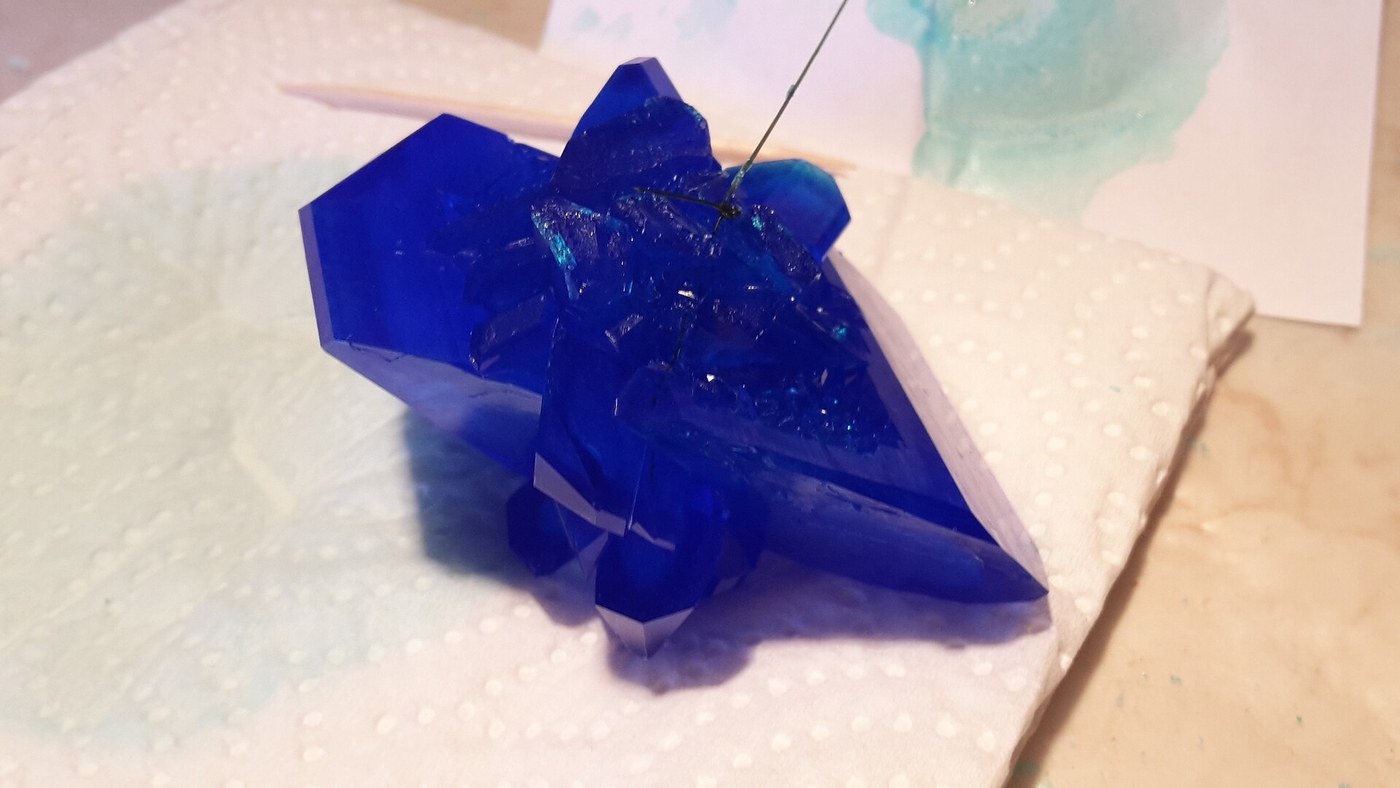


Purified Copper Sulphate: Iron Thrown Down by Fresh Copper Carbonate, Then Recrystallised
Ordinary copper sulphate usually carries a little iron sulphate. The 1907 US Dispensatory gives the cure: add freshly precipitated copper carbonate, which throws the iron down as carbonate, then filter and crystallise. The pharmacopoeia salt had to be at least 99.5 % pure copper sulphate. Making the copper carbonate from part of the same solution, and drying below 30 °C, are our choices. The source gives no quantities, so none are given here.
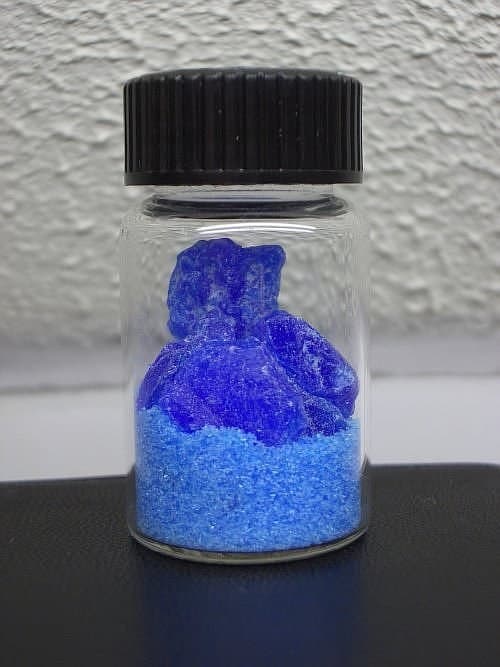
The picture: a copper sulphate crystal (Crystal Titan, Wikimedia Commons, CC BY-SA 4.0).
Intermédiaire
Two to three days
Consignes
1
1
Dissolve in boiling water
Dissolve in boiling water
Dissolve the copper sulphate in boiling distilled water: it takes about half its weight of boiling water (and about 2.2 times its weight of water at 25 °C).
Matériaux pour cette étape :
 Sulfate de cuivre pentahydraté (CuSO4·5H2O)1 as required
Outils nécessaires :
 Eau distillée
 Bécher en borosilicate
 Baguette de verre
 Plaque chauffante
 Lunettes-masque anti-projections chimiques
 Gants en caoutchouc
2
2
Make fresh copper carbonate
Make fresh copper carbonate
Take a small part of the solution and stir in sodium carbonate solution: alkaline carbonates decompose copper sulphate and copper carbonate falls. Filter it and wash it with distilled water. Use it fresh.
Outils nécessaires :
 Carbonate de sodium (cristaux de soude)Eau distilléeBécher en borosilicateBaguette de verre
 Entonnoir en verre à tige
 Papier filtreLunettes-masque anti-projections chimiquesGants en caoutchouc
3
3
Throw down the iron and filter
Throw down the iron and filter
Stir the fresh copper carbonate into the hot solution, in excess. The iron is deposited as carbonate. Filter the hot solution clear.
Outils nécessaires :
Bécher en borosilicateBaguette de verrePlaque chauffanteEntonnoir en verre à tigePapier filtreLunettes-masque anti-projections chimiquesGants en caoutchouc4
4
Crystallise and dry
Crystallise and dry
Evaporate the filtrate in a dish until crystals begin to form, then let it cool. Large, transparent, deep blue crystals grow. Drain them and dry them in the air below 30 °C: at 30 °C the salt starts to lose its water of crystallisation. It slowly loses water in dry air too, so keep it in stoppered bottles.
Outils nécessaires :
 Capsule d'évaporationPlaque chauffante
 Bouteilles en verre avec bouchonsGants en caoutchouc
5
5
Test for iron
Test for iron
Dissolve a crystal in water in a test tube and add ammonia water drop by drop. A pale blue precipitate forms and then dissolves in more ammonia to a deep azure-blue solution. Any iron is thrown down with it and does not dissolve again in the excess, so the solution should stay clear. A salt that turns green on the surface in air still contains iron.
Outils nécessaires :
 Tubes à essaiEau distillée
 Solution d'ammoniac diluéeLunettes-masque anti-projections chimiquesGants en caoutchouc
Matériaux
1- 1 as requiredEspace réservé
Outils requis
13- Espace réservé
- Espace réservé
- Espace réservé
- Espace réservé
- Espace réservé
- Espace réservé
- Espace réservé
- Espace réservé
- Espace réservé
- Espace réservé
- Espace réservé
- Espace réservé
- Espace réservé
Ce plan fabrique

Blueprints liés
Ces blueprints partagent des connaissances — techniques, matériaux ou principes
CC0 Domaine public
Ce blueprint est publié sous CC0. Vous êtes libre de copier, modifier, distribuer et utiliser ce travail pour tout usage, sans demander la permission.
Soutenez le Maker en achetant des produits via son Blueprint où il perçoit une Commission Maker définie par les Vendeurs, ou créez une nouvelle itération de ce Blueprint et incluez-le comme connexion dans votre propre Blueprint pour partager les revenus.