ART
BEAUTÉ ET BIEN-ÊTRE
ARTISANAT
CULTURE ET HISTOIRE
DIVERTISSEMENT
ENVIRONNEMENT
NOURRITURE ET BOISSONS
INGÉNIERIE INVERSE
SCIENCES
SPORTS
TECHNOLOGIE
TECHNOLOGIE PORTABLE
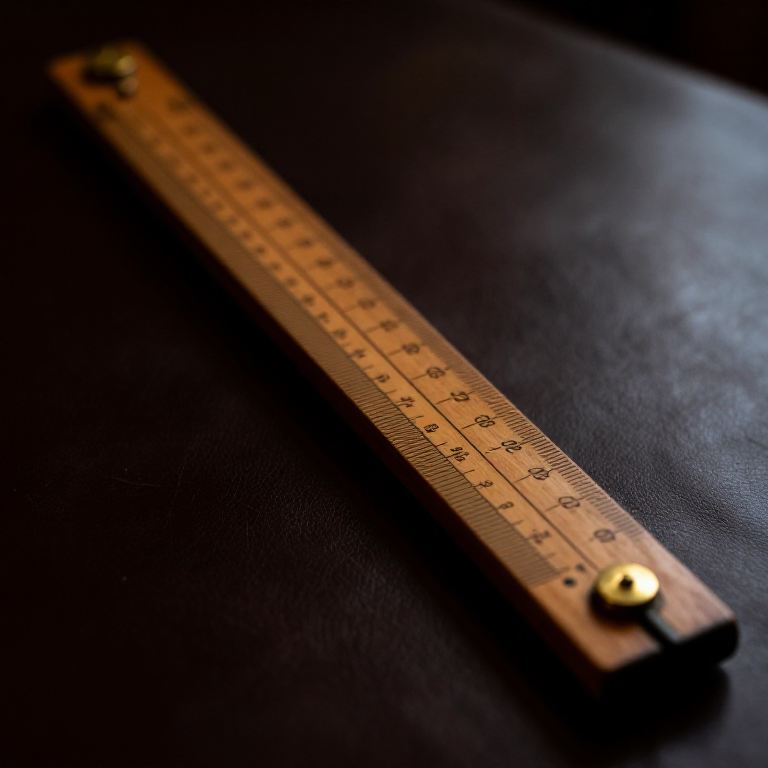


Napier's Logarithms — Build a Paper Slide Rule and Multiply by Sliding
A hands-on maths project: make a slide rule from two paper strips marked with a logarithmic scale, then multiply numbers just by sliding them -- because logarithms turn multiplication into addition. A Python cell shows the log trick, and a compendium covers 300 years of computing before the calculator.
Débutant
30 minutes
Consignes
1
1
Turning times into plus
Turning times into plus
In 1614 John Napier published logarithms, which turn hard multiplication into easy addition. The slide rule mechanised the trick and did the world's calculating for 300 years. You will build one from paper.
2
2
Make two logarithmic strips
Make two logarithmic strips
Cut two identical strips of card. On each, mark 1 at the left and 10 at the right, but space the numbers so that 2 sits about 30% along, 3 about 48%, 5 about 70% -- these positions are the logarithms. (Mark 1,2,3,...,10 at the log positions; a printed log scale helps.) These uneven marks are the secret.
Matériaux pour cette étape :
 Assortiment de papier cartonné1 pièce
Outils nécessaires :
 Règle
Règle Ciseaux
 Jeu de crayons graphite
3
3
Multiply by sliding
Multiply by sliding
To multiply, say, 2 by 3: slide the 1 of the top strip to sit above the 2 on the bottom strip. Now look above the 3 on the top strip -- it points at 6 on the bottom. You just multiplied by ADDING two lengths. Try 2 by 4, or 3 by 3. Sliding adds the log-distances, and adding logs multiplies the numbers.
4
4
See the log trick in numbers
See the log trick in numbers
Chargement du notebook Jupyter…
Outils nécessaires :
 Ordinateur de bureau
 Calculatrice
5
5
Compendium: three centuries of computing
Compendium: three centuries of computing
What your slide rule teaches. (1) A logarithm answers 'what power of 10 gives this number?', and the one law log(a times b) equals log(a) plus log(b) is why sliding (adding lengths) multiplies. (2) Equal MULTIPLES sit at equal DISTANCES on a log scale -- that is why the marks bunch up toward 10. (3) From Kepler's orbits to the Apollo programme, science ran on log tables and slide rules until electronic calculators retired them in the 1970s. (4) Logarithms never left: they measure sound in decibels, acidity in pH, earthquakes on the Richter scale and information in bits.
Matériaux
2- Espace réservé
- 1 feuilleEspace réservé
Outils requis
5- Espace réservé
- Espace réservé
- Espace réservé
- Espace réservé
- Espace réservé
Blueprints liés
Ces blueprints partagent des connaissances — techniques, matériaux ou principes

CC0 Domaine public
Ce blueprint est publié sous CC0. Vous êtes libre de copier, modifier, distribuer et utiliser ce travail pour tout usage, sans demander la permission.
Soutenez le Maker en achetant des produits via son Blueprint où il perçoit une Commission Maker définie par les Vendeurs, ou créez une nouvelle itération de ce Blueprint et incluez-le comme connexion dans votre propre Blueprint pour partager les revenus.