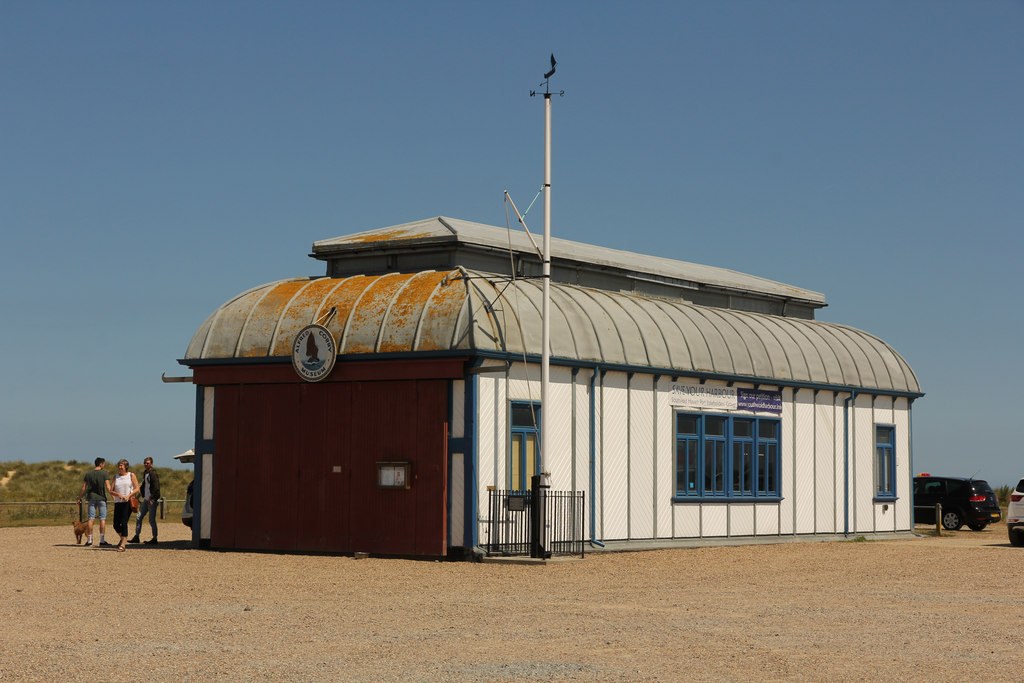


Self-Righting Lifeboat
Consignes
Build a plain hull and capsize it
Build a plain hull and capsize it
Establish that an ordinary boat is perfectly happy upside down.
- Carve or assemble a simple open hull that floats level.
- Roll it over in water and let go.
- Note that it stays inverted.
Matériaux pour cette étape :
 Assortiment de planches de balsa1 paquet
Add end air cases
Add end air cases
Buoyancy goes high and at the ends, where it does the most work.
- Seal watertight chambers into bow and stern, standing well above the waterline.
- Leave the middle open as the working space.
- Float it again and check it still sits level.
Matériaux pour cette étape :
 Plaque de liège1 feuille
Add ballast low
Add ballast low
Weight as far below the centre as you can put it.
- Fix dense ballast along the keel, outside if possible.
- Float and check the boat is stiffer — it should resist heeling more.
- Now capsize it and let go.
Matériaux pour cette étape :
 Règle1 pièce
Time the righting, and fix the flooding
Time the righting, and fix the flooding
Righting is only half the problem — the boat comes up full of water.
- Time how many seconds it takes to right from inverted.
- Note how much water it holds when it comes up.
- Add relieving holes through the floor to the sea and repeat.
Matériaux pour cette étape :
 Chronomètre1 pièce
History and context
History and context
Lionel Lukin, a London coachbuilder, patented an unimmergible boat in 1785 — air cases, a cork gunwale and a heavy false keel, converted from a Norway yawl. In 1789 the Adventure went aground on the Herd Sand at the mouth of the Tyne and her crew drowned in front of a helpless crowd. A committee at South Shields offered a prize for a boat that could work in such a sea. William Wouldhave, a parish clerk and painter, and Henry Greathead, a boatbuilder, both submitted designs; the committee awarded a split decision, Greathead built the boat, and the argument over who deserves the credit has run in South Shields ever since. Wouldhave's design is generally reckoned to be the one that would actually self-right.
The institution came later. Sir William Hillary, living on the Isle of Man and seeing wrecks constantly, campaigned for a national body and the organisation that became the Royal National Lifeboat Institution was founded in 1824. Lifeboat design after that is a long argument between self-righting boats — safer if capsized, but tender and unpopular with some crews — and stable non-self-righting designs that were far less likely to capsize in the first place. Different stations chose differently for over a century.
The honest limit of the principle: a self-righting boat is deliberately made LESS stable when upright than it could be, because the same high buoyancy that rights it also makes it roll more. Crews knew this trade-off perfectly well and it was argued about bitterly. Modern boats resolve it with a watertight wheelhouse — the sealed superstructure supplies the righting moment without needing a tender hull.
Matériaux
4- 1 paquetEspace réservé
- 1 feuilleEspace réservé
- 1 pièceEspace réservé
- 1 pièceEspace réservé
CC0 Domaine public
Ce blueprint est publié sous CC0. Vous êtes libre de copier, modifier, distribuer et utiliser ce travail pour tout usage, sans demander la permission.
Soutenez le Maker en achetant des produits via son Blueprint où il perçoit une Commission Maker définie par les Vendeurs, ou créez une nouvelle itération de ce Blueprint et incluez-le comme connexion dans votre propre Blueprint pour partager les revenus.