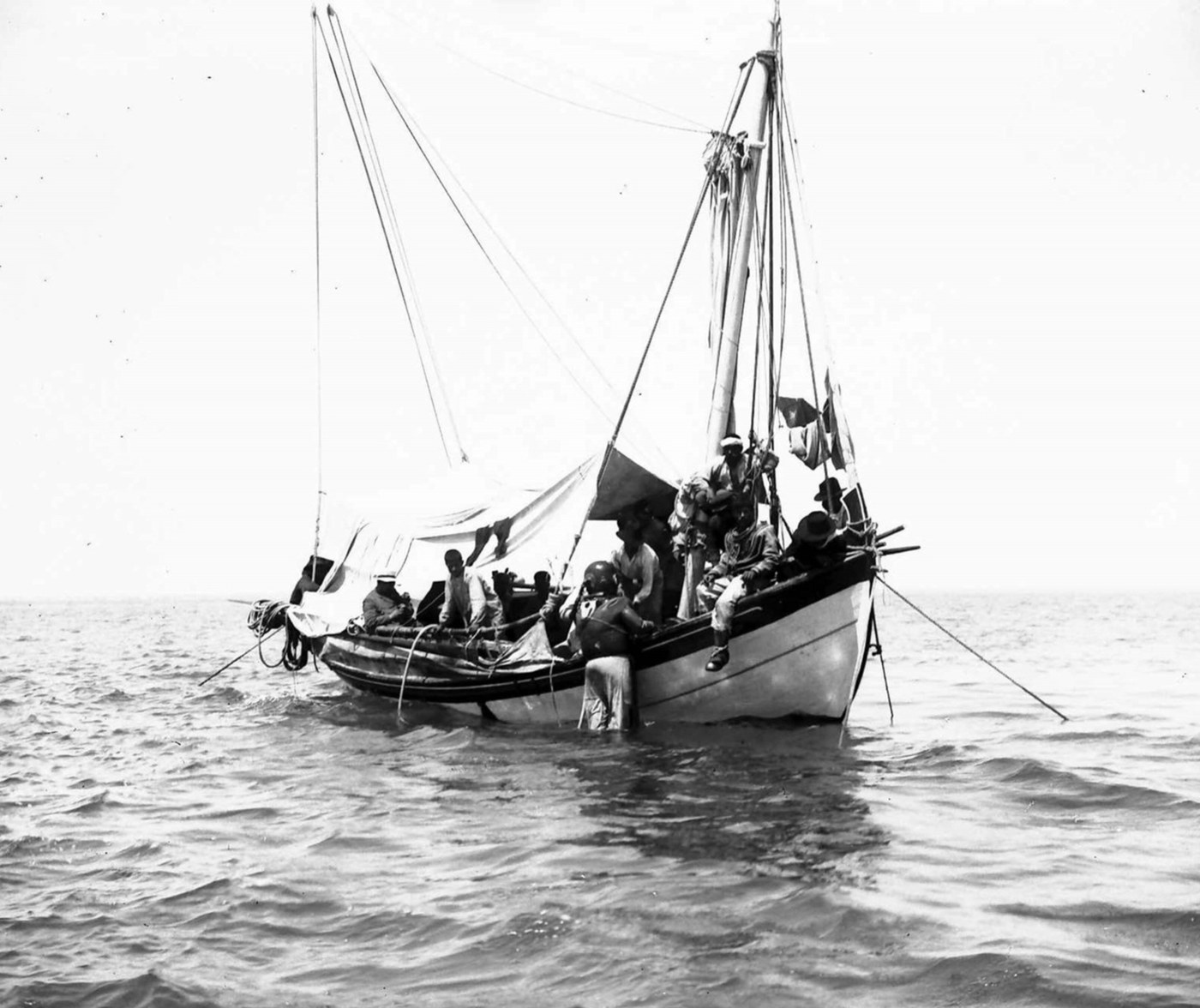


The Siebe Closed Diving Helmet
Consignes
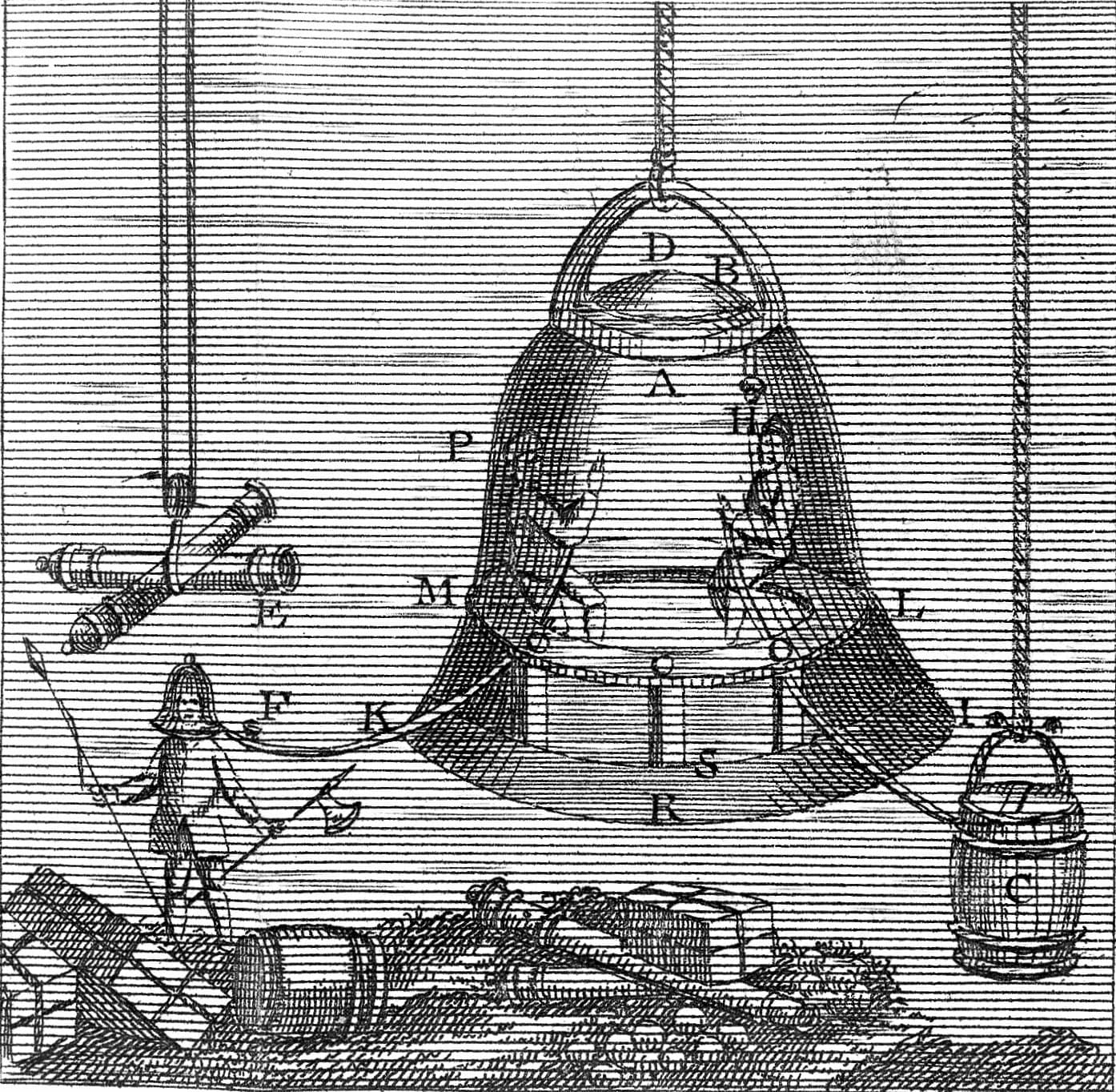
Start from the diving bell
Start from the diving bell
Build or read the diving bell first. It is the same problem — keep breathable air around a person underwater — solved with no moving parts at all, and everything the helmet adds is a response to a specific limitation of the bell.
Note as you go what the bell CANNOT do: the diver cannot leave it, the air is never renewed, and the trapped volume shrinks as depth increases. Each of those is fixed by a different feature of the helmet.
Model the pressure gradient and your air budget
Model the pressure gradient and your air budget
Outils nécessaires :
 Ordinateur de bureau
 Manomètre
Raise and planish the copper helmet bowl
Raise and planish the copper helmet bowl
The helmet is a pressure vessel you wear, and its shape is chosen for strength.
- Cut a copper disc and raise it into a dome by hammering over a stake, working from the centre outward in concentric courses.
- Anneal frequently — copper work-hardens fast and will split if you push it cold.
- Planish over a smooth stake to even the surface and stiffen it.
- Form a second dome and join them into a helmet with a neck opening and viewport apertures.
A dome carries external pressure in pure compression with no bending anywhere, which is why it is far stronger than a flat plate of the same thickness. Press on a flat sheet and then on a domed one and the difference is immediate.
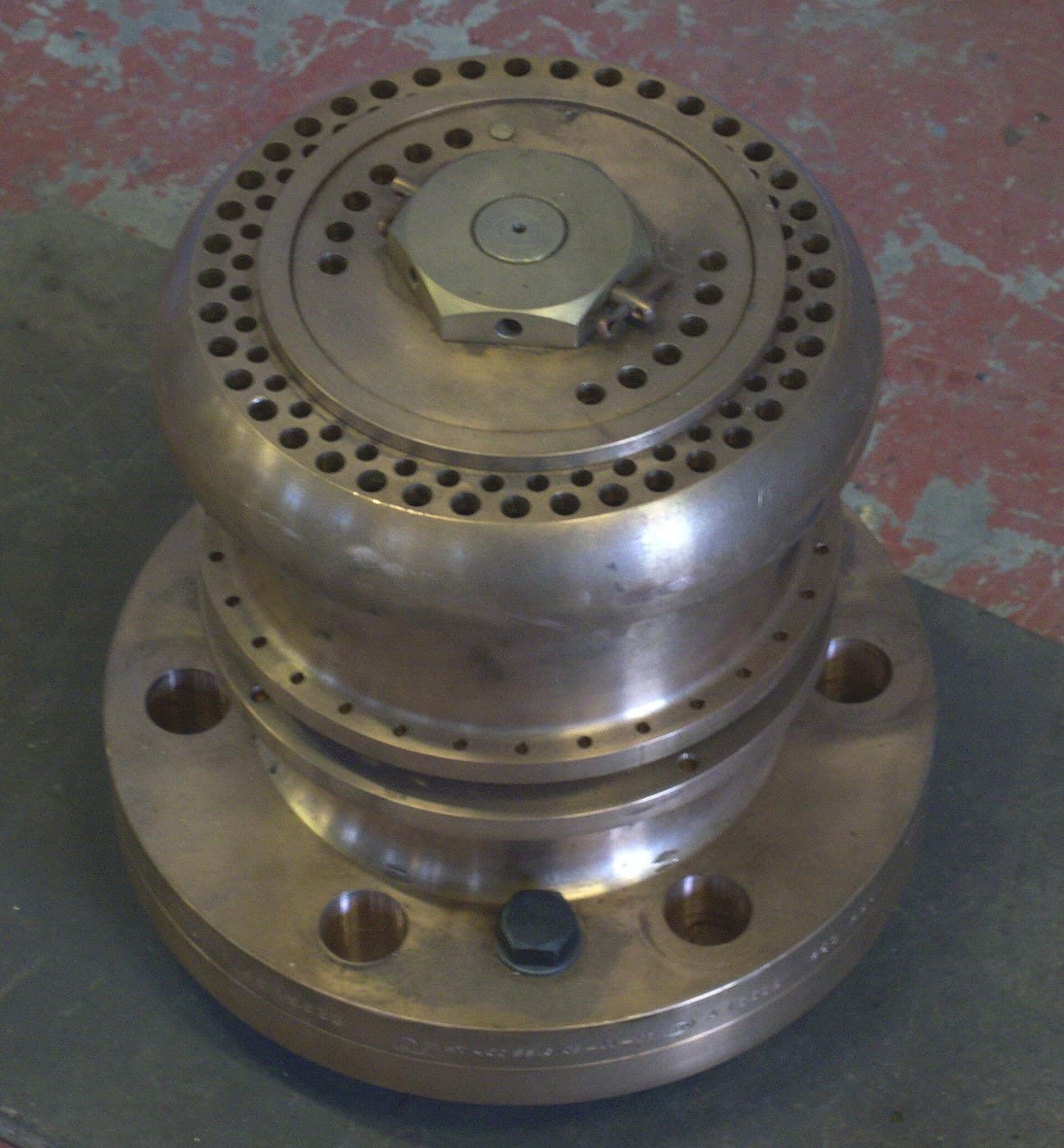
Reverse-engineering note: originals were tinned copper with brass fittings, chosen for corrosion rather than strength — copper and brass survive seawater where steel does not, and copper is antifouling into the bargain. The 12-bolt corselet clamps the suit’s rubberised collar between two flanges, a gasket design that has not needed improving in 180 years.Matériaux pour cette étape :
 Feuille de cuivre2 feuilles
 Feuille de laiton1 feuille
 Propane1 canister
Outils nécessaires :
 Chalumeau à propane
 Étau d'établi
 Jeu de limes
 Pied à coulisse numérique 6 pouces
 Thermomètre infrarouge
 Écran facial
The squeeze failure chain, and the one part that breaks it
The squeeze failure chain, and the one part that breaks it
Fit a flap or ball check valve at the air inlet, oriented to allow flow IN only. Pressurise through it, confirm free flow, then release the supply suddenly and watch the valve slam.
Trace the two paths above. Without the valve, a supply failure lets pressurised helmet air escape back up the hose, and the water outside then squeezes the flexible suit — forcing the diver’s body up into the rigid helmet. With it, the reverse flow itself closes the flap.
One moving part, no power, no operator action, defending against the single failure most likely to kill. Test the failure on a sealed water-filled model, never with a person.
This is the family the catalogue keeps meeting — the leading-edge slat, the over-centre gear lock, the radar TR cell, the oil breaker. Actuated by the very event it protects against, so nothing separate can fail and nothing must be remembered.Flow
Matériaux pour cette étape :
 Clapet antiretour en laiton2 pièces
 Assortiment de joints toriques1 kit
Outils nécessaires :
 Compresseur d'air 30 gallonsManomètre
 Téléphone avec vidéo au ralenti
 Lunettes de sécurité transparentes
Balance supply against exhaust, and find the blow-up runaway
Balance supply against exhaust, and find the blow-up runaway
Air must leave as fast as it arrives, and the diver controls buoyancy with that balance.
- Fit an adjustable spring-loaded exhaust valve.
- Feed air steadily and adjust the spring until internal pressure sits just above the surrounding water pressure.
- Tighten the exhaust and watch the suit inflate; loosen it and watch it deflate.
The diver is adjusting his own displacement. Combined with weighted boots and a lead belt, that gives fine control of whether he rises, sinks or stands.
It also introduces blow-up. If a diver becomes too buoyant and starts rising, surrounding pressure falls, so the trapped air expands, so he becomes MORE buoyant. A runaway ending in an uncontrolled ascent — which is how divers get bent or embolised, and exactly the subject of the next blueprint.
Note the structural similarity to the solid-motor pressure exponent in the rocketry batch: a loop where the correction makes the disturbance worse. Recognising that shape is worth more than memorising either instance.Matériaux pour cette étape :
Clapet antiretour en laiton1 pièce Assortiment de ressorts de compression1 jeu
 Lingot de plomb 99,9 %, 450 g1 ingot
Outils nécessaires :
Compresseur d'air 30 gallonsManomètre Balance numérique
 Peson à ressortLunettes de sécurité transparentes
Matériaux
7- 2 feuillesEspace réservé
- 1 feuilleEspace réservé
- 1 canisterEspace réservé
- 3 piècesEspace réservé
- Espace réservé
- Espace réservé
- Espace réservé
Outils requis
13- Espace réservé
- Espace réservé
- Espace réservé
- Espace réservé
- Espace réservé
- Espace réservé
- Espace réservé
- Espace réservé
- Espace réservé
- Espace réservé
- Espace réservé
- Espace réservé
- Espace réservé
Blueprints liés
Ces blueprints partagent des connaissances — techniques, matériaux ou principes


CC0 Domaine public
Ce blueprint est publié sous CC0. Vous êtes libre de copier, modifier, distribuer et utiliser ce travail pour tout usage, sans demander la permission.
Soutenez le Maker en achetant des produits via son Blueprint où il perçoit une Commission Maker définie par les Vendeurs, ou créez une nouvelle itération de ce Blueprint et incluez-le comme connexion dans votre propre Blueprint pour partager les revenus.