
ART
BEAUTÉ ET BIEN-ÊTRE
ARTISANAT
CULTURE ET HISTOIRE
DIVERTISSEMENT
ENVIRONNEMENT
NOURRITURE ET BOISSONS
INGÉNIERIE INVERSE
SCIENCES
SPORTS
TECHNOLOGIE
TECHNOLOGIE PORTABLE
Telegraph Beater Churn: Nested Knife-Edged Beaters That Whip the Cream
Martin

Créé par

Martin

6. octobre 2026NO
0
0
0
0
0

Telegraph Beater Churn: Nested Knife-Edged Beaters That Whip the Cream

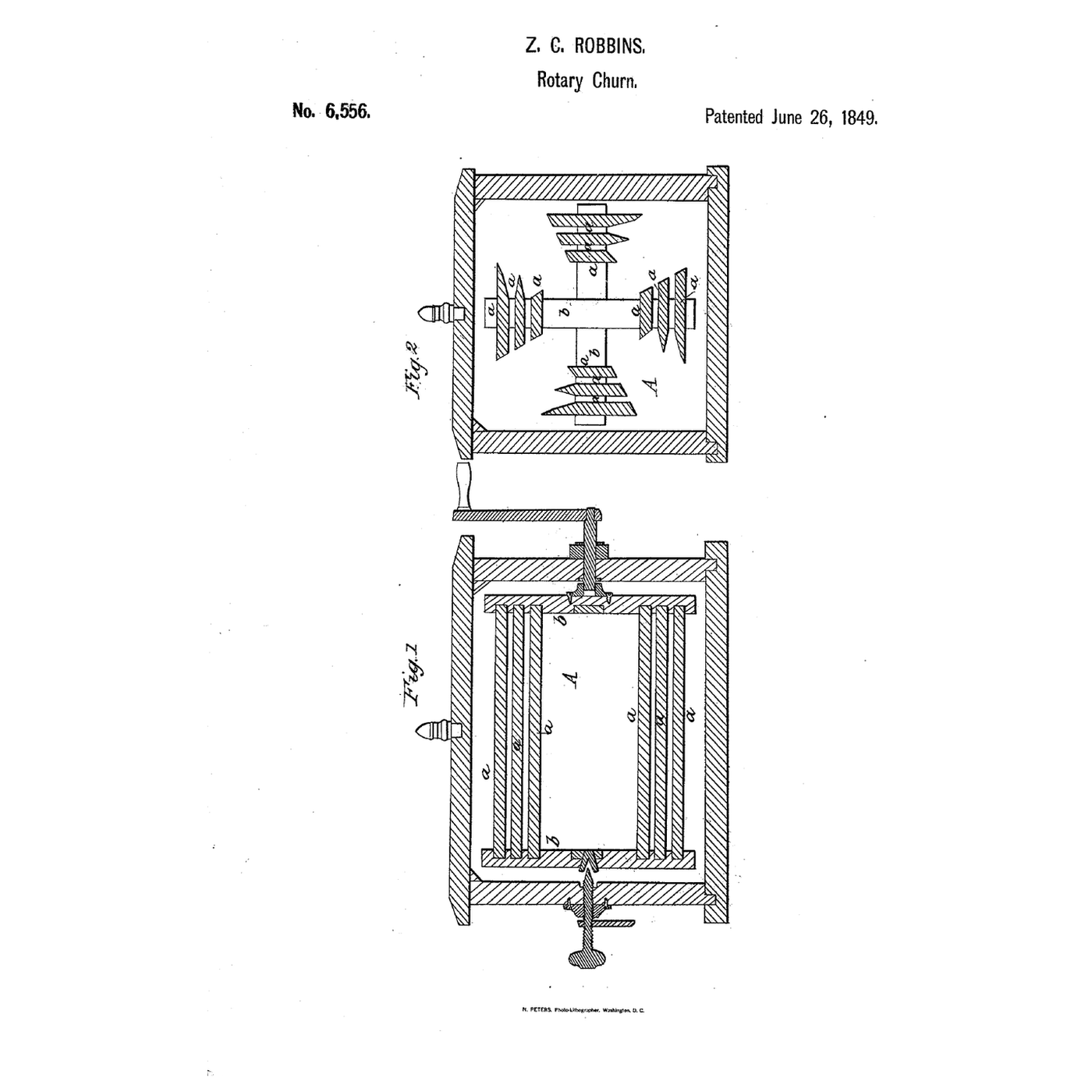
Robbins compared his agitator's work on cream to that "produced by knives upon the whites of eggs, during the process of what is called whipping them up." Z. C. Robbins of St. Louis, Missouri, received US 6,556, dated 26 June 1849 (antedated 1 June 1849, reissued as No. 159), for what he called the Telegraph Churn: a rotating agitator of four series of thin beaters on radial arms, each series of two, three or more slats one within another with narrow spaces between, narrowing inward. Their front edges are bevelled sharp, their rear edges blunt; reversed, "the butter will be collected into the center." This rung works out when the cream would fly off, then prints the beater series and spiders, fits them in a box, and makes butter.
Intermédiaire
About 3 hours, plus printing

Consignes

1

When the cream flies off

Chargement du notebook Jupyter…
2

Bevelled beaters on a crank before it

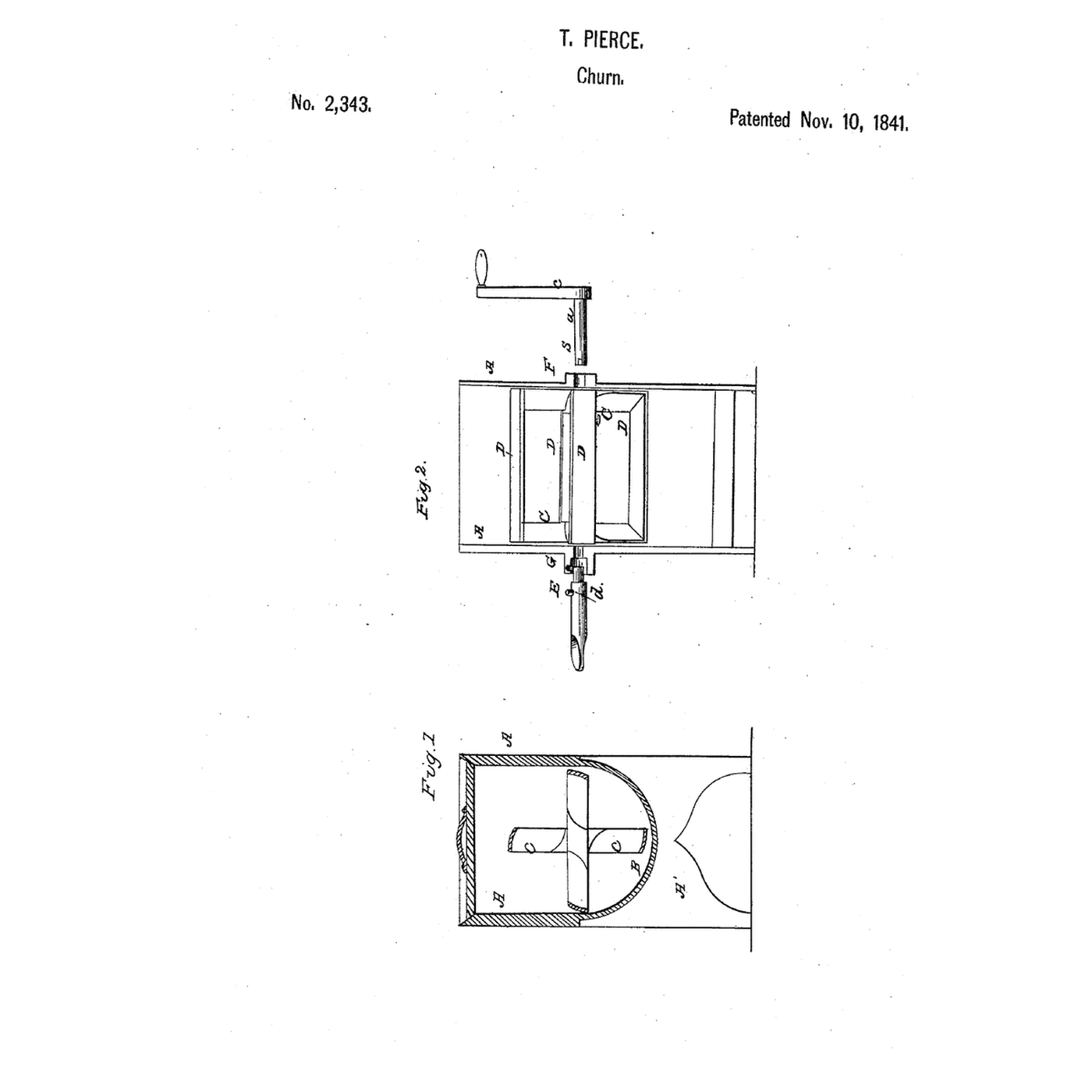
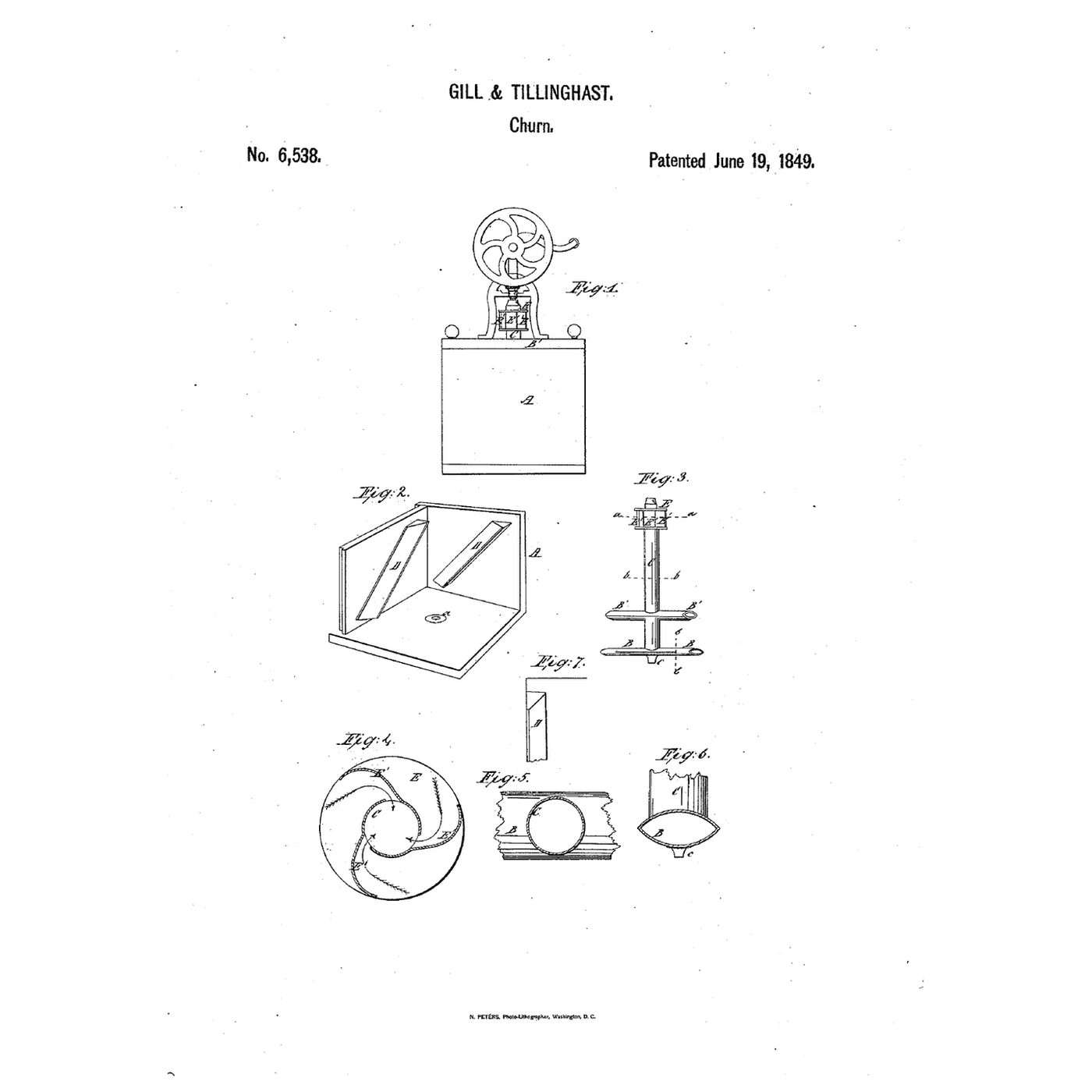
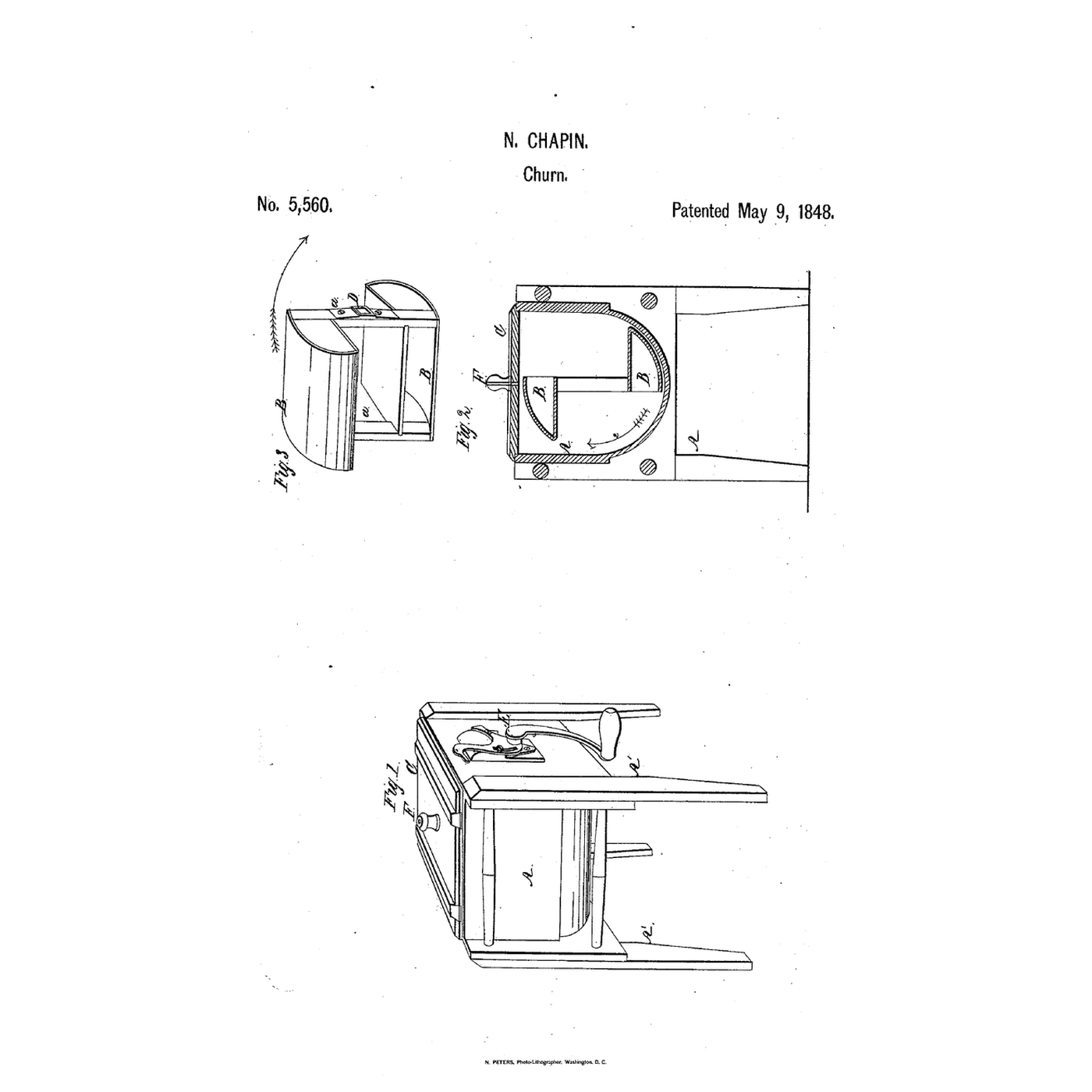
The embedded blueprint bevels its buckets to drive the cream inward. Robbins nests thin knife-edged slats and reverses them to gather the butter.
3

Read US 6,556

"When the agitator is rotated in milk or cream placed in the churn box, the sharp edges of the beaters cut into and divide the particles, and gather the milk or cream between them by their converging surfaces; and as the beaters ascend, they carry up quantities of milk or cream in the spaces between them, which is discharged in their curved sheets at their rear edges in the atmosphere in the upper part of the churn."
4

Print the parts

Print four beater series on end (/uploads/blueprints/telegraph-beater-churn-beater-series.stl): three nested slats, narrowing inward, sharp at the front and blunt at the rear, joined at both ends. Print two spiders (/uploads/blueprints/telegraph-beater-churn-spider.stl) and the crank arm (/uploads/blueprints/telegraph-beater-churn-crank-arm.stl). Print in PETG at 0.2 mm layers, 30 % infill, 4 walls; wash before first use.

Matériaux pour cette étape :

Filament PETGFilament PETG1 pièce

Outils nécessaires :

Imprimante 3D à filament (FDM)Imprimante 3D à filament (FDM)
5

Assemble the agitator

Glue the two spiders on a 10 mm square hardwood axle 130 mm apart, arms in line. Screw a beater series between each pair of arms with M3 screws, all with their sharp edges leading the same way.

Matériaux pour cette étape :

Goujons de bois durGoujons de bois dur1 pièce
Vis à métauxVis à métaux1 pièce
Colle à boisColle à bois1 pièce

Outils nécessaires :

Scie égoïneScie égoïne
Jeu de tournevisJeu de tournevis
6

The box

Take a food-safe box about 200 × 170 × 170 mm. Drill both ends on the axis 85 mm up, round the axle where it runs, pass it through, and glue the crank arm and a dowel handle on its outer end. He found it could run uncovered.

Matériaux pour cette étape :

Contenant de stockage de qualité alimentaireContenant de stockage de qualité alimentaire1 pièce
Colle à boisColle à bois1 pièce

Outils nécessaires :

Perceuse sans filPerceuse sans fil
Jeu de foretsJeu de forets
Papier abrasifPapier abrasif
7

The build in 3D

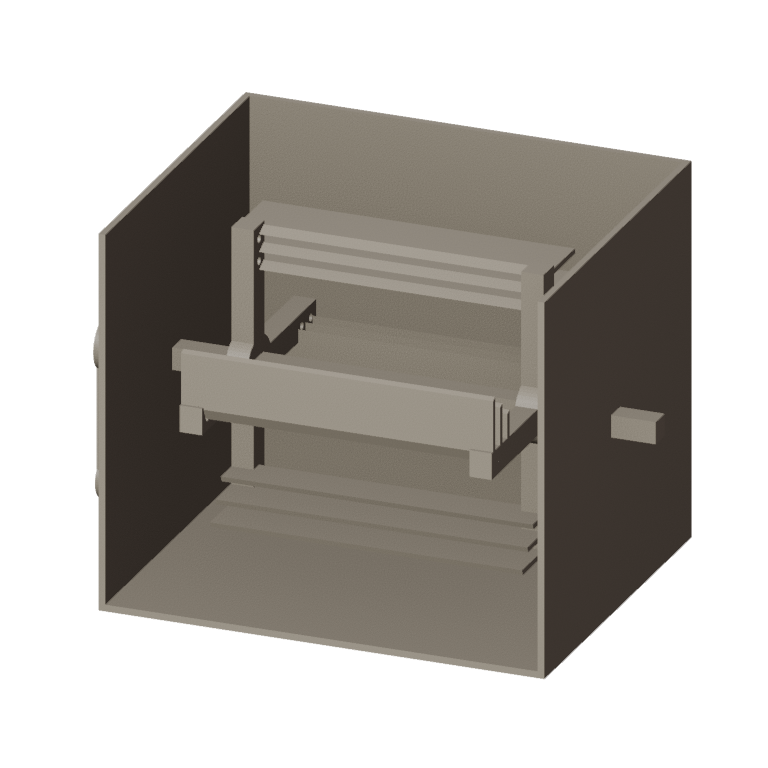
FreeCAD model of this build, not of the patent: the box with one side off to show the agitator of two spiders and four series of nested beaters on the axle, and the crank.
Fichier de designBLENDCC0 - Free
8

Crank, then reverse to gather

Let the heavy cream stand until it reaches about 15 °C, checked with the thermometer. Pour in 1.5 litres. Crank steadily, sharp edges leading; time until the butter comes. Then crank backward a while so the blunt rear edges gather it to the centre. Pour off the buttermilk, add cold water, churn a little and pour off again until it runs clear; work in a pinch of salt and weigh the butter.
Étape 8 - Image 1

Matériaux pour cette étape :

Crème liquide entièreCrème liquide entière1500 ml
Gros sel marinGros sel marin1 pièce
EauEau1 pièce

Outils nécessaires :

Thermomètre à sonde à demeureThermomètre à sonde à demeure
ChronomètreChronomètre
Balance de cuisine numériqueBalance de cuisine numérique
Grand cul-de-poule en acier inoxydableGrand cul-de-poule en acier inoxydable
9

Cream thrown out, butter not gathered

Telegraph beater churn troubleshooting.

Flow

Loading...
10

History and honest limits

**Z. C. Robbins** of St. Louis, Missouri, received US 6,556, dated 26 June 1849; antedated by request 1 June 1849; reissued as No. 159. He wrote that "butter has been produced from milk at the usual churning temperature with this churn, in two minutes"; that is his claim, not our measurement. He did not limit himself to the number or proportions of the parts, nor to any material. He claimed the series of floats or beaters so formed that their thick inclined rear edges gather the butter toward the centre when the motion is reversed. **Honest limits.** A food-safe box and printed beaters stand in for his. FDM prints hold food in their layer lines, so wash well and replace when worn. Your times and weights are the result.

Matériaux

8

Outils requis

10

Fichiers de conception

1

CC0 Domaine public

Ce blueprint est publié sous CC0. Vous êtes libre de copier, modifier, distribuer et utiliser ce travail pour tout usage, sans demander la permission.

Soutenez le Maker en achetant des produits via son Blueprint où il perçoit une Commission Maker définie par les Vendeurs, ou créez une nouvelle itération de ce Blueprint et incluez-le comme connexion dans votre propre Blueprint pour partager les revenus.

Commentaires

(0)

Se connecter pour participer à la discussion

Chargement des commentaires...