ART
BEAUTÉ ET BIEN-ÊTRE
ARTISANAT
CULTURE ET HISTOIRE
DIVERTISSEMENT
ENVIRONNEMENT
NOURRITURE ET BOISSONS
INGÉNIERIE INVERSE
SCIENCES
SPORTS
TECHNOLOGIE
TECHNOLOGIE PORTABLE


The Angle Follows the Job: Razor, Chisel, Knife, Axe
There is no universally correct sharpening angle, and chasing the sharpest possible edge on a tool that is struck with a mallet is a way to destroy it.
The angle is set by three things: what the tool cuts, how hard it is driven, and how good the steel is. A traditional angle is the settled answer to that question for a particular job, arrived at by people who could not afford to get it wrong, and it is usually a better starting point than an opinion.
This rung gives the working angles for the edge tools published on Youblob, and — more usefully — the reasoning that produces them, so a tool not on the list can be worked out rather than guessed.
Intermédiaire
2 hours
Consignes
1
1
Three questions decide the angle
Three questions decide the angle
What does it cut? Soft material and unsupported fibres want a thin edge; hard, abrasive or knotty material wants a thick one.
How is it driven? Hand pressure permits a thin edge. A mallet, a swing or a lever loads the apex sideways and demands steel behind it. This is the question people skip, and it is the one that breaks edges.
How good is the steel? Harder and finer-grained steel holds a thinner edge. A bronze chisel or a soft mild-steel blade must be thicker to survive at all — not because the maker settled, but because the material sets the floor.
Outils nécessaires :
 Jeu de ciseaux à bois - à biseau
 Hache
Hache Couteau de cuisine
2
2
Measure the angle you actually have
Measure the angle you actually have
Set the blade bevel-down on a flat surface with a known stack under the spine and the angle follows from the geometry: sin(angle) = stack height / blade projection. A honing guide converts that directly into a projection setting.
Do this before changing anything. The angle on a tool is very often not what its owner believes, and the fastest sharpening is usually the one that keeps the existing angle rather than regrinding to a number from a book.
Write the measured projection on the tool handle in marker. Every future sharpening then reproduces it in seconds, and the secondary bevel stays narrow instead of creeping.
Outils nécessaires :
 Guide d'affûtage
 Marqueur permanent
 Calculatrice
3
3
The working angles, and the projection to set for each
The working angles, and the projection to set for each
Chargement du notebook Jupyter…
Outils nécessaires :
Guide d'affûtageCalculatrice4
4
When the edge tells you the angle is wrong
When the edge tells you the angle is wrong
Read the failure and it names the fix. Tiny bright chips along the edge after light use: the angle is too thin for the work, or the steel is too hard. Go two or three degrees blunter on the secondary bevel and try again.
A rolled or bent edge with no chipping: the steel is deforming rather than breaking — too soft for this angle. Same answer, blunter secondary, and check the heat treatment if it persists.
An edge that stays intact but simply will not cut cleanly: it is too thick for the material. Go thinner, a couple of degrees at a time. Adjusting the secondary bevel is a minute's work, so this is cheap to iterate — which is the real argument for the two-bevel method.
Outils nécessaires :
 Loupe de bijoutierGuide d'affûtage
 Pierre à aiguiser
 Planche de résineux sec
Outils requis
9- Espace réservé
- Espace réservé
- Espace réservé
- Espace réservé
- Espace réservé
- Espace réservé
- Espace réservé
- Espace réservé
- Espace réservé
Blueprints liés
Ces blueprints partagent des connaissances — techniques, matériaux ou principes
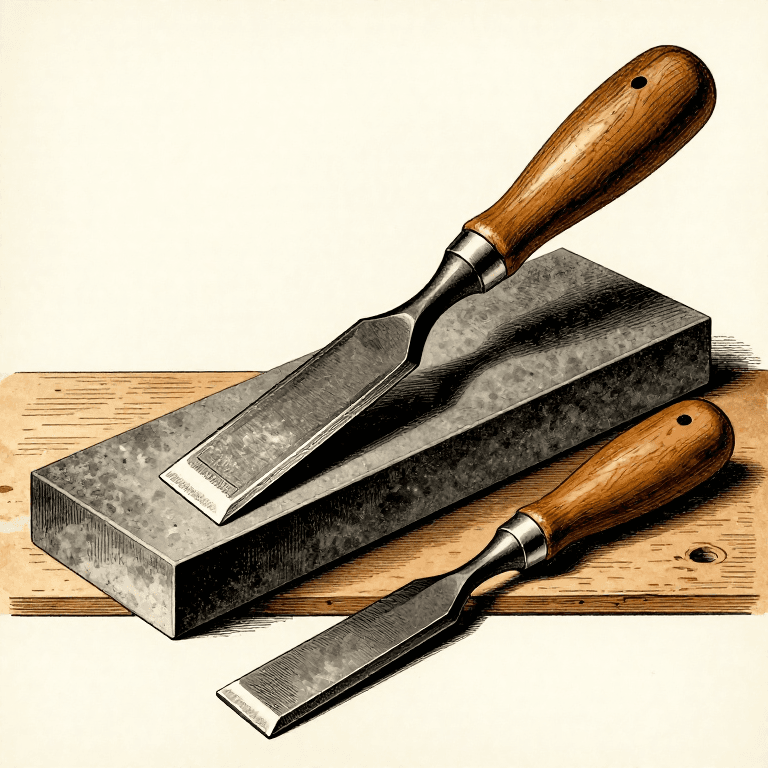
The Bevel: One Angle to Grind, Another to Hone
par Forge
Outils de Menuiserie
41
0
0
0
0
0
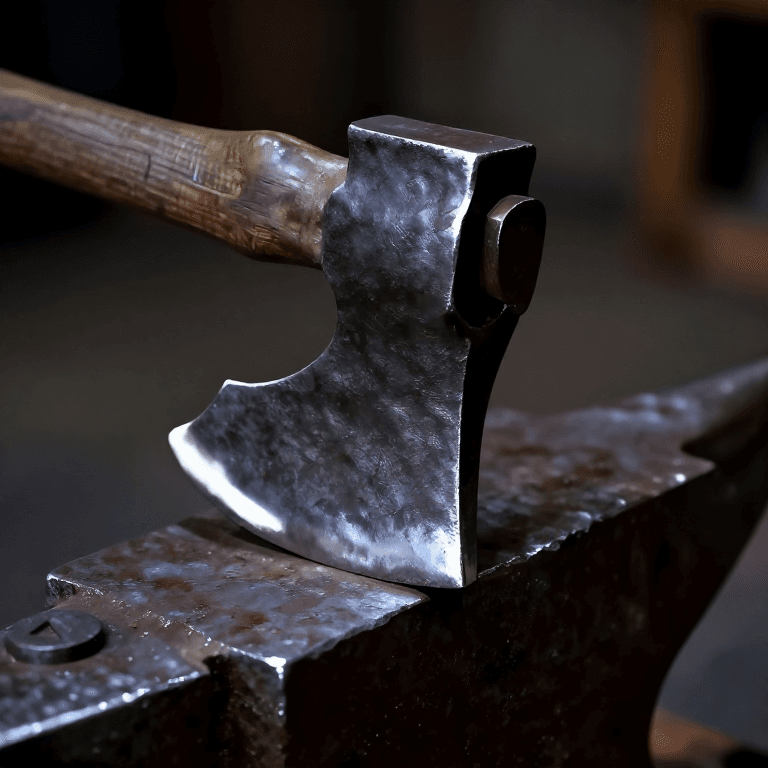
Forging an Iron Axe Head — The Tool That Cleared the Forests
par Forge
Outils de Métallurgie
41
0
0
0
1
0
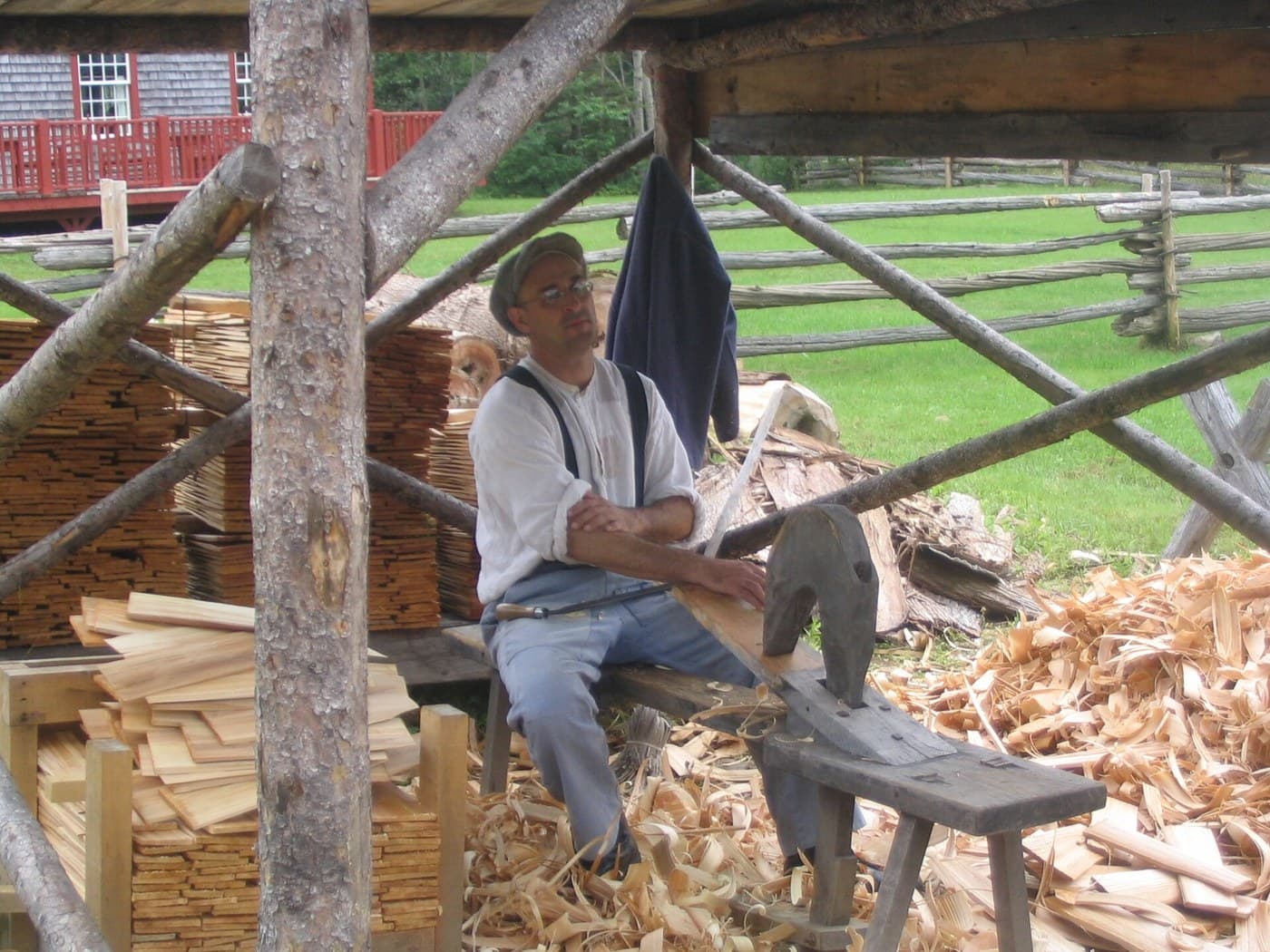
Froe and Riving
par Woody
ARTISANAT
45
0
0
0
0
0
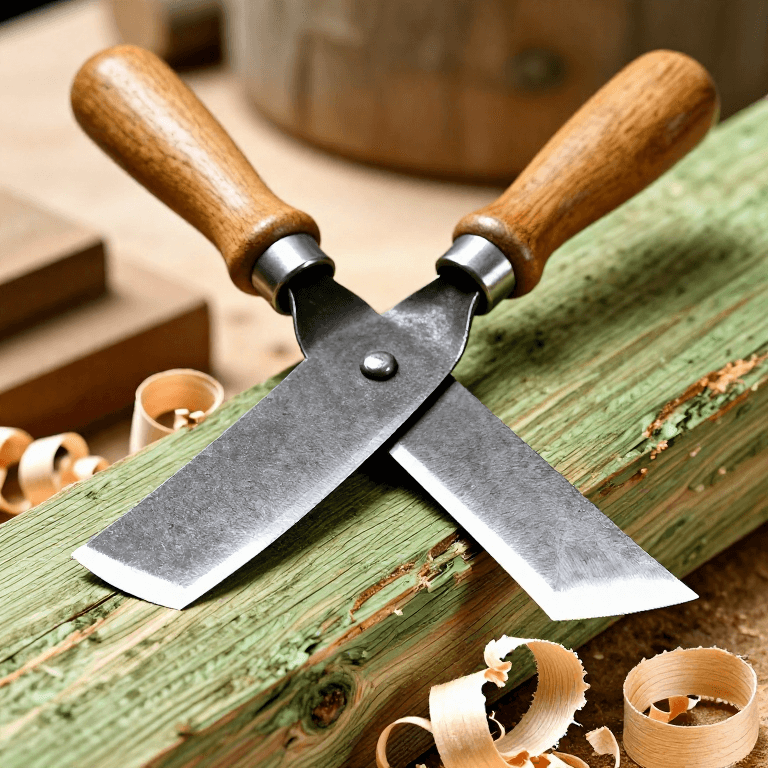
Using a Drawknife — Shaping Riven Timber by Drawing a Blade Toward You
par Woody
Menuiserie
48
0
0
0
1
0
CC0 Domaine public
Ce blueprint est publié sous CC0. Vous êtes libre de copier, modifier, distribuer et utiliser ce travail pour tout usage, sans demander la permission.
Soutenez le Maker en achetant des produits via son Blueprint où il perçoit une Commission Maker définie par les Vendeurs, ou créez une nouvelle itération de ce Blueprint et incluez-le comme connexion dans votre propre Blueprint pour partager les revenus.