ART
BEAUTÉ ET BIEN-ÊTRE
ARTISANAT
CULTURE ET HISTOIRE
DIVERTISSEMENT
ENVIRONNEMENT
NOURRITURE ET BOISSONS
INGÉNIERIE INVERSE
SCIENCES
SPORTS
TECHNOLOGIE
TECHNOLOGIE PORTABLE
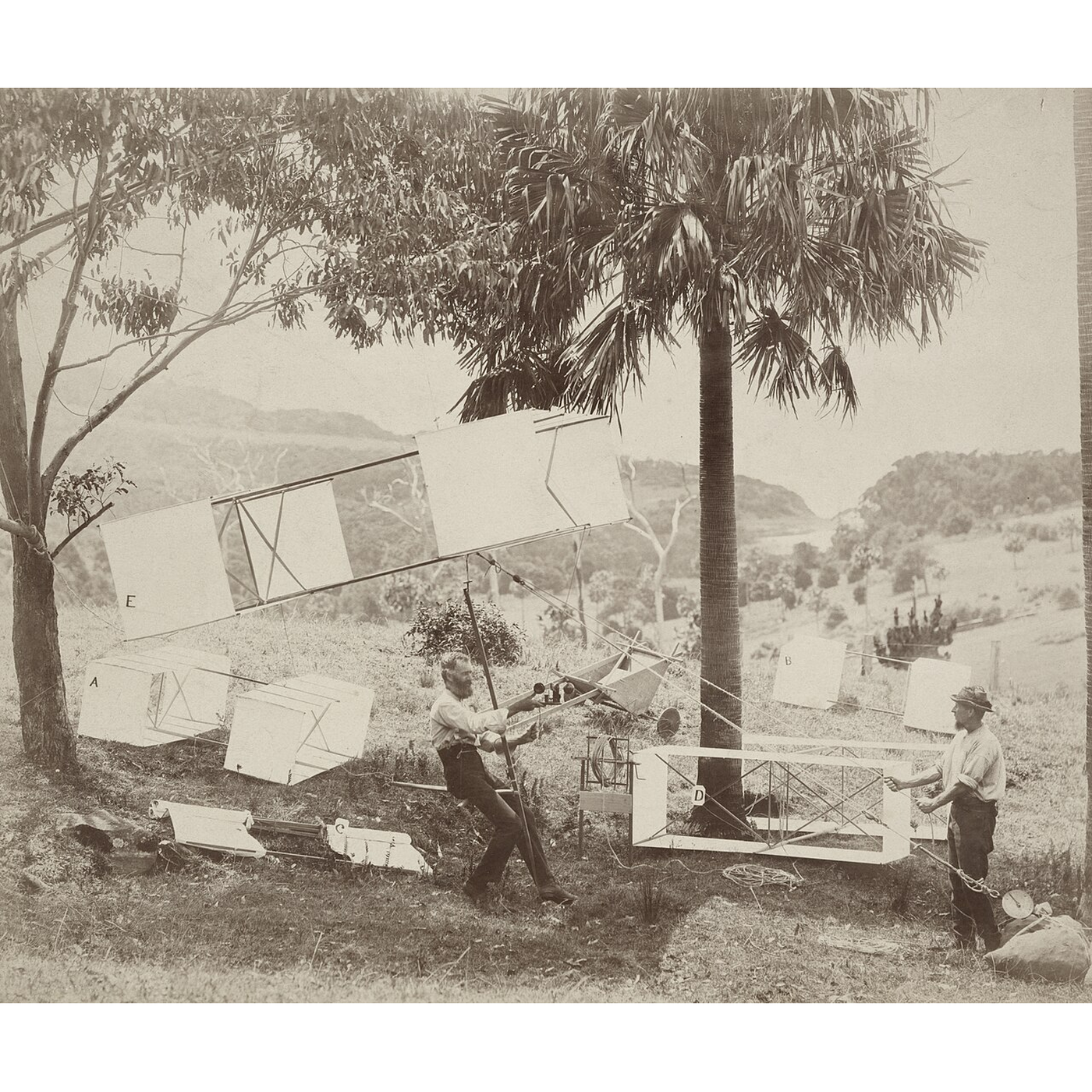


The Box Kite: Two Cells of Cloth That Hold Themselves Steady
Flat kites need a tail to stay steady and fly only in a narrow range of wind. Lawrence Hargrave, an English-born engineer working in Sydney on the problem of flight, built kites of two open boxes of cloth on a light frame in 1893. The horizontal faces lift, the vertical faces keep the kite facing the wind like a weathervane, and it flies steady without a tail.
On 12 November 1894, at Stanwell Park beach, he lifted himself off the ground under a train of four box kites. He published his work freely and took out no patents, believing discoveries should be shared. The box-kite cell shaped the early biplanes.
This rung works out a box kite's lift and the wind it needs, and builds one.
Débutant
About 4 hours
Consignes
1
1
Lift, weight and the wind it needs
Lift, weight and the wind it needs
Chargement du notebook Jupyter…
2
2
Where lift was first measured
Where lift was first measured
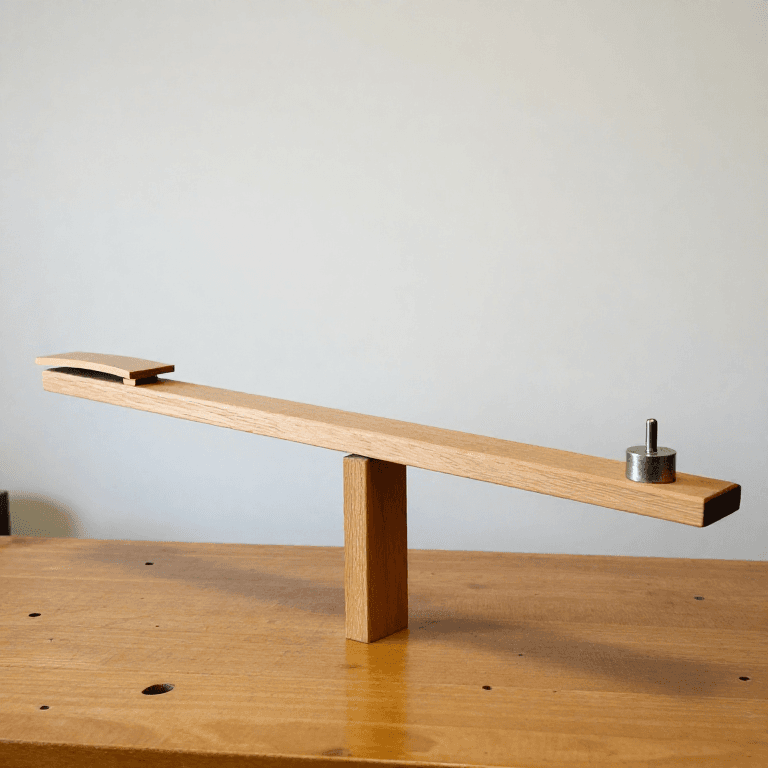
Cayley measured the lift of inclined surfaces on a whirling arm. The embedded blueprint repeats it; a kite is the same surface held on a line.
3
3
Build a Hargrave box kite
Build a Hargrave box kite
Cut four 900 mm pine dowels as longerons and eight 400 mm dowels as cross-spars. Sew two bands of ripstop nylon, each 1600 mm round and 300 mm wide, with a pocket at each corner for a longeron: these are the two cells, set 300 mm apart on the longerons.
Slide the longerons into the corner pockets so the bands form two square tubes. Fit two pairs of cross-spars inside each cell, diagonally, notched at the ends to grip the longerons and tension the cloth.
Tie a bridle to one longeron at the front of the front cell and the front of the rear cell, and tie the flying line to it about a third of the way back from the front. Fly it in open ground well away from power lines and roads.
Matériaux pour cette étape :
 Jeu de tourillons en pin1 pièce
 Nylon ripstop1 pièce
 Ficelle de cuisine en coton1 pièce
 Fil de pêche (monofilament)1 pièce
Outils nécessaires :
 Machine à coudre
 Règle
Règle Mètre ruban
 Pistolet à colle chaude
4
4
Measure the line pull against the wind
Measure the line pull against the wind
Tie a spring scale into the line near the ground anchor and read the pull at steady flight. At the same time measure the wind speed at head height with a handheld anemometer. Repeat on several days.
Plot line pull against wind speed squared: roughly a straight line, as lift goes with $v^2$. Fit it and work out your kite's $C_L$ from the notebook's formula, using the area of its horizontal faces.
Outils nécessaires :
 Anémomètre portatif
 Dynamomètre (peson à ressort)
 Chronomètre
5
5
A box kite that will not fly well
A box kite that will not fly well
Box kite problems.
Flow
Loading...
6
6
History and honest limits
History and honest limits
**Lawrence Hargrave** (1850–1915) developed the box kite in Sydney in 1893 and lifted himself under four of them at Stanwell Park on 12 November 1894. He shared his results openly and did not patent them. Early aircraft makers, including those building the first European biplanes, took up the box-kite cell.
**Honest limits.** The lift coefficient in the notebook is an illustrative value; your measurements give your kite's. Man-lifting kites are dangerous and are not something to try.
Matériaux
4- 1 pièceEspace réservé
- 1 pièceEspace réservé
- 1 pièceEspace réservé
- 1 pièceEspace réservé
Outils requis
7- Espace réservé
- Espace réservé
- 1 vendor sell this, none ship to you yetEspace réservé
- Espace réservé
- Espace réservé
- Espace réservé
- Espace réservé
Blueprints liés
Ces blueprints partagent des connaissances — techniques, matériaux ou principes


CC0 Domaine public
Ce blueprint est publié sous CC0. Vous êtes libre de copier, modifier, distribuer et utiliser ce travail pour tout usage, sans demander la permission.
Soutenez le Maker en achetant des produits via son Blueprint où il perçoit une Commission Maker définie par les Vendeurs, ou créez une nouvelle itération de ce Blueprint et incluez-le comme connexion dans votre propre Blueprint pour partager les revenus.