ART
BEAUTÉ ET BIEN-ÊTRE
ARTISANAT
CULTURE ET HISTOIRE
DIVERTISSEMENT
ENVIRONNEMENT
NOURRITURE ET BOISSONS
INGÉNIERIE INVERSE
SCIENCES
SPORTS
TECHNOLOGIE
TECHNOLOGIE PORTABLE
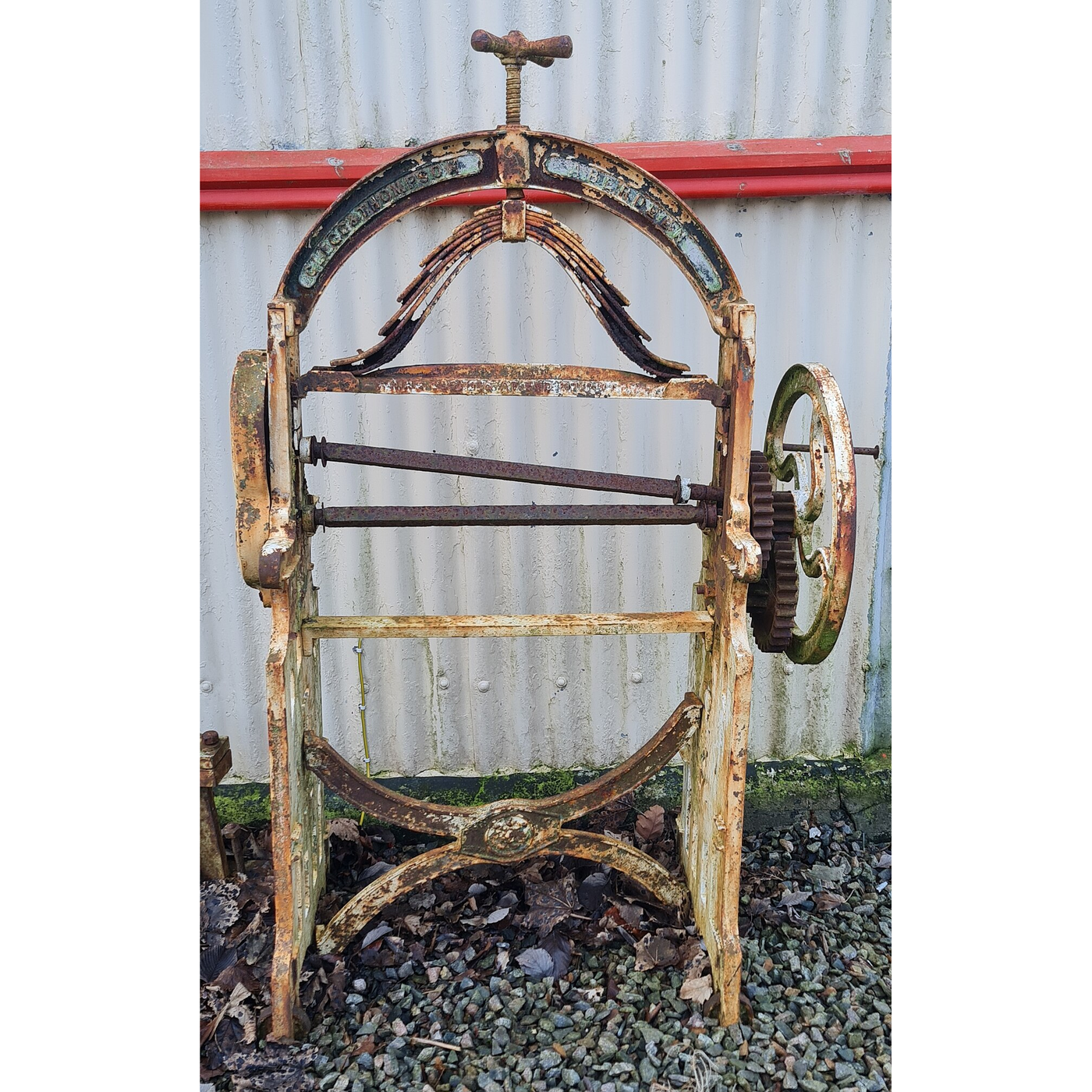

The Clothes Wringer: Two Rollers and a Spring
Washing clothes by hand leaves them heavy with water, and wringing a sheet by hand is slow, tiring and hard on the fabric. The wringer — two rubber rollers pressed together by springs and turned by a crank through gears — squeezes the water out as the cloth feeds through. Clamped to a tub or built onto a washing machine, it was in most homes that did their own washing for a century, until spin dryers took its place.
The design is a balance: more spring force takes out more water but needs more effort at the crank, wears the rubber and breaks buttons; the gearing trades speed for effort. And the nip that grips cloth grips fingers too — wringers had a release to spring the rollers apart.
This rung works out the crank effort and gearing and builds a small wringer.
Débutant
About 4 hours
Consignes
1
1
Crank effort, gearing and drying
Crank effort, gearing and drying
Chargement du notebook Jupyter…
2
2
Two rollers, a different job
Two rollers, a different job
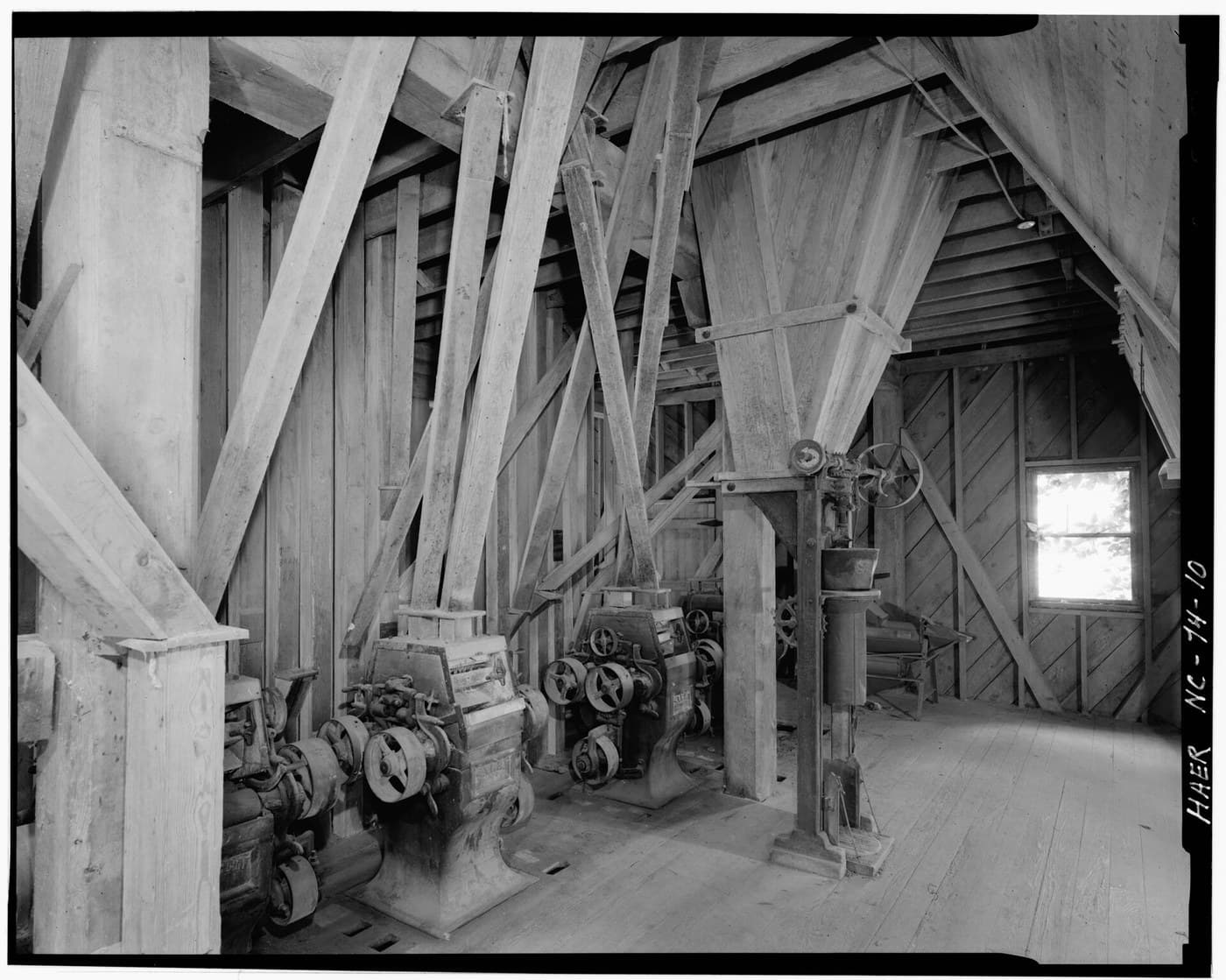
A roller mill crushes grain between rollers set a fixed gap apart; a wringer presses its rollers together with springs. The embedded blueprint shows the mill.
3
3
Build a small wringer
Build a small wringer
Cut two 250 mm lengths of 30 mm PVC pipe and slide each over a length of rubber hose, or wrap it tightly with rubber sheet glued down, to make the rollers. Run each on a steel shaft through holes in two plywood side frames: the bottom roller in fixed holes, the top roller in slots so it can move up.
Press the top shaft down with two compression springs under screw adjusters in the frame tops. Fit a crank to the bottom roller, and drive the top roller by gear or by friction from the bottom one. Add a lever that lifts the top roller's slot blocks against the springs — the safety release.
Soak cotton towels, weigh each wet, pass it through at three spring settings, and weigh again. Keep fingers well back from the nip: it pulls in whatever it grips.
Matériaux pour cette étape :
 Tube PVC1 mètre
 Plaque de caoutchouc1 pièce
 Barre d'acier brut2 pièces
 Panneau de contreplaqué1 pièce
 Assortiment de ressorts de compression1 pièce
 Vis à métaux8 pièces
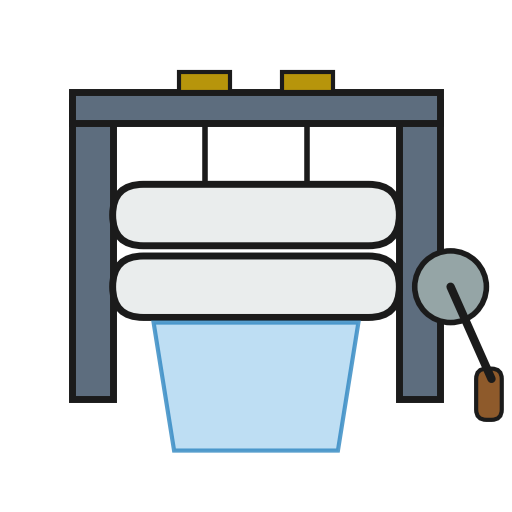 Essoreuse à rouleaux1 pièce
Outils nécessaires :
 Perceuse sans fil
 Jeu de forets
 Balance de cuisine numérique
 Clé à molette
 Pistolet à colle chaude
4
4
A wringer not wringing
A wringer not wringing
Wringer faults.
Flow
Loading...
5
5
Context and honest limits
Context and honest limits
Hand-cranked wringers and box mangles spread through nineteenth-century homes and laundries; powered wringers sat on top of early electric washing machines until spin drying replaced them in the mid-twentieth century.
**Honest limits.** The notebook's spring force, rolling arm and water contents are illustrative; measure your own. Wringers caused many injuries to hands and hair — keep children away from any wringer, and never reach toward the nip while it turns.
Matériaux
7- 1 mètreEspace réservé
- 1 pièceEspace réservé
- 2 piècesEspace réservé
- 1 pièceEspace réservé
- Espace réservé
- 8 piècesEspace réservé
- 1 pièceEspace réservé
Outils requis
5- 1 vendor sell this, none ship to you yetEspace réservé
- Espace réservé
- Espace réservé
- Espace réservé
- Espace réservé
Blueprints liés
Ces blueprints partagent des connaissances — techniques, matériaux ou principes




CC0 Domaine public
Ce blueprint est publié sous CC0. Vous êtes libre de copier, modifier, distribuer et utiliser ce travail pour tout usage, sans demander la permission.
Soutenez le Maker en achetant des produits via son Blueprint où il perçoit une Commission Maker définie par les Vendeurs, ou créez une nouvelle itération de ce Blueprint et incluez-le comme connexion dans votre propre Blueprint pour partager les revenus.