ART
BEAUTÉ ET BIEN-ÊTRE
ARTISANAT
CULTURE ET HISTOIRE
DIVERTISSEMENT
ENVIRONNEMENT
NOURRITURE ET BOISSONS
INGÉNIERIE INVERSE
SCIENCES
SPORTS
TECHNOLOGIE
TECHNOLOGIE PORTABLE



The Disc Harrow: Dished Wheels Set at an Angle
A plough turns the soil over in slabs; a seed needs it broken fine. Tine harrows dragged through clods catch and choke on trash. A disc harrow rolls through instead: rows of dished steel discs on shafts turned at an angle to the direction of travel, so each disc both rolls and scrapes sideways, cutting clods and residue and throwing the soil aside.
Silas A. Moody of San Francisco patented a "sod-cutter" of sharp circular knives on an axle in 1866, and Frederick Nishwitz of Brooklyn patented a revolving harrow in 1869 with dished discs under two beams set in a V, their angles adjustable — generally credited as the forerunner of the modern disc harrow.
This rung splits a disc's motion into rolling and scraping, shows why gangs come in opposed pairs, and measures draft and side force on a bench gang in sand.
Débutant
About 3 hours
Consignes
1
1
Rolling, scraping, side force and width
Rolling, scraping, side force and width
Chargement du notebook Jupyter…
2
2
What the harrow follows
What the harrow follows
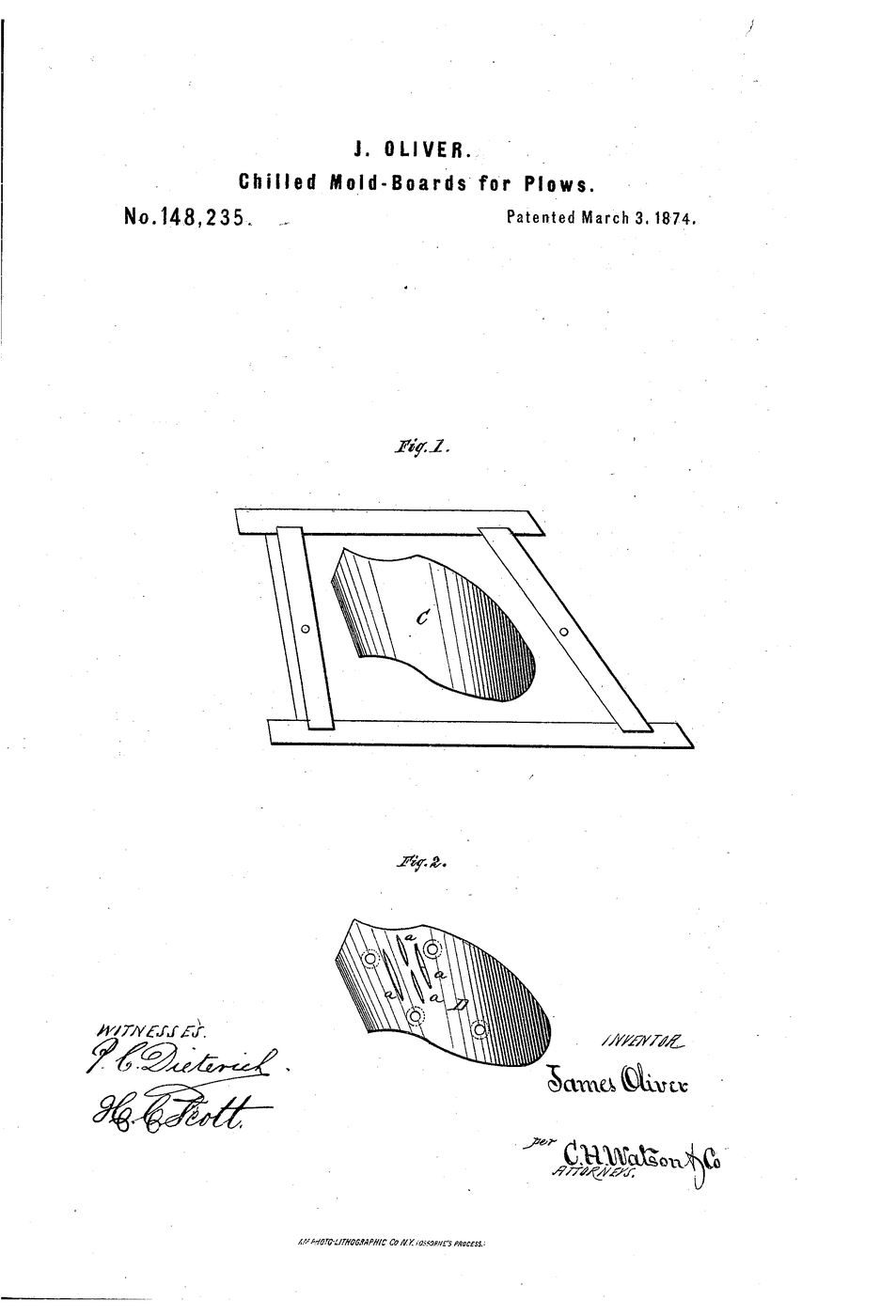
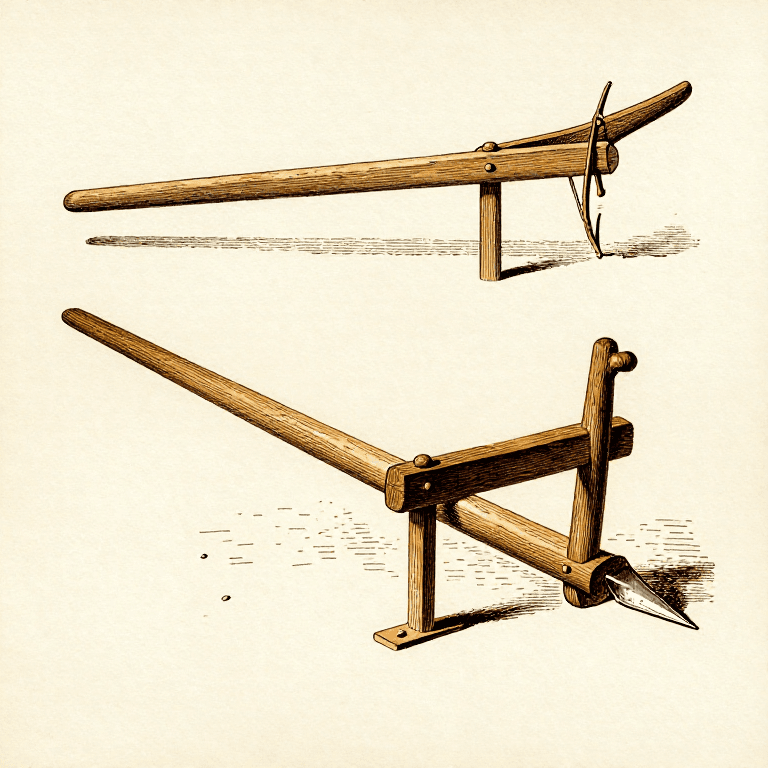
The disc harrow works ground a plough has already turned. The embedded blueprint shows the chilled plough that opened it.
3
3
Build a bench gang
Build a bench gang
Use five small stainless steel bowls, about 90 mm across, as dished discs: drill a 6 mm hole at the centre of each. Thread them on a 6 mm threaded rod, all facing the same way, 40 mm apart, with nuts and washers either side of each — that is the gang.
Mount the rod's ends in two plywood cheeks joined by a crossbar, with the rod free to turn. Drill the crossbar so the towing point can be set to make the gang angle 0, 10, 20 or 30 degrees to square, checked with a protractor. Fill a tray 80 mm deep with damp sand, packed firm.
Matériaux pour cette étape :
 Jeu de bols en acier inoxydable1 pièce
 Tige filetée1 pièce
 Rondelle plate12 pièces
 Panneau de contreplaqué1 pièce
 Sable fin20 kilogram
 Eau2 litres
Outils nécessaires :
 Perceuse sans fil
 Jeu de forets
 Clé à molette
 Rapporteur
 Règle
Règle4
4
Measure draft and side force
Measure draft and side force
Weight the gang so the discs sink to the same depth each run. At each gang angle pull it 400 mm through the sand at a steady pace with one spring scale in the line of travel (draft), while a second scale, hooked sideways to the frame and held square, keeps it running straight (side force). Rake and repack the sand between runs.
At zero angle the discs roll and barely disturb the sand; the draft and side force are small. As the angle rises both grow, and the sand is thrown to one side in a ridge. Now build a second gang with the bowls facing the other way and tow it behind the first, offset: the sideways scale reading falls towards zero.
Outils nécessaires :
 Dynamomètre (peson à ressort)
 PoidsRègle
5
5
A disc harrow leaving poor work
A disc harrow leaving poor work
Disc harrow faults and their usual causes.
Flow
Loading...
6
6
History and honest limits
History and honest limits
**Silas A. Moody** (San Francisco, 1866) and **Frederick Nishwitz** (Brooklyn, 1869) patented early disc cutters and harrows; Nishwitz's V-framed harrow of dished discs on adjustable brackets is generally credited as the forerunner of the modern one. Disc harrows spread through the Middle West and Great Plains from the 1870s.
**Honest limits.** Discing breaks soil structure; done too often, or on wet ground, it leaves a compacted pan just below its depth, and fine bare soil blows and washes away. The side-force model in the notebook is proportional by assumption — the bench measurements are what tell you how your soil actually behaves.
Matériaux
6- Espace réservé
- 1 pièceEspace réservé
- 12 piècesEspace réservé
- 1 pièceEspace réservé
- 20 kilogramEspace réservé
- 2 litresEspace réservé
Outils requis
7- 1 vendor sell this, none ship to you yetEspace réservé
- Espace réservé
- Espace réservé
- Espace réservé
- Espace réservé
- Espace réservé
- Espace réservé
Blueprints liés
Ces blueprints partagent des connaissances — techniques, matériaux ou principes



CC0 Domaine public
Ce blueprint est publié sous CC0. Vous êtes libre de copier, modifier, distribuer et utiliser ce travail pour tout usage, sans demander la permission.
Soutenez le Maker en achetant des produits via son Blueprint où il perçoit une Commission Maker définie par les Vendeurs, ou créez une nouvelle itération de ce Blueprint et incluez-le comme connexion dans votre propre Blueprint pour partager les revenus.