ART
BEAUTÉ ET BIEN-ÊTRE
ARTISANAT
CULTURE ET HISTOIRE
DIVERTISSEMENT
ENVIRONNEMENT
NOURRITURE ET BOISSONS
INGÉNIERIE INVERSE
SCIENCES
SPORTS
TECHNOLOGIE
TECHNOLOGIE PORTABLE


The Door Chain: A Slide in a Groove, and a Key for the Outside
A door chain lets a door open a hand's width to see who is there, and no further. The ordinary kind can only be put on from inside, so it is no use to someone going out.
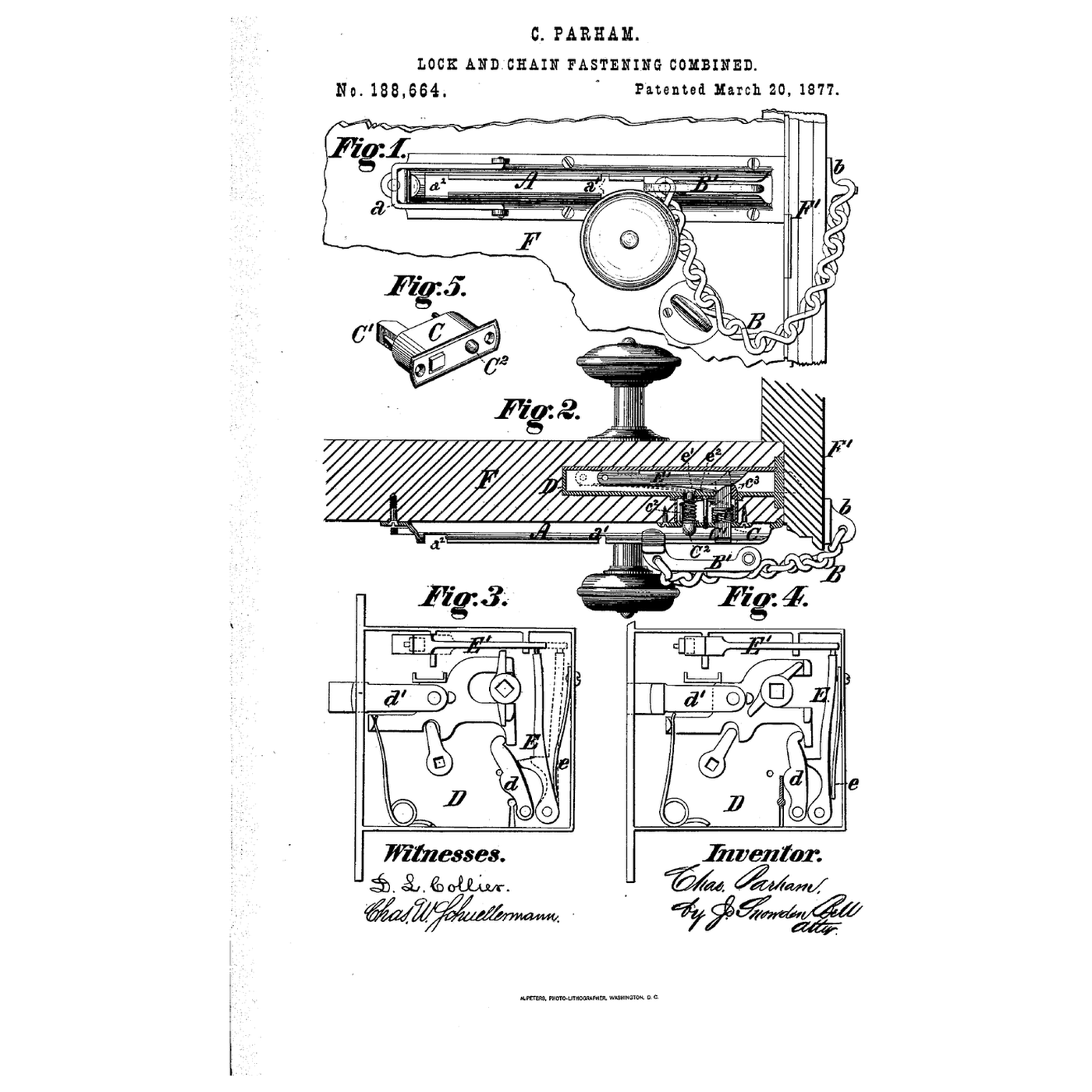
Charles Parham of Philadelphia received US 188,664, dated 20 March 1877 (filed 6 February 1877), for a lock and chain-fastening combined, so "the ordinary chain-fastening of street and other doors" can be secured "either from the outer or the inner side of the door", and "the door cannot be opened (beyond the traverse allowed by the chain) except by the use of a proper key". The slide-plate is open at its lock end; a spring stop, pushed into the groove by the chain slide itself and locked by a bar from the latch, keeps the slide in.
This rung works out the gap a chain allows, then fits one where the notebook says it should go.
Débutant
About 1 hour
Consignes
1
1
The gap a chain allows
The gap a chain allows
Chargement du notebook Jupyter…
2
2
The chain itself
The chain itself
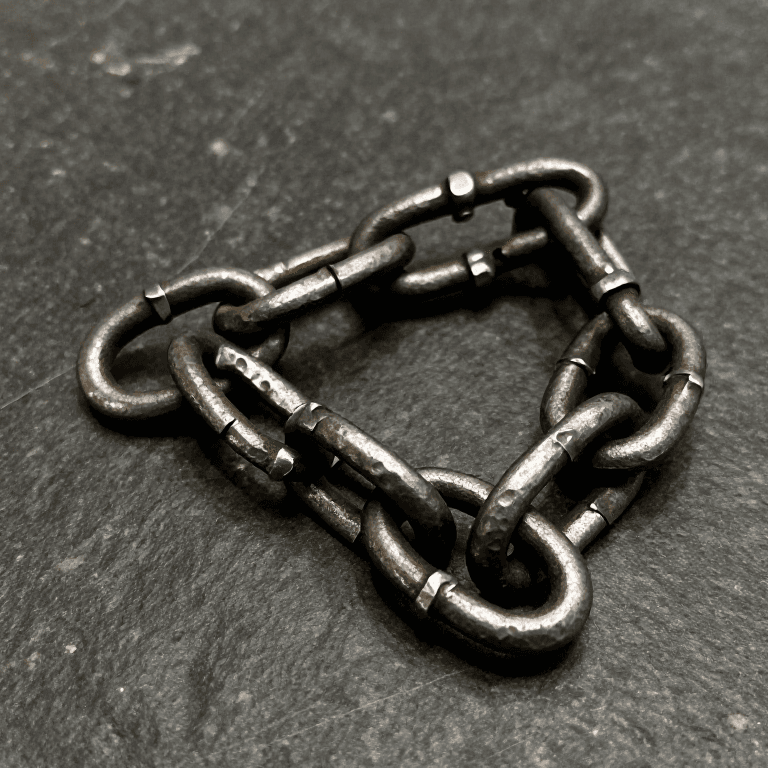
A door chain is a short forged chain with a slide on its end. The embedded blueprint forges links.
3
3
Read US 188,664
Read US 188,664
"The object of my invention is to provide simple and convenient means for enabling the ordinary chain-fastening of street and other doors to be secured either from the outer or the inner side of the door, and in such manner that, while it may be released from the inner side in the usual way, the door cannot be opened (beyond the traverse allowed by the chain) except by the use of a proper key".
"The chain B is secured at one end to an eye or staple, b, upon the door-frame F', and is provided at its free end with a slide, B', of the ordinary form." The slide-piece A on the door has a groove open "at the end next the lock or opening side of the door". A stop or bolt and a starting-pin, "each of which is movable at right angles to the slide-piece A", sit in a case let into the door: the slide pushes the pin, the pin pushes the bolt into the groove, and a bar moved by the latch-key holds it there.
"By this construction a chain-fastening may be secured as readily from the outside as from the inside of the door, and when secured it can be released in the ordinary manner from the inside of the door, but not from the outside, except by the use of a proper key."
4
4
Fit a door chain
Fit a door chain
Close the door and mark on the frame and the door a line at the height you want, usually just above the lock. Using the notebook, choose where the staple and the slide plate go for the gap you want, then hold the chain in place to check it before drilling.
Drill pilot holes and fix the staple into the frame with the longest screws that will reach the stud behind it: the screws, not the chain, are usually what fails when the door is forced. Fix the slide plate on the door. Put the chain on, open the door and measure the gap with a tape.
Matériaux pour cette étape :
 Vis à bois1 pièce
Outils nécessaires :
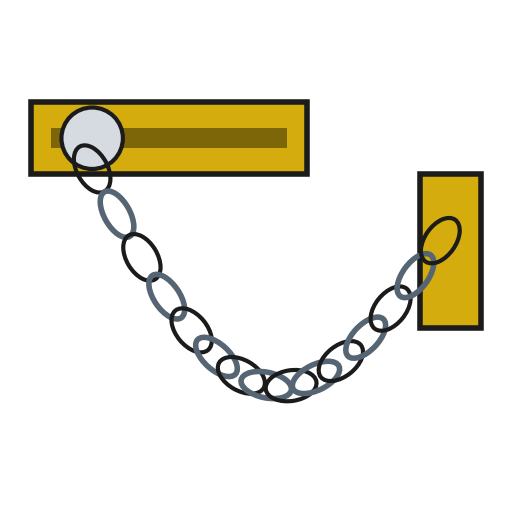 Entrebâilleur à chaîne
 Perceuse sans fil
 Jeu de forets
 Jeu de tournevis
 Mètre ruban
5
5
A door chain that is too loose, too tight or pulls out
A door chain that is too loose, too tight or pulls out
Door chain troubleshooting.
Flow
Loading...
6
6
History and honest limits
History and honest limits
**Charles Parham** of Philadelphia filed US 188,664 on 6 February 1877; it is dated 20 March 1877. He writes that a chain-fastening combined with a lock and worked from the other side "has been heretofore known and patented", and does not claim that broadly.
**Honest limits.** The patent gives no chain length or positions. The door width, positions and chain lengths in the notebook are examples.
Matériaux
1- 1 pièceEspace réservé
Outils requis
5- Espace réservé
- 1 vendor sell this, none ship to you yetEspace réservé
- Espace réservé
- Espace réservé
- 1 vendor sell this, none ship to you yetEspace réservé
Blueprints liés
Ces blueprints partagent des connaissances — techniques, matériaux ou principes
CC0 Domaine public
Ce blueprint est publié sous CC0. Vous êtes libre de copier, modifier, distribuer et utiliser ce travail pour tout usage, sans demander la permission.
Soutenez le Maker en achetant des produits via son Blueprint où il perçoit une Commission Maker définie par les Vendeurs, ou créez une nouvelle itération de ce Blueprint et incluez-le comme connexion dans votre propre Blueprint pour partager les revenus.