ART
BEAUTÉ ET BIEN-ÊTRE
ARTISANAT
CULTURE ET HISTOIRE
DIVERTISSEMENT
ENVIRONNEMENT
NOURRITURE ET BOISSONS
INGÉNIERIE INVERSE
SCIENCES
SPORTS
TECHNOLOGIE
TECHNOLOGIE PORTABLE

The Drum Brake: Shoes That Push Themselves Harder
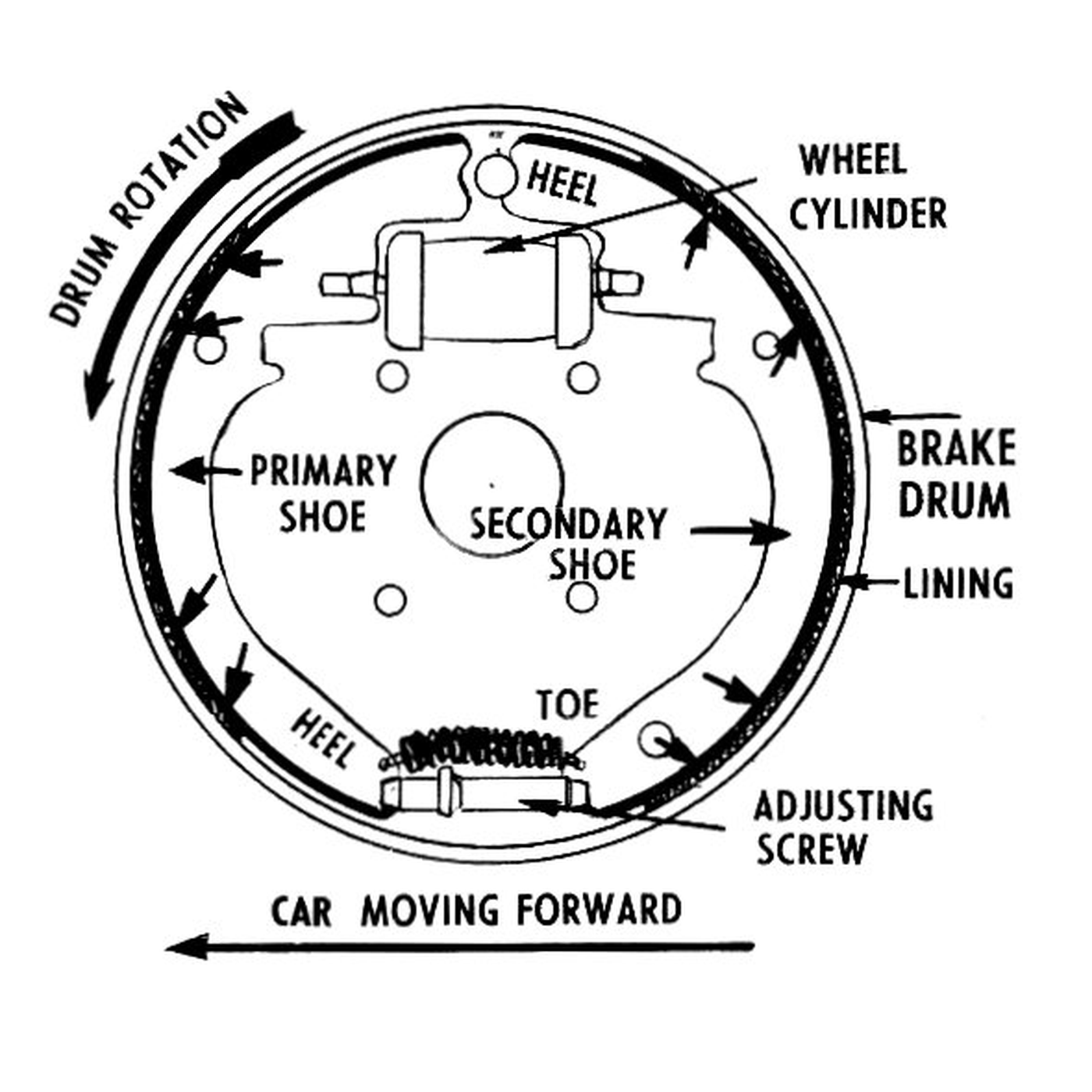
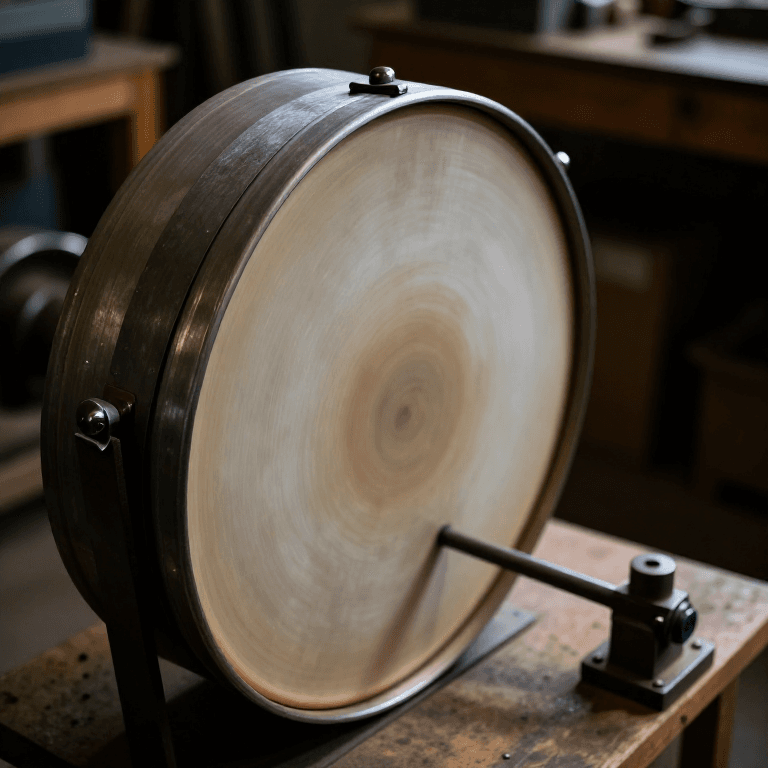
Early cars stopped with blocks pressed on the tyres or with a band tightened round a drum on the outside. In 1902 Louis Renault put the friction INSIDE the drum: two curved shoes pivoted on a fixed plate, pushed outward against the drum's inner surface. The drum keeps dirt and water off the linings, and one of the shoes is dragged by the drum's own rotation into firmer contact — it helps to apply itself.
That self-servo gives a lot of braking for a small push. It also makes the brake sensitive to the friction of its linings, which is why drum brakes fade when hot.
This rung works out leading and trailing shoe torques and builds a plywood drum with one shoe to measure the difference by spinning it each way.
Intermédiaire
About 4 hours
Consignes
1
1
Leading and trailing shoes
Leading and trailing shoes
Chargement du notebook Jupyter…
2
2
Build a drum and one shoe
Build a drum and one shoe
Make a drum: a plywood disc 200 mm across with a 30 mm rim of cardboard strip glued round it, on a bolt axle through a plywood backplate. Line the inside of the rim with sandpaper, rough side in, as a repeatable friction surface for the drum.
Make one shoe: a plywood arc that fits inside the drum, pivoted near one end on the backplate, with a piece of brake-pad friction material glued on its face. At the free end, hang the spring scale to pull the shoe out against the drum with a fixed force.
Wrap string round the drum's hub, hang a weight on it, and find the smallest weight that turns the drum against the shoe — with the drum turning towards the pivot (trailing), then away (leading). The leading direction needs far more weight.
Matériaux pour cette étape :
 Panneau de contreplaqué1 feuille
 Plaques de carton ondulé1 paquet
 Plaquettes de frein1 jeu
 Vis à métaux4 pièces
Outils nécessaires :
 Perceuse sans fil
 Jeu de forets
 Dynamomètre (peson à ressort)
 Règle
 Assortiment de papier abrasif
3
3
History and context
History and context
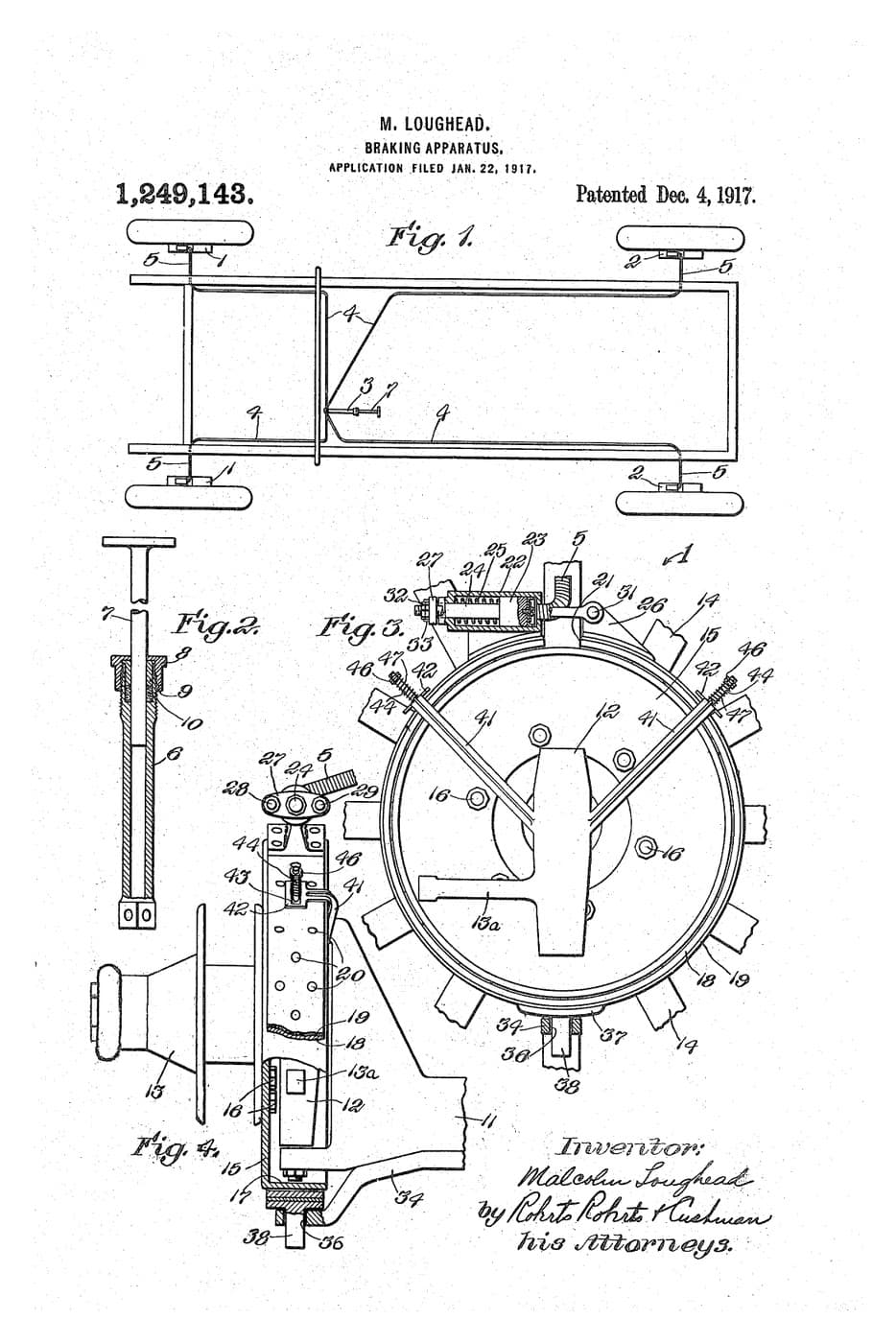
**Louis Renault, 1902** — the internal expanding shoe brake. No patent number is asserted here. Mechanical rods and cables worked the shoes until hydraulic operation (Loughead, in this catalogue) spread in the 1920s; twin-leading-shoe drums put the self-servo on both shoes for stronger front brakes.
**Honest limits.** The self-servo makes the torque sensitive to lining friction, so a hot drum fades and a wet one grabs. The drum expands away from the shoes when hot, lengthening the pedal. And the enclosed drum sheds heat poorly — the reason disc brakes (the next rung) took over at the front of cars.
Matériaux
4- 1 feuilleEspace réservé
- 1 paquetEspace réservé
- 1 jeuEspace réservé
- 4 piècesEspace réservé
Outils requis
5- 1 vendor sell this, none ship to you yetEspace réservé
- Espace réservé
- Espace réservé
- Espace réservé
- Espace réservé
Blueprints liés
Ces blueprints partagent des connaissances — techniques, matériaux ou principes



CC0 Domaine public
Ce blueprint est publié sous CC0. Vous êtes libre de copier, modifier, distribuer et utiliser ce travail pour tout usage, sans demander la permission.
Soutenez le Maker en achetant des produits via son Blueprint où il perçoit une Commission Maker définie par les Vendeurs, ou créez une nouvelle itération de ce Blueprint et incluez-le comme connexion dans votre propre Blueprint pour partager les revenus.