ART
BEAUTÉ ET BIEN-ÊTRE
ARTISANAT
CULTURE ET HISTOIRE
DIVERTISSEMENT
ENVIRONNEMENT
NOURRITURE ET BOISSONS
INGÉNIERIE INVERSE
SCIENCES
SPORTS
TECHNOLOGIE
TECHNOLOGIE PORTABLE



The Hex-Socket Screw: A Head That Sinks Out of Harm's Way
A set screw locks a pulley or a collar to a turning shaft. With an ordinary head it stands proud of the hub and turns with it — close enough to catch a sleeve.
William G. Allen of West Hartford, Connecticut, patented a way to make "flush head set screws" cheaply: US 960,244, filed 9 January 1909 and granted 7 June 1910. A headed blank is driven by a punch, "preferably hexagonal in cross section", through a die, so the head is drawn back down to the wire's diameter around the punch and keeps its hexagonal socket. The screw can be sunk below the surface and turned by "a strong key or crank".
This rung follows the metal through Allen's die, estimates what a set screw holds, and measures it on a pulley and shaft.
Débutant
About 2 hours
Consignes
1
1
Where the head goes, and what it holds
Where the head goes, and what it holds
Chargement du notebook Jupyter…
2
2
Pulling metal through a hole smaller than itself
Pulling metal through a hole smaller than itself
Allen's die works like a drawplate: the metal gets thinner and longer. The embedded blueprint shows the older process.
3
3
Read US 960,244
Read US 960,244
Allen writes that it is "now generally recognized as very desirable, and numerous governments, State and national, make it obligatory" to guard or sink the heads of set screws on rotating parts. His object is screws "cheaper than the common headed set screws, which can be entirely sunk below the surface".
Fig. 1: a blank 1 of round wire is cut, one end upset "in the ordinary way" to form an expanded head 2, and the blank is driven through a die 3 by a punch 4. The head is "drawn up to the original diameter of the wire, leaving a socket 5 in the end". Other figures start from a drilled or punched round socket and turn it hexagonal the same way, or make a headed machine screw (Fig. 4).
The sockets are "shown as hexagonal" but "can be formed square, octagonal or any other angular or non-circular shape, depending on the shape of the punch". The claims are for the process: an enlarged end forced by an angular punch through a die smaller than that end, "compressing that end onto the punch".
4
4
Measure a socket screw and a set screw's grip
Measure a socket screw and a set screw's grip
Measure a socket head cap screw with the caliper: head diameter, the socket across the flats, and its depth. Find the hex key that fits and note the size.
Slide a 16-tooth timing pulley onto a 6 mm steel shaft clamped in the bench vise. Tighten its set screw with the hex key — first lightly, then firmly. Each time, wind a string round the pulley's teeth, hook the spring scale to it, and pull until the pulley slips. Slip torque = scale reading × the pulley's pitch radius (about 5.1 mm for 16 teeth of 2 mm pitch). Compare with the notebook.
File a small flat on the shaft under the set screw and repeat: the grip rises sharply.
Matériaux pour cette étape :
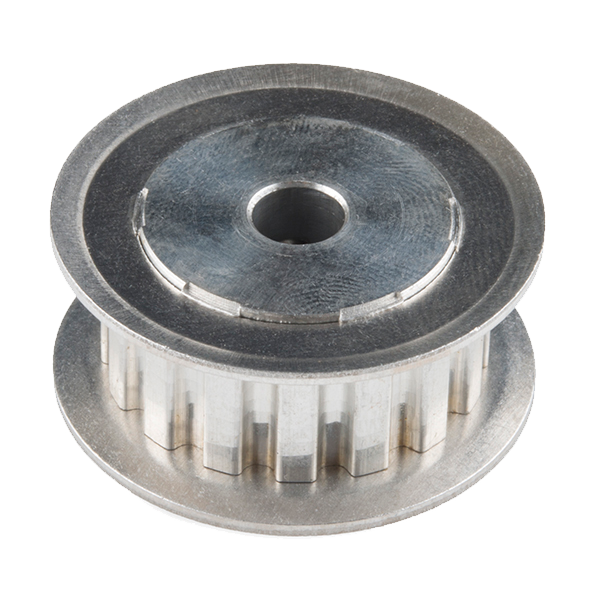 Timing Pulley - Shaft Mount (16T; 6mm Bore)1 pièce
 Barre d'acier brut1 pièce
 Vis à tête cylindrique à six pans creux2 pièces
 Vis sans tête2 pièces
 Ficelle de cuisine en coton1 pièce
Outils nécessaires :
 Jeu de clés Allen
 Pied à coulisse numérique 6 pouces
 Étau d'établi
 Dynamomètre (peson à ressort)
 Jeu de tarauds et filières
5
5
A hex-socket screw that will not behave
A hex-socket screw that will not behave
Hex socket troubleshooting.
Flow
Loading...
6
6
History and honest limits
History and honest limits
**William G. Allen** of West Hartford, Connecticut, assignor of one-half to Ira Dimock, filed US 960,244 on 9 January 1909; it was granted on 7 June 1910. It claims a process of making socketed screws by forcing an enlarged end through a smaller die onto an angular punch.
**Honest limits.** The head sizes, nut factor and friction in the notebook are examples; real set-screw holding depends on the point form, hardness and shaft finish.
Matériaux
5- Timing Pulley - Shaft Mount (16T; 6mm Bore)10 % de commission1 pièce€7.22
- 1 pièceEspace réservé
- Espace réservé
- Vis sans tête10 % de commission2 piècesEspace réservé
- 1 pièceEspace réservé
Outils requis
5- Espace réservé
- Espace réservé
- Espace réservé
- Espace réservé
- Espace réservé
Total estimé
Ce que le maker a acheté. Les matériaux sans prix se trouvent là où vous les achetez.
Blueprints liés
Ces blueprints partagent des connaissances — techniques, matériaux ou principes
Upsetting: Making It Thicker by Making It Shorter
par Forge
Travail des Métaux
25
0
0
0
0
0
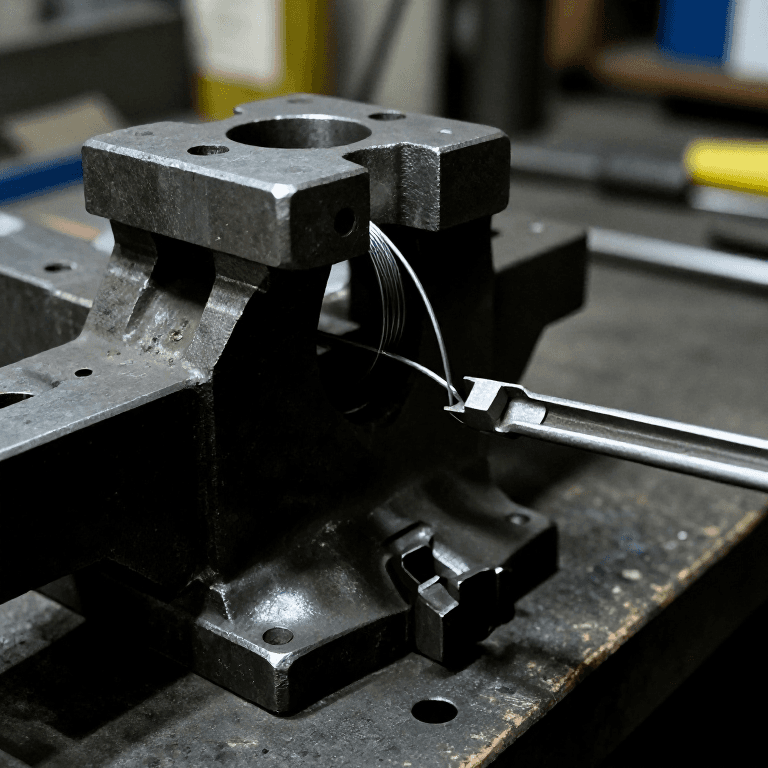
Drawing Wire Through a Drawplate — Reducing Iron Rod to Fine Wire
par Forge
Travail des Métaux
48
0
0
0
3
0
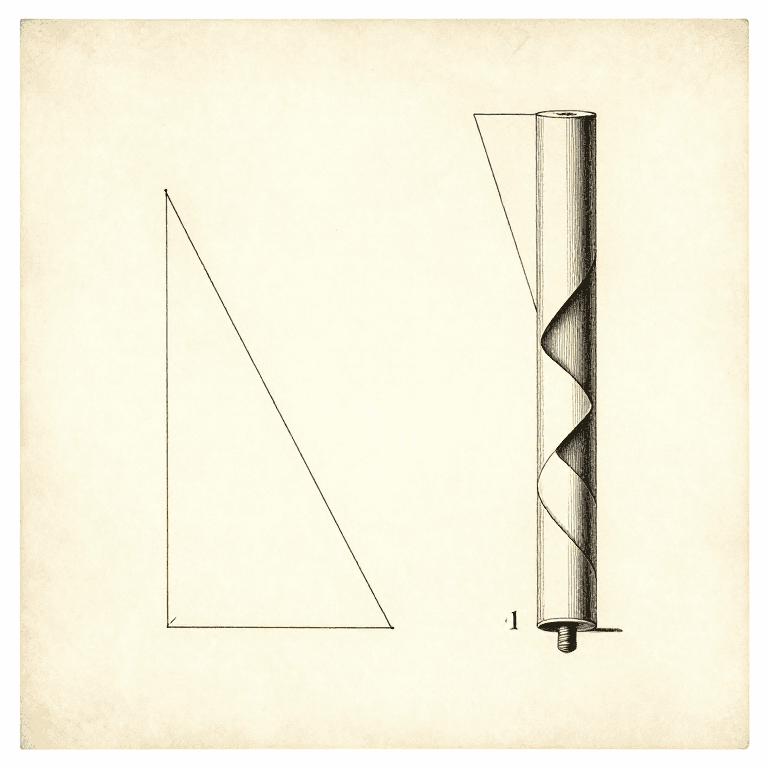
What a Screw Thread Is: A Ramp Wrapped Round a Cylinder
par Forge
Travail des Métaux
28
0
0
0
0
0
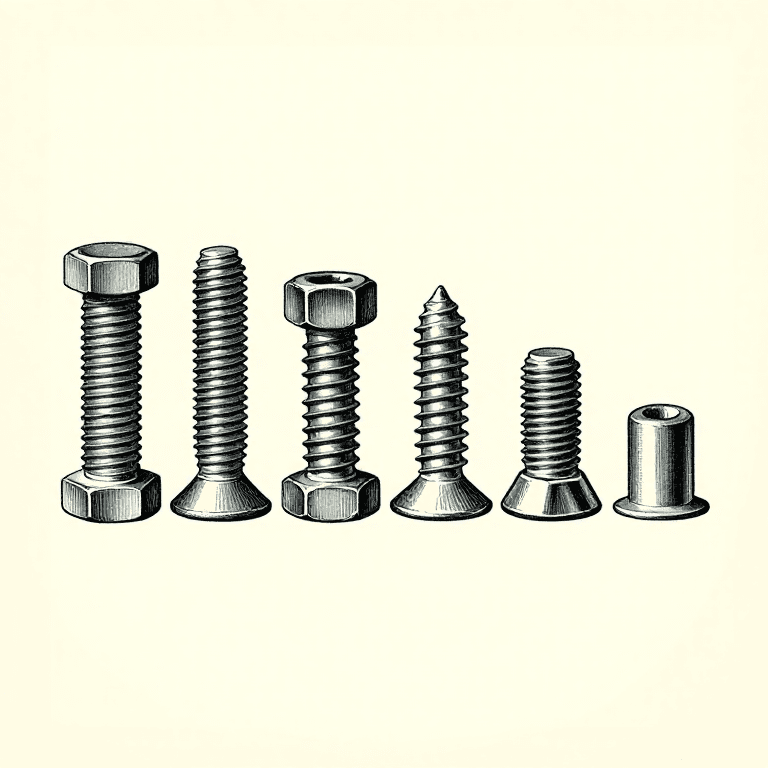
Choosing the Fastener: Screw, Bolt, Stud, Rivet
par Martin
Outils de Menuiserie
23
0
0
0
0
0
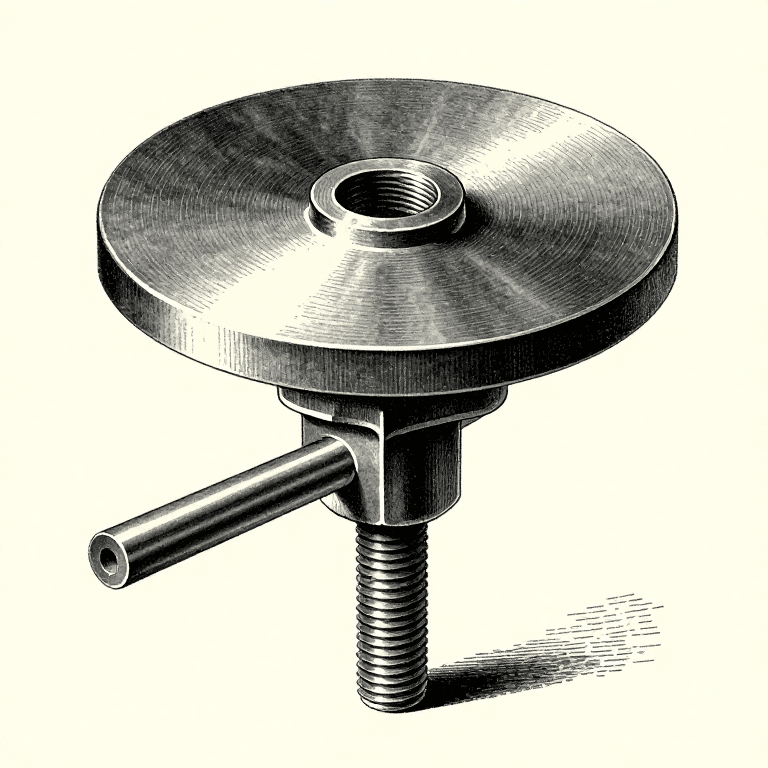
Cutting a Thread with a Die: Making Your Own Bolt
par Forge
Travail des Métaux
27
0
0
0
0
0
CC0 Domaine public
Ce blueprint est publié sous CC0. Vous êtes libre de copier, modifier, distribuer et utiliser ce travail pour tout usage, sans demander la permission.
Soutenez le Maker en achetant des produits via son Blueprint où il perçoit une Commission Maker définie par les Vendeurs, ou créez une nouvelle itération de ce Blueprint et incluez-le comme connexion dans votre propre Blueprint pour partager les revenus.