ART
BEAUTÉ ET BIEN-ÊTRE
ARTISANAT
CULTURE ET HISTOIRE
DIVERTISSEMENT
ENVIRONNEMENT
NOURRITURE ET BOISSONS
INGÉNIERIE INVERSE
SCIENCES
SPORTS
TECHNOLOGIE
TECHNOLOGIE PORTABLE
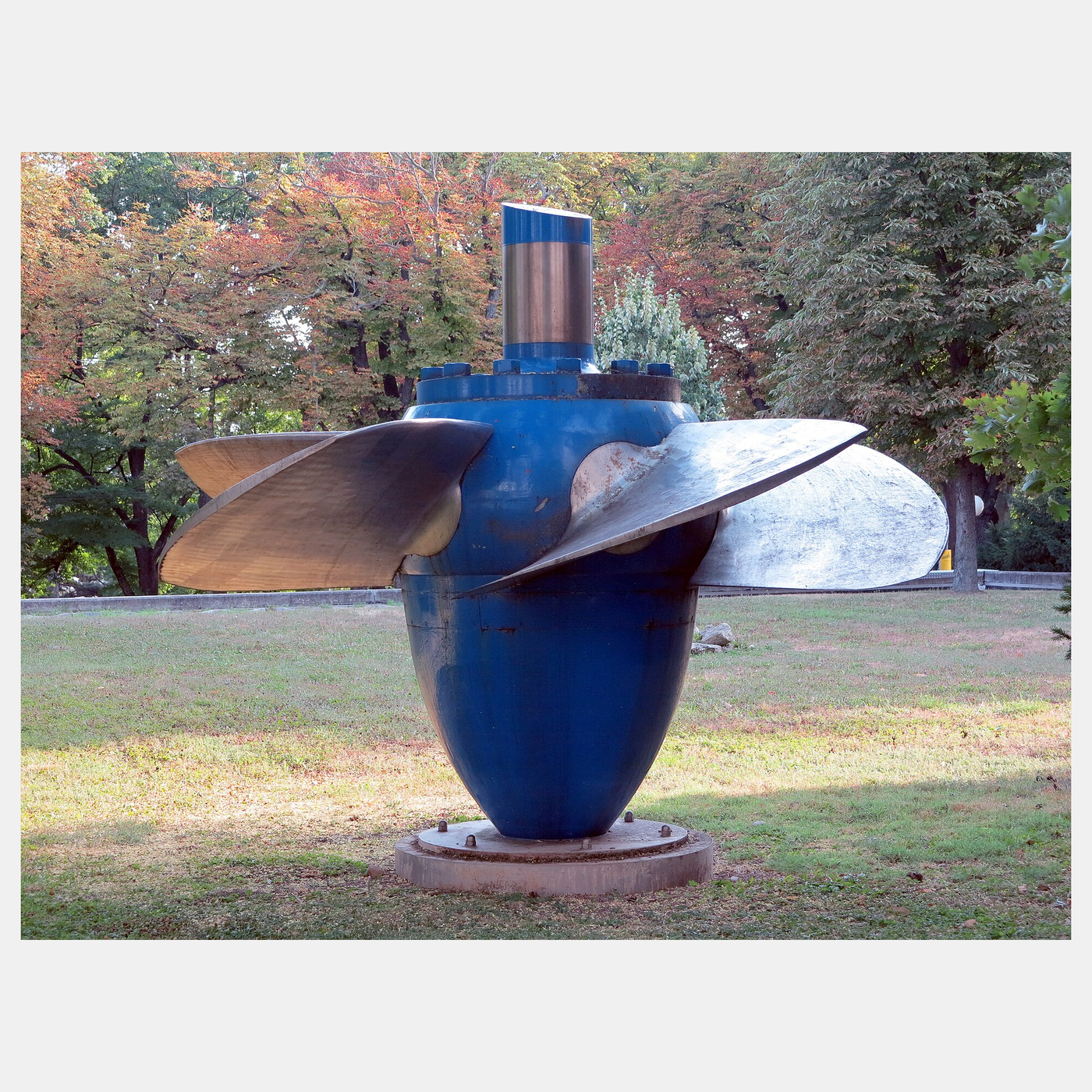


The Kaplan Turbine: A Propeller in a Pipe, With Blades That Turn
The Pelton wheel suits high heads and small flows, the Francis turbine the middle. At low heads — a river weir, a tidal barrage, a few metres of fall — the water must pass in enormous volume, and the right runner is a propeller in a pipe.
A fixed propeller only works well at one flow. Viktor Kaplan, in Brno, made the blades turn in the hub, patented in Austria from 1912–13, so that the blade angle follows the flow and the efficiency stays high as the river rises and falls. The first commercial installation ran in 1918.
This rung works out why the blades must turn, and builds a small pipe turbine whose blade pitch you can set.
Intermédiaire
About 5 hours
Consignes
1
1
Why the blades must turn
Why the blades must turn
Chargement du notebook Jupyter…
2
2
Build a pipe turbine with settable blades
Build a pipe turbine with settable blades
Print a four-bladed runner 70 mm across whose blades are separate parts, each on a short pin in the hub, with a set screw so each blade's angle can be fixed at 15°, 25° or 35°. The runner fits inside a 75 mm PVC pipe on a shaft carried by a printed spider bearing, and drives a hobby motor used as a generator, sealed outside the pipe through an O-ring gland.
Upstream of the runner, fit a ring of fixed guide vanes printed to give the water a little swirl — the wicket gate of a real Kaplan.
Matériaux pour cette étape :
 Tube PVC1 pièce
 Assortiment de raccords PVC1 jeu
 Filament PETG120 g
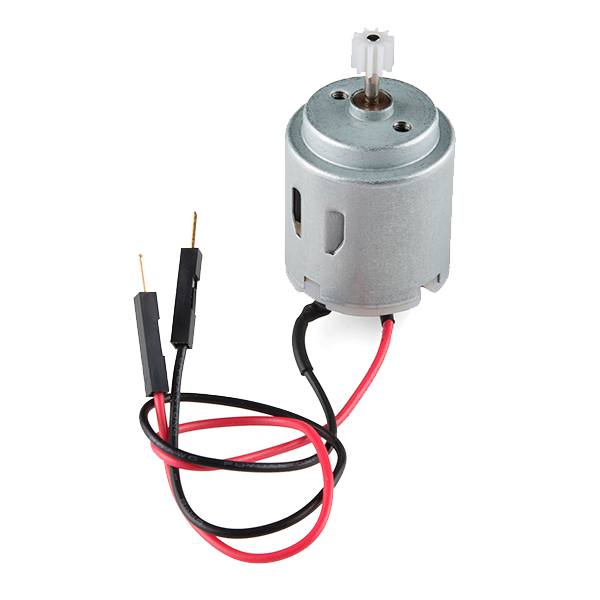 Hobby Motor - Gear1 pièce
 Assortiment de joints toriques1 kit
 Barre d'acier brut1 pièce
 Mastic silicone1 pièce
Outils nécessaires :
 Imprimante 3D à filament (FDM)
 Coupe-tube
 Jeu de clés Allen
 Pied à coulisse numérique 6 pouces
3
3
Find the best blade angle at two flows
Find the best blade angle at two flows
Feed the pipe from the submersible pump in a bucket, with a ball valve to set the flow; time a measuring jug at the outlet to know the flow. Load the generator with a 330 Ω resistor and read the voltage; power is V² ÷ R.
At full flow, try each blade angle and note the power. Then close the valve to about half flow and try each again. The best angle at half flow is flatter than at full flow — exactly what a Kaplan runner's blade-turning gear does automatically.
Matériaux pour cette étape :
 Eau20 litres
 Vanne à boisseau sphérique en laiton1 pièce
 Résistance de 330 ohms1 pièce
Outils nécessaires :
 Pompe à eau immergée
 Seau
Seau Verre doseur
 Chronomètre
 Multimètre
 Tachymètre numérique
4
4
History and context
History and context
**Viktor Kaplan**, professor at the German Technical University in Brno, patented the propeller turbine with adjustable runner blades in Austria in 1912–13; the first installation went into service in 1918. His US patent number is not asserted here — it could not be read from a primary source — and the mechanism is fully documented.
Kaplan turbines and their fixed-blade relatives run most low-head hydro plants, and the bulb turbine — a Kaplan runner with the generator in a pod inside the water passage — runs tidal barrages.
**Honest limits.** At low head the machine is large and slow for its power. Kaplan runners are prone to cavitation (the NPSH problem of the centrifugal pump rung, in reverse). And the blade-turning mechanism inside the hub must stay watertight for decades.
Matériaux
10- 1 pièceEspace réservé
- Espace réservé
- 120 gEspace réservé
- Hobby Motor - Gear10 % de commission1 pièce€2.24
- Espace réservé
- 1 pièceEspace réservé
- 1 pièceEspace réservé
- 20 litresEspace réservé
- Espace réservé
- 1 pièceEspace réservé
Outils requis
10- Espace réservé
- Coupe-tube10 % de commissionEspace réservé
- Espace réservé
- Espace réservé
- Espace réservé
- Espace réservé
- Espace réservé
- Espace réservé
- Espace réservé
- Espace réservé
Total estimé
Ce que le maker a acheté. Les matériaux sans prix se trouvent là où vous les achetez.
Blueprints liés
Ces blueprints partagent des connaissances — techniques, matériaux ou principes

CC0 Domaine public
Ce blueprint est publié sous CC0. Vous êtes libre de copier, modifier, distribuer et utiliser ce travail pour tout usage, sans demander la permission.
Soutenez le Maker en achetant des produits via son Blueprint où il perçoit une Commission Maker définie par les Vendeurs, ou créez une nouvelle itération de ce Blueprint et incluez-le comme connexion dans votre propre Blueprint pour partager les revenus.