ART
BEAUTÉ ET BIEN-ÊTRE
ARTISANAT
CULTURE ET HISTOIRE
DIVERTISSEMENT
ENVIRONNEMENT
NOURRITURE ET BOISSONS
INGÉNIERIE INVERSE
SCIENCES
SPORTS
TECHNOLOGIE
TECHNOLOGIE PORTABLE


Locking Pliers: A Grip That Holds Itself
Ordinary pliers grip only while the hand squeezes. Locking pliers grip, lock, and stay locked when you let go — a portable vise.
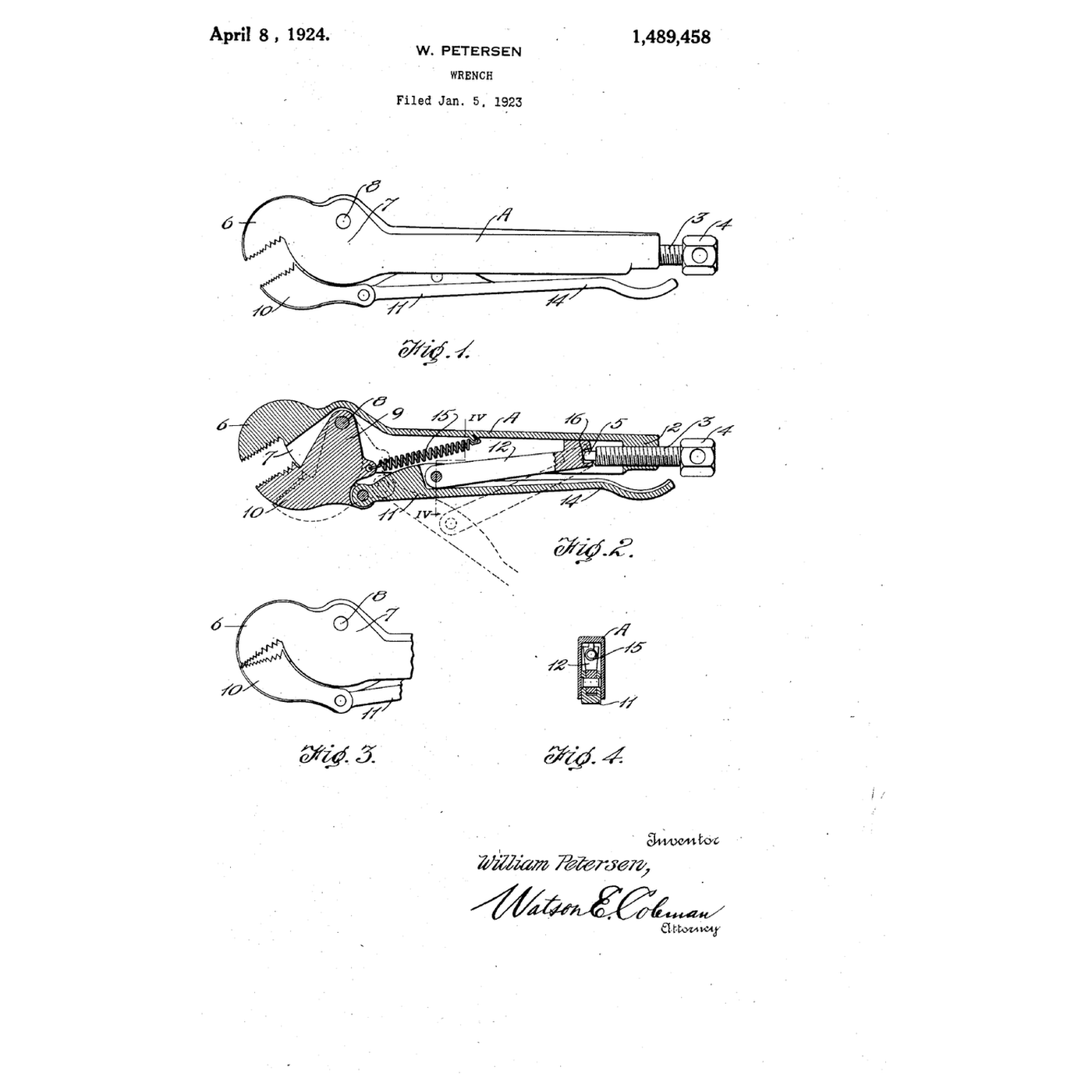
William Petersen of De Witt, Nebraska, assignor of one-half to Jules A. Bibe, filed US 1,489,458 on 5 January 1923; it was granted on 8 April 1924. A channel-section handle carries a stationary jaw; the movable jaw pivots on a pin and is closed by an "articulated lever" of two sections bearing on the point of a screw threaded through the end of the handle. A spring opens the jaw. With the operating handle swung "beyond center" and the screw adjusted, the tool holds "with the grip of a vise".
This rung works out the toggle's force as it straightens, sets the grip with the screw, and tests it.
Débutant
About 2 hours
Consignes
1
1
Toggle force through centre
Toggle force through centre
Chargement du notebook Jupyter…
2
2
The same over-centre lock on a bench
The same over-centre lock on a bench
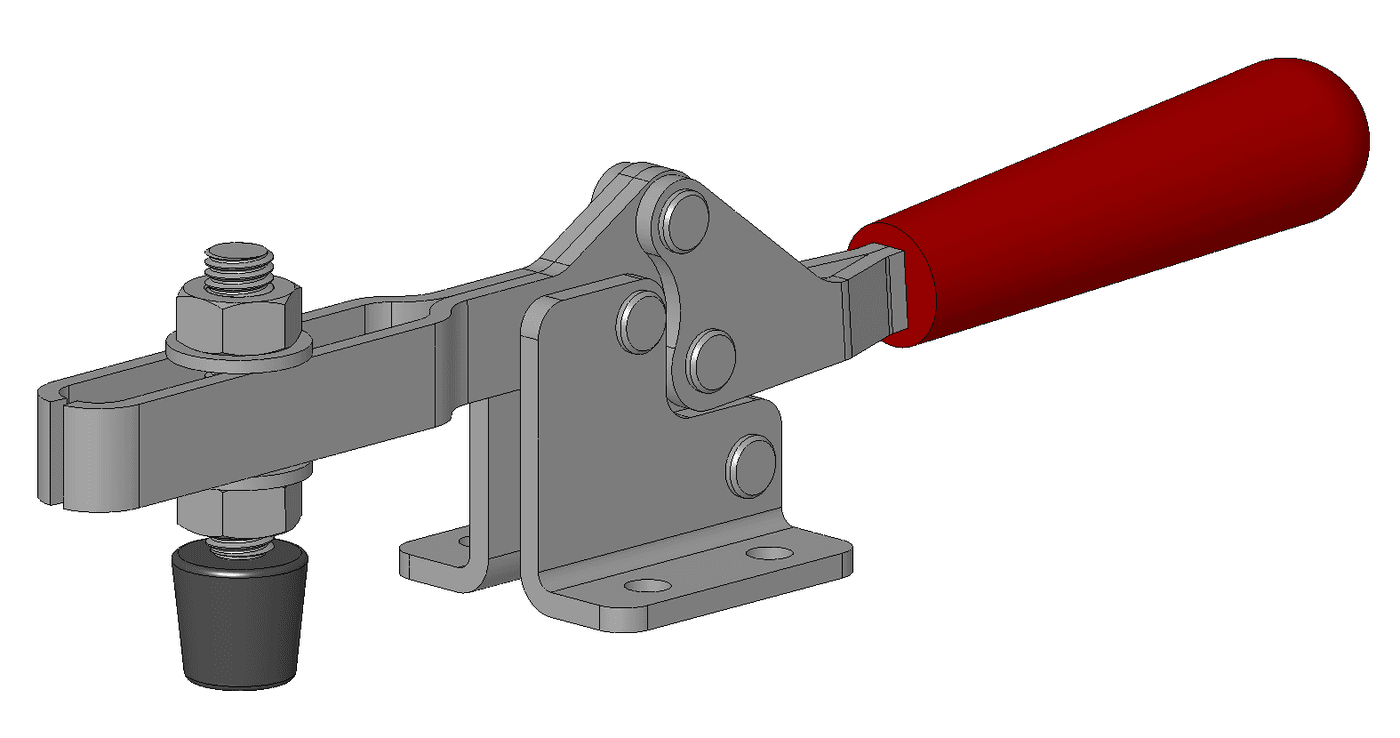
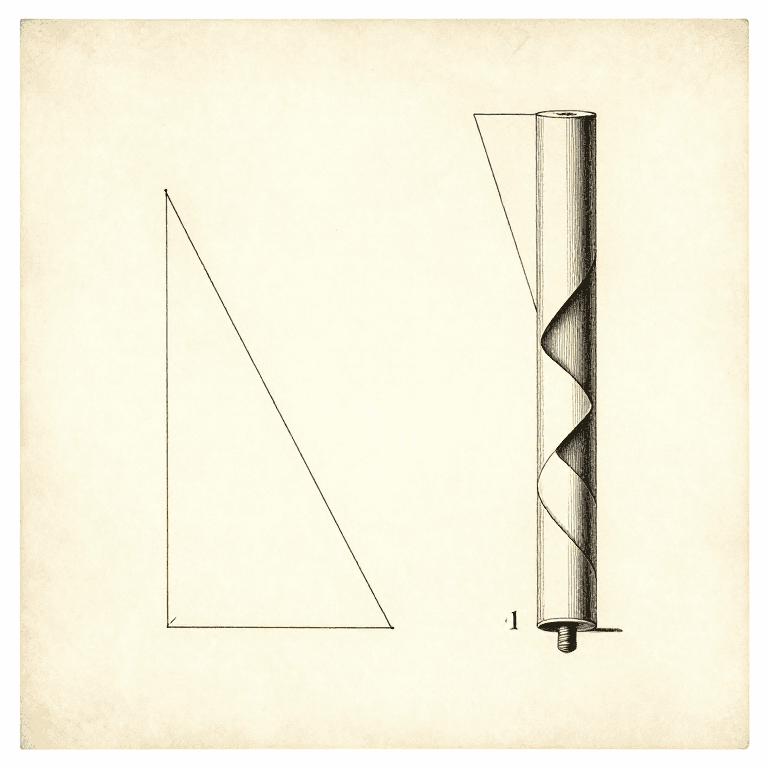
The toggle clamp uses the same two-link lock to hold work flat. The embedded blueprint explains the geometry.
3
3
Read US 1,489,458
Read US 1,489,458
Petersen's handle A is "of channel formation" with its outer end closed, and a shank 3 threaded through that end with a head 4 for turning it and a point 5 inside. The stationary jaw 6 at the other end has its working face at "approximately 22½ degrees" to the handle. The movable jaw 10 pivots on a pin 8.
Section 11 of the articulated lever pivots on the movable jaw and is "extended to provide an operating handle 14"; section 12 reaches into the handle, where a pocket 16 in its end receives the point 5 of the shank. Pressing the lever forces the movable jaw toward the stationary one. A coil spring 15 opens the jaw again, "so that my improved tool may be employed with substantially the same convenience and the effectiveness as a ratchet wrench."
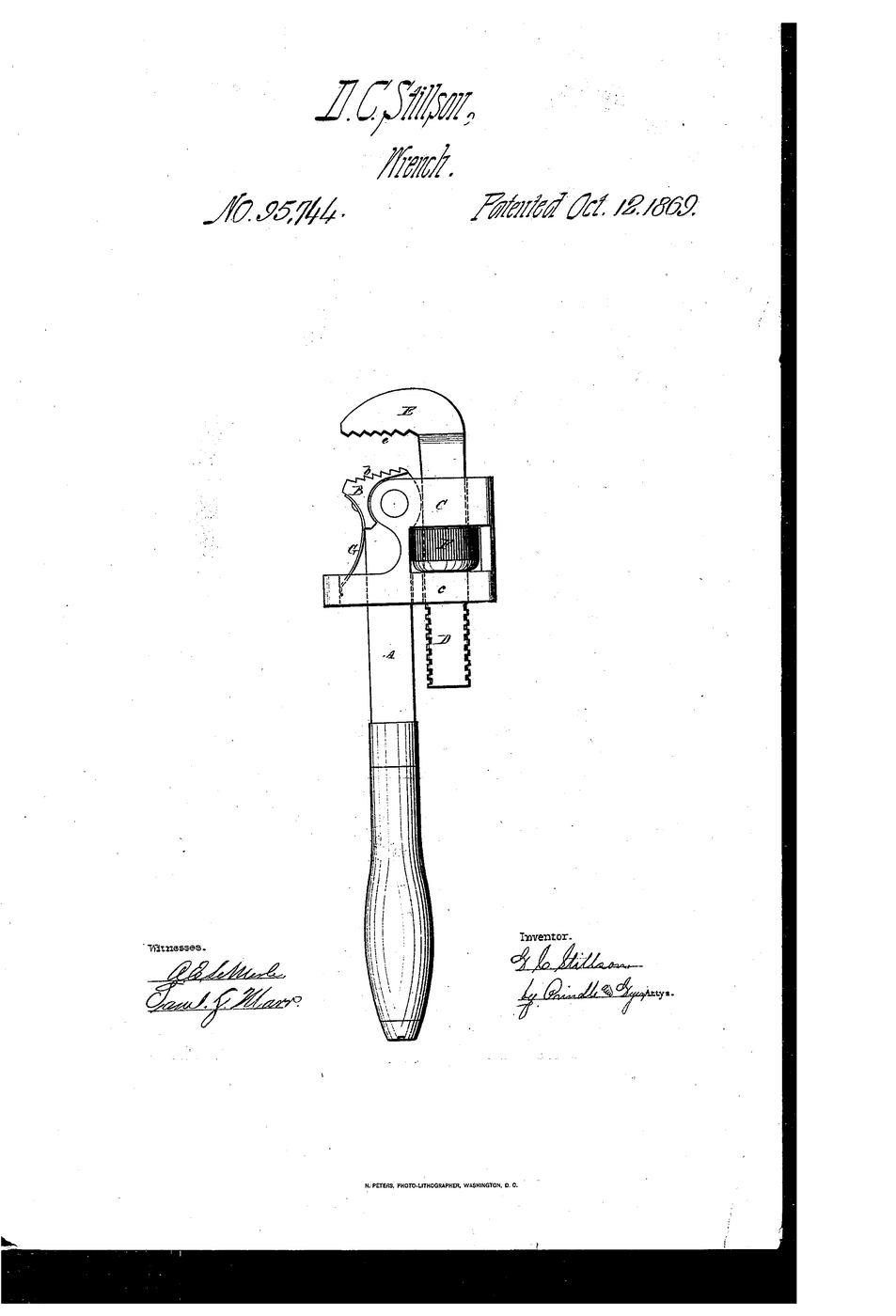
Turning the shank moves the lever's fulcrum and so sets the jaw opening. The patent says the tool "can be engaged with the work with the grip of a vise and particularly when the operating handle 14 has been swung outward and the handle A is beyond center and the shank 3 adjusted to further force the jaw 10 into engagement with the work". It is meant to serve as pliers, ratchet wrench and pipe wrench.
4
4
Set, lock and measure the grip
Set, lock and measure the grip
Close locking pliers on a hex nut threaded onto a bolt in the bench vise. Turn the adjusting screw until the handles just close with a firm snap, and lock them. Let go: the pliers stay on.
Hook the spring scale to the handle end and pull square to it until the nut turns; record the reading. Give the screw a quarter turn tighter, lock again, and repeat. Watch the handle as it snaps over: feel the force rise to a peak as the links straighten and fall as they pass it.
Release with the release lever (modern pliers) and look inside the handle: find the two links, the screw's point and the spring, and match them to Petersen's 11, 12, 3 and 15.
Matériaux pour cette étape :
 Assortiment de boulons à tête hexagonale1 pièce
 Écrou hexagonal2 pièces
Outils nécessaires :
 Pince-étau (Vise-Grip)
 Étau d'établi
 Dynamomètre (peson à ressort)
 Pied à coulisse numérique 6 pouces
5
5
Locking pliers that will not hold
Locking pliers that will not hold
Locking pliers troubleshooting.
Flow
Loading...
6
6
History and honest limits
History and honest limits
**William Petersen** filed US 1,489,458 on 5 January 1923 and it was granted on 8 April 1924, half assigned to Jules A. Bibe of De Witt. He had filed an earlier wrench patent, US 1,392,443, granted 4 October 1921. Later locking pliers added a release lever.
**Honest limits.** The link-force formula ignores friction and assumes rigid links; the stiffness and screw pitch in the notebook are examples, not Petersen's figures.
Matériaux
2- Espace réservé
- 2 piècesEspace réservé
Outils requis
4- Pince-étau (Vise-Grip)10 % de commissionEspace réservé
- Espace réservé
- Espace réservé
- Espace réservé
Blueprints liés
Ces blueprints partagent des connaissances — techniques, matériaux ou principes

CC0 Domaine public
Ce blueprint est publié sous CC0. Vous êtes libre de copier, modifier, distribuer et utiliser ce travail pour tout usage, sans demander la permission.
Soutenez le Maker en achetant des produits via son Blueprint où il perçoit une Commission Maker définie par les Vendeurs, ou créez une nouvelle itération de ce Blueprint et incluez-le comme connexion dans votre propre Blueprint pour partager les revenus.