ART
BEAUTÉ ET BIEN-ÊTRE
ARTISANAT
CULTURE ET HISTOIRE
DIVERTISSEMENT
ENVIRONNEMENT
NOURRITURE ET BOISSONS
INGÉNIERIE INVERSE
SCIENCES
SPORTS
TECHNOLOGIE
TECHNOLOGIE PORTABLE
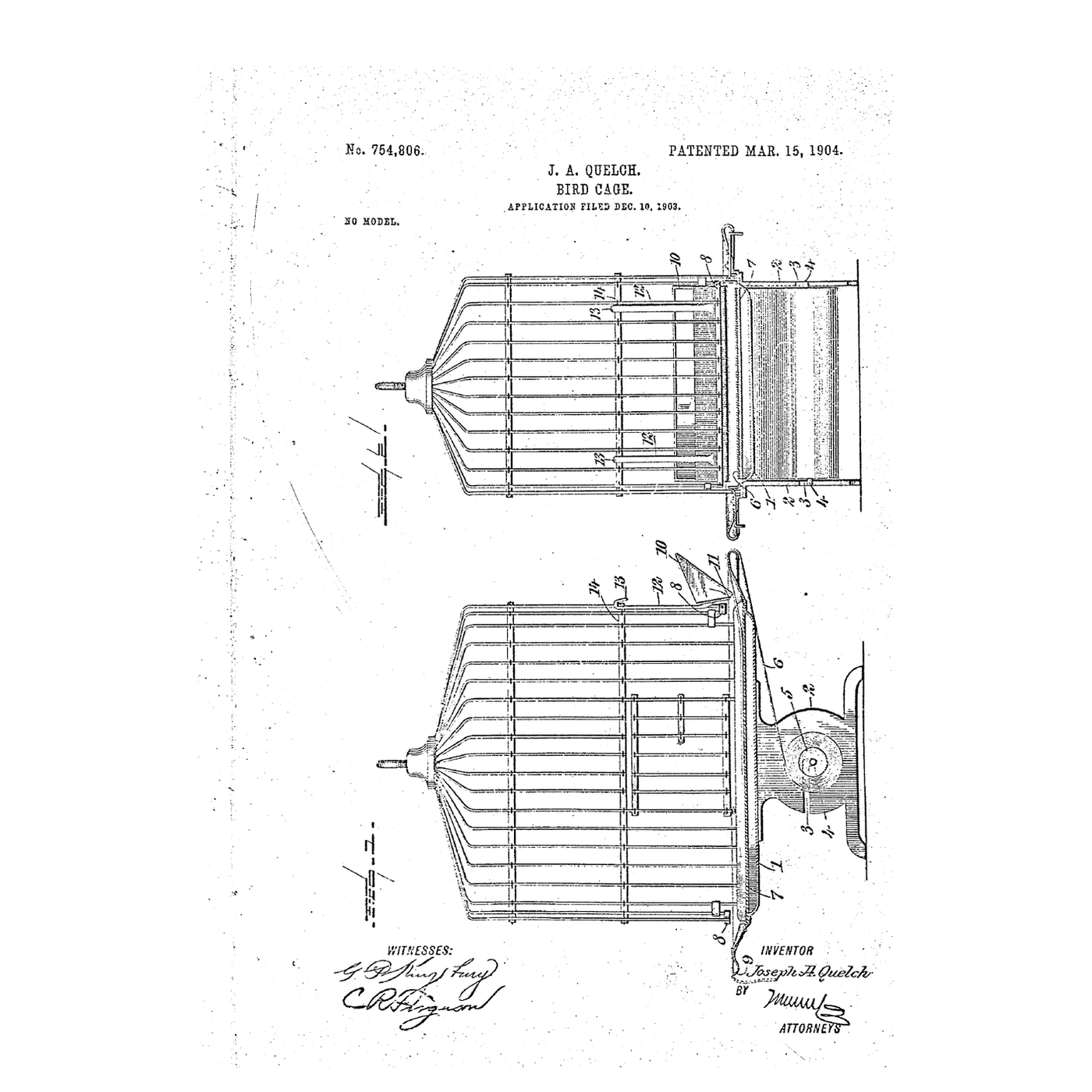


The Paper-Roll Cage Floor: Pull a Clean Length Through, Tear Off the Old
The paper on a cage floor needs changing often, and that usually means taking the cage down, lifting the tray out and cutting a new sheet.
Joseph A. Quelch of Brooklyn, New York, received US 754,806, dated 15 March 1904, for a bird-cage with "a paper-roll holder, whereby the paper covering for the cage-bottom may be conveniently and quickly changed or renewed": a roll held in slotted hangers under the cage, drawn over the floor and torn off against a sharpened edge, with a hopper that sprinkles gravel on the new length.
This rung works out how long a roll lasts, then fits a paper roll under a cage floor and times a change.
Débutant
About 2 hours
Consignes
1
1
Changes per roll
Changes per roll
Chargement du notebook Jupyter…
2
2
Paper from a roll
Paper from a roll
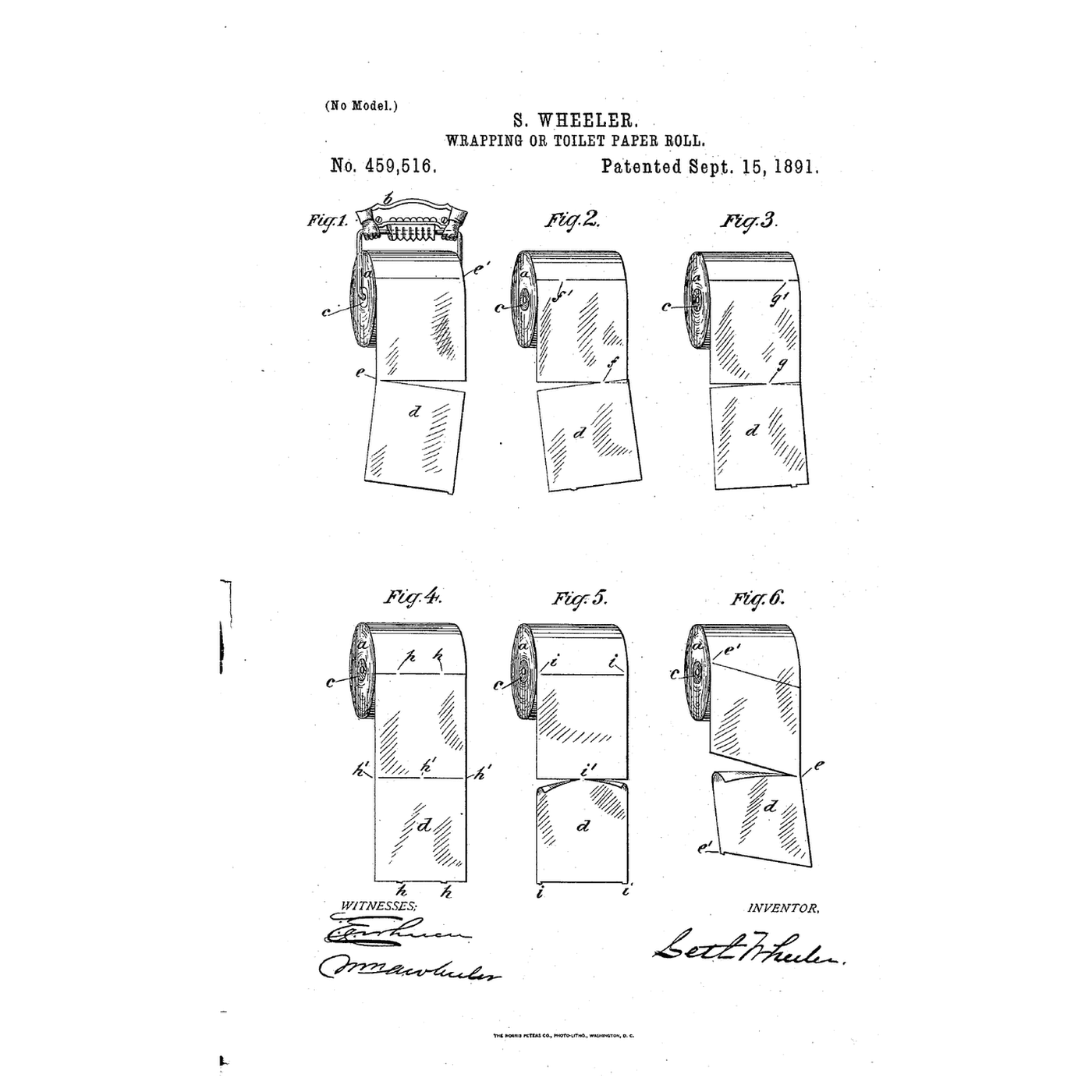
The embedded blueprint perforates a roll so one sheet tears off at a time. Quelch tears the cage's paper off against a sharpened edge instead.
3
3
Read US 754,806
Read US 754,806
"This invention relates to improvements in bird-cages, the object being to provide, in connection with a cage, a paper-roll holder, whereby the paper covering for the cage-bottom may be conveniently and quickly changed or renewed; and another object is to provide a novel means for distributing gravel on the paper as it is drawn through the cage."
The far end of the bottom "is turned upward and somewhat sharpened, as indicated at 9, so that the paper may be readily torn off at this point when a new length is drawn into the cage."
"By this arrangement it is obvious that the paper may be changed in the cage without removing the cage from a suspending-hook or the like".
4
4
Fit a paper roll under the floor and time a change
Fit a paper roll under the floor and time a change
Cut two hangers from aluminium sheet, each with a slot open at the top near its lower end, and file them smooth. Screw them under one end of the cage's floor tray so their slots line up. Slide a dowel rod through a roll of kraft paper and drop its ends into the slots.
Cut a strip of aluminium as wide as the floor, file one long edge to a blunt ridge, and screw it across the far end of the floor with the ridge standing up. Draw the paper from the roll, over the floor, and down over the ridge.
Time a change: pull a clean length through and tear the used length off against the ridge. Then time the old way, lifting the tray out and cutting and laying a new sheet.
Matériaux pour cette étape :
 Rouleau de papier kraft (brun)1 pièce
 Tourillon en bois1 pièce
 Tôle d'aluminium1 pièce
 Vis à bois6 pièces
Outils nécessaires :
 Cage à oiseaux
 Cisaille à tôle
 Lime à métaux
 Perceuse sans fil
 Jeu de forets
 Jeu de tournevis
 Règle
Règle Chronomètre
5
5
A roll that jams, tears early or bunches
A roll that jams, tears early or bunches
Paper-roll floor troubleshooting.
Flow
Loading...
6
6
History and honest limits
History and honest limits
**Joseph A. Quelch** of Brooklyn, New York, filed US 754,806 on 10 December 1903; it was patented 15 March 1904. His hangers also served as the cage's legs, and a hopper hooked above the floor let gravel fall onto each new length as it was drawn through.
**Honest limits.** The notebook assumes one full length per change and no waste. Roll and cage sizes are examples. Your two timings are the measurement.
Matériaux
4- Espace réservé
- 1 pièceEspace réservé
- 1 pièceEspace réservé
- 6 piècesEspace réservé
Outils requis
8- Espace réservé
- Espace réservé
- Espace réservé
- 1 vendor sell this, none ship to you yetEspace réservé
- Espace réservé
- Espace réservé
- Espace réservé
- Espace réservé
Blueprints liés
Ces blueprints partagent des connaissances — techniques, matériaux ou principes



CC0 Domaine public
Ce blueprint est publié sous CC0. Vous êtes libre de copier, modifier, distribuer et utiliser ce travail pour tout usage, sans demander la permission.
Soutenez le Maker en achetant des produits via son Blueprint où il perçoit une Commission Maker définie par les Vendeurs, ou créez une nouvelle itération de ce Blueprint et incluez-le comme connexion dans votre propre Blueprint pour partager les revenus.