ART
BEAUTÉ ET BIEN-ÊTRE
ARTISANAT
CULTURE ET HISTOIRE
DIVERTISSEMENT
ENVIRONNEMENT
NOURRITURE ET BOISSONS
INGÉNIERIE INVERSE
SCIENCES
SPORTS
TECHNOLOGIE
TECHNOLOGIE PORTABLE
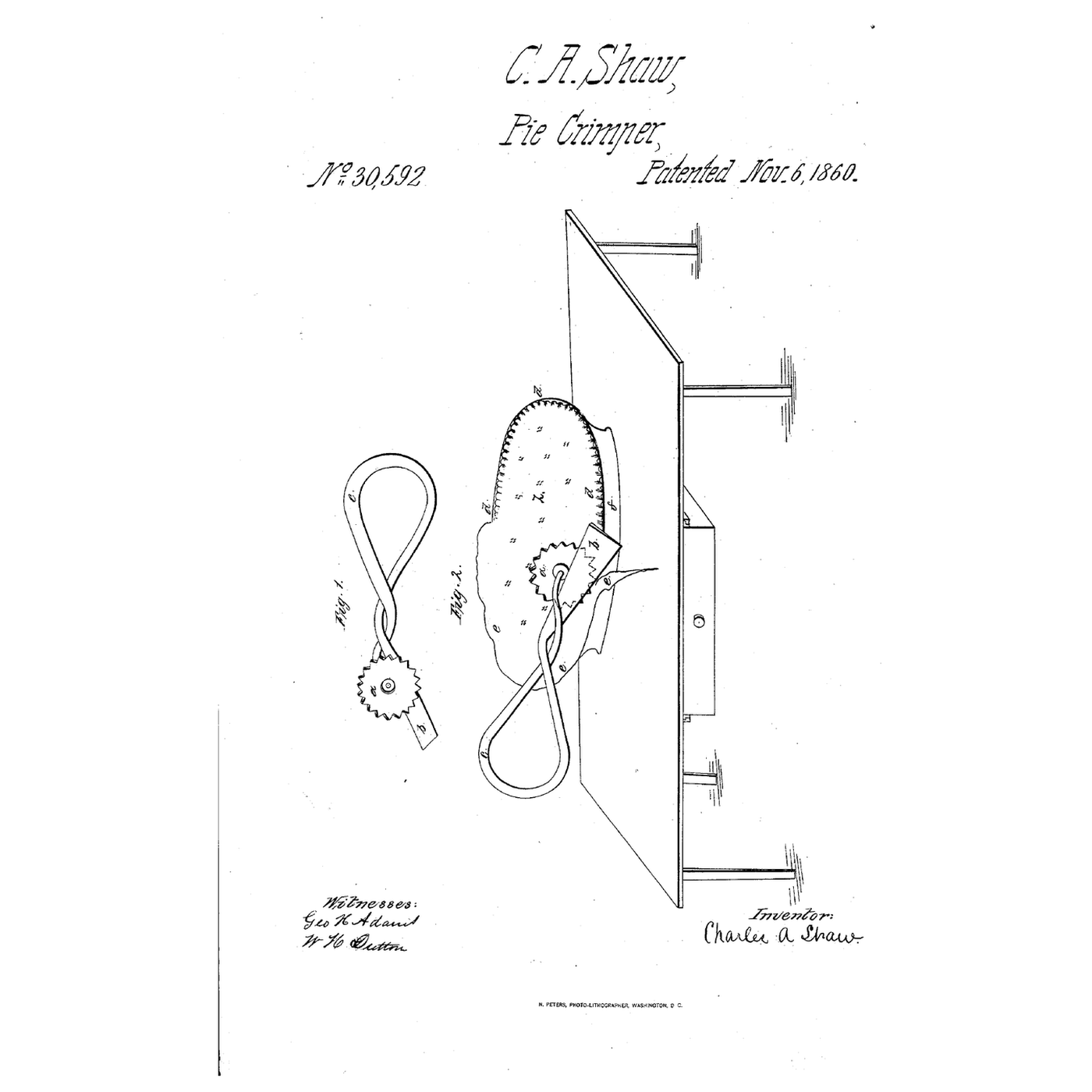


The Pie Crimper and Trimmer: Seal, Mark and Trim in One Pass
A covered pie needs two jobs at its edge: the crusts pressed together so the filling stays in, and the overhang cut off. Most cooks do them with a fork and a knife, one after the other.
Charles A. Shaw of Biddeford, Maine, received US 30,592, dated 6 November 1860, for a pie-crimper that combines "a cutting instrument for trimming the pie, and a wheel for crimping and ornamenting the edge" on one handle of bent and twisted wire.
This rung counts the crimps a wheel leaves round a pie, then bends a crimper from wire and a small gear and uses it on an apple pie.
Débutant
About 2 hours
Consignes
1
1
Crimps round the pie
Crimps round the pie
Chargement du notebook Jupyter…
2
2
A wheel that counts its path
A wheel that counts its path
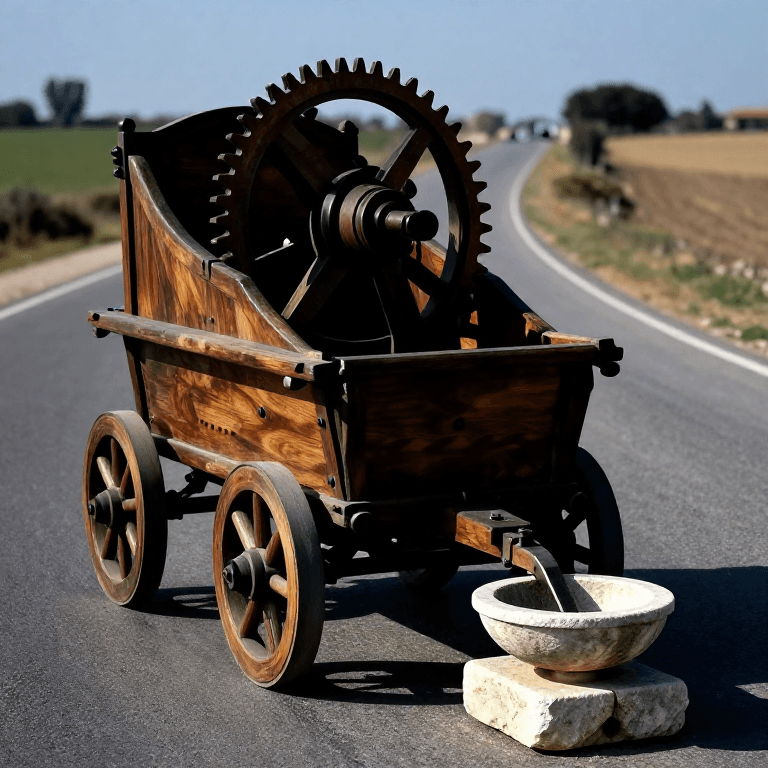
The embedded blueprint rolls a wheel along a road and counts its turns to measure distance. Shaw's wheel rolls round the edge of a pie and leaves one mark per tooth.
3
3
Read US 30,592
Read US 30,592
"It is well known that in making pies the upper and lower crusts have to be pressed together firmly at the edges to make them adhere to each other, and before baking those parts of the crusts projecting beyond the plate are trimmed off with a knife".
"The nature of my invention consists in the use, when combined in the same implement, of a cutting instrument for trimming the pie, and a wheel for crimping and ornamenting the edge."
"I am aware that a wheel with cogs is an old device".
4
4
Bend a crimper and crimp an apple pie
Bend a crimper and crimp an apple pie
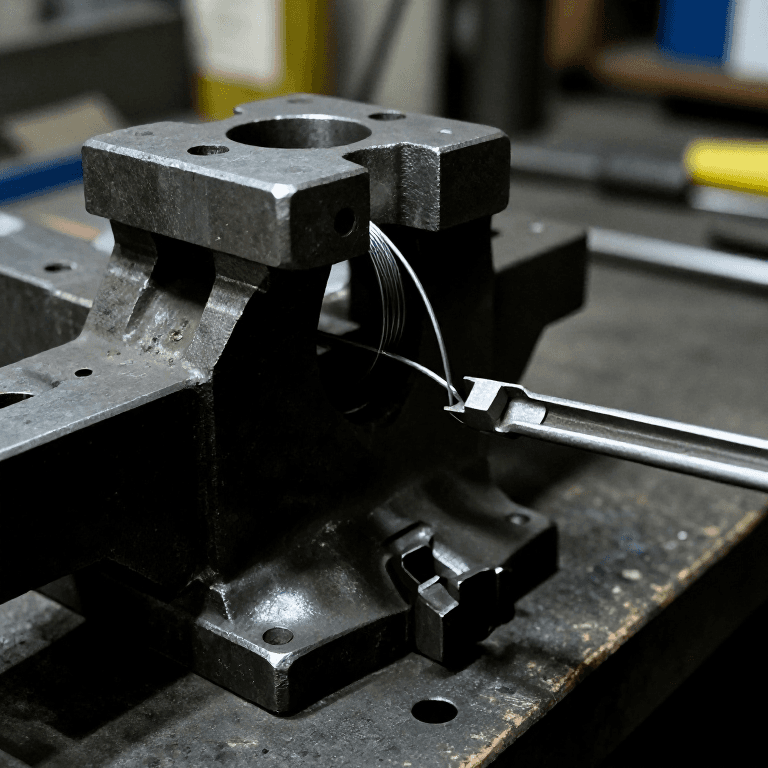
Scrub a small steel gear free of oil. Bend a length of steel wire into a long loop for a handle and twist its two strands together, as in the patent drawing. Thread one end through the gear's hole and bend it over so the gear turns freely. Hammer the other end flat on the vise and file it to a blunt blade.
Rub 125 g of cold butter into 250 g of flour with a pinch of salt, add about 4 tablespoons of cold water and press it into a dough. Roll half into the pie dish, fill it with sliced apples and a little sugar, and lay the other half on top.
Press the blade against the rim of the dish and draw the crimper round once: the blade trims and the wheel seals and marks. Time it with the stopwatch, then time a fork and knife on a second pie. Bake at about 200 °C until golden.
Matériaux pour cette étape :
 Fil d'acier1 pièce
 Jeu d'engrenages droits (acier, 20 dents)1 pièce
 Farine tout usage250 g
 Beurre125 g
 Sel1 pinch
 Eau60 ml
 Pomme4 pièces
 Sucre cristallisé50 g
Outils nécessaires :
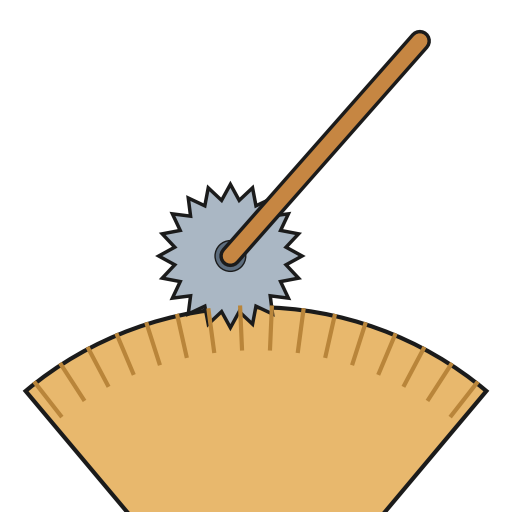 Roulette à pâtisserie
 Plat à tarte
 Pince à becs longs
 Marteau
 Étau d'établi
 Lime à métaux
 Rouleau à pâtisserie
 Four
Four Chronomètre
 Balance de cuisine numérique
5
5
A crimper that tears, skips or will not trim
A crimper that tears, skips or will not trim
Pie crimper troubleshooting.
Flow
Loading...
6
6
History and honest limits
History and honest limits
**Charles A. Shaw** of Biddeford, Maine, received US 30,592, dated 6 November 1860. He did not claim the cog wheel or a guided crimper on their own, only the knife and wheel "combined to crimp and trim a pie at one operation".
**Honest limits.** The notebook assumes the wheel rolls without slipping; on soft pastry it slips a little. Pie and wheel sizes are examples. Your two stopwatch times are the measurement.
Matériaux
8- 1 pièceEspace réservé
- Espace réservé
- 250 gEspace réservé
- 125 gEspace réservé
- 1 pinchEspace réservé
- 60 mlEspace réservé
- 4 piècesEspace réservé
- Espace réservé
Outils requis
10- Espace réservé
- Espace réservé
- Espace réservé
- Espace réservé
- Espace réservé
- Espace réservé
- Espace réservé
- Espace réservé
- Espace réservé
- Espace réservé
Blueprints liés
Ces blueprints partagent des connaissances — techniques, matériaux ou principes


CC0 Domaine public
Ce blueprint est publié sous CC0. Vous êtes libre de copier, modifier, distribuer et utiliser ce travail pour tout usage, sans demander la permission.
Soutenez le Maker en achetant des produits via son Blueprint où il perçoit une Commission Maker définie par les Vendeurs, ou créez une nouvelle itération de ce Blueprint et incluez-le comme connexion dans votre propre Blueprint pour partager les revenus.