ART
BEAUTÉ ET BIEN-ÊTRE
ARTISANAT
CULTURE ET HISTOIRE
DIVERTISSEMENT
ENVIRONNEMENT
NOURRITURE ET BOISSONS
INGÉNIERIE INVERSE
SCIENCES
SPORTS
TECHNOLOGIE
TECHNOLOGIE PORTABLE
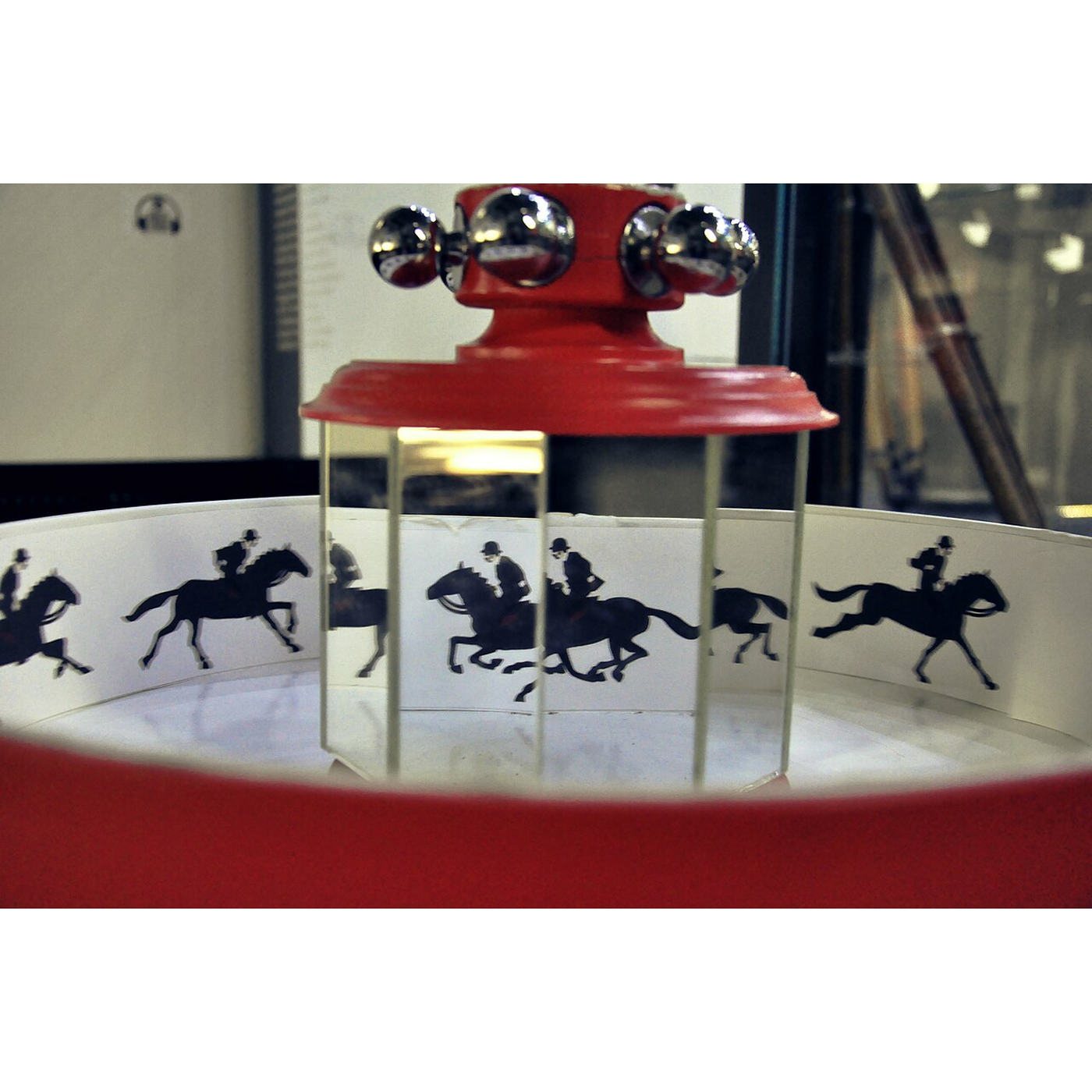
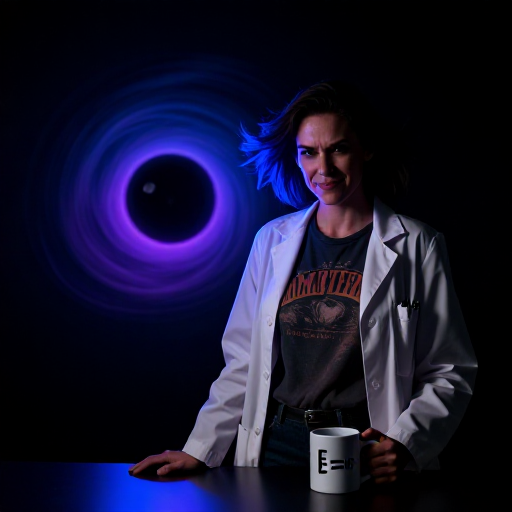

The Praxinoscope: Moving Pictures in a Ring of Mirrors
Before cinema, moving pictures were toys. The zoetrope spun a strip of drawings inside a slotted drum; looking through the slots, you saw each drawing only for an instant, and the series ran together into motion — dimly, because the slots let in so little.
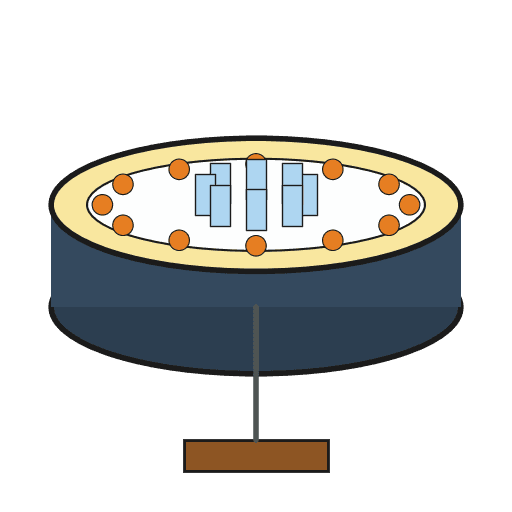
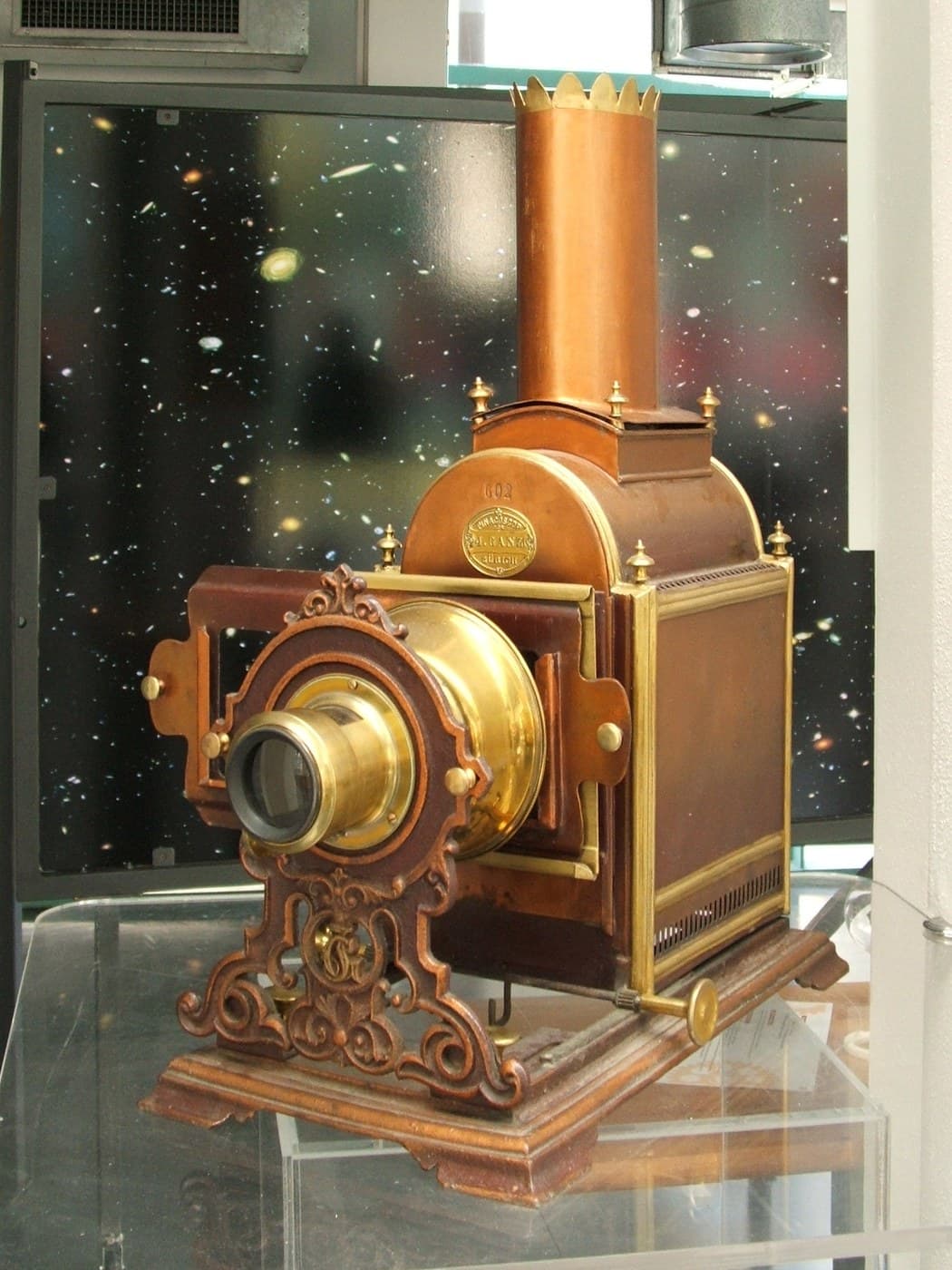
Émile Reynaud of Paris patented the praxinoscope in France on 30 August 1877 (patent 120484). He replaced the slots with a ring of flat mirrors at the centre of the drum, one for each picture, set at half the drum's radius. The reflected pictures appear one after another in the same place, bright and steady. Reynaud went on to project them for audiences in his Théâtre Optique.
This rung shows why the mirrors must stand at half the radius, and builds a praxinoscope.
Débutant
About 3 hours
Consignes
1
1
Where the images land
Where the images land
Chargement du notebook Jupyter…
2
2
Mirrors making images
Mirrors making images
The praxinoscope's trick is plane-mirror imaging, as in the kaleidoscope. The embedded blueprint shows how facing mirrors multiply a picture.
3
3
Build a praxinoscope
Build a praxinoscope
Cut a cardboard disc 220 mm across and glue a 60 mm-high cardboard wall round it: the drum, radius 110 mm. Mount it on a pencil or dowel through a bead so it spins freely on a base.
Cut twelve pieces of acrylic mirror sheet, each 28 mm wide and 50 mm high, and stand them round a twelve-sided cardboard prism glued at the centre, so the mirror faces are 55 mm from the axis — half the drum's radius.
Draw twelve pictures of a simple motion — a ball bouncing, a figure jumping — on a paper strip that fits inside the drum wall, one picture opposite each mirror. Spin the drum and look into the mirrors: the drawings move. Move the mirrors to 45 mm and to 65 mm from the axis and see the image jump and blur.
Matériaux pour cette étape :
 Plaques de carton ondulé1 pièce
 Plaque de miroir acrylique1 pièce
 Goujons de bois dur1 pièce
Outils nécessaires :
 Pistolet à colle chaude
 Règle
 Pied à coulisse numérique 6 pouces
 Rapporteur
4
4
A praxinoscope whose pictures jump or blur
A praxinoscope whose pictures jump or blur
Praxinoscope problems.
Flow
Loading...
5
5
History and honest limits
History and honest limits
**Émile Reynaud** patented the praxinoscope in France on 30 August 1877 (patent 120484), and later built the projecting Théâtre Optique, showing hand-drawn animated films to audiences in Paris from 1892 — before cinema.
**Honest limits.** The notebook treats the mirrors as ideal planes and the strip as a perfect circle. The persistence-of-vision explanation of why the pictures blend is simplified; how the brain perceives apparent motion is more subtle.
Matériaux
3- 1 pièceEspace réservé
- 1 pièceEspace réservé
- 1 pièceEspace réservé
Outils requis
4- Espace réservé
- Espace réservé
- Espace réservé
- Espace réservé
Ce plan fabrique
Blueprints liés
Ces blueprints partagent des connaissances — techniques, matériaux ou principes

CC0 Domaine public
Ce blueprint est publié sous CC0. Vous êtes libre de copier, modifier, distribuer et utiliser ce travail pour tout usage, sans demander la permission.
Soutenez le Maker en achetant des produits via son Blueprint où il perçoit une Commission Maker définie par les Vendeurs, ou créez une nouvelle itération de ce Blueprint et incluez-le comme connexion dans votre propre Blueprint pour partager les revenus.