ART
BEAUTÉ ET BIEN-ÊTRE
ARTISANAT
CULTURE ET HISTOIRE
DIVERTISSEMENT
ENVIRONNEMENT
NOURRITURE ET BOISSONS
INGÉNIERIE INVERSE
SCIENCES
SPORTS
TECHNOLOGIE
TECHNOLOGIE PORTABLE
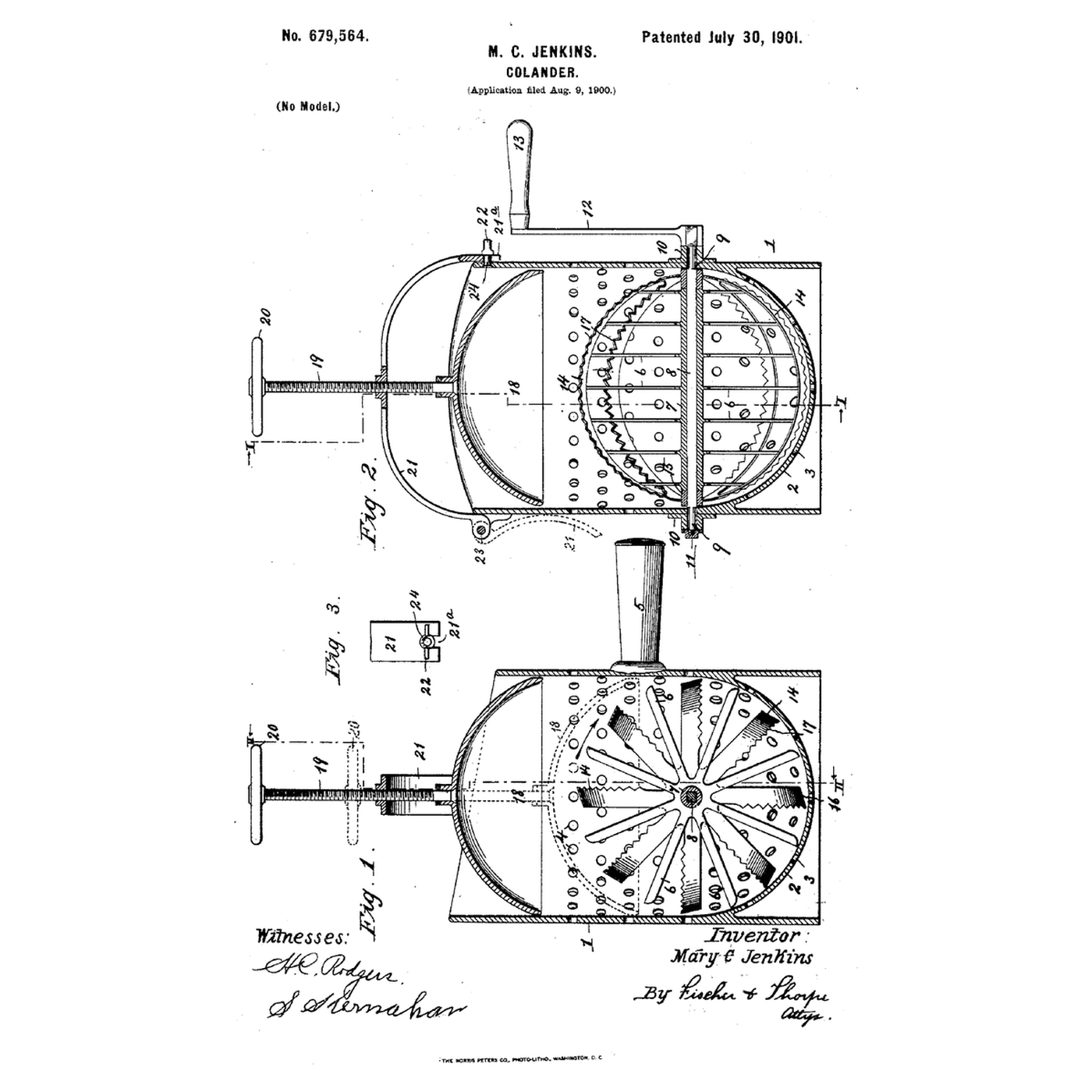

The Pressing Colander: Knives, Loops and a Plunger Over a Perforated Bowl
Making jelly starts with getting the juice out of cooked fruit: pressing it through a colander by hand with a spoon is slow and leaves much behind.
Mary C. Jenkins of Kansas City, Kansas, received US 679,564, dated 30 July 1901 (filed 9 August 1900), for a colander "for the purpose of cutting up raw or cooked fruits and pressing out their juices preparatory to making jellies, syrups, apple-float": a perforated cylinder with a hemispherical bottom, a crank-turned shaft carrying knives and pressing loops, and a plunger on a screw that presses the fruit to the dasher and keeps it from being thrown out.
This rung models how pressure and pulp fineness set the juice flow, then presses cooked apples with and without pressing and weighs the juice.
Débutant
About 2 hours
Consignes
1
1
Pressure, pulp and juice
Pressure, pulp and juice
Chargement du notebook Jupyter…
2
2
Pressing food through holes
Pressing food through holes
The ricer presses cooked potato through a perforated cup. The embedded blueprint shows it.
3
3
Read US 679,564
Read US 679,564
"My invention relates to improvements in colanders; and my object is to provide a utensil of this character for the purpose of cutting up raw or cooked fruits and pressing out their juices preparatory to making jellies, syrups, apple-float, &c."
"The face portions 16 of said loops are arranged to present an inclined surface to the hemispherical bottom in order that when rotating in the direction indicated by the arrow in Fig. 1 they will catch and press the fruit against the bottom 2 and force the juice through the perforations thereof, while the serrated rear edges 17 of the loops will thoroughly macerate the smaller particles of fruit not cut by the knives by pressing them against said bottom 2. In order that the dasher may the more effectually perform its work, I press the fruit in contact therewith by a vertically-operating plunger, which also prevents the fruit or a portion thereof from being cast out of the cylinder by the rotating dasher."
4
4
Press cooked apples two ways
Press cooked apples two ways
Quarter and simmer six apples in a little water until soft; let them cool until safe to handle. Divide into two equal weights.
Put the first half in a colander over a bowl and let it drain for ten minutes without pressing; weigh the juice. Put the second half in and press it with a spoon or a masher for ten minutes, stirring as Jenkins's loops do; weigh that juice. Compare juice per 100 g of fruit. Keep hands off hot fruit; it holds heat.
Matériaux pour cette étape :
 Pomme6 pièces
 Eau0.5 litres
Outils nécessaires :
 Passoire
 Bol
Bol Balance numérique
 Chronomètre
5
5
A colander that clogs or lets pulp through
A colander that clogs or lets pulp through
Pressing colander troubleshooting.
Flow
Loading...
6
6
History and honest limits
History and honest limits
**Mary C. Jenkins** of Kansas City, Kansas, filed US 679,564 on 9 August 1900; it is dated 30 July 1901. The cylinder may be "glass, porcelain, or other suitable material".
**Honest limits.** The patent gives no sizes. Viscosity, permeabilities, pressures, area and pulp thickness in the notebook are examples; Darcy's law is only a rough guide for a squeezed pulp.
Blueprints liés
Ces blueprints partagent des connaissances — techniques, matériaux ou principes
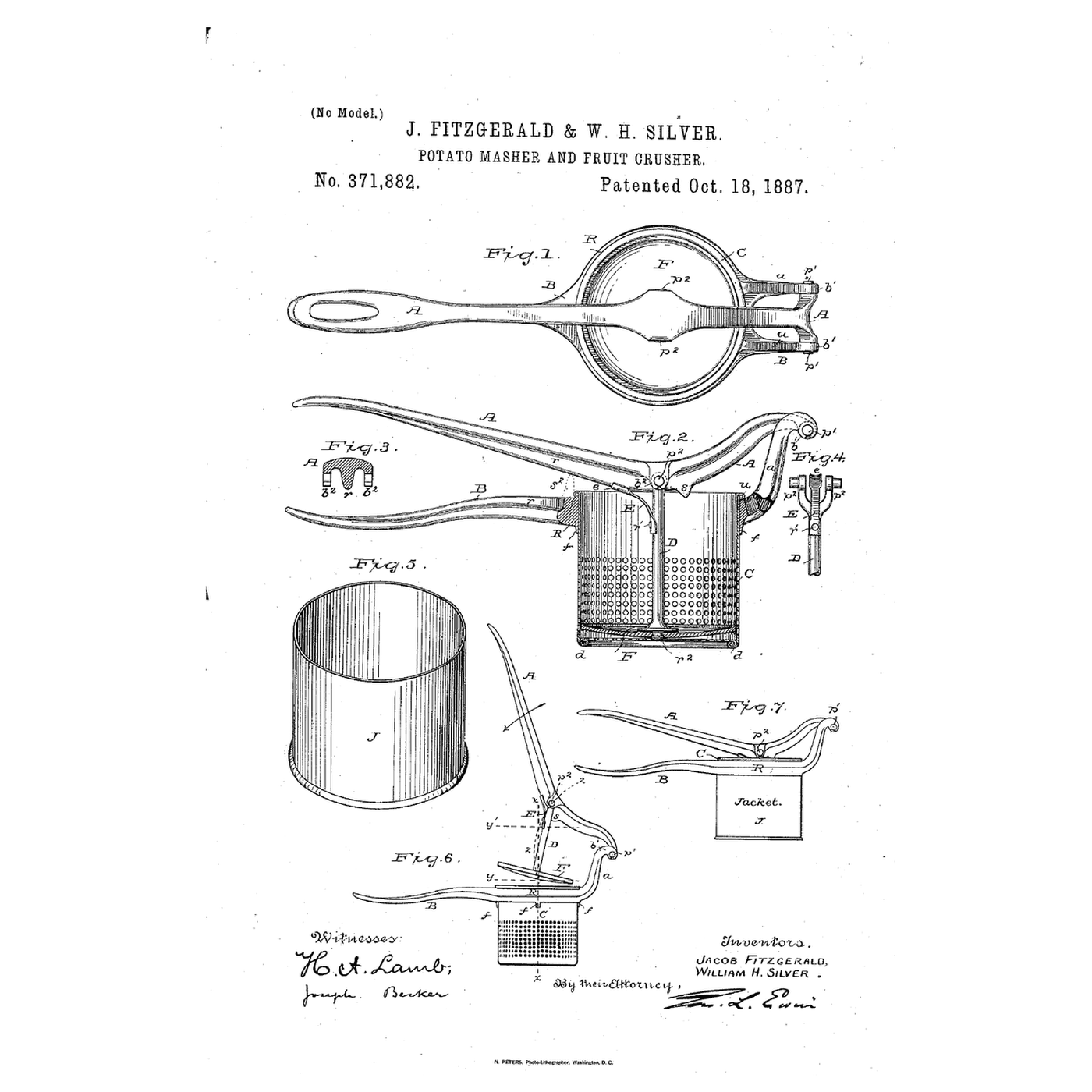
The Potato Ricer: A Perforated Cup and a Lever-Worked Follower
par TheChef
NOURRITURE ET BOISSONS
8
0
0
0
0
0
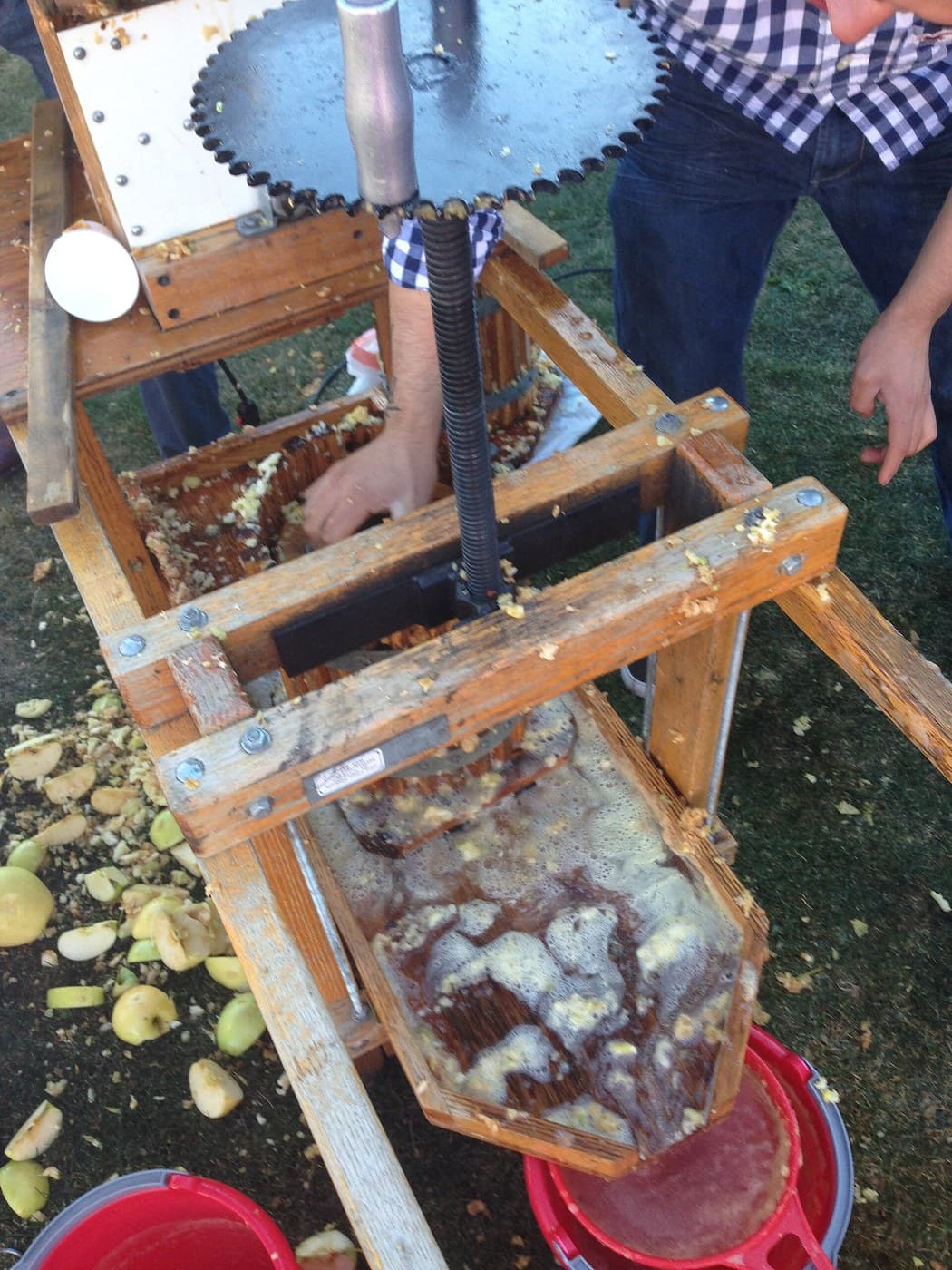
Apple Cider Pressing
par Alchometer
NOURRITURE ET BOISSONS
30
0
0
0
0
0

The Flour Sifter: A Crank That Breaks the Lumps
par YourGrandma
NOURRITURE ET BOISSONS
6
0
0
0
0
0
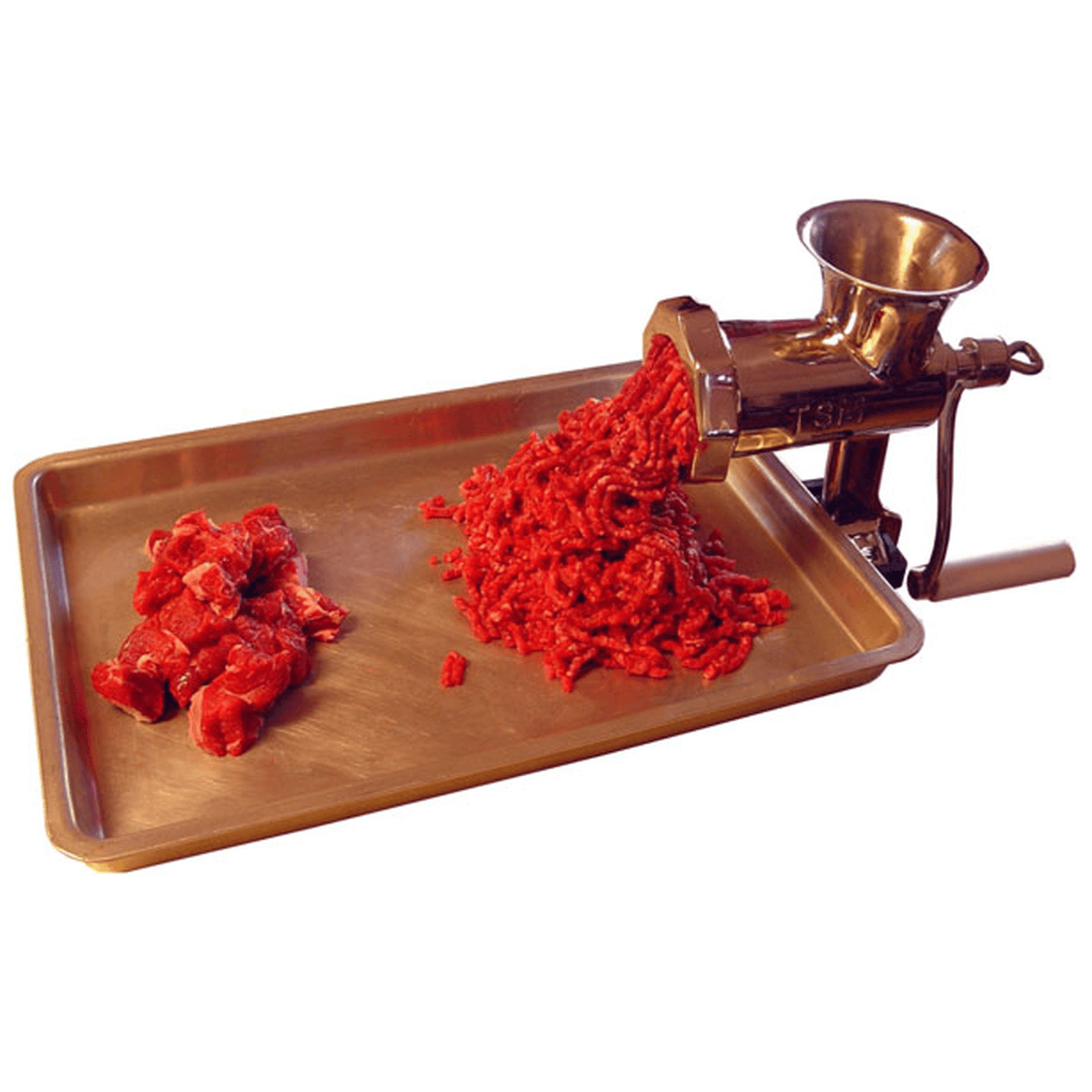
The Meat Mincer: A Screw That Feeds a Knife
par TheChef
NOURRITURE ET BOISSONS
5
0
0
0
0
0
CC0 Domaine public
Ce blueprint est publié sous CC0. Vous êtes libre de copier, modifier, distribuer et utiliser ce travail pour tout usage, sans demander la permission.
Soutenez le Maker en achetant des produits via son Blueprint où il perçoit une Commission Maker définie par les Vendeurs, ou créez une nouvelle itération de ce Blueprint et incluez-le comme connexion dans votre propre Blueprint pour partager les revenus.