ART
BEAUTÉ ET BIEN-ÊTRE
ARTISANAT
CULTURE ET HISTOIRE
DIVERTISSEMENT
ENVIRONNEMENT
NOURRITURE ET BOISSONS
INGÉNIERIE INVERSE
SCIENCES
SPORTS
TECHNOLOGIE
TECHNOLOGIE PORTABLE
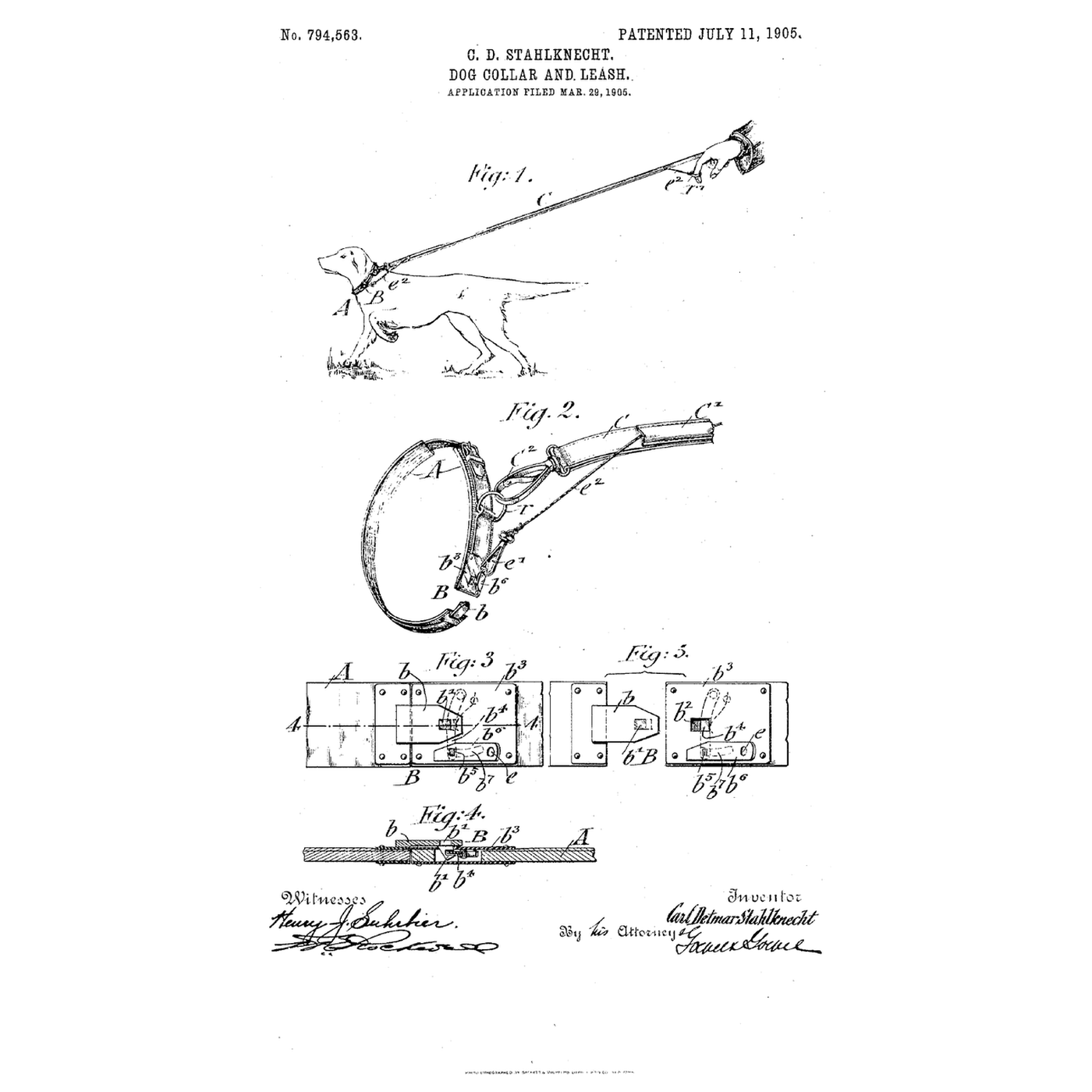


The Release-Cord Collar: Let the Dog Go Without Reaching Its Neck
A hunter who wants to send a dog off has to bend down and unbuckle its collar, while the dog pulls and jumps.
Carl Detmar Stahlknecht of Bremen received US 794,563, dated 11 July 1905, for a dog collar and leash "by which a dog may be firmly held but instantly released when desired by unlocking the collar from the handle end of the leash": the collar closes with a hook and a spring latch, and a releasing cord runs in a sleeve along the leash to a ring by the hand.
This rung works out how hard the cord must be pulled, then sews a webbing collar and leash with a pin release and measures the pull on the bench.
Intermédiaire
About 3 hours
Consignes
1
1
Pull needed to release
Pull needed to release
Chargement du notebook Jupyter…
2
2
A collar to build on
A collar to build on
The embedded blueprint makes a collar that stays shut. Stahlknecht's collar is made to come open on command, from the other end of the leash.
3
3
Read US 794,563
Read US 794,563
"This invention relates to an improved dog collar and leash by which a dog may be firmly held but instantly released when desired by unlocking the collar from the handle end of the leash".
"When it is desired to release the dog for returning the bird or other game or for any other purpose, the releasing-cord e² is pulled back by the finger, which is readily accomplished, as the pull of the dog on the leash holds the cord taut, so that when the line is pulled back the latch b⁴ releases the hook b′ and produces the instant unlocking of the lock and the release of the collar from the neck of the dog."
4
4
Sew the collar and leash, and measure the release
Sew the collar and leash, and measure the release
**Collar.** Cut nylon webbing to the dog's neck size plus 12 cm and seal the cut ends with a lighter. Fold each end back 5 cm and sew it down with a saddle stitch in nylon thread, leaving a loop just wide enough for a 6 mm pin. Sew a short webbing loop beside one end for the leash to clip to.
**Pin.** Cut 6 cm of hardwood dowel, round one end, and drill a 2 mm hole across the other end. Lay the two loops one on top of the other so their openings line up, push the dowel through both, and tie paracord through its hole.
**Leash.** Sew a snap hook to one end of 1.5 m of webbing and a hand loop at the other. Sew 5 small webbing guide loops along it and pass the cord through them, ending in a finger loop tied beside the hand loop.
**Measure.** Close the collar round a broom handle held in the vice, clip on the leash and hang a bucket from the hand loop. Load it with 5 kg of sand, pull the cord with the spring scale and write down the reading when the pin slides out. Repeat at 10 kg. Divide each reading by the load's weight to get μ.
Matériaux pour cette étape :
 Sangle en nylon1 pièce
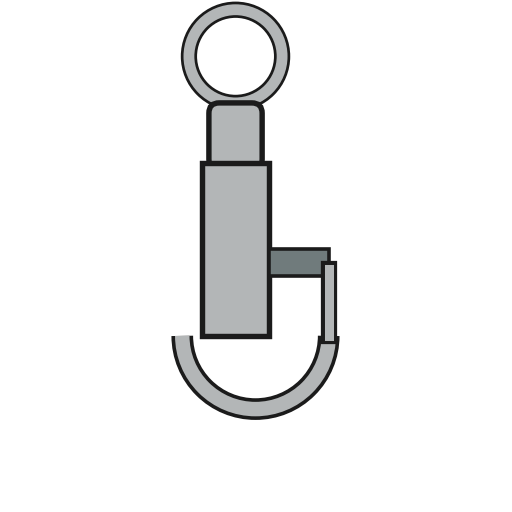 Mousqueton1 pièce
 Goujons de bois dur1 pièce
 Paracorde1 pièce
 Fil de nylon1 pièce
 Sable fin10 kg
Outils nécessaires :
 Aiguilles à coudre à la main
 Ciseaux de couturière
 Briquet
 Perceuse sans fil
 Jeu de forets
 Peson à ressort
 Seau
 Étau d'établi
 Mètre ruban
5
5
A release that sticks or lets go too soon
A release that sticks or lets go too soon
Release-cord collar troubleshooting.
Flow
Loading...
6
6
History and honest limits
History and honest limits
**Carl Detmar Stahlknecht** of Bremen filed US 794,563 on 29 March 1905; it is dated 11 July 1905. The leash and cord were carried "in the pocket or hunting-bag until required for use" and snapped to the collar.
**Honest limits.** Our lock is a pin in two loops, not Stahlknecht's hook and spring latch, so it needs more pull. The notebook treats the friction as the same on both loops. A wooden pin is for the bench; your measured μ is the result.
Matériaux
6- 1 pièceEspace réservé
- 1 pièceEspace réservé
- 1 pièceEspace réservé
- 1 pièceEspace réservé
- 1 pièceEspace réservé
- 10 kgEspace réservé
Outils requis
9- Espace réservé
- Espace réservé
- Espace réservé
- 1 vendor sell this, none ship to you yetEspace réservé
- Espace réservé
- Espace réservé
- Espace réservé
- Espace réservé
- 1 vendor sell this, none ship to you yetEspace réservé
Blueprints liés
Ces blueprints partagent des connaissances — techniques, matériaux ou principes



CC0 Domaine public
Ce blueprint est publié sous CC0. Vous êtes libre de copier, modifier, distribuer et utiliser ce travail pour tout usage, sans demander la permission.
Soutenez le Maker en achetant des produits via son Blueprint où il perçoit une Commission Maker définie par les Vendeurs, ou créez une nouvelle itération de ce Blueprint et incluez-le comme connexion dans votre propre Blueprint pour partager les revenus.