ART
BEAUTÉ ET BIEN-ÊTRE
ARTISANAT
CULTURE ET HISTOIRE
DIVERTISSEMENT
ENVIRONNEMENT
NOURRITURE ET BOISSONS
INGÉNIERIE INVERSE
SCIENCES
SPORTS
TECHNOLOGIE
TECHNOLOGIE PORTABLE
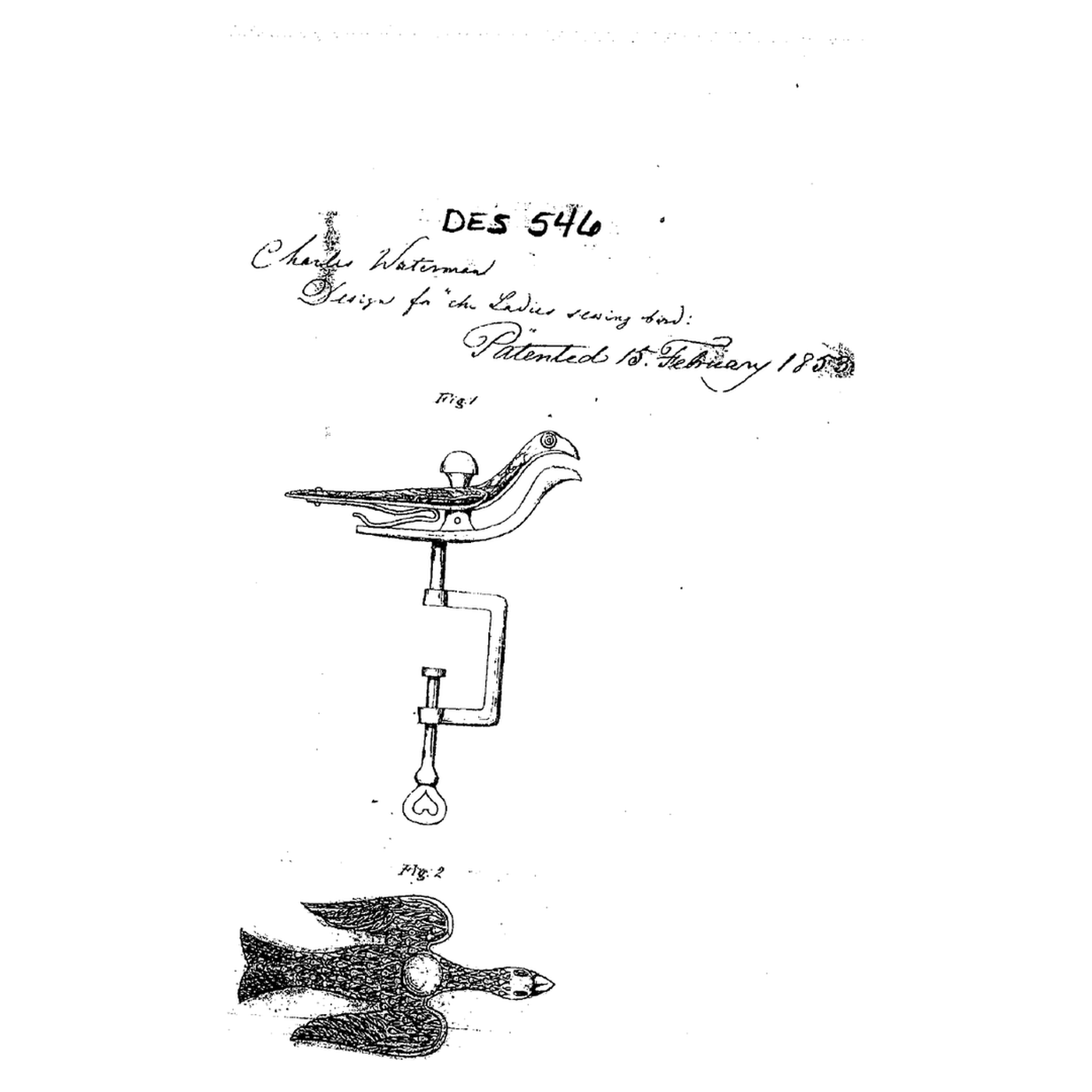


The Sewing Bird: A Spring-Beaked Clamp as a Third Hand
Hand-sewing a long hem needs the cloth held taut, and two hands are not enough to hold it and sew.
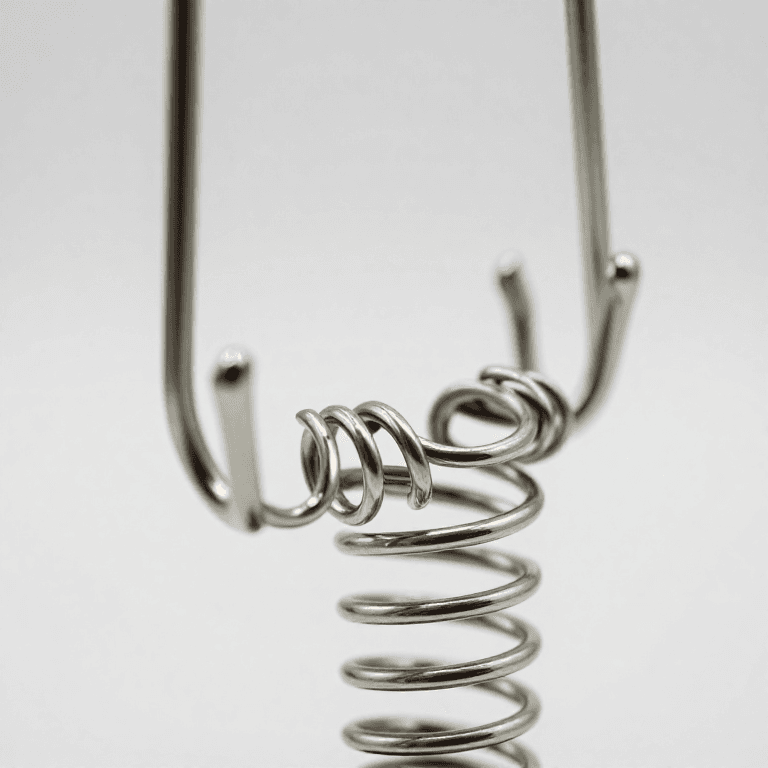
Charles Waterman of Meriden, Connecticut, received design patent D546, dated 15 February 1853, for "the instrument known as the 'Sewing bird'": a table clamp topped by "a bird on the wing bearing a burden upon its back". The burden is "in fact the emery ball" for cleaning needles. A spring in the tail holds the beak shut on the cloth.
This rung works out how hard a spring beak must grip to hold cloth under a sewing pull, then makes a spring-jaw sewing clamp and measures its hold.
Débutant
About 2 hours
Consignes
1
1
The grip a beak needs
The grip a beak needs
Chargement du notebook Jupyter…
2
2
Sewing that needs the cloth held
Sewing that needs the cloth held
The embedded blueprint darns and patches by hand. A sewing bird holds the work while you do.
3
3
Read D546
Read D546
"It is a settled principle of taste in all works of Design that the highest degree of beauty is attained where the useful and ornamental are properly blended or combined."
"The burden borne upon the back of the bird is in fact the emery ball and while it is an indispensable accompaniment of the sewing bird its position is here appropriate in every respect."
"What I claim is the design herein represented by the feathered bird upon the wing, bearing a burden upon its back."
4
4
Make a spring-jaw clamp and measure its hold
Make a spring-jaw clamp and measure its hold
Screw a C-clamp to the table edge as the base. On it, fix a pair of short hardwood jaws hinged together at one end, like a clothespin, with a spring from the assortment pushing the other ends apart so the front ends close. Glue a strip of emery cloth inside the jaws for grip.
Clamp one end of a strip of cloth in the jaws. Hook the force meter to the other end and pull slowly until it slips; read the force. Compare with the notebook. Then hem the strip by hand with the end held in the clamp.
Matériaux pour cette étape :
 Planche de bois dur1 pièce
 Assortiment de ressorts de compression1 pièce
 Toile émeri1 pièce
 Colle à bois1 pièce
 Tissu de coton (léger)1 pièce
 Fil à coudre1 pièce
Outils nécessaires :
 Pince de couturière
 Serre-joint en C
 Scie égoïne
 Perceuse sans fil
 Dynamomètre (peson à ressort)
 Aiguilles à coudre à la main
5
5
A sewing clamp that slips, marks or wobbles
A sewing clamp that slips, marks or wobbles
Sewing clamp troubleshooting.
Flow
Loading...
6
6
History and honest limits
History and honest limits
**Charles Waterman** of Meriden, New Haven County, Connecticut, received design patent D546, dated 15 February 1853. A design patent protects the look of an object, not its mechanism: the claim is the feathered bird bearing its burden, and the spring clamp itself is not claimed.
**Honest limits.** The notebook treats the grip as simple friction on two faces. Soft or slippery cloth changes the result. The spring forces and friction values are examples. Your force-meter reading is the measurement.
Matériaux
6- 1 pièceEspace réservé
- Espace réservé
- 1 pièceEspace réservé
- 1 pièceEspace réservé
- 1 pièceEspace réservé
- 1 pièceEspace réservé
Outils requis
6- Espace réservé
- Espace réservé
- Espace réservé
- 1 vendor sell this, none ship to you yetEspace réservé
- Espace réservé
- Espace réservé
Blueprints liés
Ces blueprints partagent des connaissances — techniques, matériaux ou principes

CC0 Domaine public
Ce blueprint est publié sous CC0. Vous êtes libre de copier, modifier, distribuer et utiliser ce travail pour tout usage, sans demander la permission.
Soutenez le Maker en achetant des produits via son Blueprint où il perçoit une Commission Maker définie par les Vendeurs, ou créez une nouvelle itération de ce Blueprint et incluez-le comme connexion dans votre propre Blueprint pour partager les revenus.