Collaboration
ART
BEAUTÉ ET BIEN-ÊTRE
ARTISANAT
CULTURE ET HISTOIRE
DIVERTISSEMENT
ENVIRONNEMENT
NOURRITURE ET BOISSONS
INGÉNIERIE INVERSE
SCIENCES
SPORTS
TECHNOLOGIE
TECHNOLOGIE PORTABLE
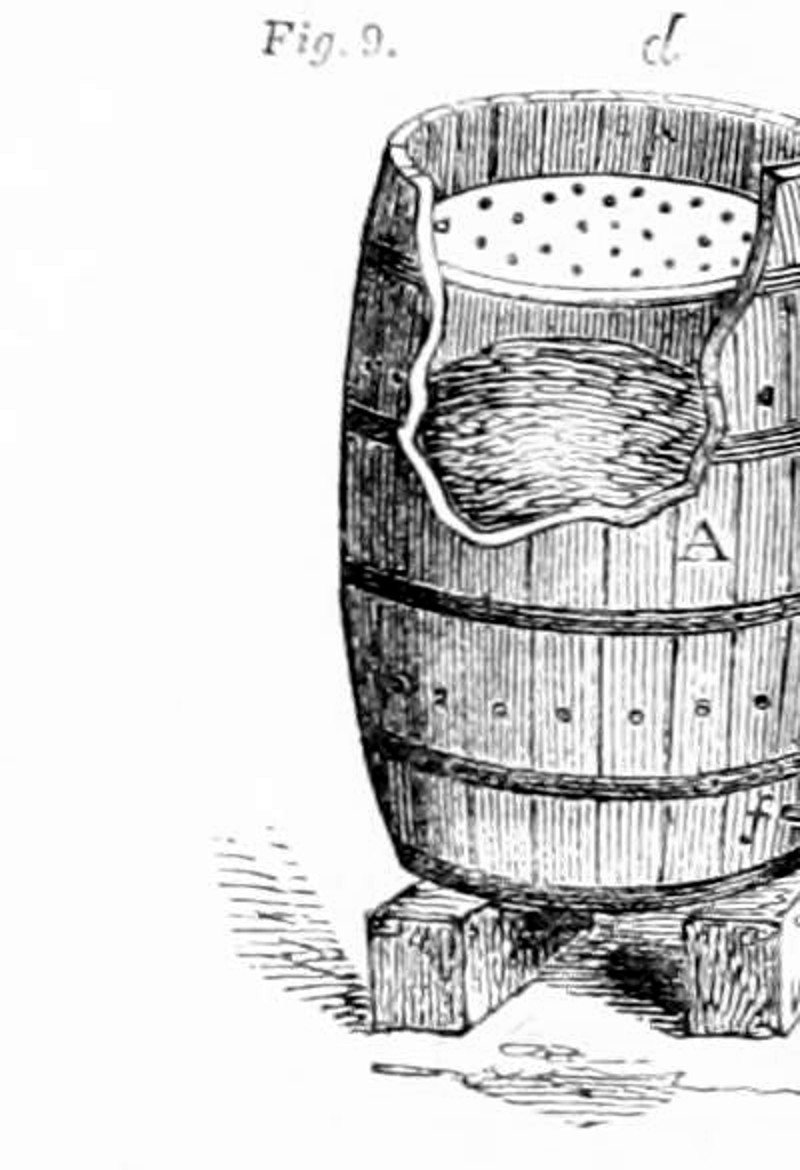


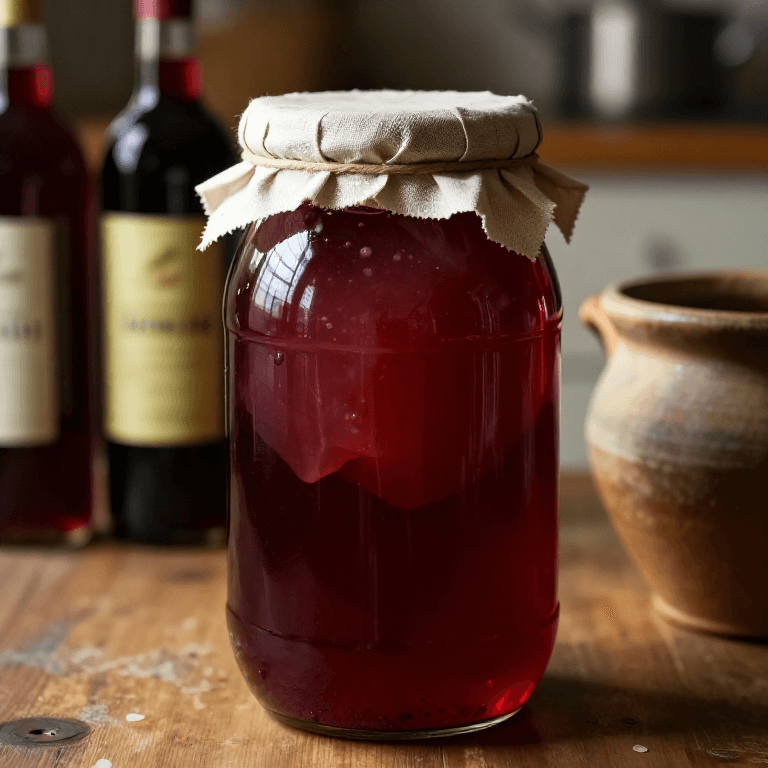
Quick Vinegar: Dilute Spirit Trickled Through Beech Shavings in Ventilated Oak Casks (Tomlinson, 1854)
The 'quick method' of the 1850s, from Tomlinson's Cyclopaedia of Useful Arts: a warm mixture of spirit, vinegar and water poured again and again over curled beech shavings in tall oak casks with air holes near the bottom, so the vinegar bacteria on the shavings turn the alcohol to acetic acid in days instead of months.
Intermédiaire
A few days
Consignes
1
1
Mixtures and temperatures
Mixtures and temperatures
Chargement du notebook Jupyter…
2
2
Read the Cyclopaedia of Useful Arts
Read the Cyclopaedia of Useful Arts
"Vinegar is manufactured by one of two distinct methods called the slow and the quick method."
3
3
Prepare the casks
Prepare the casks
Use oak casks 5 to 7 ft high and 2-1/2 to 3 ft across, a little narrower at the bottom. About a foot from the bottom, just above the syphon, bore air holes about an inch wide sloping downward so air enters but liquor does not escape. Fit a cover with a centre hole 2 or 3 in square. Set them on frames or brick piers high enough to draw off the liquor.
Matériaux pour cette étape :
 Tonneau en bois1 pièce
Outils nécessaires :
 Vilebrequin et mèche
 Scie égoïne
4
4
Fill with beech shavings
Fill with beech shavings
Scald curled beech shavings repeatedly with hot water to remove soluble matter, dry them, soak them in hot vinegar, and fill the cask. (Or fit an inner beech hoop about 6 in below the mouth carrying a perforated shelf, with cotton wicks knotted on top drawn through the holes, the edges packed with tow, and the shavings below; Fig. 9.)
Matériaux pour cette étape :
 Copeaux de hêtre1 pièce
 Vinaigre1 pièce
 Matière à mèches en coton1 pièce
 Étoupe de lin1 pièce
Outils nécessaires :
 Grande marmite
5
5
Run the mixture
Run the mixture
Mix 20 quarts alcohol, 40 vinegar and 120 water (or 15-1/2, 20 and 137), heating the water to 100-104 F first so the mixture is about 86-90 F. Pour 2-1/2 to 5 quarts on every half hour with the cover on and the centre hole open. When all has run through, draw it off, add a few quarts of alcohol and pass it through again; then less alcohol and a third time. It is then strong vinegar.
Matériaux pour cette étape :
 Alcool distillé1 pièceVinaigre1 pièce
Outils nécessaires :
 Thermomètre de cuisson
 Seau de 20 litresGrande marmite
6
6
Keep it working
Keep it working
Keep the room about 77 F; the cask inside runs 95-100 F and must not fall below 95 F. Cover the casks with paper or linen jackets, leaving the air holes open. Never more than 10 % alcohol; stay between 72 and 113 F. For fruit or malt vinegar the liquor must be clear.
Matériaux pour cette étape :
 Tissu de coton1 pièce
Outils nécessaires :
Thermomètre de cuisson7
7
Troubleshooting
Troubleshooting
Quick vinegar troubleshooting.
Flow
Loading...
8
8
History and honest limits
History and honest limits
From Charles Tomlinson (ed.), **Cyclopaedia of Useful Arts** (1854), vol. I, "Acetic Acid" (checked on the archive.org scan cyclopaediaofuse01tomluoft, pp. 6-7). The Celsius figures and the tools are ours.
Matériaux
7- 1 pièceEspace réservé
- 1 pièceEspace réservé
- 2 piècesEspace réservé
- 1 pièceEspace réservé
- 1 pièceEspace réservé
- 1 pièceEspace réservé
- 1 pièceEspace réservé
Outils requis
5- Espace réservé
- Espace réservé
- Espace réservé
- Espace réservé
- Espace réservé
Ce plan fabrique

Blueprints liés
Ces blueprints partagent des connaissances — techniques, matériaux ou principes

CC0 Domaine public
Ce blueprint est publié sous CC0. Vous êtes libre de copier, modifier, distribuer et utiliser ce travail pour tout usage, sans demander la permission.
Soutenez le Maker en achetant des produits via son Blueprint où il perçoit une Commission Maker définie par les Vendeurs, ou créez une nouvelle itération de ce Blueprint et incluez-le comme connexion dans votre propre Blueprint pour partager les revenus.